Why Arkansas Quail Numbers Fell
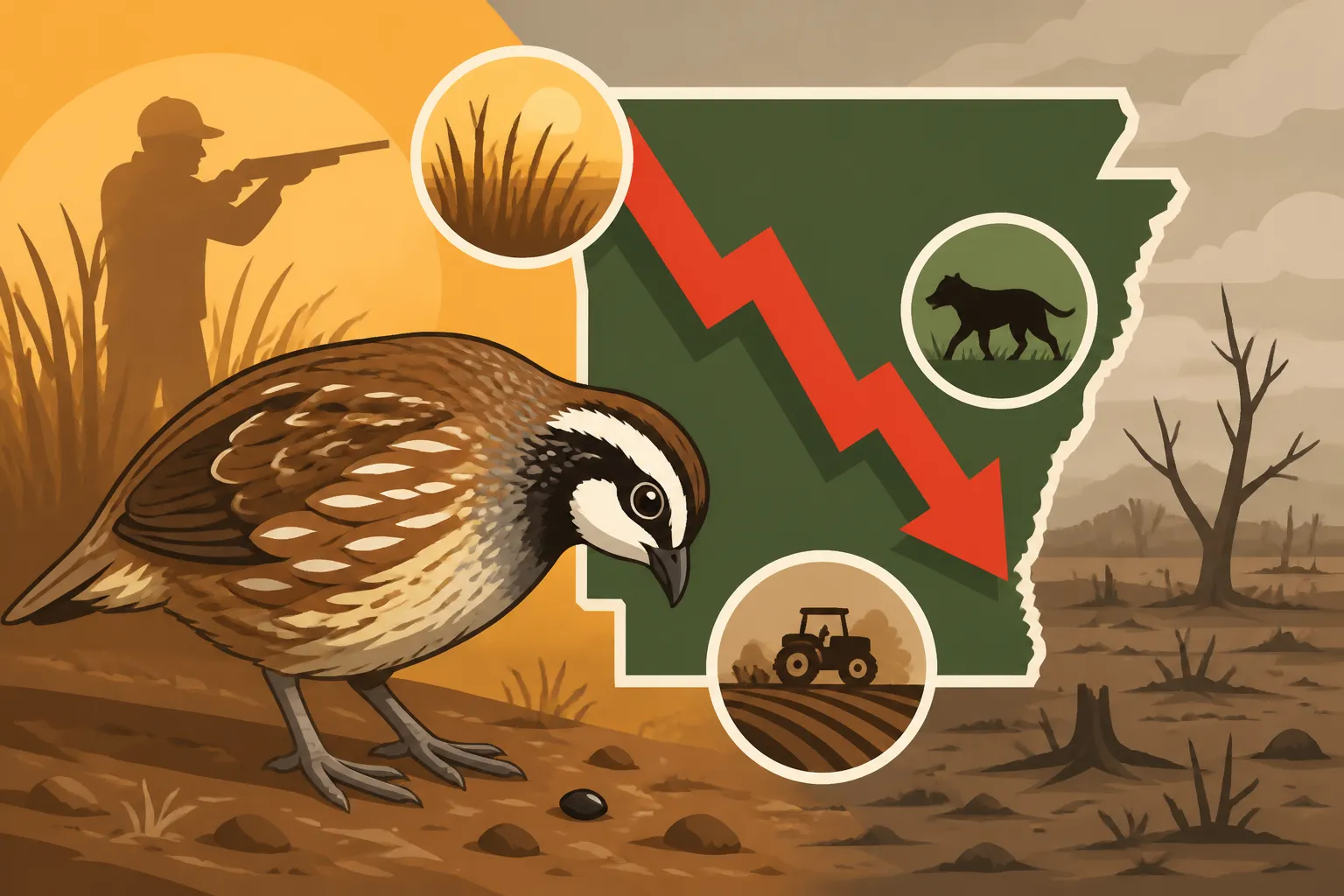
Oh, the bobwhite quail. For so many of us who grew up hunting in Arkansas, the distinctive "bob-WHITE!" call was the soundtrack of autumn, a promise of flushing coveys and fast-flying targets. But if you've spent any time in the fields and timber over the last few decades, you know that sound has become heartbreakingly rare. It's not just a feeling; the numbers confirm a significant and long-term decline in our state's bobwhite quail population. It's a complex issue, with no single culprit, and it leaves many of us scratching our heads and wondering what happened to these iconic birds. This guide will walk through the primary reasons why Arkansas quail numbers fell, exploring the intertwined factors that led to this unfortunate reality.
Habitat Loss and Fragmentation: The Root of the Problem
When you talk about wildlife decline, habitat is almost always at the top of the list, and for bobwhite quail in Arkansas, it's certainly the undeniable main driver. Quail are creatures of the edge – they need a patchwork of different cover types close together to thrive. Think about it: dense cover for nesting, open ground for brooding chicks, thickets for escape, and a consistent food supply. Over the years, that patchwork has been systematically dismantled.
Agricultural Intensification and Monoculture
Back in the day, Arkansas's agricultural landscape was a haven for quail. Small family farms were common, often featuring smaller fields, hedgerows, fallow tracts left to grow, and diverse crops. These farms weren't always "clean." There were weedy corners, brushy ditches, and field borders that might not have been perfectly tilled or mowed right up to the fence line. This created incredible "edge habitat"—places where field met forest, where crops met native grasses, or where a brush pile provided cover.
Today, modern agriculture, while incredibly efficient and vital for feeding our nation, has drastically altered this landscape. We've seen a massive shift towards larger fields, often planted in monocultures like soybeans, corn, or cotton, particularly across the Delta. The drive for efficiency means less wasted space. Fencerows are cleared, ditches are kept manicured, and every acre is put into production. While good for crop yield, it's devastating for quail. They lose the diverse vegetation they need for nesting, the insects the chicks rely on, and the dense escape cover from predators. Imagine a mile-long field of just one crop – there's nowhere for a quail to hide, nest, or find a varied diet without traveling significant distances, exposing them to greater risks. The old mosaic is gone, replaced by vast, uniform blocks of land that simply don't support quail year-round.
Forest Management Changes and Urban Sprawl
It's not just agriculture that has taken its toll. Our forests, especially in the Ouachitas and Ozarks, have also undergone changes. Historically, much of Arkansas's timberland was more open, with frequent natural fires or traditional logging practices creating a diverse understory of grasses, forbs, and scattered shrubs. This open pine or pine-hardwood forest was ideal quail habitat.
However, in many areas, the push for faster-growing timber led to dense pine plantations. These plantations, with their thick canopy, quickly shade out the low-growing vegetation that quail rely on for food and cover. The forest floor becomes a barren, dark place devoid of the seeds and insects quail need. While some modern forestry practices are incorporating more quail-friendly techniques like prescribed fire and thinning, the legacy of past intensive, dense planting remains a challenge.
Coupled with this, the ever-encroaching tide of urban and suburban sprawl means that prime quail habitat on the fringes of towns and cities is lost forever to housing developments, shopping centers, and roads. What might have once been a diverse mix of woods and small fields near a community is now asphalt and rooftops, permanently removing those crucial acres from the quail's potential range. This fragmentation also isolates remaining quail populations, making it harder for them to recover or expand their range.
Declining Food Sources and Pesticide Impact
Even if a covey manages to find some decent cover, they still need to eat. And just like their homes, their dinner plate has changed dramatically over the decades.
Loss of Native Weeds and Insects
Bobwhite quail are not picky eaters, but they need a variety of things. Chicks, in particular, are incredibly reliant on insects for the protein they need to grow quickly in their first few weeks of life. Think about it: those tiny little birds need a burst of energy and building blocks, and insects provide that in spades. As agricultural practices intensified and moved towards "cleaner" fields, the use of broad-spectrum insecticides naturally reduced insect populations. No bugs, no baby quail. It's a grim but simple equation.
For adult quail, seeds from native weeds are critical, especially during the lean winter months. They forage on the ground, picking up seeds from plants like ragweed, partridge pea, croton, and various grasses. These aren't cash crops; they're the "weeds" that used to grow abundantly along field edges, in fallow strips, and in open woods. However, with widespread herbicide use, these beneficial plants are systematically eliminated. Farmers are often incentivized to control weeds to maximize crop yields, and rightfully so for their bottom line. But the unintended consequence is a landscape largely devoid of the diverse seed bank that historically sustained quail through tough times. What once was a smorgasbord is now a desert.
The Clean Farm Syndrome
It's not just the chemicals; it's the mentality of "clean." Farmers work hard, and a tidy farm often means a well-managed farm. Ditches are mowed, fencerows are kept narrow and neat, and fields are tilled right up to the property line. While aesthetically pleasing and efficient for operations, this "clean farm syndrome" unfortunately removes much of the interstitial habitat – those small, neglected spaces that are gold for quail.
A brush pile in the corner of a field might seem like an eyesore to some, but to a quail, it's a vital sanctuary from predators and harsh weather. An unmowed field edge might harbor "weeds" but also provides essential nesting cover and seeds. The removal of these small, unmanaged areas, driven by efficiency and aesthetics, compounds the problem of food scarcity and lack of cover, forcing quail into smaller, less secure pockets of habitat where survival becomes increasingly difficult.
Increased Predation and Environmental Pressures
While habitat and food are huge, other factors contribute to the decline, especially when combined with a compromised landscape. Predators and Mother Nature herself play a role.
Predator Dynamics and Habitat Changes
Arkansas is teeming with predators, and that's a natural, healthy thing for an ecosystem. However, when quail habitat is degraded and fragmented, it can inadvertently make quail more vulnerable. Coyotes, raccoons, opossums, snakes, and various raptors are all natural quail predators. In a healthy, diverse habitat, quail have plenty of places to hide, nest, and escape. Their numbers are naturally regulated but not decimated.
But in a fragmented landscape, the remaining quail coveys might be concentrated into smaller, isolated patches of cover. This makes them easier targets for predators, whose own populations might be stable or even increasing due to other factors (like adaptable coyotes thriving near human development). A single brush pile surrounded by acres of clean field becomes an easy target for a raccoon or hawk. There's less safe nesting cover, meaning more nests are found and depredated. It's not that there are necessarily more predators than before, but rather that the habitat changes have made the quail less able to cope with natural predation pressure. Nest Predation and Turkey Hatches face similar challenges in habitat-poor areas.
Weather Extremes and Disease
Mother Nature, as we all know, can be a harsh mistress. Quail are susceptible to extreme weather events, especially during critical periods like nesting and brooding. Prolonged periods of heavy rain during the spring hatch can decimate chick populations, as tiny quail chicks are highly vulnerable to chilling and drowning. Conversely, extended droughts can impact food availability and reduce overall bird health, making them more susceptible to disease. The availability of clean water for quail can also become an issue during dry spells.
While less studied and perhaps less of a primary driver than habitat loss, disease can also play a role in localized quail declines. Dense populations, even in limited areas, can be more susceptible to the spread of parasites and pathogens. While not as widespread or well-understood as diseases like Chronic Wasting Disease in Arkansas for deer, it's another layer of pressure on an already struggling population.
Lack of Targeted Management and Restoration Efforts (Historically)
For a long time, quail weren't the "glamour species" of wildlife management, and that oversight, combined with shifting conservation priorities, also contributed to their decline.
Historical Neglect and Shifting Focus
It's fair to say that for many years, large-scale conservation efforts in Arkansas, and indeed across much of the country, focused more heavily on species like white-tailed deer and wild turkeys. These species bounced back incredibly well from historical lows, proving that dedicated management could work wonders. With the success stories of deer and turkey, and the rising popularity of waterfowl hunting in the Delta, quail often got less attention.
It wasn't a malicious neglect, but rather a practical allocation of resources and attention. Quail populations were often seen as a lost cause in many areas, or simply a reflection of broader landscape changes that were too massive to address effectively. The financial models of many wildlife agencies are also often tied to license sales, and as quail hunting declined, so too did some of the dedicated funding that might have supported more robust quail programs. Hunters shifted to other species, and the quail continued their quiet slide.
Emerging Conservation Programs and Hope for the Future
Thankfully, this trend has begun to reverse in recent years. There's a growing awareness and renewed commitment to bobwhite quail conservation in Arkansas and beyond. Organizations like the Arkansas Game and Fish Commission (AGFC) and private groups are actively working to restore quail habitat and populations.
Programs now focus on things like prescribed fire to open up dense understories in timber, creating early successional habitat. Landowners are being offered technical assistance and incentives to plant native grasses, establish diverse field borders, and manage their properties with quail in mind. There's a recognition that simply protecting existing habitat isn't enough; we need to actively create and restore it. Efforts like these, particularly in designated Arkansas Quail Focus Areas, represent a hopeful shift, but it's a long road back. We're learning more every day about what truly makes a difference, from improving nesting success to providing better winter cover.
Here's a quick look at the main factors contributing to the decline:
| Factor | Primary Impact | Example in Arkansas |
|---|---|---|
| Agricultural Intensification | Loss of diverse field edges, hedgerows, fallow fields | Large, clean row crop fields in the Delta |
| Forest Management Changes | Dense pine plantations shading out understory vegetation | Uniform pine stands in the Ouachitas |
| Urban/Suburban Sprawl | Permanent loss of habitat to development, fragmenting remaining areas | Housing developments expanding near rural edges |
| Pesticide/Herbicide Use | Reduction of insect populations (chick food), elimination of native seed-producing weeds | Widespread spraying in agricultural areas |
| Clean Farm Syndrome | Removal of brush piles, unmowed areas, and diverse cover | Manicured ditches, absence of unkempt corners |
| Increased Predation | Higher vulnerability of quail in fragmented, less secure habitats | Raccoons, coyotes preying on concentrated quail populations |
| Weather Extremes | Direct mortality of chicks (rain), food scarcity (drought) | Heavy spring rains washing out nests, prolonged summer droughts |
| Historical Management Focus | Less dedicated resources and attention to quail compared to other game species | Majority of conservation funding going to deer/turkey programs |
The decline of bobwhite quail in Arkansas is a stark reminder of how interconnected our ecosystems are and how human activity, even with good intentions like efficient farming, can have profound effects on wildlife. It's not one single villain but a complex web of changes that have slowly but surely chipped away at the world the bobwhite calls home. Understanding these reasons is the crucial first step as we look towards a future where the iconic "bob-WHITE!" might once again ring out across more of our beautiful state.
Disclaimer
This article is for general informational purposes only and does not constitute professional advice. Laws, prices and regulations vary by location and change over time. Consult a qualified professional for guidance on your specific situation.