Dove and Woodcock Flights
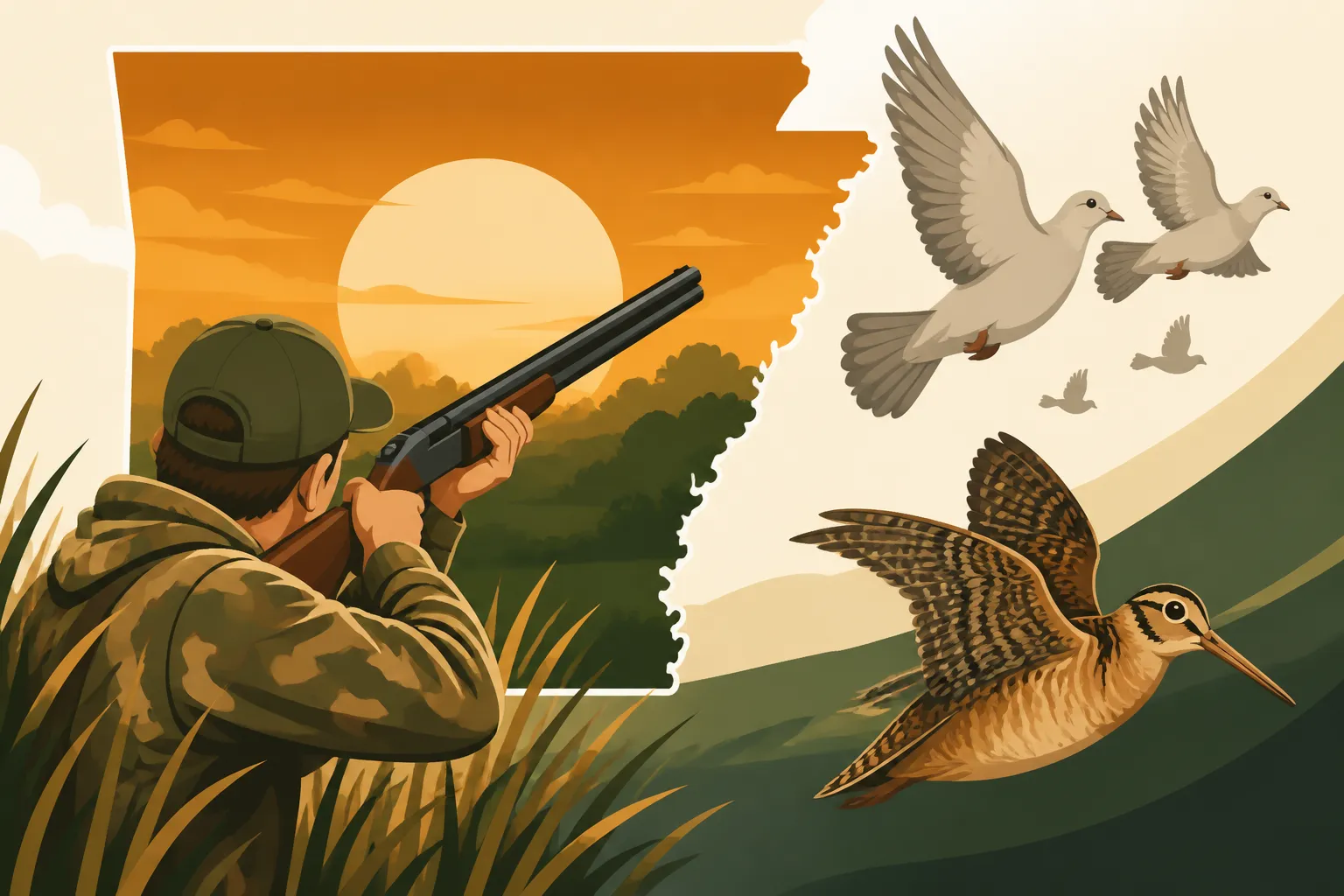
Oh, the sheer joy, and sometimes utter frustration, of chasing doves and woodcock in Arkansas! One day you're shoulder-to-shoulder with friends, shots ringing out like a battlefield symphony as birds zip by, and the next, you're trudging through thickets, hoping for a single flush. It’s a game of timing, understanding migration, and knowing where these quick-winged birds want to be. This guide is here to unravel the mysteries of dove and woodcock flights, giving you the insights and tactics to make your next hunt a memorable one, rather than a bust.
Understanding Arkansas Dove Migration and Habits
Doves, particularly mourning doves, are a beloved game bird across Arkansas, offering some of the earliest hunting opportunities of the fall. But they're not all the same, and understanding their movements is key to consistent success.
Early Season Mourning Doves and Local Birds
When the dove season opens in September, many hunters are eager to get out, even if the thermometer still reads a sweltering 90 degrees. What you're primarily seeing in these early days are the local, resident birds – those that hatched and summered right here in Arkansas. These birds have established feeding patterns and roosting sites, often gravitating towards abundant food sources like fields of sunflowers, millet, or recently cut wheat and corn stubble. They know the territory intimately, flying predictable routes between their nightly roosts, morning feeding grounds, and water holes.
Pre-season scouting is absolutely paramount if you want to connect with these early birds. You're looking for evidence: birds perched on power lines along field edges, small groups flying into or out of a particular patch of agriculture, or even just the tell-tale white splashes on the ground indicating recent activity. This is where local knowledge truly shines, as farmers’ fields are often the hotspots. The challenge, beyond the heat and the mosquitos that will test your resolve, is that these local birds can get "shot out" or simply get wise to pressure fairly quickly. They'll alter their patterns, become more skittish, and you'll find yourself wondering where all the birds went.
The Main Mourning Dove Migration Waves
Just when the local birds start to thin out or become impossible to decoy, nature often lends a helping hand with the arrival of migratory waves. These are the birds that have been raised further north in states like Missouri, Illinois, or even further up the Mississippi Flyway. As cold fronts begin to sweep down from Canada and the northern states, pushing temperatures lower and often freezing over food sources and water, these doves are triggered to begin their journey south.
You'll notice a distinct change in the fields. One day, you might have seen only a handful of birds, and the next, your chosen field is buzzing with new arrivals, often acting a bit less wary than their local counterparts who’ve already had a few close calls. These waves can arrive in stages, meaning hunting opportunities can remain strong through the first and second splits of Arkansas's dove season. The weather plays a crucial role here; a strong, sustained cold snap up north can bring a significant influx of birds down into Arkansas, refreshing the hunting potential. Keeping an eye on weather patterns to our north can give you a heads-up on when to expect new birds. This is the period when you might experience those truly phenomenal hunts, where the sky seems full of doves.
Eurasian Collared Doves: A Year-Round Opportunity
While mourning doves get most of the attention, Arkansas is also home to a burgeoning population of Eurasian collared doves. These birds are an invasive species, much larger than mourning doves, with a distinctive black half-collar on the back of their neck. Unlike mourning doves, which have specific seasons and bag limits, Eurasian collared doves can typically be hunted year-round with no bag limit. This makes them a fantastic bonus bird and a great option for extending your dove hunting opportunities.
Eurasian collared doves tend to prefer different habitats. While mourning doves favor open agricultural fields, collared doves are often found around human habitation: farms, barns, feedlots, grain elevators, and even suburban areas. They are more likely to perch on buildings, silos, and taller trees. Because they're not as accustomed to hunting pressure and often found closer to structures, they can present unique hunting challenges and opportunities. You might find great success setting up on the edge of a dairy farm or near an old homestead with a few strategically placed decoys. Given their year-round status, they can be a consistent target when the mourning dove season has closed or when local birds are scarce, adding another layer of excitement to your wingshooting endeavors in Arkansas.
Deciphering Woodcock Migration Patterns in Arkansas
Woodcock are truly unique, often overlooked game birds that offer a distinctly different hunting experience than doves. They are secretive, camouflaged masters of the underbrush, and their presence in Arkansas is entirely dependent on migration.
Ideal Habitat for Arkansas Woodcock
If you’re looking for woodcock, you need to think "moist and dense." These aren't field birds like doves. American woodcock, sometimes affectionately called "timberdoodles," thrive in moist, young timber, dense thickets, overgrown creek bottoms, willow swamps, and alder stands. What all these habitats have in common is soft, damp soil, which is absolutely critical for their primary food source: earthworms. Their long, sensitive bills are perfectly designed for probing into the ground to extract worms, so if the ground is frozen or too dry, they simply won't be there.
Many Arkansas hunters, focused on deer, turkey, or ducks, often walk right past prime woodcock cover without even realizing it. These thick, brushy areas, often bordering more mature timber or open fields, provide both cover from predators and easy access to their subterranean meals. Knowing where to look means seeking out areas with a good mix of young trees, shrubs, and especially low-lying areas that retain moisture. Places where water collects or drains slowly often create those ideal conditions for earthworm populations, which in turn attract woodcock.
The Northern Migration Push
Woodcock are quintessential migratory birds, their movements dictated almost entirely by the freezing and thawing of the ground. Unlike doves that might stick around if food is plentiful, woodcock must move south when their feeding grounds to the north freeze solid. This typically means that prime woodcock migration into Arkansas begins in late October, peaks through November, and can extend into December, especially if milder weather persists.
A series of hard freezes in states like Minnesota, Wisconsin, Michigan, and even Missouri is usually the trigger for significant flights into Arkansas. Just like with doves, keeping an eye on the weather forecast to our north is a fantastic way to predict when new birds will start showing up. A strong northern cold front, followed by a period of clear, calm weather, can often "drop" large numbers of woodcock into suitable coverts across the state. These are your "flight days," when the odds of finding good numbers of birds are highest. They are pushed by necessity, seeking unfrozen ground to feed, and Arkansas often serves as a critical stopover or even a wintering ground before they continue further south to Louisiana and Texas.
Key Stopover Points and Wintering Grounds
Arkansas sits squarely in the path of a significant portion of the woodcock migration. As these birds move south, they tend to follow major river bottoms and their associated tributaries, which often provide continuous corridors of suitable, moist habitat. The Ouachita River, the White River, and countless smaller creeks and sloughs act like natural highways, guiding woodcock through the state. Areas that feature diverse cover – a mix of young hardwoods, pines, and brush – are particularly attractive.
Once they hit Arkansas, they’ll concentrate in specific areas that offer the best combination of food and cover. These can become de facto wintering grounds for a significant portion of the season, provided the ground doesn't freeze hard for extended periods. If we get a sustained cold snap in Arkansas, they might move further south. However, even during cold spells, areas with spring-fed seeps or thick, south-facing cover can offer pockets of unfrozen ground where birds will hunker down. Understanding these preferred travel routes and stopover points is critical. For instance, focusing on the floodplains and low-lying areas near rivers in the Ozark National Forest or Ouachita National Forest can be incredibly productive for Woodcock in Arkansas Bottoms. These birds are trying to conserve energy during migration, so they'll settle into the best habitat they can find until forced to move again.
Scouting Strategies for Both Species
Effective scouting isn't just about finding birds; it's about understanding why they are where they are, which helps predict where they'll be tomorrow. This is especially true for migratory species like doves and woodcock.
Pre-Season Dove Scouting for Field Selection
You wouldn't show up for deer season opening morning without scouting, would you? The same goes for doves. Getting out there weeks before the opener is critical. Drive country roads, look for power lines running alongside agricultural fields, and pay close attention to any fields that have recently been cut. Wheat, corn, and milo stubble are magnets for doves, as are planted fields of millet or sunflowers. These are often specifically managed by landowners or hunting clubs to attract doves, making them prime real estate.
Look for birds flying into or out of fields, perched on wires, or congregating near water sources. Pay attention to the types of crops. Doves love small seeds, so fields that have been recently harvested, leaving plenty of fallen grain, are like a buffet. Don’t forget about gravel roads or sandy spots; doves often pick up grit for digestion. When you're trying to figure out where to hunt, tools like the AGFC Map Tool or other mapping apps can be incredibly helpful. They allow you to look at aerial photos, identify different types of agriculture, and pinpoint potential travel corridors and roosting areas. If you can identify active feeding patterns before the season even begins, you’re already miles ahead of the game. Remember, these birds are creatures of habit until pressured.
In-Season Scouting and Adjusting to Flights
The thing about dove hunting is that conditions can change rapidly. A hot field on opening day might be quiet by the weekend due to hunting pressure, or a new wave of migrating birds might totally change the dynamics. That's why in-season scouting and the willingness to adapt are so important.
If your usual spot is slow, don't just sit there lamenting. Get up, drive around, and look for new activity. Morning roost observations can tell you where birds are bedding down, and then you can try to intercept them on their flight path to a new feeding field. Similarly, observing evening fly-in patterns can reveal fresh feeding grounds. Doves are opportunistic; if a new food source becomes available, they’ll shift. Pay attention to changes in weather; a new cold front means new birds. Be ready to move your setup, change your decoy spread, or even switch fields entirely. Often, the best dove hunters aren't just great shots, they're excellent scouts who are constantly analyzing and adapting. This adaptability is key to consistent success throughout the season, especially as birds become more educated.
Finding Woodcock Coverts
Scouting for woodcock is a completely different ballgame. You're not looking for birds in the air; you're looking for subtle signs on the ground in dense cover. The best way to scout for woodcock, particularly if you don't have the luxury of a bird dog during scouting, is to literally put boots on the ground and walk through likely habitat.
Look for areas with moist, loamy soil, typically near water sources or in low-lying depressions. What are you looking for? The tell-tale signs are small, white droppings, often called "splashes," on leaves or logs, and distinctive probe holes in the ground where their long bills have been digging for worms. These are clear indicators that woodcock have been actively feeding in the area. Focus your efforts on the edges of clearcuts that are a few years old, overgrown fence rows, and the fringes of timber stands where sunlight still penetrates to encourage thick undergrowth. A good bird dog is an absolute game-changer for woodcock scouting and hunting. A pointing dog will lock up when they scent a bird, while a flushing dog will push them out, allowing you to see where they are holding. Without a dog, you'll need to be thorough and methodical, walking in a grid pattern and kicking every brush pile and thicket you come across. Remember, these birds are experts at disappearing into their surroundings.
Effective Hunting Tactics for Doves and Woodcock
Once you've done your homework and found the birds, it's time to put those scouting efforts to good use. But remember, a dove hunt and a woodcock hunt are two distinct experiences, each requiring its own set of tactics.
Maximizing Dove Success
Dove hunting is often fast-paced, high-volume wingshooting, and it can be incredibly addictive. To maximize your success, decoys are almost a must. Spinning wing decoys, like those from Mojo Outdoors, are incredibly effective, especially on slower flying days or for attracting new birds. Position them strategically in open areas of the field or on low perches to create a visual magnet. Supplement with static shell decoys on the ground or clipped to fence lines.
Your blind placement is crucial. Doves have excellent eyesight. You need to break up your outline. Use natural cover like tree lines, brush piles, or even a portable ground blind. Consider the sun's position and the wind direction. You want the sun at your back, making it harder for birds to see you and easier for you to see them. Position yourself so incoming birds are flying into the wind, which slows them down and makes for easier shots. When the birds are flying hot and heavy, practice shooting quickly and smoothly. The frustration of multiple misses is real, but that's part of the fun! Focus on swinging through the bird and following through. Remember, a common tactic is to focus on Hunting Doves on an Arkansas Field near water or preferred food sources.
Woodcock Dog Work and Shooting
Hunting woodcock is a much more intimate, slow-paced affair, often requiring more physical exertion as you push through dense cover. This is where a good bird dog truly shines. Whether it's a pointing breed like a Setter or Pointer, or a flushing dog like a Springer Spaniel, a canine companion will find birds you would undoubtedly walk past. The dog's nose will lead you to the bird, often allowing for a more controlled flush and a better shooting opportunity.
For guns, think light and fast. An open-choked (Skeet or Improved Cylinder) shotgun with light field loads (like 7.5 or 8 shot) is ideal. The shots are almost always at close range, often in thick cover, so a wide pattern is your friend. Woodcock have a peculiar, erratic flight pattern – they flush vertically for a few feet, then dart horizontally through the brush, making them incredibly challenging targets. Anticipate that initial vertical rise and be ready for the quick lateral move. Safety is paramount in thick cover; always know where your hunting partners and dog are, and be mindful of what's beyond your target. The reward of seeing a dog work a bird and making a clean shot on a timberdoodle is deeply satisfying, a true testament to the partnership between hunter and dog.
Combining Strategies and Respecting Seasons
While doves and woodcock require different hunting approaches, there are times and places in Arkansas where you might encounter both species on the same outing. Think about mixed habitat areas: the edge of a dove field that transitions into a dense, moist creek bottom or a power line right-of-way that runs through young timber. In these "transition zones," you might start your morning with doves and then switch gears to chase timberdoodles in the afternoon.
However, always remember to respect the distinct season dates and bag limits for each species. Mourning dove seasons are typically split, and woodcock have their own specific window. Eurasian collared doves, as we mentioned, are the exception with their year-round status. Always identify your target clearly before shooting. Ethical hunting also means knowing and respecting property boundaries. If you're hunting on private land, ensure you have explicit Asking an Arkansas Landowner for Permission before you step foot on it. Whether you're chasing the sky-darkening flights of doves or the secretive flushes of woodcock, enjoy the unique experiences these migratory birds offer.
Licenses, Regulations, and Conservation Efforts
Navigating the rules and regulations for migratory bird hunting can feel a bit like wading through quicksand sometimes, but it’s absolutely essential. Understanding what’s required ensures you’re hunting legally and contributing to the conservation efforts that make these pursuits possible.
Required Licenses and Stamps
To legally hunt migratory birds like doves and woodcock in Arkansas, you'll need a few key documents. First and foremost, you'll need a valid Arkansas hunting license. This is your baseline permit to hunt any game in the state. Beyond that, because doves and woodcock are migratory birds, you'll also need both a state migratory bird stamp and a federal migratory bird hunting and conservation stamp, often referred to as a "Duck Stamp," even though it applies to many migratory species beyond ducks.
Lastly, and this is crucial, you must register with the Harvest Information Program (HIP). This involves answering a few simple questions about your previous year's migratory bird hunting success. The data collected from HIP registration is vital for wildlife biologists, helping them monitor migratory bird populations and set future season dates and bag limits. It doesn't cost anything extra, but it's a mandatory step for anyone hunting migratory game birds. You can often complete your Arkansas HIP Registration for Migratory Birds when you purchase your licenses online or from an authorized vendor. Always double-check the current regulations annually, as they can sometimes change.
Bag Limits and Shooting Hours
Arkansas has specific daily bag and possession limits for doves and woodcock, designed to manage populations sustainably. For mourning doves, these limits typically allow for a generous number per day, with a higher possession limit that reflects multiple days of hunting. Eurasian collared doves, being an invasive species, generally have no bag limit, meaning you can harvest as many as you encounter, which is a unique opportunity. Woodcock, being less numerous and having a more specific habitat, usually have a lower daily bag limit.
Shooting hours are another critical regulation. For most migratory birds, hunting is permitted from one-half hour before sunrise until sunset. However, these times can sometimes vary slightly for certain species or in specific zones, so always consult the latest Arkansas Game and Fish Commission (AGFC) regulations booklet or website. Exceeding bag limits or shooting outside legal hours are serious violations, and the AGFC takes them very seriously. It's your responsibility as a hunter to know and adhere to these rules. Keeping track of the exact Arkansas Dove Opener and Later Splits will ensure you’re hunting within the legal season dates.
Conservation and Habitat Initiatives
Every time you purchase an Arkansas hunting license, state migratory bird stamp, or federal duck stamp, you are directly contributing to conservation efforts that benefit not just doves and woodcock, but a vast array of wildlife. The revenue generated from these sales goes directly into funding wildlife habitat acquisition, restoration, and management projects. These funds are critical for maintaining and improving the diverse ecosystems that migratory birds depend on during their arduous journeys.
Organizations like Ducks Unlimited, The National Wild Turkey Federation, and many others, in partnership with state agencies like the AGFC, work tirelessly to ensure there are still places for these birds to thrive. Whether it's managing agricultural fields for dove food, preserving wetland habitats for woodcock, or conducting crucial population surveys, hunters' dollars are the backbone of these programs. So, while you're enjoying the thrill of a dove or woodcock hunt, remember that you're also part of a larger community dedicated to preserving these opportunities for future generations. It’s a point of pride that hunters are among the strongest proponents of conservation, making sacrifices and investing in the land and wildlife they cherish.
| Species | Preferred Habitat | Migration Timing in AR | Common Tactics | Bag Limit (Typical) |
|---|---|---|---|---|
| Mourning Dove | Agricultural fields (stubble, millet, sunflowers), power lines, water sources | Early Sept (local), Late Sept-Oct (main migration) | Decoys (spinners), concealment, open fields, pass shooting | Generous daily |
| Woodcock | Moist, young timber, thickets, willow bottoms, alder swamps, soft soil | Late Oct-Dec (pushed by northern freezes) | Bird dog essential, dense cover, close-range shooting | Lower daily |
| Eurasian Collared Dove | Human habitation (farms, barns, grain elevators), urban/suburban fringes | Year-round resident, expanding population | Opportunistic, often around structures, decoys | No limit |
Disclaimer
This article is for general informational purposes only and does not constitute professional advice. Laws, prices and regulations vary by location and change over time. Consult a qualified professional for guidance on your specific situation.