Hail Calls Versus Soft Feeding Chuckles
That moment when you spot ducks, whether they're tiny specks against a vast Arkansas sky or quietly working the edges of your spread, is pure adrenaline. But it's also when the real work begins. The biggest challenge for many hunters, new or seasoned, is knowing exactly what to say to those birds with their duck call. Should you lean into a loud, commanding hail call to grab their attention from afar, or should you keep it subtle and realistic with soft, inviting feeding chuckles? Getting this wrong can mean the difference between ducks cupping their wings over your decoys and flaring off into the next county. This guide will walk you through the nuances of both, helping you master the conversational art of duck calling for success in Arkansas's diverse flyway.
Understanding the Power of the Hail Call
The hail call is your long-distance communicator, the clarion call that says, "Hey, over here! Check out this buffet!" It's designed to carry across vast distances, pierce through wind, and grab the attention of ducks that might not even know you exist. Think of it as your opening statement, a bold declaration in the duck world. Many hunters shy away from loud calling, fearing they'll scare birds, but when executed correctly and at the right time, a strong hail call is absolutely essential.
When to Unleash the Loud Hail
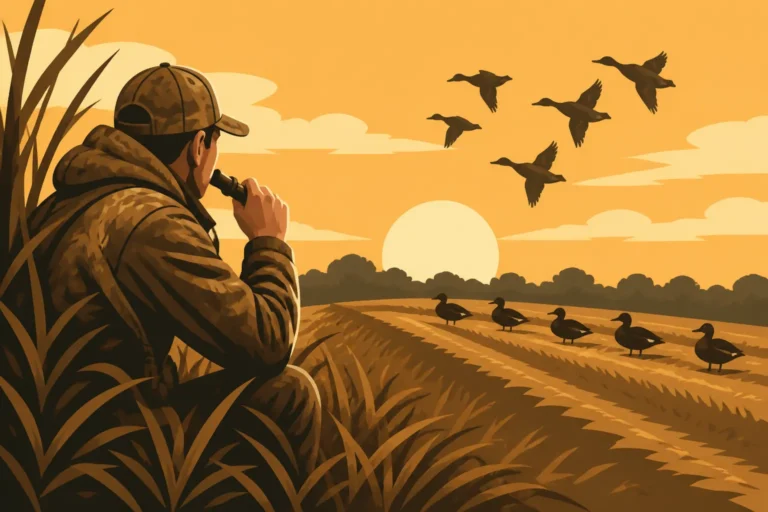
You'll want to reach for that hail call when ducks are at a considerable distance, often flying high, wide, and seemingly uninterested in your general direction. Imagine a group of mallards high up, flying a bee-line towards another distant field or a known roost. They're just passing through your air space, and without a powerful invitation, they'll keep on trucking. This is precisely when a series of sharp, loud hail calls can make them break from their flight path, turn their heads, and maybe, just maybe, start a long, arcing swing towards your setup.
Another prime scenario for hail calls is on those blustery, windy days that are so common during the Arkansas duck season. The wind can carry away softer calls, making them nearly inaudible beyond a short distance. A robust hail call, particularly one with a crisp, high-pitched tone, can cut through the wind and reach those distant birds. This is especially true in open water scenarios, like Hunting Arkansas Reservoir Ducks, where the sound has to travel across a wide expanse without much cover to hold it. Similarly, when you're set up in a vast Field and Flooded Rice Duck Hunting in the Delta spread, you need to broadcast your presence far and wide. Without a good hail call, those birds could pass by a mile away, oblivious to your carefully laid out decoy spread.
Mastering the Hail Call Technique
A good hail call isn't just about blowing as hard as you can. It's about rhythm, conviction, and producing a sound that genuinely mimics a duck trying to get attention. Typically, a hail call starts with a few loud, drawn-out quacks, often strung together in a series of 5-7 notes, sometimes more. The key is to start strong, maintain volume, and then let it trail off slightly, mimicking a natural duck sequence. It's not a machine gun burst; it's a deliberate, drawn-out conversation starter.
Practice is crucial here. You want to generate enough air pressure from your diaphragm, not just your cheeks, to make the call resonate. Focus on crisp, distinct notes, ensuring each quack sounds like a full, rich duck note, not a squawk or a squeal. A high-quality call, like those from Duck Commander or Rich-N-Tone, can certainly help, but technique trumps gear every time. When practicing, try to project your sound far away. Many hunters practice indoors, but the acoustics of a living room are vastly different from a flooded timber hole or an open field. Take your calls outside, gauge how far the sound travels, and learn to adjust your breath and hand positions to maximize carry and realism. Remember, your goal is to make a single duck or a small group sound like they're confidently communicating over a long distance, not like a frightened bird.
The Subtle Art of Feeding Chuckles
Once you've grabbed their attention with a hail call, or if ducks are already working closer, it's time to shift gears. The feeding chuckle, sometimes called a "feed call" or "cluck," is about reassurance, contentedness, and creating the illusion of a lively, happy flock on the water. It’s the sound of ducks just being ducks, comfortably feeding and completely at ease. This is where you seal the deal, convincing those circling birds that your spread is the safest, most inviting place to land.
The Role of Soft Reassurance
Imagine ducks swinging wide, perhaps they’ve responded to your hail call and are now circling. They’re observing, looking for any sign of danger. If you keep blasting loud hail calls at this point, you’re likely to spook them. Instead, you want to convey a sense of calm and normalcy. Soft feeding chuckles, gentle clucks, and subtle contented calls are exactly what’s needed. These sounds suggest that everything is perfectly fine, there’s plenty of food, and no predators are lurking. It’s the aural equivalent of a welcoming committee.
This approach is especially effective in intimate settings like Hunting Arkansas Flooded Green Timber. In the close confines of a timber hole, loud calls echo unnaturally and can easily sound aggressive or alarming to wary ducks. Here, the soft, rhythmic chatter of feeding ducks is far more convincing. Even if you're set up on a small pocket of water in an Hunting Arkansas Moist-Soil Units, subtle calls create that irresistible tableau of contented ducks. When birds are directly overhead, eyeing your decoys, these soft sounds provide the final, irresistible nudge to bring them down through the canopy. It's all about making your decoy spread sound like the most natural, safest spot for them to join.
Delivering Authentic Feeding Chuckles
Authentic feeding chuckles are generally short, choppy, and repetitive. They are often delivered in a staccato fashion, varying in rhythm and sometimes interspersed with a soft quack or two. Think about the sound of several ducks picking through acorns or grain, chattering softly amongst themselves. It's not one continuous sound, but rather a broken, sometimes overlapping sequence of "dit-dit-dit-dit" or "tuck-tuck-tuck-tuck" sounds.
The key to realism is varying the rhythm and intensity. You don't want a perfectly mechanical feed call; real ducks don't sound like that. Throw in some pauses, speed up for a few notes, slow down. It helps to envision the ducks themselves: one might be greedily gobbling, another might be casually dabbling. Some callers use their tongue to create the chop, while others rely more on precise breath control and a relaxed lower jaw. The volume should be significantly lower than a hail call, just loud enough to be heard by birds working within 100-200 yards, or much closer in thick cover. Many hunters integrate a softer, contented quack into their feeding routine, often a single, drawn-out low note. This mix of soft quacks and chuckles creates a very realistic vocal environment that is difficult for ducks to resist.
Reading the Birds: Blending Your Calls
The true art of duck calling in Arkansas isn't about choosing one call over another for the entire hunt. It's about blending them seamlessly, transitioning between loud and soft, urgent and calm, based entirely on what the ducks are telling you. Every swing, every head turn, every rise or drop in altitude is a message, and a good caller learns to interpret those messages and respond appropriately.
Transitioning Between Hail and Feed
The transition is critical. You might start with a strong hail call to grab those high-fliers. They turn, maybe make a big, sweeping circle. Now they're closer, perhaps a quarter-mile out. This is when you can start to soften things up. A series of contented quacks or a shorter greeting call might replace the full-blown hail. As they get even closer, maybe 150-200 yards and on their final approach, that’s when the soft feeding chuckles become your primary tool. You're constantly analyzing their reaction: if they seem hesitant, back off the volume. If they're coming hard, keep those contented sounds going.
One powerful technique is to use the "comeback call" after an initial hail. A comeback call is a shorter, slightly more excited series of quacks than a hail, signaling that you're still interested and encouraging them to continue their approach. Once they commit and start losing altitude, you can then switch fully to feeding chuckles and soft quacks. It's like a conversation: "Hello!" (Hail) "Come on over here!" (Comeback) "Everything's great, plenty of food!" (Feeding chuckles). Using a tool like GoHunt to scout the area beforehand can give you an edge by understanding typical flight paths and potential hiding spots, which helps in deciding when to initiate and when to soften your calling sequence based on how ducks usually work that specific piece of water.
| Call Type | Purpose | When to Use | Volume | Effect on Ducks |
|---|---|---|---|---|
| Hail Call | Get attention, announce presence | Distant birds, high flyers, windy days | Loud, commanding | Attracts from afar, makes them turn |
| Comeback Call | Encourage approach after initial turn | Birds circling at mid-range | Moderate, eager | Reassures, maintains interest |
| Feeding Chuckles | Reassure, mimic contented flock | Close birds, working spread, calm days | Soft, varied | Builds confidence, encourages landing |
| Contented Quacks | Gentle invitation, signal safety | Birds on final approach, in timber | Soft, mellow | Calms wary birds, seals the deal |
Common Calling Mistakes to Avoid
One of the most common mistakes hunters make is overcalling. You get excited, the ducks are working, and you just keep blowing. While it might feel good, excessive calling can often sound unnatural and alarm ducks, especially those that are wary from weeks of hunting pressure. Learn to call to the birds, not at them. If they're responding well to soft chuckles, don't suddenly blast a hail call. Conversely, if they're still way out there, don't try to draw them in with feed calls that won't carry. It’s also important to understand How Timber Calling Differs From Open Water – the acoustics are entirely different, and what works in a rice field will likely sound terrible in a tight green timber hole.
Another mistake is calling at the wrong time in the sequence. For example, blasting a hail call just as birds are cupping their wings to land is a sure way to make them flare. At that point, silence, or just the very softest, most realistic feeding chatter, is often the best call of all. Also, don't be afraid of silence. Sometimes, a short period of silence allows ducks to focus on your decoys and the sounds of nature, building their confidence before you offer another soft series of chuckles. Many hunters also neglect the importance of hand placement; by adjusting how you cup your hands around the barrel of the call, you can greatly influence volume and tone, allowing for more dynamic and realistic calling without having to change calls. A good mapping tool like GoHunt can help you understand the landscape and anticipate how sound might travel in different environments, further refining your calling strategy.
Advanced Calling Strategies for Arkansas Ducks
Once you've mastered the basics of hail calls and feeding chuckles, you can start layering in more sophisticated techniques to really fool those wise old mallards. This is where you move beyond just "making duck sounds" to truly "talking to ducks."
Incorporating Multiple Callers
If you're hunting with a partner, don't just have both of you blowing the same call at the same time. This is a golden opportunity to create a more realistic and dynamic soundscape. One hunter might focus on the primary hail and comeback calls, while the other provides background chatter with soft feeding chuckles or contented quacks. This mimics a larger, more active flock and can be incredibly convincing. Imagine one caller taking the lead with a strong, urgent series, while the other occasionally interjects with a subtle feed. This kind of interplay is exactly what you hear in a real raft of ducks on the water and helps to create that sense of bustling activity.
Varying the types of calls used by each hunter also adds realism. Perhaps one person uses a deeper, raspy call, while the other uses a higher-pitched, cleaner tone. This diversity of sound suggests a variety of ducks of different ages and sizes, making your spread seem even more natural. Coordinating your calling efforts is crucial; you want it to sound like a conversation, not a competition. A quick hand signal can indicate when to start or stop, ensuring a synchronized, realistic performance. This is particularly effective when Calling Ducks in Tight Arkansas Timber, where the acoustics allow for subtle variations to really shine.
Adding Whistles and Other Vocalizations
While mallard hens do most of the talking, drake mallards contribute with their distinctive whistle, a soft, almost ethereal sound. Incorporating a mallard whistle into your calling sequence, especially when birds are circling or on final approach, can add another layer of realism. A few soft drake whistles mixed with hen chuckles can make your spread sound like a truly authentic, diverse group of ducks. Beyond mallards, if you're targeting other species like pintails or wigeons, their unique whistles can be incredibly effective when used appropriately.
Don't be afraid to experiment with other vocalizations. Sometimes, a very soft, drawn-out "greeting call" (a series of 3-5 medium-volume quacks) can be effective when ducks are 150-200 yards out and seem hesitant. A "lonesome hen" call – a few spaced-out, somewhat mournful quacks – can also be powerful, especially on slow days, suggesting a duck looking for company. Understanding the full range of duck sounds and knowing when to deploy them will significantly elevate your calling game. Using your scouting information from GoHunt to identify which species are in the area can help you choose the right supplementary calls.
Ultimately, whether you're belting out a booming hail call or whispering a contented feeding chuckle, the goal remains the same: to convince those wild ducks that your small piece of Arkansas is exactly where they want to be. It's a skill that takes time, practice, and a keen ear for nature, but the rewards are well worth the effort.
Disclaimer
The information provided in this guide is for educational and entertainment purposes only. Hunting regulations and conditions can change rapidly. Always consult the latest Arkansas Game and Fish Commission (AGFC) regulations and local laws before planning any hunting trip. Hunter safety is paramount; always follow safe firearm handling practices and be aware of your surroundings.