Setting a Spread on a Levee
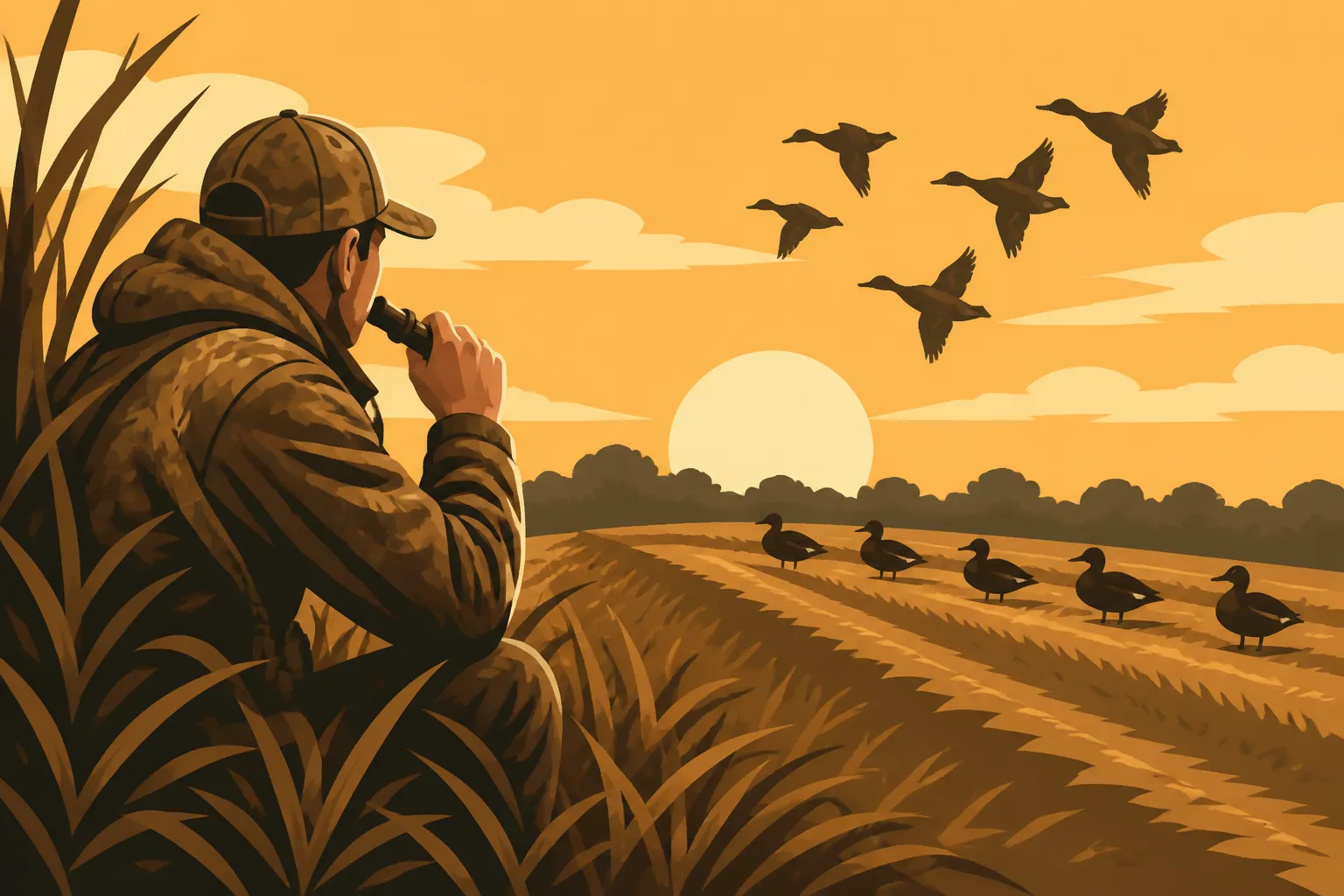
There's a unique challenge that comes with hunting ducks on a levee in Arkansas. You've found a spot that looks promising – maybe it's surrounded by flooded fields, or it's a raised road offering access to areas others can't reach – but then you realize you're completely exposed. Ducks see everything from above, and making that levee feel like a safe, inviting spot for them to land, while simultaneously hiding yourself, can feel like trying to disappear in plain sight. This guide is all about tackling that specific frustration, helping you understand how to strategically set a decoy spread and hide effectively when you're perched on that thin strip of dry ground.
Understanding Levee Dynamics for Duck Hunting
Hunting from a levee isn't like hiding in flooded green timber; it's a whole different ballgame. You're often dealing with open skies, minimal natural cover, and ducks that have seen it all. But with the right approach, a levee can be an incredibly productive spot, especially during periods of high water or when field hunting is the dominant tactic.
The Unique Challenges of Levee Hunting
The biggest headache for most hunters on a levee is the sheer exposure. When you're standing on an elevated strip of ground, especially one that runs through a vast flooded field or a large open pool, you stick out like a sore thumb to circling ducks. They've got an eagle-eye view, and if anything looks amiss, they're flaring out of there faster than you can blink. This means your hide needs to be absolutely impenetrable, and your decoy spread needs to pull their attention away from your position. It’s not just about blending in; it’s about creating a scene that’s so compelling, ducks forget to scrutinize the edges.
Another challenge is the type of duck traffic you often encounter. Instead of birds weaving through trees, you're looking at ducks working vast stretches of open water or flying high over fields. They might be wary from miles away, constantly eyeing the landscape for anything out of place. This necessitates a spread that screams "safe landing zone" from a distance, pulling those high-fliers down and making them commit. The lack of natural breaks in the landscape also means that wind and sun can play havoc with your setup, revealing shadows or glints that betray your presence. It's a constant battle against visibility, both yours and the ducks'.
Reading the Water and Wind on a Levee
When you're perched on a levee, understanding the surrounding water and, most importantly, the wind, is paramount. Unlike a timber hole where current might be minimal, on a levee, you could be dealing with significant water movement, or even just shallow sheet water over a field. The depth of the water directly impacts where ducks will want to land. Mallards, for instance, prefer shallower water where they can dabble for food, while divers might be happy in deeper sections. Observe the water for subtle currents or ripples; these can help you predict how your decoys will move and how ducks might approach their landing.
Wind is your best friend and worst enemy on a levee. Ducks almost always land into the wind, much like an airplane. This means your "kill hole" – the open landing zone in your spread – absolutely must be positioned directly into the prevailing wind direction relative to your hide. If the wind is at your back, ducks will land right in front of you, wings cupped. If it's a crosswind, they'll land broadside to your hide, offering a different shot. What you want to avoid at all costs is having the wind at your face, as ducks will land behind you, out of sight until it's often too late. Before you even think about setting out a single decoy, spend a good ten minutes just observing the wind, feeling it on your face, and watching how it affects any ripples on the water. This vital information will dictate your entire setup.
Crafting Your Decoy Spread on a Levee
Once you've got a handle on the wind and water, it's time to build a decoy spread that's both irresistible and deceptive. This isn't just about tossing out a bunch of plastic birds; it's about creating a dynamic, lifelike scene that convinces wary ducks they've found the perfect pit stop.
Decoy Types and Numbers for Levee Spreads
For levee hunting, realism and motion are your keywords. You'll primarily be targeting dabbling ducks like mallards, gadwalls, wigeon, and pintails, so a majority of your spread should reflect that. Mix up your mallard drakes and hens to look natural, but also include a good number of confidence decoys. A few pintails with their long necks visible from a distance can add an extra layer of realism, especially for high-flying birds. Even a couple of Canada goose floaters or fully flocked specklebelly goose decoys strategically placed further out can make the area seem even more inviting and safe.
Don't underestimate the power of motion. A jerk cord strategically placed can create ripples that mimic feeding birds, instantly adding life to a static spread. Spinning wing decoys, often referred to as "Mojo" or "Lucky Duck" style, can be incredibly effective at grabbing attention from a distance, especially on clear, calm days. However, be mindful that over-reliance on them, or using them when ducks are already close and wary, can backfire. Sometimes, less is more with spinners. The number of decoys often depends on the size of the water you're hunting; a vast flooded field might warrant a larger spread (5-6 dozen), while a smaller slough near a levee might only need 2-3 dozen.
Here’s a quick look at common decoy types and their uses:
| Decoy Type | Primary Purpose | Best Conditions | Considerations |
|---|---|---|---|
| Mallard Floaters | Core of most spreads, mimic feeding/resting dabblers | All conditions | Mix drakes and hens for realism; use weighted keels. |
| Pintail Floaters | Confidence birds, visible from a distance | Clear, open water, sunny days | Their high heads signal safety. |
| Gadwall/Wigeon | Adds variety and realism, good confidence birds | Anytime you want to show diversity | Helps convince pressured birds. |
| Canada Goose/Speck | Large confidence birds, visible from afar | Open fields, large bodies of water | Signals a highly safe area to ducks. |
| Jerk Cord Decoys | Creates natural water movement and ripples | Calm days, when ducks are working close | Extremely effective for adding subtle, realistic motion. |
| Spinning Wings | Attracts attention from a long distance | Clear, sunny days, when trying to pull high birds | Can flare wary birds; use sparingly when ducks are close. |
When you're trying to figure out how many decoys you need or where the birds are actually hitting, remember that tools like GoHunt can be invaluable for scouting. You can use their mapping features to study topography, identify potential feeding areas, and even locate other levee systems that might be holding birds. This kind of pre-hunt intelligence can save you a lot of time and effort once you're on the ground.
Layout Strategies: The "Kill Hole" and Beyond
The goal of your spread is to guide ducks into a specific, open landing zone – the "kill hole" – where they are within easy shooting range. On a levee, this kill hole needs to be directly into the wind from your hidden position. A common and highly effective strategy is the "J-hook" or "U-shape" spread. Imagine the long side of the 'J' or 'U' extending out into the water, with the hook or curve creating the landing pocket. Your hide should be at the base of the 'J' or 'U', facing directly into the wind.
For example, if the wind is blowing from north to south, and you're hiding on the south side of the levee, your spread would start to the north of you, curve around, and leave an open pocket of water between you and the main body of decoys. This forces the ducks to land directly into the wind, putting them right in front of your hide. You can also create a simple "V" spread, with the point of the 'V' extending upwind, and the open end of the 'V' creating the landing zone near your hide. The key is to keep the area where you expect ducks to land free of decoys and obstacles, making it look like a clear, safe runway. For those who are used to Setting Decoys in Timber Holes, this open-water approach requires a different kind of spatial reasoning.
Beyond the basic shape, think about adding "confidence" elements. Place a few decoys, maybe a pair of pintails or gadwalls, slightly outside the main body of your spread, as if they're just arriving or a bit separated from the flock. This adds realism and makes the main spread more believable. Some hunters also like to place a small cluster of decoys very close to their levee hide, almost as if they're feeding right at the edge, to add an extra layer of comfort for incoming birds. Remember, the idea is to present a natural, inviting scene, not just a bunch of plastic.
Hiding and Calling on a Levee
No matter how perfect your decoy spread, if the ducks see you, the hunt is over. Hiding on an exposed levee is one of the toughest aspects of this kind of hunting, and your calling strategy needs to complement the open environment.
Maximizing Concealment on Exposed Levees
This is where the real work often comes in. Natural cover on a levee can be scarce. You might find some tall grass, a few scattered bushes, or a lone tree. You need to use every bit of it to your advantage, and often, you'll need to enhance it significantly. Building a blind out of natural materials you find nearby – cattails, willow branches, dried brush – is often the best approach. Take the time to truly brush it in, not just on the front, but all around and above to break up your silhouette. Think about the sun's angle throughout your hunt; an otherwise good blind can cast a revealing shadow.
Many hunters rely on specialized gear like layout blinds or ground blinds when hunting open areas from a levee. Layout blinds are particularly effective when you're in a field adjacent to the levee, allowing you to lie flat and almost disappear into the terrain. If you're physically on the levee itself, a well-brushed-in A-frame or panel blind can work wonders. The main thing is to ensure that when ducks are circling, they see nothing but natural vegetation or what appears to be part of the landscape. For a more detailed look at effective setups, check out Brushing In a Blind on a Levee or even Using a Ground Blind on an Arkansas WMA for tips on maximizing concealment in open areas. Whatever you choose, make sure it's big enough to comfortably conceal you and any hunting partners, as well as your gear.
Effective Calling for Levee Hunts
Calling ducks in open country, from a levee, is different from calling them into tight timber. In the timber, you often use softer, more subtle calls once they're close, as the sound carries and bounces more. In open water or over fields, sound dissipates quickly, so you often need louder, more commanding calls to grab their attention from a distance. Think about starting with a strong "hail call" or a series of loud greetings to birds flying high or far off. Once they acknowledge you and begin to turn, you can transition to more reassuring, softer calls.
As the ducks get closer and start to commit, move to contented feed calls, soft clucks, and quacks. The goal is to make your spread sound like a bustling, safe haven. Pay close attention to their reaction; if they flare, back off the call. If they continue to work, keep calling them gently. Don't overcall, but don't be afraid to be aggressive when you need to be. Many hunters find that a combination of attention-grabbing calls and soft, reassuring sounds is the ticket. Comparing this to Calling Ducks in Tight Arkansas Timber really highlights the adaptability needed. The objective with levee calling is to imitate a large, happy group of ducks, making those wary birds feel comfortable enough to drop their feet into your kill hole. You might find that mastering different call types, like those described in Hail Calls Versus Soft Feeding Chuckles, can significantly improve your success rate here.
Advanced Levee Tactics and Considerations
Hunting from a levee often requires more than just a good hide and a well-placed spread. You need to be adaptable, safe, and always thinking ahead, especially with changing conditions.
Adapting to Changing Conditions
Arkansas weather, especially during waterfowl season, is notoriously fickle. A hunt might start with calm, clear skies and end with a blustery front pushing through. This means your levee setup needs to be flexible. If the wind shifts significantly, you might need to quickly re-position your decoys to keep that kill hole properly oriented. Ducks will always prioritize landing into the wind, so if it changes, your setup should too. Keeping your decoy lines and weights organized can make these quick adjustments much easier.
Beyond weather, consider hunting pressure. If you're on public land, like some of the vast tracts managed by the Arkansas Game and Fish Commission, or even private land adjacent to heavy hunting, ducks will become incredibly wary. They'll skirt obvious spreads and shy away from aggressive calling. In these situations, scaling back your decoy numbers, using more realistic "feeder" postures, or even moving to a smaller, more natural spread might be more effective. Sometimes, simply going quiet and letting the motion decoys and the wind work for you is the best strategy. Keep an eye on how other areas are hunting too; if the water levels are shifting, say on the White River as discussed in Reading Water Levels on the White River, it could push more birds to your area or move them away. Flexibility is key to continued success on the levee.
Safety and Ethics on Levee Hunts
Safety should always be your top priority, especially when hunting from a raised position like a levee. Be acutely aware of your shooting lanes and what lies beyond your target. There might be other hunters, farm equipment, or even residences further out in the distance. Always identify your target clearly and ensure you have a safe backstop before taking a shot. When hunting with partners, communicate your shooting zones to avoid swinging on birds that are heading towards someone else’s line of fire. Given that you're likely on or near agricultural land, be extra vigilant.
Ethical considerations extend to respecting property lines and following all regulations. Always know if you're on public land or private, and if private, ensure you have explicit permission. Use mapping tools like those from GoHunt to clearly delineate boundaries. Adhere strictly to bag limits, shooting hours, and all other Arkansas hunting laws, including Nontoxic Shot Rules in Arkansas, which are critical for waterfowl hunting. We owe it to the resource, and to each other, to hunt responsibly. Being a good steward of the land and the sport ensures that future generations can enjoy the unique experience of hunting ducks from an Arkansas levee.
Disclaimer
Please remember that hunting regulations and conditions can change rapidly. Always consult the latest Arkansas Game and Fish Commission (AGFC) regulations and local guidelines before planning any hunt. Safety should always be your top priority in the field.