Using a Ground Blind on an Arkansas WMA
Hunting Arkansas's public lands, especially our Wildlife Management Areas (WMAs), can feel like a constant uphill battle. You’ve scouted, you’ve put in the miles, but finding consistent success when the woods are full of other hunters and the game is warier than usual is a real challenge. This guide is all about tackling that struggle head-on, delving deep into the tactical advantages and strategic use of ground blinds to help you effectively hunt those pressured Arkansas WMAs.
The Unique Challenges of Hunting Arkansas WMAs
Let's be honest, public land hunting in Arkansas isn't for the faint of heart. While it offers incredible opportunities, it also comes with a unique set of hurdles that can frustrate even the most seasoned hunter. Understanding these challenges is the first step to overcoming them, and it’s where a well-placed ground blind can truly shine.
High Pressure and Wary Game
Arkansas WMAs, particularly those with a reputation for good deer or turkey populations, often see a significant amount of hunting pressure. This isn't a bad thing in itself – it just means the game animals are educated, to put it mildly. They’ve encountered human scent, heard calls, and seen movement, making them incredibly difficult to approach and fool with traditional methods.
Imagine trying to set up a treestand in a prime feeding area only to find that every mature buck skirts it by 100 yards. Or picture a gobbler that simply won't commit to your setup because he's seen countless hunters sitting against trees. This wariness is a direct result of consistent human presence, forcing animals to adapt their movements and habits. Your scent cone, even when trying to be careful, can spread far and wide, alerting animals long before you ever see them. It's a frustrating reality many of us face, but it's not insurmountable.
Limited Cover and Stand Restrictions
Another significant hurdle on many WMAs is the availability of suitable natural cover, especially when combined with regulations on stand placement. Many WMAs have rules against cutting vegetation, using screw-in steps, or even leaving stands overnight or for extended periods. This means you might find the perfect pinch point or funnel, but there isn't a single tree big enough or strong enough to hang a treestand from.
Even when suitable trees exist, they might be in a location that forces you into an awkward shot angle or doesn't provide adequate concealment from all directions. This can be incredibly limiting, forcing you to compromise on your ideal setup or pass on a promising spot altogether. The need for a portable, adaptable solution that respects WMA regulations while maximizing your concealment becomes incredibly apparent in these scenarios. It's about working within the rules while still gaining an edge.
Why Ground Blinds Are a Game-Changer on WMAs
Given the challenges of public land hunting, ground blinds have emerged as an invaluable tool for Arkansas hunters. They offer distinct advantages that can significantly increase your odds of success, transforming tricky spots into productive hunting locations.
Superior Concealment and Movement
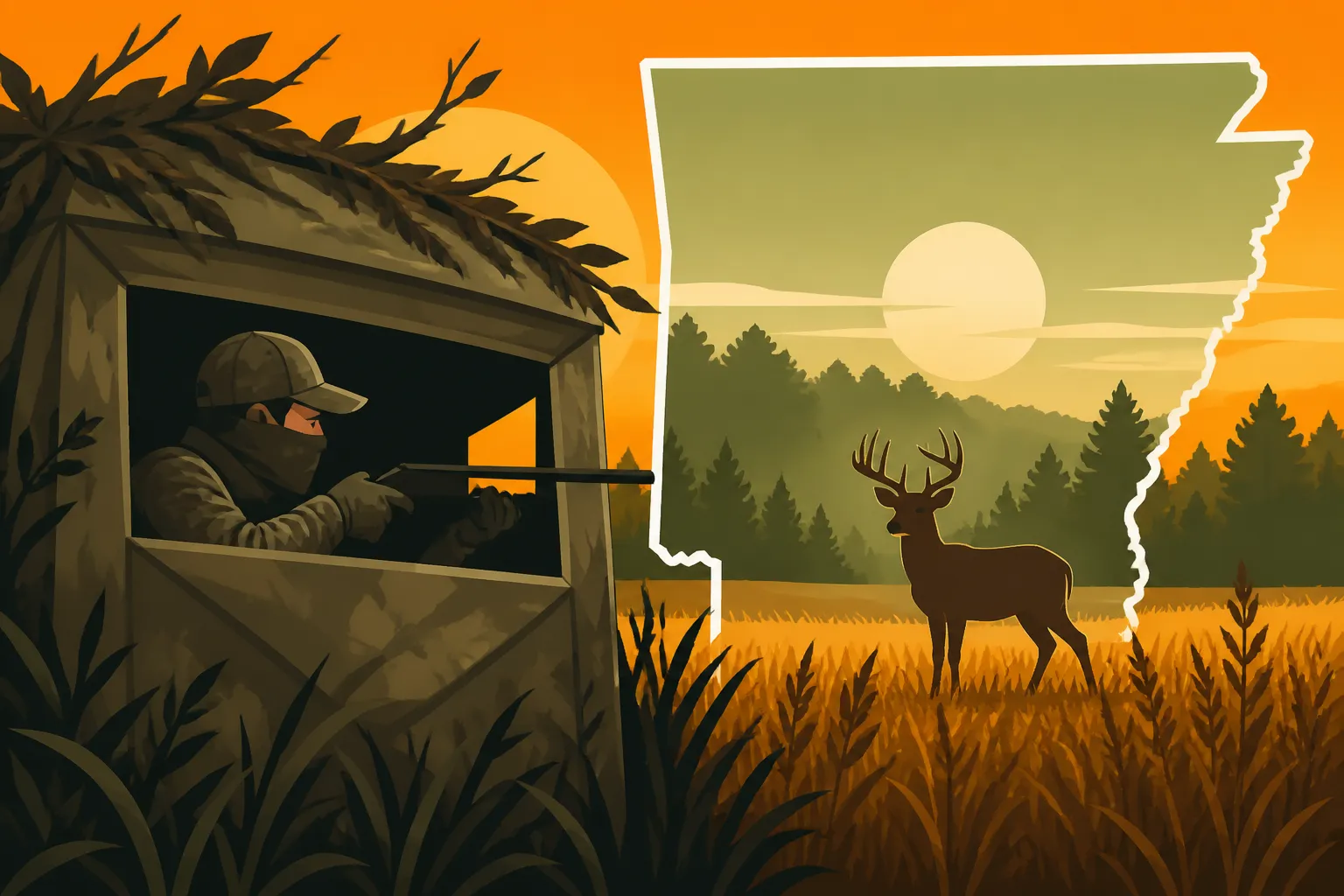
One of the biggest selling points of a ground blind is the unparalleled concealment it provides. Unlike a treestand where your silhouette can still be picked out against the sky or tree trunk, a well-brushed ground blind completely breaks up your human form. The dark interior, often combined with shoot-through mesh windows, makes it nearly impossible for game animals to see you, even at relatively close distances.
This superior concealment allows for a level of movement inside the blind that would be unthinkable in a treestand or while sitting in open cover. Do you need to stretch your legs, check your phone, grab a snack, or even tend to a restless child? A ground blind offers the freedom to do so without spooking nearby game. This is especially crucial during long sits for wary animals like mature bucks or when hunting with young hunters who need to move around. It's about comfort and stealth, combined.
Adapting to Diverse Terrain
Ground blinds offer incredible versatility, allowing you to adapt to almost any terrain or cover scenario you encounter on an Arkansas WMA. Think about it: a treestand requires a suitable tree, which often means mature timber. But what if your prime hunting spot is an overgrown cutover, a dense thicket, a CRP field edge, or even a strategic opening near a food plot where no mature trees exist?
This is where ground blinds shine. They can be deployed virtually anywhere, from the edge of a flooded field to a dense pine plantation or a rocky Ozark hollow. This adaptability opens up countless hunting opportunities in areas that would be impossible to hunt from an elevated position. Using advanced mapping tools like those offered by GoHunt, you can identify these overlooked pockets and precisely place your blind for maximum effectiveness, regardless of the tree cover. If you're looking for how to effectively hunt Hunting Ozark Ridges and Hollows for Deer, a blind can be a perfect tool.
Strategic Setup and Deployment for Success
Simply owning a ground blind isn't enough; its effectiveness hinges on strategic setup and thoughtful deployment. On pressured Arkansas WMAs, every detail matters, from where you place it to how you get in and out.
Location, Location, Location: Scouting Key Areas
Before you ever think about setting up a ground blind, you absolutely need to dedicate time to Scouting Arkansas Public Land Before Season. This isn't just a casual walk-through; it's a deep dive into understanding the landscape and the animals' habits. Utilize aerial maps, like those found on GoHunt's platform, to identify natural funnels, pinch points, bedding areas, preferred food sources (like white oak acorns or persimmon trees), and water sources. Look for subtle terrain features that might direct animal movement, such as an old fence line, a slight rise in elevation, or a creek crossing.
Once you’ve identified a promising area on your map, get boots on the ground. Look for fresh sign: tracks, rubs, scrapes, and droppings. Observe where deer or turkeys are entering and exiting different areas. Pay close attention to prevailing wind directions in your chosen spot. You need to visualize how the wind will carry your scent and ensure your blind placement keeps it away from where you expect game to appear. Your ideal spot combines good game sign, strategic cover, and a favorable wind.
Brushing In Your Blind for Maximum Effectiveness
Dropping a pop-up blind in the middle of a field or a sparse woods and expecting success is a surefire way to spook every animal in the vicinity. The blind, initially, is an anomaly in the landscape, and wary WMA animals will notice it immediately. The key to success is "brushing in" your blind, naturalizing it with local vegetation so it blends seamlessly into its surroundings.
Gather branches, logs, tall grasses, and leaf litter from the immediate area (without violating any WMA rules about cutting live vegetation). Weave these materials into the blind's exterior, especially around the base and corners, to break up its hard lines and artificial silhouette. Don't just pile it up; make it look organic, like a natural part of the habitat. The more effort you put into making it disappear, the more comfortable game will be approaching it. If you're setting up near a field or water, think about how to create a natural-looking blind, much like when Brushing In a Blind on a Levee.
Ideally, if WMA rules permit, set your blind up a few days or even a week before you plan to hunt. This gives animals time to acclimate to its presence and view it as a harmless part of the environment. If you can't leave it out, spend extra time on the morning of your hunt meticulously brushing it in.
Mind Your Entry and Exit Routes
Even the best-placed and brushed-in ground blind can be compromised if you don't pay careful attention to your entry and exit routes. This is arguably one of the most overlooked aspects of public land hunting. Every time you walk to or from your blind, you're leaving a scent trail and potentially disturbing the area.
Plan your routes to minimize noise and scent contamination. This often means using natural terrain features as a screen, such as a creek bed, a thick ridge line, or a dense stand of pines. Try to approach and depart against the wind, or at least perpendicular to where you expect game to be. Avoid walking through bedding areas or heavily used travel corridors. In some cases, especially when hunting Entry Routes Through Flooded Timber, you might need waders and a boat or kayak to minimize your footprint. Always move slowly and quietly, especially in the pre-dawn darkness or post-sunset twilight when game animals are most active and likely to detect you.
Best Practices and Advanced Tips
Beyond the basic setup, there are several best practices and advanced tips that can significantly boost your success when using a ground blind on an Arkansas WMA. These nuances can make all the difference when dealing with pressured animals.
Scent Control and Noise Discipline
While a ground blind offers excellent visual concealment, it's not a magical force field against scent or noise. Scent control remains paramount. Always shower with scent-eliminating soap, wear clean hunting clothes, and use scent sprays. Even inside a blind, your human odor can escape through windows and seams, especially if the wind swirls. Understanding Wind and Thermals in Ouachita Hollows can be particularly helpful, even in a blind. Pay attention to how air currents move in your specific location.
Noise discipline is equally critical. Opt for silent zippers on your blind and clothing. Bring only essential gear, and arrange it inside the blind so you can access it quietly. A comfortable, silent chair is a must – nothing ruins a sit faster than a creaky seat. Minimize all movement; even a slight shift of position can be noticed by a keen-eyed deer if you're too close to a mesh window. Your goal is to be an invisible, silent predator.
Practice Makes Perfect: Shooting From a Blind
Shooting from inside a ground blind presents unique challenges compared to an open-air treestand or still-hunting. The confined space, the shoot-through mesh, and the limited shooting lanes all require practice. Don't wait until opening day to find out if your broadhead flies true through mesh or if you can comfortably draw your bow without hitting the blind walls.
Set up your blind in your backyard or a safe shooting area and practice shooting from all possible angles and through different window configurations. Pay close attention to how your arrow or bullet interacts with the mesh – some meshes can deflect projectiles, especially broadheads, if not shot cleanly. Adjust your bow or rifle rest height to ensure a comfortable and stable shooting position. Also, consider the lower light conditions inside the blind; practice target acquisition in varying light, especially during dawn and dusk. Ensure you're familiar with the Legal Firearms for Arkansas Deer and how they handle within the confines of your blind.
Understanding WMA Regulations and Ethics
Before deploying your ground blind, it's absolutely essential to consult the Arkansas Game and Fish Commission's (AGFC) regulations for the specific WMA you plan to hunt. Rules regarding Arkansas WMA Rules and Permits can vary greatly from one area to another. Some WMAs may prohibit leaving blinds unattended overnight, while others might allow it for a specific duration. There might be restrictions on the type of material you can use for brushing in or even rules about the color of your blind.
Always check the rules concerning Blinds and Stands on Arkansas Public Land. Disregard for these regulations can result in fines, loss of hunting privileges, and even the confiscation of your equipment. Beyond the rules, practice good public land ethics. Don't crowd other hunters, respect marked boundaries, and always pack out everything you pack in, leaving no trace behind. If you leave your blind out, secure it properly to prevent it from blowing away and becoming litter.
Here's a quick comparison of ground blinds versus treestands on Arkansas WMAs:
| Feature | Ground Blind (Pop-Up) | Treestand (Hang-On/Climber) |
|---|---|---|
| Concealment | Excellent (full enclosure, dark interior) | Good (elevated, breaks silhouette, but still exposed to sides) |
| Movement | High (can shift, stand, adjust without detection) | Low (limited movement, subtle shifts) |
| Versatility | High (can be set almost anywhere with cover) | Moderate (requires suitable trees) |
| Setup Time | Fast (pop-up takes minutes) | Moderate to long (climbing, hanging, or finding suitable tree) |
| Portability | Moderate (can be bulky to carry long distances) | High (climber is one unit, hang-ons require sticks) |
| Wind/Rain Protection | Excellent (sheltered from elements) | Minimal (fully exposed) |
| Sight Lines | Horizontal (requires clear shooting lanes) | Elevated (over some brush, wider field of view) |
| WMA Regulations | Must check specific WMA rules for leaving overnight, brushing, etc. | Must check specific WMA rules for screw-in steps, cutting limbs, duration. |
| Visibility to Game | Very low if properly brushed in and camouflaged | Moderate to low, depending on height and background |
Disclaimer
The information provided in this guide is for general informational purposes only and does not constitute legal advice. Hunting regulations, seasons, and rules for Arkansas Wildlife Management Areas (WMAs) are subject to change. It is the responsibility of every hunter to consult the most current Arkansas Game and Fish Commission (AGFC) regulations and WMA-specific rules before engaging in any hunting activities. Always prioritize safety and ethical hunting practices.