Coyote Calling in Arkansas Farm Country
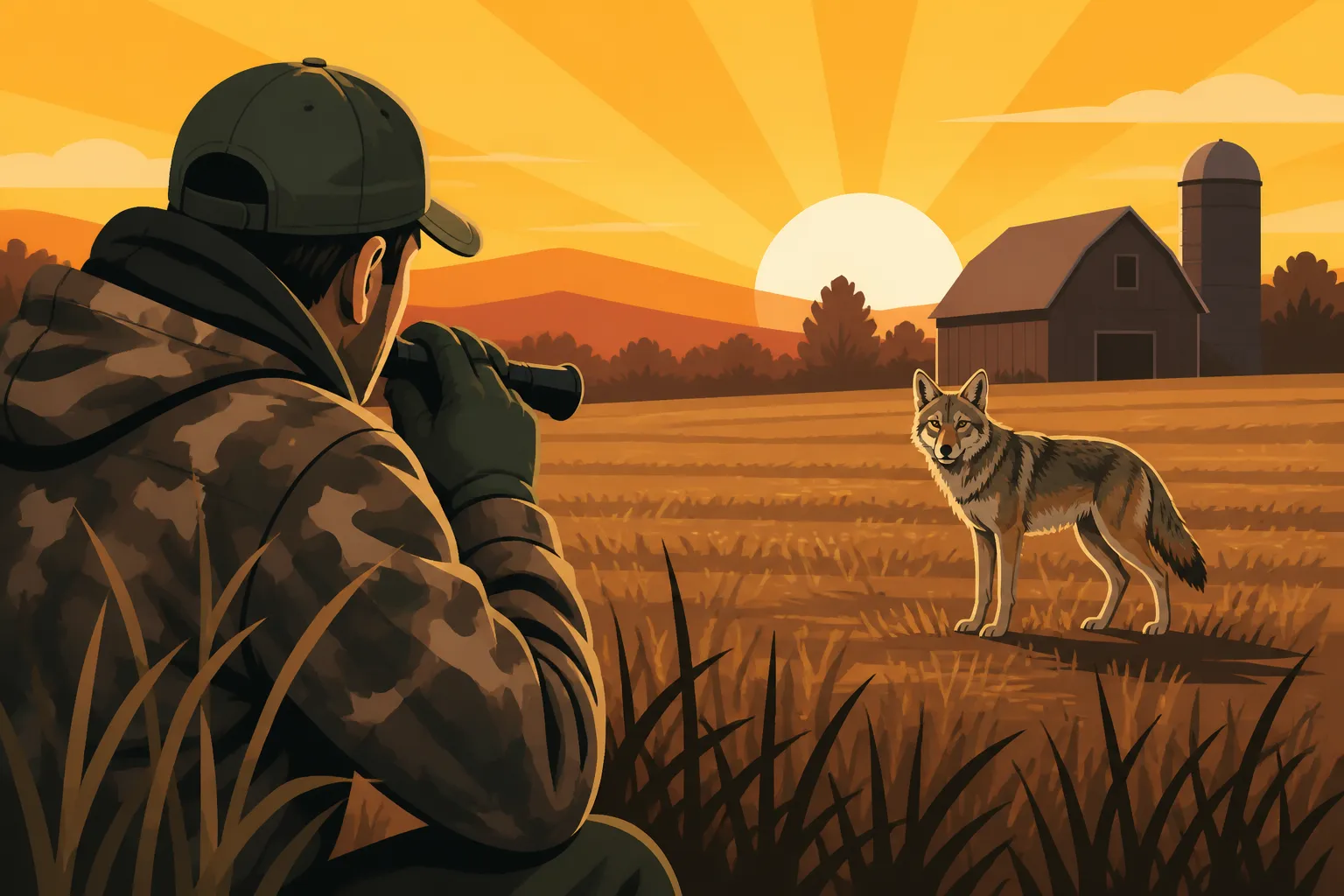
The constant battle against coyotes in Arkansas farm country is a very real, often frustrating, part of rural life. Farmers see their livestock threatened, especially calves and lambs, and sportsmen worry about the impact on deer fawns and small game populations. These wily predators are incredibly adaptable, thriving in the patchwork of fields, timber pockets, and brushy draws that define much of our agricultural landscape. If you’ve spent countless hours trying to outsmart these intelligent canids, only to be met with empty stands, you know the challenge. This guide is designed to help you understand, locate, and effectively call coyotes in Arkansas's unique farm settings, turning those frustrating outings into successful hunts.
Understanding Coyote Behavior in Agricultural Landscapes
Coyotes aren't just surviving in farm country; they're truly thriving. The environment provides a smorgasbord of food and an intricate network of cover, making them formidable adversaries for hunters. Before you even think about setting up a call, it's crucial to put yourself in a coyote's paws and understand their daily grind.
Why Farm Coyotes Flourish
One of the biggest frustrations for landowners and hunters alike is just how quickly coyotes seem to multiply and adapt. It's not magic; it's simply a perfect storm of resources. Farm fields, woodlots, and the general lack of human pressure in certain pockets create an ideal habitat. For starters, food sources are abundant. Think about the massive rodent populations—mice, voles, rats—that thrive in overgrown fencerows, hayfields, and grain storage areas. Rabbits are another primary food source, and Arkansas farm country is absolutely crawling with them, especially along brushy ditches and field edges. Then there are the larger targets: deer fawns during the spring and early summer, turkey poults, and unfortunately, even domestic livestock like young calves and chickens. This constant buffet means coyotes don't have to travel far or work too hard to fill their bellies, leading to larger, healthier populations.
Beyond food, farm country offers diverse and often overlooked cover. This isn't just vast, unbroken timber, but a mosaic of habitat types. Conservation Reserve Program (CRP) fields, with their thick stands of grasses and forbs, are absolute sanctuaries. Timber strips along creeks, drainage ditches, and fencerows provide excellent travel corridors and denning sites. Even standing row crops like corn or soybeans can offer incredible concealment for coyotes, allowing them to move unseen across open landscapes. They use these features to avoid detection, ambush prey, and escape pressure. If you've been wondering why you're seeing more coyotes near your property, it’s probably because they've found the perfect balance of food, water, and security right there.
Daily and Seasonal Movements
Coyotes are creatures of habit, but those habits shift based on the season, time of day, and agricultural activity. In farm country, their movements are heavily dictated by the edges and transitions. You'll often find them patrolling field edges where the timber meets the open ground, or along fencerows and drainage ditches that offer both concealment and easy travel. These linear features act like highways for coyotes, connecting different hunting grounds and secure bedding areas. They'll use these routes to investigate new smells, check for easy meals, and move between their core territories.
During the warmer months, especially when crops are standing tall, coyotes will readily bed down right within a cornfield or a dense hayfield. It offers shade, protection from predators (though they don't have many), and proximity to food. Once crops are harvested, their patterns can change dramatically. They might shift to thicker timber blocks, marshy areas, or newly grown cover crops. Their activity also peaks during dawn and dusk, much like deer, but they are opportunistic and will hunt at any time if the hunger or opportunity strikes. During the rut (breeding season, typically January-March in Arkansas), you'll hear and see more daytime activity as males search for females, and pairs consolidate their territories. Understanding these shifts is key to knowing where to set up and when. For instance, knowing how the Arkansas rut peaks by zone can give you insight into when coyotes might also be most active in a given area.
Essential Gear for Successful Calling
Hunting coyotes in farm country is a gear-intensive endeavor, but not necessarily expensive. Having the right tools, and knowing how to use them, will significantly increase your odds of success against these sharp-witted predators.
Calls: Electronic Versus Manual
The heart of coyote hunting is the call itself. You have two main categories: electronic and manual. Both have their place, and many experienced callers carry a mix.
Manual calls, like open reed and closed reed calls, require skill and practice. Open reed calls are incredibly versatile, allowing you to mimic a wide range of sounds from rabbit distress to fawn bleats, and even coyote vocalizations like howls and barks, all with subtle changes in your mouth and hand position. Closed reed calls are simpler to use, often designed for a specific sound like a cottontail distress, and are great for beginners. The biggest advantage of manual calls is their portability and the immediate feedback you get, allowing for dynamic adjustments in tone and volume. However, consistency and realism come with practice. You can find excellent manual calls from brands like Primos, and they’re indispensable for quick adjustments or when an electronic call battery dies.
Electronic calls are incredibly popular for a reason: realism, volume, and variety. These devices can store dozens, even hundreds, of different sounds—everything from a dying rabbit to a coyote pup in distress, a lone howl, or a pack serenade. Many models come with remote controls, allowing you to place the speaker away from your position, drawing the coyote's attention away from you. This is a huge advantage, especially for wary farm coyotes who might circle downwind. Brands like Foxpro and Lucky Duck are well-known for their quality e-callers. The downside? They require batteries (always carry spares!), can be pricey, and if you're not careful, the sound can be too static or repetitive, educating the coyotes. For targeting pressured animals, an electronic call’s ability to project sound from a distance is invaluable.
Optics and Firepower
Optics are non-negotiable for coyote hunting. You need a good pair of binoculars (10×42 is a versatile choice) to scan fields, fencerows, and distant treelines for incoming coyotes. A quality spotting scope can also be beneficial for confirming distant movement or identifying tracks. Remember, coyotes are masters of camouflage, and they can appear out of nowhere.
When it comes to firepower, your choice will depend on the typical distances you expect to shoot and the terrain. For wide-open farm fields, a rifle is often preferred. Calibers like .223 Remington, .22-250 Remington, or .204 Ruger are popular for their flat trajectory and minimal recoil. A good scope with adjustable magnification (e.g., 3-9×40 or 4-12×40) is essential. If you're hunting in areas with tighter cover, like brushy ditches or timber strips, a shotgun loaded with heavy loads (e.g., #4 buckshot or TSS in a 12-gauge) can be devastating at closer ranges. Suppressors are also becoming increasingly popular, not just for hearing protection, but because they reduce the muzzle blast that can spook other coyotes in the area or alert non-target animals. No matter your choice, knowing your effective range and practicing regularly is paramount. You'll also want comfortable camouflage clothing that breaks up your outline, and a good set of shooting sticks or a bipod for steadying your shot.
Mapping and Scouting Tools
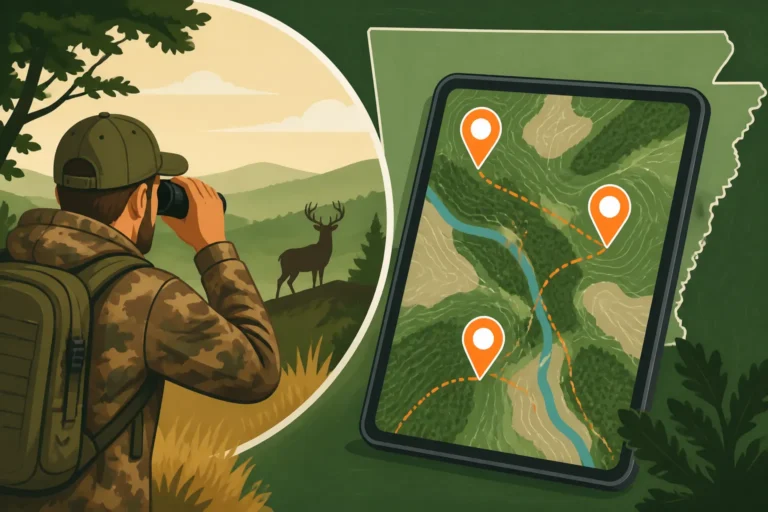
In Arkansas farm country, knowing the lay of the land is half the battle. This isn't just about general knowledge; it's about detailed, almost forensic, understanding of your hunting area. Modern mapping tools are absolute game-changers. Platforms like GoHunt allow you to zoom in on aerial photos, identifying key features that coyotes will utilize. You can pick out those subtle drainage ditches that act as travel corridors, the isolated brush piles in the middle of a field, or the exact boundaries of a dense CRP tract. This digital scouting saves you countless hours of walking around and potentially spooking animals.
Before you ever step foot on the property, use these tools to map out potential stand locations based on prevailing winds, sun direction, and expected approach routes for coyotes. Look for pinch points, funnels, and areas where multiple habitat types converge. Understanding the terrain, especially if you're hunting on land you don't own, is also vital for things like Asking an Arkansas Landowner for Permission. You can use these mapping apps to mark property lines, helping you avoid accidental trespass and maintaining good relationships. This meticulous planning ensures you maximize your time and effort in the field.
Strategic Setups and Calling Techniques in Farm Fields
Effective coyote calling is a chess match, not a game of checkers. It requires careful planning, a deep understanding of the environment, and the ability to adapt your tactics on the fly. The right setup and a nuanced calling sequence can make all the difference, especially when dealing with intelligent, pressured coyotes.
Reading the Landscape for Optimal Stands
Your setup is perhaps the most critical component of a successful call. You need to pick a spot that gives you a clear view, a safe shooting lane, and, most importantly, keeps you hidden. Always consider the wind. Coyotes almost always try to circle downwind of a call to scent check what they're approaching. You want to set up so that you have a shot before they can get your scent. This means positioning yourself so the wind is blowing from the intended approach of the coyote towards you, but they can't get behind you without being exposed. Often, this involves using natural barriers like a thick fencerow, a stand of trees, or even a large hay bale as a backdrop to break up your silhouette.
Elevated positions can be advantageous in flatter farm country, giving you a wider field of view. A slightly elevated knob, the edge of a timber block, or even a well-placed ground blind can work wonders. When you approach your chosen stand, do so quietly and against the wind, minimizing your scent and visual disturbance. Think about where the sun will be – you want it at your back or to the side, never directly in your face, which can obscure your vision and make it harder to spot an incoming coyote. Consider the angles they might approach from, and ensure you have clear shooting lanes. You might even use a simple ground blind setup, similar to techniques used for Using a Ground Blind on an Arkansas WMA, for added concealment in open fields.
Varying Your Call Sequence
Once you're set up, it's time to call, but don't just blast away. Start softly. Think about a subtle rabbit squeal or a few quiet pup whines. This allows any close-by coyotes to approach without being immediately spooked by an overwhelming sound. If nothing responds after a few minutes, gradually increase the volume and intensity. Mix in different sounds. A rabbit distress call is a classic, but don't be afraid to intersperse it with a few coyote howls (especially during the breeding season) or pup distress calls. The goal is to create a realistic scenario – a struggling prey animal, or an intruder in their territory.
A common sequence might look like this:
- Opening: 1-2 minutes of soft, intermittent prey distress.
- Middle: 3-5 minutes of louder, more consistent distress calls, potentially mixed with a short coyote challenge howl if you think there's a dominant animal.
- Latter: 1-2 minutes of pup distress or whines, followed by silence.
The "stand duration" is crucial. Many hunters pack up too early. I recommend staying at least 20-30 minutes per stand, sometimes longer, especially if it’s cold or windy. Coyotes can take their sweet time to approach, often circling far out before committing. Always be vigilant during silent periods; that's often when they slip in. And remember, don’t be afraid to experiment with the volume; sometimes less is more for Rattling Volume in Thick Cover, and the same can apply to coyote calls in subtle farm country.
Dealing with Wary Farm Coyotes
Farm coyotes, especially those that have heard calls before, can be incredibly wary. They've likely been shot at, seen traps, or simply learned to associate certain sounds with danger. The key here is to adapt. One of the most effective strategies is to use shorter stands and move more frequently. Instead of a 30-minute stand, try 10-15 minutes and then move to a new location a few hundred yards away, approaching from a different angle. This reduces the chance of a coyote circling you and catching your scent.
Also, vary your calls. If you've been using rabbit distress all season, switch to bird distress, rodent squeaks, or even a subtle fawn bleat. The element of surprise is your friend. Don't be afraid to use coyote vocalizations, like a lone howl or interrogation howls, to try and get a response from a dominant male. Sometimes, simply finding new ground that hasn't been pressured is the best solution. Utilizing mapping tools like GoHunt to find those isolated pockets of cover on larger farms can pay huge dividends. These areas might be harder to access, but often hold less educated coyotes.
Adapting to Different Farm Country Scenarios
Arkansas farm country isn't uniform; it's a diverse tapestry of row crops, pastures, timber breaks, and water features. Each presents its own unique set of challenges and opportunities for the coyote caller. Being able to adapt your strategy to the specific conditions you encounter is paramount to success.
Calling in Row Crops (Corn, Soybeans, Rice)
When row crops like corn, soybeans, or even rice are standing tall, they become fortresses for coyotes. These fields offer incredible concealment, allowing coyotes to move unseen and unheard. This presents a double-edged sword: coyotes feel secure, but it's incredibly difficult for a hunter to spot them until they're very close.
In this scenario, you need to think about access points and edges. Roads, turn rows, irrigation ditches, and the perimeter where the crop meets timber or a fencerow are your best bets. Set up where you have a clear view down a long row or across an open section. Place your electronic call 50-75 yards out into the field, facing the direction you expect coyotes to come from, drawing their attention away from your hiding spot. Use loud, aggressive distress calls initially to penetrate the dense foliage. If the coyote is moving within the crop, they might only hear the sound when they're very close to the edge. Be prepared for a quick shot, as they can pop out of the cover rapidly. Remember that even deer use these fields, so adapting strategies from Hunting Standing Corn and Beans in the Delta might provide insight into movement patterns.
Hunting Near Livestock and Residential Areas
Hunting coyotes in areas close to livestock or residential properties requires an extra layer of caution, ethics, and communication. Your priority must be safety: knowing your backstop, being absolutely certain of your target, and understanding that a missed shot or a ricochet can have serious consequences. Always use ammunition that is appropriate for the terrain and expected shot distance – avoiding over-penetration is key.
Before you even consider calling near livestock, have a clear conversation with the landowner. Understand their property boundaries, where their animals are located, and any specific concerns they might have. They'll appreciate your diligence. When setting up, choose locations that face away from homes or pastures, giving you a safe shooting angle into open fields or timber. Acoustic considerations are also important; your call should be loud enough to attract coyotes but not so loud that it disturbs neighbors. For Predator and Furbearer Hunting in Arkansas, responsible hunting means being a good neighbor and ambassador for the sport.
Post-Harvest Strategies
Once the crops are cut and the fields are bare, the landscape changes dramatically, and so do coyote patterns. The thick cover they once relied on is gone, forcing them to use alternative sources of concealment like fencerows, drainage ditches, brush piles, and timber blocks. This is often an excellent time to hunt, as coyotes are more exposed and easier to spot.
Look for fresh sign—tracks, scat, and active dens—along the edges of these newly exposed fields. These indicators will tell you where coyotes are still active. Focus your calling efforts on those remaining pockets of cover. In stubble fields, coyotes might be more inclined to travel out in the open, especially during low light, but they’ll still gravitate towards the security of a ditch or woodline. Set up on the downwind side of these features, giving yourself a commanding view across the open field. This is where your long-range optics and rifle will shine, as coyotes may hang up at a distance, trying to assess the situation before committing to the call.
| Coyote Vocalization/Prey Call | Sound Description | Best Time to Use | Notes |
|---|---|---|---|
| Cottontail Distress | High-pitched, frantic squealing | Year-round, especially effective in early season | Universal prey call, great for drawing in curious coyotes. |
| Fawn Distress | Nasal, pleading bleat | Spring/early summer (fawning season) | Highly effective when fawns are vulnerable. |
| K-9 Howls (Lone Howl) | Long, drawn-out howl | Year-round, especially during breeding season | Announce presence, challenge territorial coyotes. |
| Interrogation Howl | Shorter, sharper howls | Year-round, to locate or challenge | Used to elicit a response from distant coyotes. |
| Pup Distress/Whines | High-pitched, urgent cries | Spring/early summer (denning season) | Often brings in protective adult coyotes. |
| Mouse/Vole Squeaks | Small, subtle, high-pitched squeaks | Year-round, especially effective for wary coyotes | Great for close-range work or finishing a hung-up coyote. |
| Bird Distress | Shrill, frantic chirping | Year-round, especially effective in fall/winter | Good alternative if coyotes are educated to rabbit calls. |
| Coyote Challenge Barks | Aggressive, sharp barks | During breeding season, or to challenge rivals | Can provoke a territorial coyote to investigate. |
Remember, the goal is to paint a realistic audio picture for the coyote. By varying your sounds and adapting to the specific farm environment you're hunting, you can significantly increase your chances of calling in and harvesting these cunning predators. Good luck out there, and stay safe!
Disclaimer
Always consult the latest Arkansas Game and Fish Commission (AGFC) regulations before heading afield. Hunting laws and seasons can change, and it is every hunter's responsibility to be informed and compliant. This guide is for informational purposes only and does not supersede official regulations.