Rattling Volume in Thick Cover
It's frustrating, isn't it, when you've done all the scouting, found the perfect thicket where you know a big buck is bedded, and then you try to rattle, and it just feels… ineffective? Many hunters struggle with how to properly use rattling antlers or calls in really dense cover, especially here in Arkansas where we've got everything from the gnarled hardwoods of the Delta to the steep, brushy hillsides of the Ozarks. This guide is all about mastering the art of rattling in close quarters, focusing on how to adjust your volume and technique to pull deer out of the nastiest spots.
The Unique Challenges of Rattling in Dense Arkansas Cover
Rattling, at its heart, is an attempt to mimic the sounds of bucks fighting, which can ignite a dominant buck's territorial instinct or a curious younger buck's desire to check out the commotion. But when you're dealing with the kind of thick, tangled cover found in a dense pine plantation or a years-old cutover here in Arkansas, that sound often struggles to penetrate. It’s not like an open hardwood bottom where sound carries. In these spots, sound absorption is a real problem, and your typical "full-volume" rattling sequence might actually be working against you.
Sound Travel and Limited Visibility
Imagine you're trying to whisper a secret across a crowded, noisy room versus a quiet, empty hallway. That's essentially the difference between rattling in open woods and rattling in a jungle-like thicket. Leaves, branches, small saplings, and dense underbrush all act as sound dampeners, breaking up and absorbing the sound waves. This means that a buck might be just 60 or 70 yards away, but your aggressive, loud rattling sequence could sound like little more than a distant, muted clatter by the time it reaches his ears. It’s not just about getting the sound to him, but getting it there distinctly enough to pique his interest.
Compounding this issue is the limited visibility. In thick cover, even if a buck hears your rattle, he might not be able to immediately pinpoint the source or see what's happening. Deer rely heavily on their eyesight, and if they can't see the "fight," they might be hesitant to commit. This is especially true for older, wiser bucks who have likely encountered hunters before. They're not just listening for a fight; they're looking for it. The goal isn't just to make noise, but to create an illusion of a fight he wants to investigate, despite the visual handicaps.
Understanding Buck Behavior in Heavy Security Cover
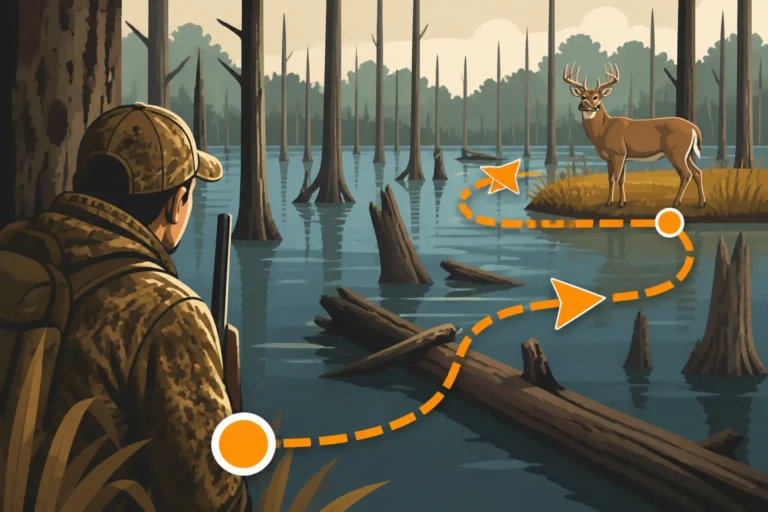
Deer, particularly mature bucks, use thick cover for bedding, security, and travel between feeding areas. These are their sanctuaries. A buck bedded deep in a brush pile or a briar patch isn't just looking for a nap; he's looking for safety. When you rattle in these areas, you're essentially bringing the fight to his living room. His response might be different than if he were out cruising in more open timber. In heavy cover, bucks often move more cautiously, often circling downwind to get a scent check before revealing themselves.
It’s crucial to remember that a buck in thick cover is often already feeling secure. He might not need to risk much to investigate a distant sound. His natural inclination is to stay hidden. The key, then, is to make the sound close enough and realistic enough that it overrides his natural caution. You want to make him think there's an easy win, or a serious threat, right there in his immediate vicinity, not a football field away. This is where understanding Hunting Arkansas Cutovers and Clearcuts can really pay off, as these transition zones are prime spots where bucks will hold up before venturing into more open areas.
Mastering Rattling Volume and Sequence for Thickets and Cutovers
When you're trying to draw a buck out of dense cover, your approach to rattling needs to be far more nuanced than simply crashing antlers together as loud as you can. It's less about raw volume and more about intelligent application and realistic simulation. Think of it as painting with sound, rather than just splashing it around.
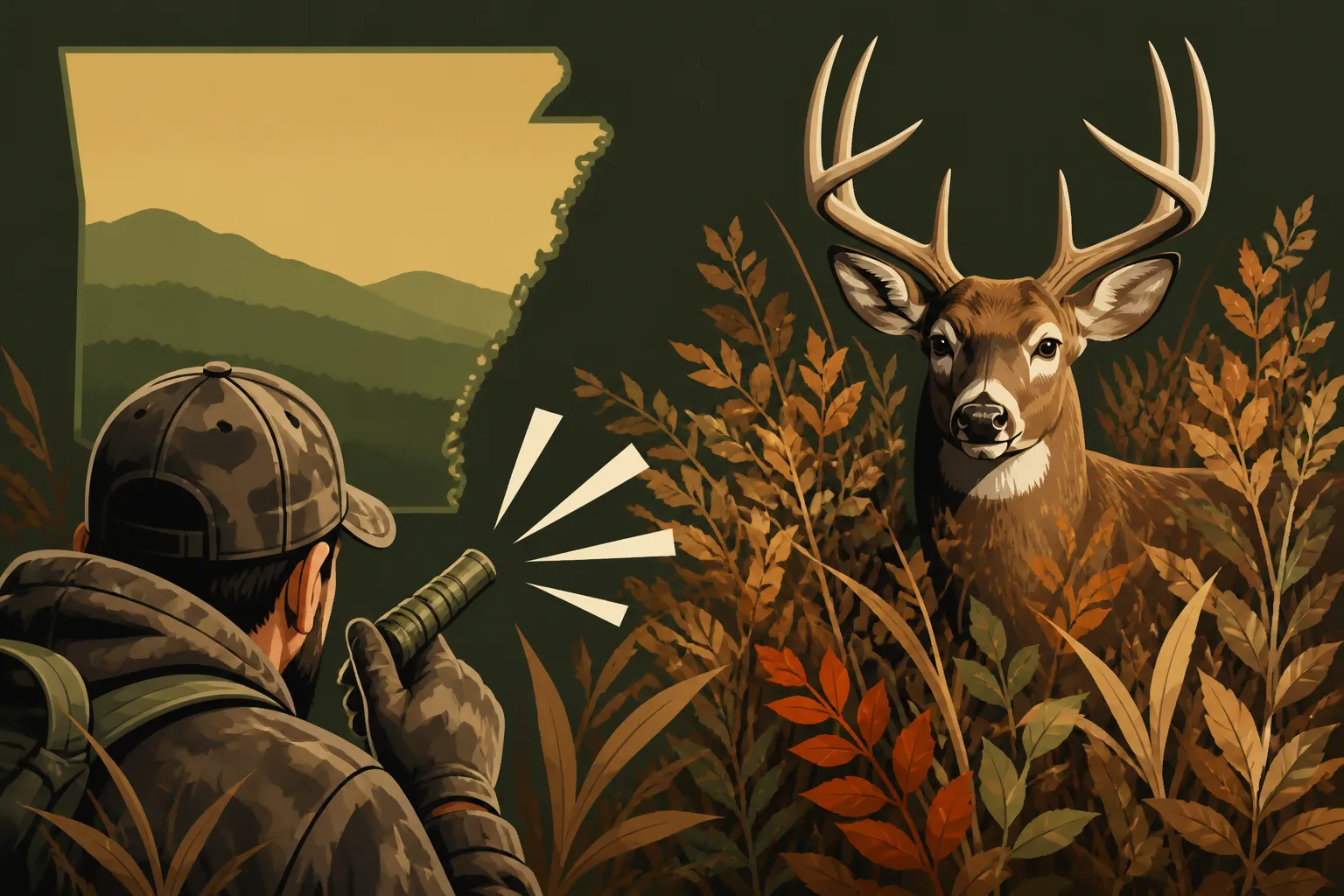
The Art of "Soft" Rattling and Tickling Tines
In dense cover, less is often more. Instead of trying to punch through the thicket with maximum volume, focus on creating a realistic, localized disturbance. This is where "soft" rattling comes in. It's not about being silent, but about controlling the intensity. Start with a light tickle of the tines, mimicking two bucks testing each other out, or sparring. Think about the subtle sounds: the light clacking of antlers, the scraping of bone, a small branch breaking, even a soft grunt. This can often be enough to pique a nearby buck's curiosity without immediately signaling a full-blown brawl that might make him hang up.
After a minute or so of this light sparring, you can escalate slightly. Maybe a slightly harder clack, a quick jab. The idea is to build the intensity slowly, almost like a story unfolding. A good rattling sequence in thick cover might involve 30-60 seconds of soft sparring, followed by a minute or two of silence, then another short, slightly more aggressive burst. This intermittent approach allows a buck to process the sound, move in a bit, and then hear it again, drawing him closer incrementally. You want him to think he's approaching an active fight, not just a static noise source. It’s also important to blend this with other calls, and understanding Grunt Calls in Arkansas River Bottoms can be invaluable here, as soft grunts often accompany sparring.
Using Rattling Bags and Real Antlers Effectively
The choice of rattling tool can significantly impact your success in thick cover. While real antlers certainly offer the most authentic sound, they can also be cumbersome and generate too much volume too quickly if not handled carefully. For really dense spots, a rattling bag or synthetic antlers might actually be a better choice. Brands like GoHunt often feature product reviews and discussions on various rattling tools, which can help hunters decide what fits their style best.
- Rattling Bags: These are excellent for controlling volume. You can easily create soft clacks, scrapes, and light sparring sounds without the risk of an overly loud crash. They’re also much quieter to carry into the woods.
- Synthetic Rattlers: Products like the RattleBag or Knight & Hale Pack Rack are designed to be compact and allow for a good range of sounds, from soft to aggressive. They are generally lighter and less prone to getting tangled in brush.
- Real Antlers: If you use real antlers, choose a smaller, lighter set for thick cover. Focus on the tips of the tines for soft sparring and only bring the bases together for more aggressive, but still controlled, crashes. Always keep them ready but silent until you're in position.
Here's a quick comparison of rattling tools for thick cover:
| Rattling Tool | Pros | Cons | Optimal Use in Thick Cover |
|---|---|---|---|
| Real Antlers | Most authentic sound, resonant | Heavy, bulky, difficult to control volume, can get snagged | Controlled soft sparring, short, sharp clacks, limited aggressive |
| Rattling Bag | Excellent volume control, compact, quiet to carry | Less resonant than real antlers, can sound "synthetic" if overdone | All soft sparring, subtle scrapes, initial curiosity calls |
| Synthetic Rattlers | Good range of sounds, lighter than real antlers, durable | Can still be a bit bulky, some lack full realism | Versatile for soft to moderate intensity, longer sequences |
Strategic Setups and Positioning
Your position when rattling in thick cover is just as important as your volume. You need to maximize the chances of a buck seeing the "fight" once he gets close, and also position yourself for a shot. Here’s how:
- Elevate If Possible: If you're in a treestand, you've got a huge advantage. Sound travels better from above, and you have a broader field of view for spotting an approaching buck. Just be mindful of projecting the sound too far.
- Use Natural Funnels: Identify natural travel corridors, game trails, or pinch points within the thick cover. Set up near these, often on the downwind side, so a buck approaching will pass within shooting range. These are often excellent spots you might find by using a mapping app like GoHunt to analyze terrain.
- Create an Alley: Before you rattle, try to create a small shooting lane or clear out some low-hanging branches in front of you. This gives you a window for a shot and gives the buck a clearer path to investigate.
- Stay Hidden: Always rattle from a position where you are well-camouflaged and can remain perfectly still after your sequence. Any movement will bust you. A ground blind brushed in well can be highly effective in these situations, especially when Using a Ground Blind on an Arkansas WMA where regulations allow.
Remember, a buck that comes to a rattle in thick cover is often moving cautiously. He'll likely try to get downwind of the sound source, so position yourself to intercept him before he gets your scent.
Integrating Soft Rattling with Other Stealthy Tactics
Rattling in thick cover isn't a standalone tactic; it's most effective when combined with other elements of your hunting strategy. It's about building a comprehensive approach that exploits the deer's natural tendencies in these challenging environments.
Pairing With Grunts and Estrus Bleats
The sounds of a buck fight are rarely just antler-on-antler crashes. Often, there are grunts of aggression, grunts of challenge, and sometimes even the excited bleats of a doe nearby. Integrating these calls can significantly enhance the realism of your rattling sequence.
- Buck Grunts: A deep, guttural grunt can signify dominance and challenge. Use it immediately before or after a rattling sequence. A short, soft grunt can also be used as a "closer" if a buck is hanging up, making him think another buck is getting the best of the fight or is about to claim the prize.
- Estrus Bleats: During the rut, the sound of a hot doe can be an irresistible draw, especially to a buck that's just heard a fight. He might think two bucks are fighting over her. A soft estrus bleat just after rattling can often be the final nudge a buck needs to commit. Remember, the timing of Hunting the Arkansas Rut by Zone varies, so adjust your calls accordingly.
The key is subtle integration. You don't want to sound like a circus. A short rattling sequence, followed by a quick grunt, then silence. Or a grunt, then soft rattling, then a bleat. Experiment to see what elicits a response.
Still-Hunting into Rattling Positions
Often, the best way to get close enough to rattle effectively in thick cover is to still-hunt your way into a prime position. This means moving incredibly slowly and deliberately, stopping frequently to scan and listen. As you move, you're looking for fresh sign: rubs, scrapes, and tracks. Once you identify an area where a buck is likely bedded or traveling, you can then set up and initiate your rattling sequence.
Still-hunting allows you to minimize your impact and maximize your chances of surprising a deer. It also lets you assess wind direction and thermal currents more accurately, which is absolutely critical when trying to approach a bedding area. For example, if you're trying to work a Scrape Lines Along a Logging Road that leads into a dense cutover, still-hunting along the edge allows you to approach quietly before you even think about rattling. A mapping tool like the one from GoHunt can highlight these logging roads and dense areas, helping you plan your still-hunting route and potential rattling spots.
The Importance of Patience and Observation
Rattling in thick cover demands an immense amount of patience. Bucks rarely charge in head-first, especially in tight quarters. They will almost always try to circle downwind, often moving slowly, stopping to listen and look. After a rattling sequence, remain absolutely motionless for a good 10-15 minutes. This silence is crucial. It gives the buck time to approach, and it gives you time to spot him before he spots you.
Pay close attention to subtle sounds and movements. The rustle of leaves, a breaking twig, a flicker of an ear – these are all clues. Use your binoculars to pick apart the cover, looking for horizontal lines in a vertical world. A buck might approach silently, standing just inside the thicket, trying to determine what's happening. Your patience in this waiting game is often the difference between success and failure. Don't be too quick to move or call again; let the silence work for you. This patient approach is especially important during Bowhunting Arkansas's Five-Month Archery Season, as you need that buck to commit within close range for a shot.
Common Pitfalls and Pro Tips for Rattling Success in Close Quarters
Rattling in thick cover is a high-risk, high-reward endeavor. While it can draw out a cagey buck, it can also send him running if done incorrectly. Avoiding common mistakes and applying some pro tips can greatly increase your chances of success.
Over-Calling and Moving Too Soon
One of the most common mistakes hunters make, especially in dense cover, is over-calling. They rattle too loudly, too often, or for too long. Remember, the goal is to create a realistic scenario, not a continuous performance. Constant noise can actually make a buck suspicious. He might think something is off, or that the "fight" is just not worth investigating.
Equally detrimental is moving too soon after a rattling sequence. You might rattle for a minute, wait two minutes, and then start packing up or moving. This is a huge error. As discussed, bucks will take their time, often circling, assessing. Give it at least 10-15 minutes, sometimes even longer, especially if you're in truly dense cover like a Hunting a Cutover Two Years After Logging. Many bucks are killed by patient hunters who simply waited an extra five minutes after they thought all hope was lost.
Ignoring Wind Direction and Thermals
In Arkansas, whether you're in the rolling hills or the river bottoms, wind and thermals are constantly at play. Ignoring these factors when rattling in thick cover is a recipe for failure. A buck will almost always try to approach downwind to get a scent check. If your wind is blowing directly into his bedding area, or if a thermal shift carries your scent to him, your hunt is over before it begins.
Always position yourself so that any buck approaching from the thicket will have to pass your shooting lane before he gets downwind of you. This might mean circling around a bedding area to get the optimal wind advantage. Mornings often have sinking thermals, while afternoons have rising thermals. Pay attention to these micro-climates, especially in hilly terrain like when Reading an Ozark Bench for Deer. Use a wind checker constantly to monitor subtle shifts. It’s an easy thing to forget in the heat of the moment, but it’s absolutely critical for success.
Practicing Your Rattling Sequences
Just like any other hunting skill, rattling requires practice. Don't wait until you're in the woods with a big buck on the line to try out your rattling sequence. Practice at home, paying attention to the sounds you're making. Try different intensities, durations, and combinations of antler crashes, scrapes, and grunts. Record yourself and listen back. Does it sound realistic? Does it sound like two bucks actually fighting, or just a random clatter?
Understanding the nuances of different sounds – the sharp crack of tines, the dull thud of bases, the grinding scrape – will give you more control and confidence in the field. Practice your full sequences, including the periods of silence and integrated calls. This preparation will make you a more effective and confident rattler, especially when you need to be subtle and precise in thick Arkansas cover. The more realistic and controlled your sounds are, the more likely you are to convince a wary buck to step out of his security blanket and into your shooting lane.
Disclaimer
Hunting is an activity with inherent risks. This guide provides information for educational purposes only and is not a substitute for professional training, adherence to all local and state regulations, and personal responsibility. Always prioritize safety, respect wildlife, and obtain the necessary licenses and permits before hunting.