Grunt Calls in Arkansas River Bottoms
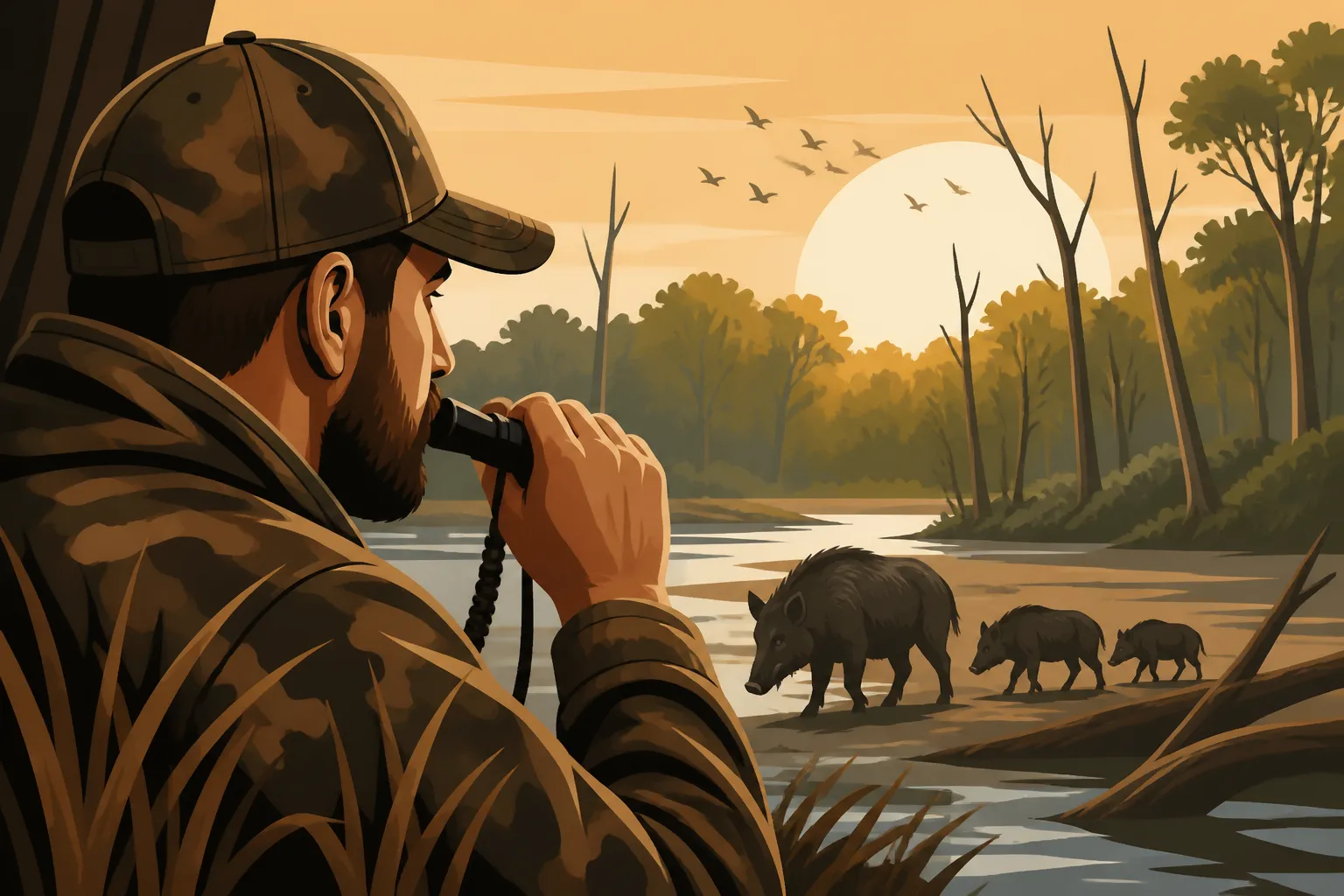
There's nothing quite like the dense, tangled world of Arkansas river bottoms. You're deep in the timber, the air is thick with humidity, and visibility is often measured in yards, not acres. It can be incredibly frustrating to know there are big deer in there, but you just can't seem to get a bead on them or even confirm their presence. This guide is all about cutting through that challenge by leveraging one of the most effective tools in a deer hunter's arsenal for these unique environments: the grunt call. We'll dive deep into how to use these calls to pull those secretive bucks out of the thick cover and into shooting lanes, even in the most challenging conditions.
Understanding the Arkansas River Bottom Environment
Hunting Arkansas river bottoms is a beast of its own. It's not your open hardwoods or pine plantations; it's a world dictated by water, thick vegetation, and often, an abundance of natural food sources that keep deer hidden. To effectively use a grunt call here, you first need to truly grasp what makes these areas tick and how deer navigate them.
Unique Challenges of River Bottom Hunting
The first thing that hits you when you step into an Arkansas river bottom is the cover. It's usually incredibly dense, a mix of briars, vines, young saplings, and mature hardwoods. This creates a few significant challenges. For one, your sightlines are severely limited. A buck can be 40 yards away, and you might only catch a glimpse of a leg or antler tip. This makes visual communication with a deer nearly impossible, pushing the importance of auditory signals.
Another challenge is the ambient noise. Rivers, even when not flooding, have a constant presence – the gurgle of water, wind rustling through dense canopy, and the general hum of a moist environment. This can make it hard for a deer to hear your calls, and for you to hear a deer approaching. Furthermore, the terrain itself can be tricky. Uneven ground, old oxbow lakes, sloughs, and varying water levels create a constantly shifting landscape. You're not just hunting deer; you're hunting the terrain itself, trying to predict where deer can move most easily, which often dictates where they'll respond to a call.
Deer Behavior in These Habitats
Deer, especially mature bucks, are masters of their environment, and river bottoms offer them everything they need: food, water, and security. During the early season, they'll often stick to these areas because of the abundant soft mast like persimmons and hard mast like acorns from red oaks and water oaks, as well as the lush browse. As the season progresses into the rut, these bottomland sanctuaries become hotspots for breeding activity. Bucks will cruise these dense areas looking for does, using natural travel corridors along old creek beds, levees, or slight rises in elevation.
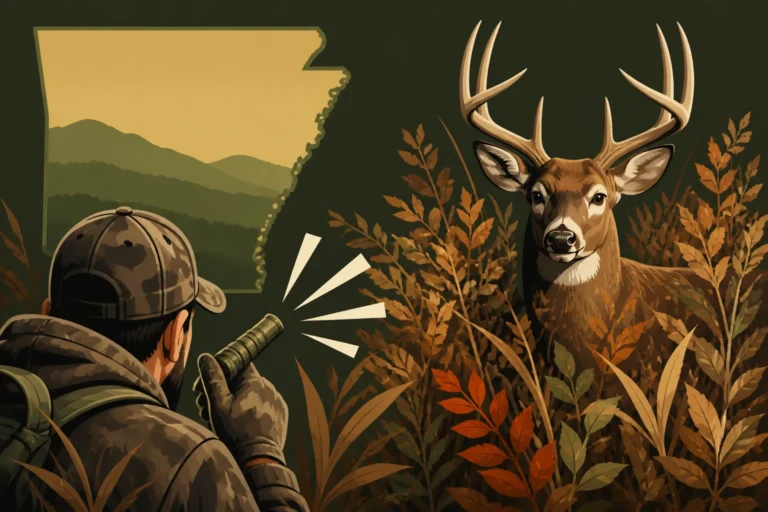
Bedding areas in river bottoms are often in the thickest, nastiest tangles you can imagine, sometimes even on slight islands or humps surrounded by water, giving them an advantage against predators and hunters. Understanding these patterns is key. A buck might be bedded down in a briar patch on the edge of a slough, waiting for a doe to pass by. That's where your grunt call comes in. He might not get up for just any sound, but a well-placed, authentic grunt can tap into his instincts, convincing him that a rival buck or a receptive doe is nearby, making him curious enough to investigate. When you're trying to figure out these travel corridors and bedding spots, tools like the GoHunt app can be invaluable, allowing you to mark water sources, elevation changes, and dense cover areas right from your phone, giving you a better understanding of potential deer movement before you even step foot in the woods.
Mastering the Grunt Call
A grunt call isn't just a toy; it's an instrument. And like any instrument, truly mastering it takes practice, understanding, and a nuanced approach to its application. It's about more than just blowing air through a tube; it's about speaking the language of a whitetail buck.
Different Types of Grunt Calls
When you walk into a sporting goods store, you'll see a dizzying array of grunt calls. They generally fall into a few categories. You've got your fixed-reed calls, which are often simple, easy to use, and produce a consistent sound. These are great for beginners because you don't have to worry about adjusting anything on the fly. Then there are adjustable-reed calls, which usually have a rubber O-ring or a sliding band that allows you to change the pitch, mimicking a fawn, doe, or mature buck with one device. This versatility is fantastic once you get the hang of it, letting you adapt your calling to the specific situation. Finally, some hunters prefer open-reed calls, which require more air control and technique, similar to a duck call, but offer unparalleled realism and range of sound for those who master them.
The choice really depends on your comfort level and how much practice you're willing to put in. For the thick cover of Arkansas river bottoms, an adjustable call often gives you the most bang for your buck, allowing you to fine-tune your grunts to sound like a younger buck or a dominant old warrior, depending on what you think might entice a deer. Experiment with different brands and styles until you find one that feels comfortable in your hand and produces sounds you can control. A call that sounds great in the open woods might be too quiet or too harsh in the dense, sound-absorbing environment of the river bottom, so consider testing them in similar conditions if possible.
Proper Calling Techniques
This is where the art truly comes in. It's not just what you blow, but how you blow it. Volume is critical in river bottoms. You're often dealing with limited visibility and significant ambient noise. You need enough volume to penetrate the thick cover, but not so much that it sounds unnatural or spooks a nearby deer. Start soft, listen, and then gradually increase if you don't get a response.
Cadence and duration are equally important. A single, drawn-out grunt often signals a contented buck, while a series of shorter, snappier grunts can indicate a buck on the move, perhaps chasing a doe, or even a challenge. A common sequence might be 1-3 short grunts, followed by a slight pause. Think about the natural rhythm of deer sounds you've heard in the wild. You don't want to sound like a machine. Varying your calling can make it more realistic. I like to picture what kind of buck I'm trying to imitate or lure in. Is he a young buck looking for trouble, or an older, more dominant animal? This visualization helps dictate the length and intensity of my grunts. Remember, your goal is to mimic a real deer, not just make noise.
Strategic Grunt Calling Scenarios
Effective grunt calling in Arkansas river bottoms isn't about random noise; it's about calculated decisions based on the situation unfolding around you. Each encounter calls for a slightly different approach, and knowing when to pull out your grunt call and what type of grunt to use can make all the difference.
Calling to a Cruising Buck
Imagine this: You're perched in your stand, having carefully selected a spot along a pinch point or travel corridor where deer naturally funnel through the thick river bottom. Perhaps you used your GoHunt app earlier in the season to scout out a good location, identifying these natural funnels. Suddenly, you catch a glimpse of a buck moving purposefully through the trees, head down, on a mission. He's probably cruising for does, and he hasn't seen you. This is prime grunt call territory.
The key here is to get his attention without alarming him. Start with a medium-volume, inquisitive grunt – a "hurrr" sound, almost like a question. If he stops and looks, that's your cue. Stop calling immediately. Let him process the sound. If he continues on his path, you might try another, slightly more aggressive grunt. The goal is to pique his curiosity, making him think there might be a rival buck or a hot doe in your vicinity. Once he changes direction or commits to coming your way, go silent. Let his natural curiosity and the promise of a potential encounter do the rest of the work. Overcalling at this stage can make him suspicious and send him trotting off. Learning to read his body language is crucial here; a buck with his ears swiveling, trying to pinpoint the sound, is a buck you've got on the hook.
Working a Buck in Heavy Cover
This is the classic river bottom challenge. You hear crashing in the thicket, or perhaps catch a fleeting glimpse of a nice rack, but the buck is completely obscured by dense vegetation. You know he's there, but you can't see enough to shoot, and he's not coming out on his own. This requires a more patient and subtle approach with your grunt call.
Instead of loud, aggressive grunts, start with softer, more contented "social grunts." These are less threatening and might just encourage him to take a few more steps to investigate the "other deer" in his sanctuary. If you can, try to simulate some light movement in the leaves with your foot while grunting. The combination of a soft grunt and the sound of deer moving can be incredibly effective in convincing him to emerge from the thick stuff. Give it time; these bucks are notoriously cagey. You might grunt once, wait five minutes, then grunt again. Don't be afraid to try varying your calls – a short "urrp" followed by a slight pause, then another. Sometimes, subtly suggesting a buck is tending a doe can draw him in, as he'll want to investigate the competition. For more general calling techniques in dense areas, a lot of the principles for Rattling Volume in Thick Cover also apply to grunting: less is often more, and realism beats sheer volume.
Complementing Scrapes and Rubs
River bottoms are often littered with deer sign, especially during the rut. Finding active scrape lines along a logging road or a series of fresh rubs on saplings tells you bucks are actively marking their territory and searching for does. This sign offers a perfect opportunity to use your grunt call to reinforce the message.
When you find an active scrape, especially a large primary one, the area around it is already a hub of communication for deer. A few soft, tending grunts can make a passing buck think there's another deer actively working the scrape or checking a nearby doe. You're essentially adding an auditory layer to the visual and olfactory cues already present. If you're Hunting the Peak Rut Week in Arkansas, these areas will be especially hot, and a well-timed grunt can pull a buck in quickly. Similarly, if you find a fresh rub line, position yourself downwind and send out a few medium grunts. A buck making rubs is asserting dominance, and a grunt can be interpreted as another buck doing the same, which might just draw him in to confront the perceived intruder or check for a doe being courted. Integrating your grunt calls with these natural deer behaviors can be incredibly potent, especially when you're Hunting the Delta Rut in January where mature bucks are often still highly active and susceptible to calling.
Common Mistakes and Advanced Tips
Even the most experienced hunters can make mistakes with grunt calls, especially in challenging environments like Arkansas river bottoms. Knowing what to avoid and how to refine your technique can significantly increase your success rate.
Overcalling and Under-calling
This is a delicate balance, and it’s one of the biggest challenges for hunters using any kind of call. Overcalling is perhaps the more common mistake, especially for eager hunters. You get excited, you hear something, and you just keep blowing that grunt call. The problem is, deer are smart. If a buck hears a persistent, unchanging grunt from a stationary position, it's going to make him suspicious. He might circle widely, or simply ignore it, figuring it's not a real threat or an actual deer. In dense cover, overcalling can lock him up, making him stand just out of sight, listening intently, but unwilling to move. He's trying to pinpoint the source, and if it sounds too artificial or too static, he'll likely disappear.
On the flip side, under-calling can be equally detrimental, especially in the noisy river bottom environment. If you only grunt once and then give up, a buck might not even hear you, or if he does, he might dismiss it as a distant sound not worth investigating. The key is to be patient and observant. Start with a series of 1-3 grunts, then wait. Watch for any flick of an ear, a head turn, or subtle movement. If you get no response after a few minutes, try another series, perhaps slightly different in tone or volume. It's an ongoing conversation, not a monologue. Always let the deer dictate the pace of the interaction. Sometimes, even when Hanging a Stand in Bottomland Hardwoods, the ambient noise from the wind or distant traffic might require you to increase your volume more than you’d expect, but always with caution.
Wind, Thermals, and Call Projection
In the ever-shifting environment of Arkansas river bottoms, understanding wind and thermals is paramount for successful grunt calling. Wind directly affects how far your call carries and, more importantly, where your scent travels. You absolutely must position yourself downwind of where you expect the buck to approach. No amount of perfect grunting will overcome a buck catching your scent. If he smells you, the game is over.
Thermals are the rising and falling air currents, especially active in the mornings and evenings. In a river bottom, these can be tricky, as cold air often sinks into low-lying areas (like sloughs and creek beds) in the morning, and warm air rises later in the day. Your grunt call's sound, much like your scent, will travel with these air currents. Therefore, consider how the sound will project. If you're calling into a hollow where cold air is pooling, your sound might not carry as far up the ridge. Conversely, if you're on a slight rise, your call might carry better down into the lowlands. Using a mapping tool like GoHunt can help you visualize elevation changes and predict how thermals might behave, allowing you to choose the optimal setup for both scent control and call projection. This insight is also super important when you're considering factors like Wind and Thermals in Ouachita Hollows, even if you're not in the Ozarks, the principles remain the same for hilly, varied terrain.
Combining Grunts with Other Calls or Tactics
Sometimes, a grunt call alone isn't enough, especially for those hard-to-fool river bottom bucks. That's when you need to get creative and combine tactics. Rattling is a natural companion to grunting. A few aggressive grunts followed by a short, sharp rattling sequence can perfectly simulate a sparring match between two bucks, which is a powerful draw during the rut. After rattling, always follow up with a few more grunts, as if the victorious buck is asserting dominance or chasing off the loser. You can also add a doe bleat into the mix. A doe bleat followed by a tending grunt can make a buck think a hot doe is with another buck, sparking intense jealousy and often prompting him to investigate.
Beyond calling, consider using scents. A well-placed buck or doe-in-estrus scent on a wick near your stand, combined with strategic grunting, can create a highly realistic scenario. The visual of a mock scrape, the smell of a hot doe, and the sound of a challenging buck can be an irresistible combination. Even when still-hunting after a delta rain, a soft grunt, coupled with your careful movement, can sometimes be enough to draw a hidden buck's attention. Remember to always have your bow or gun ready after calling, as responses can be quick and sometimes deer appear from unexpected angles in the dense river bottom cover. Sometimes, even during a strategic Deer Drives in Arkansas Bottomland, a soft grunt after a deer has been bumped might make it pause just long enough for a shot, as it tries to figure out what that unfamiliar sound means.
Disclaimer
Hunting is an inherently dangerous activity. Always prioritize safety, follow all local and state regulations, and obtain proper licenses and permits before engaging in any hunting activity. The information provided here is for educational and informational purposes only and should not be considered a substitute for professional guidance or personal judgment regarding safe hunting practices. Always hunt responsibly and ethically.