Scrape Lines Along a Logging Road
Finding those elusive whitetail bucks can often feel like searching for a needle in a haystack, especially when they aren't actively chasing does. One of the most reliable indicators of a mature buck's presence and activity is a well-used scrape line, and perhaps no place offers a more distinct opportunity to find them than along a logging road. This guide will walk you through how to identify, scout, and effectively hunt these crucial signposts in the Arkansas deer woods.
Understanding Logging Roads as Deer Highways
Logging roads, whether active or long-abandoned, are often overlooked goldmines for deer hunters. They create unique habitat features that bucks, in particular, seem to gravitate towards when establishing their travel patterns and marking their territory.
Why Logging Roads Attract Deer
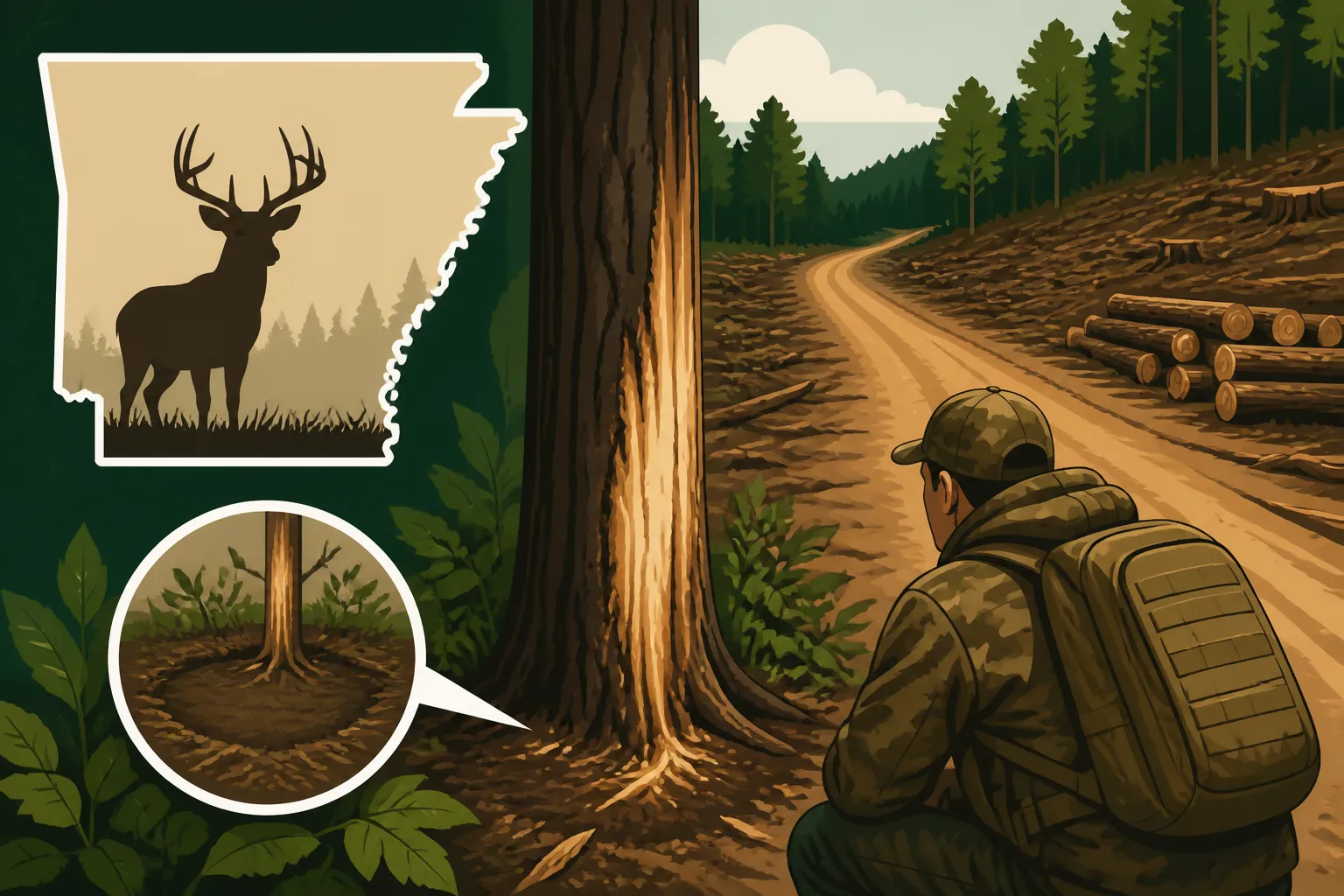
Logging roads cut through dense timber, creating clear travel corridors that deer prefer for efficient movement. Think about it from a deer's perspective: why fight through thick underbrush when there's a relatively open path? These roads become natural highways connecting bedding areas, food sources, and watering holes. But it's more than just ease of travel. The edges created by logging roads are often ecological transition zones, or "edge habitat," which are incredibly attractive to deer. Sunlight can penetrate more easily, promoting the growth of diverse browse, forbs, and mast-producing saplings that provide critical food. The edges also offer a blend of security cover just a few steps into the timber, allowing deer to feed or travel discreetly while still being close to escape routes.
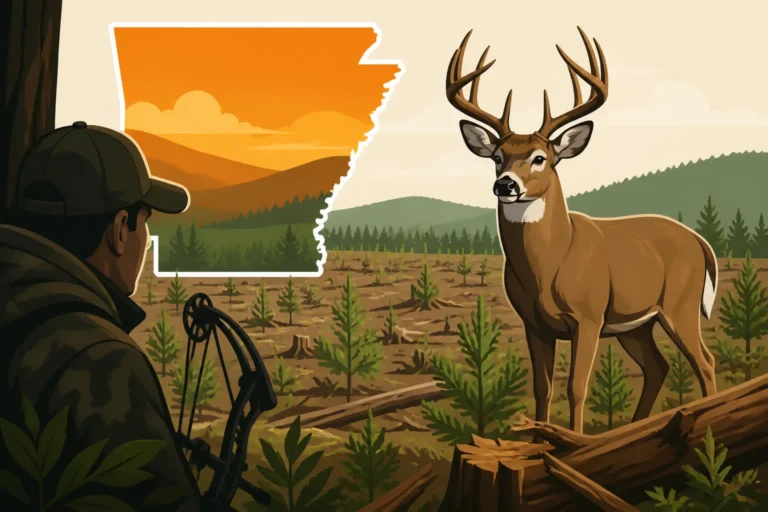
Furthermore, these roads frequently lead to or pass through areas that have been recently logged. As you learn about hunting Arkansas cutovers and clearcuts, you'll understand that these areas, after a few years of regrowth, become incredibly thick and offer exceptional bedding cover and young, succulent forage. Bucks will often use the edges of these clearcuts, with the logging roads providing perfect access points. In areas like the Ouachita National Forest or portions of the Ozark National Forest, these roads can stretch for miles, providing endless opportunities for deer to establish travel routes and, consequently, scrape lines.
Identifying Active Scrapes
When you're walking an old logging road, you'll inevitably see numerous scrapes. The trick, however, is to differentiate between old, dormant scrapes and those that are currently active and being visited by a buck. An active scrape is a clear indicator that a buck is frequently using that specific location. Look for freshly pawed-out bare earth, often a circular patch of disturbed soil about 1-3 feet in diameter, usually under an overhanging branch. This "licking branch" is critical; bucks will rub their pre-orbital glands on it, deposit urine on the exposed dirt, and often chew on it.
The key is "fresh." If the dirt is dark, moist, and free of leaf litter, it's likely active. You might even see fresh hoof prints, often large ones, around the scrape. If there are cobwebs on the licking branch or dry leaves covering the bare earth, it's an old scrape and less likely to be visited regularly. Bucks typically begin making scrapes in the pre-rut phase – usually late September and early October in many parts of Arkansas – as they begin to assert dominance and communicate with does. As the rut intensifies, these scrapes become even more active, serving as crucial communication hubs. Understanding when the Arkansas rut peaks by zone can give you a major advantage in timing your scouting and hunting efforts for these scrape lines.
Scouting Strategies for Logging Road Scrapes
Finding an active scrape line is one thing; understanding how it's being used and when to hunt it requires strategic scouting. This isn't just about stumbling upon a scrape; it's about piecing together the puzzle of a buck's movement.
Timing Your Scrape Reconnaissance
The pre-rut is undoubtedly the prime time for scrape reconnaissance. In Arkansas, this typically means late September through much of October. During this period, bucks are feeling the urge to breed but the does aren't quite ready, leading bucks to create and frequently check scrapes as a way to advertise their presence and condition. If you're scouting Arkansas public land before season, logging roads should be high on your list of areas to check. Look for these early signs of activity. The more scrapes you find along a single stretch of road, especially if they are fresh, the higher the likelihood of a mature buck being in the area.
As the season progresses and the rut intensifies, bucks might spend less time actively working scrapes and more time chasing does. However, they will still check these communication hubs regularly, especially during the morning and evening hours. Don't be discouraged if you find a line of scrapes that seem to go "cold" during the peak of the rut; bucks will often swing back through to see who's been visiting. The colder, post-rut period can also see some scrape activity as bucks continue to scent-check for any late-cycling does.
Tools and Techniques for Effective Scouting
Effective scouting for logging road scrapes involves a blend of boots on the ground and technological assistance. First and foremost, you need a good mapping tool. Applications like GoHunt provide detailed aerial imagery and topographic maps that are invaluable for identifying old logging roads, often appearing as faint lines through the timber. Use these tools to plan your scouting routes, looking for roads that connect different habitat types, such as dense bedding cover with open hardwoods or agricultural fields. Pin potential scrape locations or areas of high deer sign so you can return to them easily.
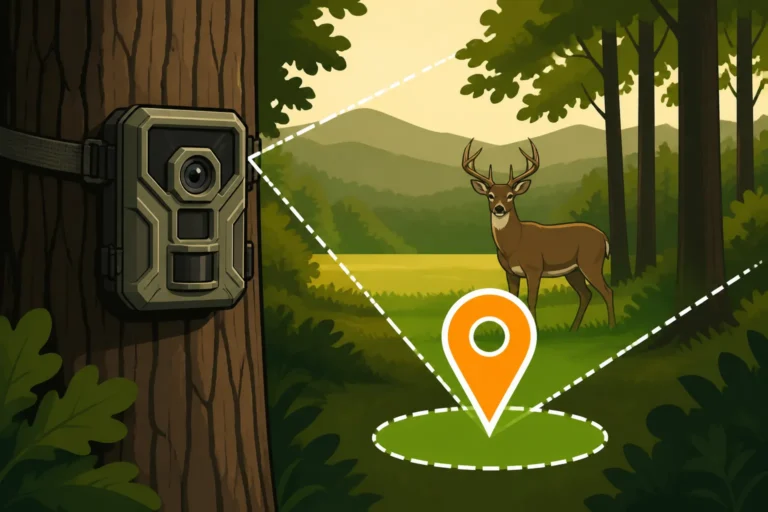
Once you're on the ground, practice meticulous observation. Walk slowly and quietly, scanning both sides of the road. Look for deer tracks, droppings, and rubs, which can indicate the direction of travel and the size of the bucks present. Trail cameras are your best friends here. Place cameras strategically on active scrapes, focusing on the licking branch, but make sure they're far enough back not to spook deer. Check them sparingly, perhaps once a week, to minimize your intrusion. When you do check them, approach and leave quickly, paying close attention to wind direction to avoid leaving human scent directly over the scrape or travel path. Consider placing a camera about 15-20 yards away, angled to capture the entire scrape and any approaching deer. This will tell you not only if a buck is using the scrape, but when and from what direction.
Hunting Strategies Near Scrape Lines on Logging Roads
Once you've identified an active scrape line on a logging road, the real work begins: setting up for a successful hunt. This requires careful consideration of the environment, deer behavior, and your own approach.
Optimal Stand Placement
Hunting directly over an active scrape might seem like the obvious choice, but it can often lead to disappointment. Bucks are incredibly wary, especially around these territorial markers, and will often scent-check a scrape from downwind before approaching it directly. A better strategy is to set your stand or blind where you can intercept the buck before he gets to the scrape or as he leaves. Look for natural funnels or pinch points along the logging road that lead to or from the scrape line. This might be a bend in the road, a thicket that forces deer into a narrow travel lane, or a subtle change in elevation.
Your stand placement should be 20-30 yards downwind of the scrape, if possible, allowing you to cover the scrape and any approach trails without your scent blowing into the deer's path. Consider using a climbing stand or a ladder stand well within the timber, just off the edge of the logging road, to break up your silhouette. For ground setups, a well-brushed-in ground blind on an Arkansas WMA can be highly effective, offering excellent concealment, especially if you're hunting more open logging roads in pine plantations or areas with less mature timber. Always prioritize your entry and exit routes, ensuring you can get to and from your stand without disturbing the area you plan to hunt. For more detailed guidance, consider how to optimize your Treestand Setups in Delta Hardwoods, as many principles apply universally to timbered logging roads.
Calling and Decoying Tactics
Active scrape lines provide an excellent opportunity to incorporate calling and decoying into your hunt plan, especially during the peak of the rut. Rattling and grunting in Arkansas can be incredibly effective when a buck is actively seeking does. If you've got a camera on a scrape, and you see bucks regularly, a short, aggressive rattling sequence followed by some grunts can often pique their curiosity. The key is to sound like two bucks fighting, implying a receptive doe nearby. Position yourself so the sound carries well down the logging road, but be ready for a buck to come in quickly and cautiously.
Decoys can also play a role, but use them with caution. A single buck decoy, placed 20-30 yards from the scrape, facing away from your stand, can draw in an aggressive buck looking to challenge. However, mature bucks are smart, and a poorly placed or unrealistic decoy can spook them. Scent is another powerful tool. Using doe estrus or buck urine around the scrape or on cotton balls hung on nearby branches can enhance the illusion and draw bucks in. Remember that wind is paramount when using scents; ensure they are carried downwind into areas where a buck might approach.
Here's a quick look at the pros and cons of different scrape hunting tactics:
| Tactic | Pros | Cons | Best Time/Situation |
|---|---|---|---|
| Trail Cameras | Provides intel on buck presence, size, and movement patterns; low impact | Requires regular checks; risk of theft/damage | Pre-rut and throughout season for monitoring |
| Stand Placement | Elevated vantage, good concealment, better shot angles | Limited mobility; specific wind requirements; difficult access/egress | Any time, but critical during active rut for interception |
| Ground Blinds | Excellent concealment; weather protection; good for youth/new hunters | Less visibility; can be spotted if not well-brushed; placement critical | Any time, especially on public land or open areas |
| Rattling/Grunting | Can draw in curious or aggressive bucks; stimulates interaction | Can spook wary deer if overdone; requires deer to be in earshot | Peak rut when bucks are actively seeking does |
| Scent Dispersal | Attracts deer by simulating presence of other deer; easy to deploy | Wind dependent; can attract unwanted animals; some scents can be synthetic | Pre-rut to peak rut, used with active scrapes |
| Decoys | Can draw bucks closer; visual appeal | Can spook wary deer; bulky to carry; requires open space for visibility | Peak rut for aggressive bucks in open logging roads |
No matter which tactics you employ, remember that logging roads, while convenient, can also be high-pressure areas, especially on public land. Learning to read Wind and Thermals in Ouachita Hollows, for example, is just as crucial on a logging road as it is deep in the timber. Stay vigilant, play the wind, and keep your intrusions to a minimum for the best chance at success.
Disclaimer
Hunting is an inherently dangerous activity. Always prioritize safety, understand and adhere to all Arkansas Game and Fish Commission regulations, and obtain proper licenses and permits before hunting. The information provided here is for educational and informational purposes only and should not be considered a substitute for professional guidance or personal judgment.