Hunting Bears Over Bait in Arkansas
The thrill of chasing a black bear through the dense forests of Arkansas is undeniable, but let's be honest, finding these elusive creatures can feel like looking for a needle in a haystack. With vast timberlands and bears often traveling great distances, consistently getting an encounter can be a real challenge for even seasoned hunters. This guide is designed to cut through that frustration, walking you through the often-misunderstood world of hunting bears over bait in Arkansas, from understanding the specific regulations to setting up a successful site and executing a ethical shot.
Understanding Arkansas Bear Baiting Regulations
Hunting bears over bait is a fantastic way to increase your odds of success and allow for careful shot selection, but it comes with a strict set of rules that you absolutely must understand. The Arkansas Game and Fish Commission (AGFC) takes baiting seriously, and ignorance of the law is never an excuse. It’s not just about throwing out some donuts; it’s about doing it legally and ethically.
Legalities and Permitted Areas
First and foremost, not all areas in Arkansas permit bear baiting. This is a critical point that can land you in a lot of trouble if you don't do your homework. Bear baiting is typically restricted to specific bear zones, primarily within the Ozark and Ouachita National Forests and surrounding private lands where hunting black bears is permitted. You need to verify the specific zone regulations for your hunting location each year, as they can change. The AGFC's website and their annual hunting guide are your best friends here. For a broader overview of the season structure, you might want to read up on Arkansas Bear Seasons and Zone Quotas.
The rules dictate how close your bait can be to a public road, a residence, or even another bait site. Generally, there are buffer zones to prevent conflicts and ensure public safety. You're typically required to clearly mark your bait site with identifying information, including your name, address, and AGFC customer ID. This isn't just a suggestion; it's a legal requirement designed to ensure accountability. Always double-check these distances and marking requirements; they are non-negotiable. Furthermore, remember that the bear hunting season itself has specific dates, and you cannot bait outside of the designated periods, even for scouting or attraction purposes. Keep in mind that checking How Many Black Bears Arkansas Has and their distribution will help you understand where to focus your efforts.
Bait Types and Placement Rules
When it comes to the actual bait, there are specific guidelines on what you can and cannot use. While it might seem like a free-for-all, certain items are prohibited. For instance, it's illegal to use domestic livestock or parts of domestic livestock as bait. You also can't use any meat product that contains the brain or spinal column of a cervid (like deer or elk) to prevent the spread of diseases such as Chronic Wasting Disease (CWD). The focus is usually on sweet, aromatic foods that bears love, like pastries, dog food, corn, or commercial bear baits.
The placement of the bait is just as important as the type. You usually can’t just scatter it on the ground. Regulations often require bait to be placed in a container or in a manner that prevents non-target animals, particularly domestic animals, from accessing it. This helps reduce conflicts and ensures the bait is primarily consumed by bears. Also, the bait must be removed at the end of the season. Don't leave a mess behind; it's an ethical responsibility. You'll want to review the detailed Arkansas Bear Baiting Rules and Tactics for all the nitty-gritty specifics to stay compliant.
Here’s a quick glance at some common bait types and considerations:
| Bait Type | Pros | Cons | Considerations |
|---|---|---|---|
| Pastries/Donuts | High sugar, strong scent, readily available | Can mold quickly, messy | Bears love the sweetness and strong aroma. |
| Dog Food | Protein-rich, easy to acquire in bulk | Less appealing scent from a distance | Mix with grease or molasses for better attraction. |
| Corn | Inexpensive, easy to distribute | Attracts deer and other non-target animals | Often used as a filler or alongside other baits. |
| Commercial Baits | Designed for bears, strong attractants | Can be expensive, may require special order | Often comes in liquid or gel form for scent trails. |
| Meat Scraps (Legal) | High in protein, strong smell | Must be from non-domestic animals, can spoil | Check local regulations carefully for meat use. |
Setting Up an Effective Bear Bait Site
Once you’ve got a handle on the rules, the real work begins: establishing a bait site that actually brings in bears. This isn't just about dumping food; it's about strategic planning, consistent effort, and understanding bear behavior in the Arkansas woods.
Choosing the Right Location
Location, location, location! This is perhaps the most crucial factor in your success. You're looking for areas that bears naturally frequent. Think thick cover, near known travel corridors, bedding areas, or water sources. Bears in Arkansas, especially in the Ozark National Forest, often stick to dense areas. Utilizing mapping tools like the GoHunt app can be incredibly beneficial here. You can use their satellite imagery to identify potential travel routes, water sources, and heavy cover where bears might feel secure.
Focus on remote, undisturbed spots. Bears are shy animals, and constant human presence will deter them. Look for areas with existing bear sign, such as tracks, scat, rubbed trees, or claw marks on trees. If you can find evidence of their natural food sources nearby, like acorn flats or berry patches, that's a bonus. Bears are often found where food is readily available, so setting up your bait to supplement their natural diet can be very effective. A good starting point would be to learn more about Where Arkansas Black Bears Live to narrow down your scouting efforts. Access is another consideration; can you get to your site without disturbing the area too much, and can you do it consistently without leaving a strong human scent trail?
What to Use for Bait and How Much
Variety is the spice of life, even for bears. While a primary bait source is good, offering a mix of high-calorie, high-scent items will keep them interested. Think about a base of dog food or corn mixed with a heavy dose of sweet, sticky treats like molasses, expired pastries, or fruit-flavored cereals. The goal is a high-energy reward that makes it worth their trip. Adding a strong scent attractant, whether commercial or something like anise oil, can help draw bears from a distance, especially if your site is just starting.
As for quantity, consistency trumps massive dumps. A manageable amount that keeps bears returning every day or two is better than one huge pile that's gone in an hour. You're trying to establish a routine, making your bait site a reliable food source. Bears have incredible memories, and once they find a good thing, they'll keep checking back. Start with a decent amount to get their attention, then scale back to a quantity they can consume in a day or two, forcing them to return more frequently.
Consistency and Scent Management
Regularity is key. If you set a bait site, you must commit to maintaining it consistently, ideally every 24-48 hours. Bears learn patterns quickly. If your bait disappears or isn't refreshed, they'll move on. This commitment means making time to check and replenish your site, rain or shine. Think of it like running a convenience store for bears; if the shelves are empty, they'll go to the next shop.
Scent management is equally important. Bears have an incredible sense of smell, and they can easily detect human odor. Always approach your bait site upwind if possible, wear clean clothes, and consider using scent-eliminating sprays. Rubber boots are a must to minimize your footprint, and try to touch as little as possible around the bait site itself. Establishing a consistent entry and exit route that minimizes disturbance and scent deposition is also crucial. When using a mapping tool like GoHunt, you can even mark your intended approach and departure paths to ensure you're always minimizing your impact. This dedication helps keep the bears feeling secure and less pressured, which translates to more daytime visits. Learning to identify Finding Bear Sign in the Ozarks can also help you determine if your scent management is working or if bears are being deterred.
Hunting Strategies for Baited Bears
Having a prime bait site is only half the battle; knowing how to hunt it effectively is where your preparation truly pays off. This involves careful planning, stealth, and a deep understanding of bear behavior.
Stand Placement and Approach
Your stand setup is paramount for success and safety. You'll want to place your stand downwind of your bait site, keeping in mind the prevailing winds in your hunting area. Bears have an incredible nose, and if they catch your scent, they're gone. Consider multiple stand locations for different wind directions, giving you flexibility. The ideal distance from the bait depends on your weapon. For archery hunters, 15-25 yards is often ideal, allowing for a close, ethical shot. For firearm hunters, you might sit a bit further back, but still within a comfortable, confident shooting range.
Ensure your stand provides good cover and a clear shooting lane to the bait without obstructing your view of the approach trails. Bears often come in slowly, checking the wind and surroundings. A comfortable, quiet stand is also important, as you might be sitting for long hours. When approaching your stand, do so as quietly as possible, again, always mindful of the wind. Use natural cover to break up your silhouette, and avoid making any sudden movements or loud noises. For more tactical insights, especially on public land, consider topics like Hunting Arkansas Bear Over Natural Food to complement your baiting efforts, as a fed bear is still a wild bear.
Timing Your Hunt and Patience
Bears are often most active during dawn and dusk, but with a consistent bait site, you can sometimes entice them during daylight hours. However, mature bears, especially boars, are often nocturnal or crepuscular when pressured. It’s crucial to know the specific Checking Whether an Arkansas Bear Zone Is Open and legal shooting hours for bears. The key is to be in your stand well before daylight or in the early afternoon, giving the woods time to settle after your approach.
Patience is a hunter's best friend, especially when bear baiting. You might sit for hours without seeing anything, only for a bear to suddenly materialize out of the thick cover. Avoid checking your phone, fidgeting, or making unnecessary movements. Bring a good book or simply enjoy the quiet of the woods. Often, the largest bears will be the most cautious, circling the bait site multiple times, testing the wind, and observing the area before committing. They might even wait until other, smaller bears have visited before making an appearance.
Shot Placement and Recovery
When a bear finally comes into the bait, take your time. Identify the bear, assess its size, and ensure it's a legal animal according to Arkansas regulations (e.g., no cubs present). Wait for a broadside or slightly quartering-away shot. The ideal shot placement for a bear is similar to a deer: aiming for the vitals (heart and lungs) just behind the shoulder. Bears have thick hide and heavy bone, so a well-placed, powerful shot is essential. Avoid a head-on shot or a shot that is too far forward into the shoulder.
After the shot, it's critical to give the bear time. Bears are incredibly tough animals, and they can travel a surprising distance, even with a lethal hit. If you suspect a good hit, wait at least 30-60 minutes, or even longer if it's getting dark, before beginning your tracking. Mark the spot where the bear was standing and the direction it ran. Blood trailing a bear can be challenging due to their thick fat and dark fur, but taking your time and carefully following the trail is crucial. Having a good tracking light for night trailing, a compass, or GPS (like the GoHunt mapping features) can be invaluable. Being prepared for Shot Placement on a Black Bear is vital for an ethical harvest. Once recovered, be sure to understand the process for Handling Bear Meat and Hide properly.
Common Challenges and Troubleshooting
Hunting bears over bait isn't without its hurdles. You'll likely encounter frustrating situations that test your resolve. Understanding these common challenges and having a plan to address them can save you a lot of heartache.
Dealing with Nuisance Animals
One of the most common frustrations with bear baiting in Arkansas is the presence of non-target animals. Raccoons, opossums, coyotes, and even deer can quickly clean out your bait, leaving nothing for the bears. Not only is this frustrating, but it means you're spending money and time feeding animals you're not targeting. While it's impossible to completely eliminate all other animals, you can minimize their impact.
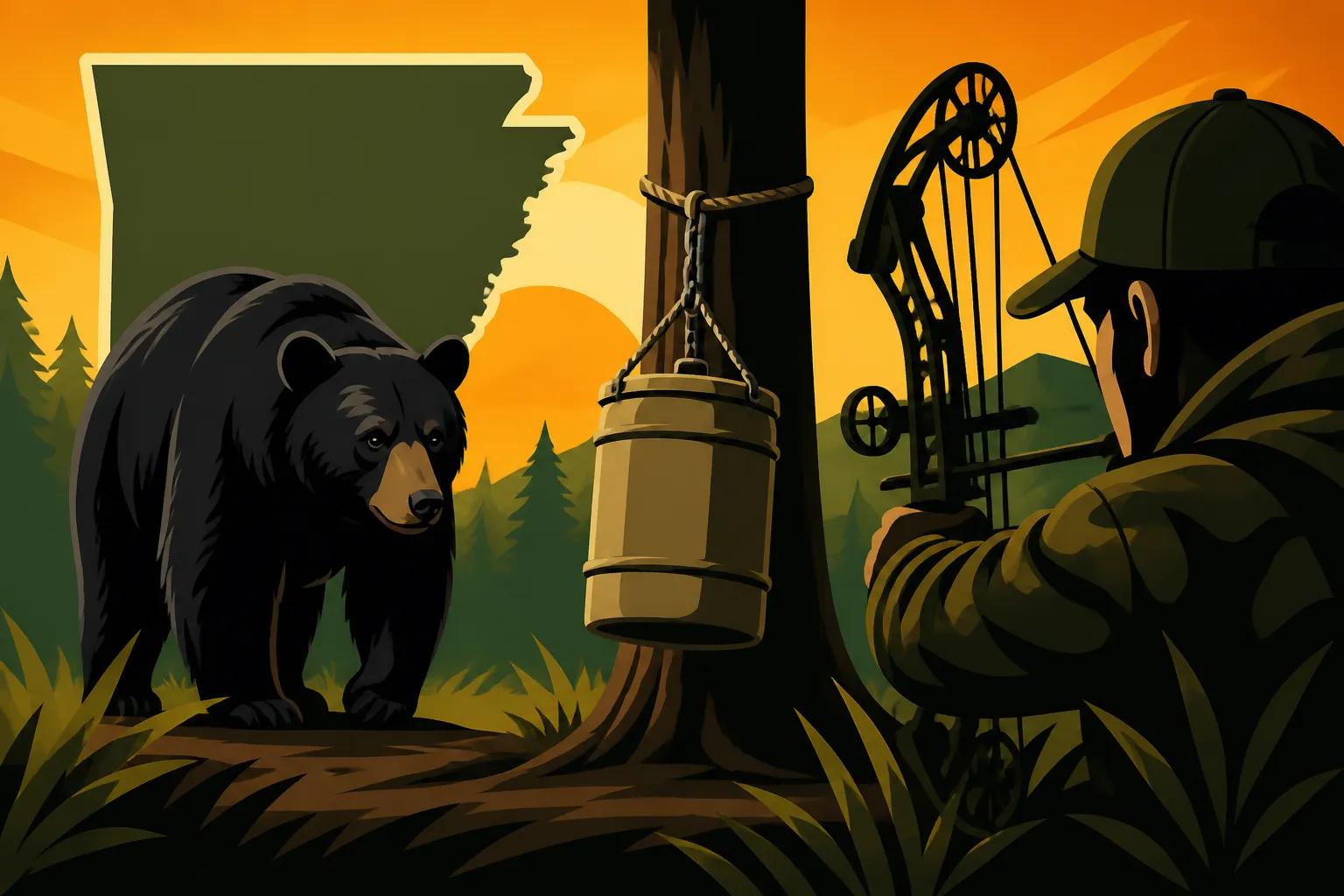
One effective strategy is to use a heavy, secured container for your bait. A metal barrel or culvert pipe, with a heavy lid or even a rock on top, can make it harder for smaller animals to access the food. Bears, with their strength and determination, can usually get to it, but it creates a deterrent for the others. Some hunters even dig a small pit and bury the bait in a heavy-duty container with a limited opening, forcing bears to work for it. Another option is to consider bait that is less attractive to deer, such as strong-smelling, fatty treats instead of straight corn. Changing your bait type or even trying different scents can sometimes help. You're trying to create an exclusive restaurant for bears, making it less appealing or harder to access for freeloaders.
Keeping Your Bait Active
Sometimes, you've got a great spot, you're following the rules, but the bears just aren't hitting your bait consistently. This can be incredibly disheartening. One reason might be too much natural food available. If it's a bumper acorn crop year, bears might prefer natural forage over your bait. In these cases, you might need to make your bait even more enticing, adding stronger scents or richer foods.
Another issue could be human pressure or disturbances. Even if you're careful, other hunters, hikers, or even local curious individuals can spook bears. If you notice a sudden drop-off in activity, check for fresh human tracks, trash, or anything that suggests disturbance. Sometimes, moving your bait site a short distance to a more secluded area can reinvigorate activity. Ensure you're checking your game cameras regularly; they are invaluable tools for understanding bear patterns, identifying specific bears, and seeing if something is spooking them. If the camera shows nocturnal visits, try to shift your hunting times to be in the stand at least an hour before dark. Sometimes, all it takes is a subtle change to bring those big black bears back into your desired timeframe.
Disclaimer
Hunting is an inherently dangerous activity. This guide is for informational purposes only and does not substitute for thorough understanding and adherence to all Arkansas Game and Fish Commission regulations, hunter education, and personal safety practices. Always prioritize safety, ethical hunting, and legal compliance.