Shot Placement on a Black Bear
Hunting black bear in Arkansas is an incredibly rewarding experience, offering a unique challenge that sets it apart from deer or turkey hunting. However, the sheer size, thick hide, and dense musculature of a bear can make shot placement feel like a puzzle, especially if you're not intimately familiar with their anatomy. Many hunters worry about making a poor shot, leading to a lost animal and an unethical outcome. This guide is designed to take the guesswork out of bear hunting, helping you understand precisely where to aim for a quick, humane harvest when you finally get that opportunity in the rugged Arkansas wilderness.
Understanding Bear Anatomy for Ethical Shots
Before you even step foot in the woods, knowing what lies beneath that shaggy coat is paramount. Black bears are robust animals, and their vital organs are not always exactly where a deer hunter might expect them. It's a common misconception that a bear's vitals are directly behind the shoulder, just like a deer. While similar, there are crucial differences that demand your attention.
The Challenge of Bear Physiology
Bears possess a unique build that can fool the eye. Their broad shoulders, deep chest, and often thick layers of fat and heavy fur can obscure the precise location of their vitals. You might look at a bear and instinctively aim where you'd shoot a deer, only to find yourself hitting shoulder bone or non-vital tissue. Their scapula (shoulder blade) is particularly large and dense, protecting a significant portion of the lung area. This means a shot that might be perfect on a deer could be a crippling, non-lethal shot on a bear, simply because of bone deflection or insufficient penetration. Their rib cage is also incredibly sturdy, requiring a well-constructed bullet or broadhead to pass through effectively.
Furthermore, a bear's heart sits lower and more forward in the chest cavity compared to many other big game animals. It's tucked snugly between the front legs and relatively low in the brisket area. The lungs, while large, are also protected by that formidable shoulder structure. This combination requires precise aiming, especially with the added visual distortion of their dense fur, which can make a bear appear larger and shift your perception of where the vitals truly lie. It's not about brute force, it's about surgical precision.
Vital Organ Locations
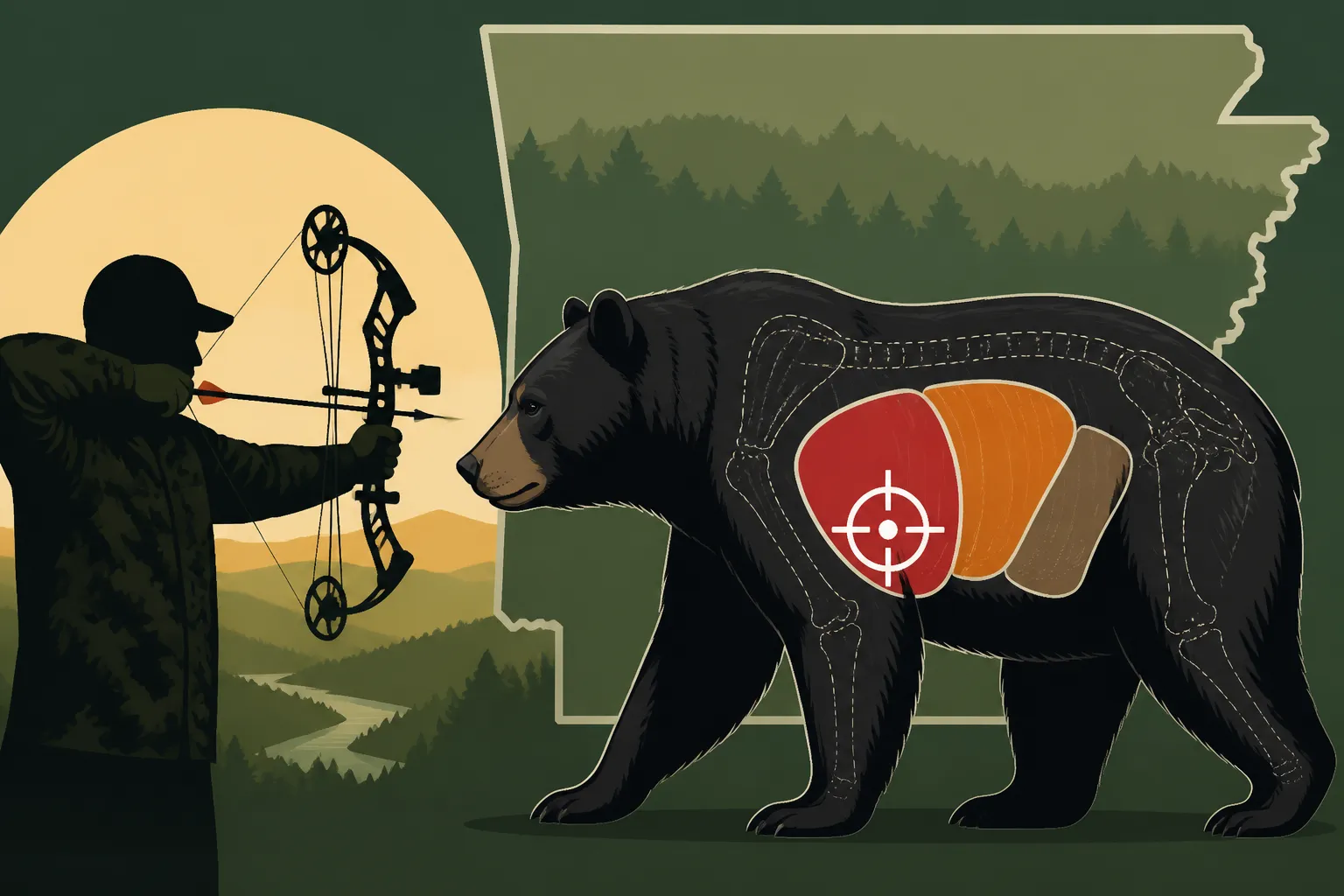
When you're looking to make a clean kill on a black bear, your primary targets are the heart and lungs. These organs are crucial for life and, when hit effectively, will lead to a rapid and ethical harvest. The heart is positioned very low in the chest, nestled between the front legs, almost appearing to be within the "armpit" area if you could imagine one. A shot directly in this zone will cause massive hemorrhage and rapid incapacitation.
The lungs are situated above and behind the heart, filling a large portion of the chest cavity. They extend further back than the heart and are a slightly larger target. A double lung shot, where the projectile passes through both lungs, is often a hunter's goal, as it causes massive internal damage and respiratory failure. While not as immediately fatal as a heart shot, a solid double lung hit is still highly effective and ethical. You can find more details on general bear hunting tactics in Arkansas by checking out our guide on Black Bear Hunting in Arkansas.
Beyond the heart and lungs, other vital areas include the spine and brain, though these are much smaller and riskier targets. A spine shot, particularly to the cervical or thoracic spine, will instantly drop a bear, paralyzing it. However, the spinal column is a narrow target, and a slight miss can result in a non-fatal injury. The brain, while also causing instant lights-out, is an even smaller target, heavily protected by the bear's skull. Most ethical hunters reserve headshots only for extremely close-range, absolute last-resort situations, as the risk of a non-lethal jaw or facial injury is too high.
Skeletal Structure and Shot Angles
The bear's skeletal structure is a key consideration. The massive shoulder blade can easily stop or deflect a projectile if you don't account for it. When a bear is standing broadside, the shoulder blade covers a significant portion of the upper lung area and some of the heart. The trick is to aim behind the shoulder blade when it's forward, or slightly into the shoulder if it's back, targeting the sweet spot where the vitals are exposed. This requires you to visualize the internal structure. Many hunters use mapping tools, like those offered by GoHunt, to better understand animal anatomy and plan shot angles beforehand.
The ribs protect the entire chest cavity. While not as dense as the shoulder blade, they are still tough bone. Your projectile needs to have enough energy and proper construction to penetrate ribs and continue into the vitals. Different shot angles will present different challenges. A perfectly broadside bear offers the clearest path to the heart and lungs, aiming just behind the front leg. As the bear quarters, the angle of the ribs and shoulder changes, demanding a different point of aim to ensure the projectile travels directly into the vitals and avoids dense bone. For ethical hunting, understanding these nuances is critical, as discussed in detail in our section on Arkansas Hunter Education and Safety Rules.
Optimal Shot Placement Strategies
Knowing the anatomy is one thing; putting it into practice under pressure is another. The goal is always to deliver a lethal blow that minimizes suffering and ensures a quick recovery. While there's no single "magic spot" for every scenario, certain shot placements are universally more effective than others.
The Broadside Shot
The broadside shot is generally considered the most ideal and ethical shot placement for black bears, offering the largest target area for the vitals. When a bear is standing perfectly perpendicular to you, you want to aim roughly one-third of the way up from the bottom of the chest, and just behind the line of the front leg. Think of a line running vertically up the back of the front leg, and then aim a few inches behind that line, horizontally midway up the chest.
This aiming point is designed to thread the needle between the dense shoulder bone and still catch both lungs, potentially even the top of the heart. If your projectile passes through this zone, it will typically impact one lung, then the other, causing massive hemorrhage and quickly bringing the bear down. A good, well-constructed bullet or broadhead will punch through ribs and vitals, exiting the far side to create a better blood trail. After the shot, observe the bear's reaction carefully and listen for sounds. Details on how to read these signs are covered in our article on Blood Trailing After Dark in Arkansas.
The Quartering-Away Shot
A quartering-away shot is another excellent option, especially for bowhunters, as it offers a clear path to the vitals while avoiding the dense shoulder bone on the entry side. In this scenario, the bear is angled away from you, with its hindquarters slightly closer than its front. The key is to aim for the opposite shoulder, imagining the projectile exiting there. This typically means aiming further back on the body than a broadside shot.
For instance, if the bear is quartering away to your left, you'd aim for a spot behind the rib cage on your side, but with the trajectory angled forward to pass through the vitals and ideally exit near the opposite front shoulder. This angle allows the projectile to travel through a significant portion of the internal organs, including the liver, lungs, and potentially the heart, creating extensive damage. The longer internal path often leads to more damage and a better blood trail. Remember, precise aiming is key, and understanding bear behavior can help you anticipate these shot opportunities, as explored in our guide on Hunting Arkansas Bear Over Natural Food.
Shots to Avoid
While the thrill of the hunt can be intense, it's crucial to exercise discipline and pass on shots that are low-percentage or unethical.
- Quartering-To Shot: This is when the bear is angled towards you, with its front shoulder closer than its hindquarters. The heavy shoulder bone and dense chest muscles on the entry side can easily stop a bullet or deflect an arrow, leading to a superficial or non-lethal wound. The vitals are largely shielded, making a clean kill highly unlikely.
- Frontal Shot: While a direct frontal shot can hit the vitals, particularly the heart, it's a very small target. The bear's brisket bone and shoulder muscles provide significant protection, and a slight miss can result in a painful but non-fatal gut shot or superficial wound. This shot should almost always be avoided unless it's a very close, last-ditch effort for a follow-up.
- Rear Shot: Shots to the rear of a bear are highly unethical and should never be taken. There are no major vitals accessible from the rear, and such a shot will only wound the animal, causing immense suffering and almost guaranteeing a lost bear. Ethical hunting dictates waiting for a favorable angle.
Factors Influencing Your Bear Shot
Beyond understanding anatomy, several other elements come into play when it's time to take the shot. These factors can dramatically influence your success and the ethical outcome of your hunt.
Equipment Considerations
Your choice of equipment plays a significant role in ethical bear hunting.
- Rifles: For rifle hunters, caliber choice is important. While many deer calibers can take a bear, a good quality, heavy-for-caliber bullet is essential. Cartridges like .30-06 Springfield, .300 Win Mag, .338 Win Mag, and even larger calibers like .375 H&H are excellent choices, provided you use bullets designed for deep penetration and controlled expansion. Brands like Barnes, Nosler, and Hornady produce bullets specifically engineered for tough-skinned game. GoHunt's extensive ballistic data can help you match the right bullet to your chosen caliber for optimal performance on bear.
- Bowhunting Setups: Bowhunters need to prioritize kinetic energy and momentum. A heavier arrow (450+ grains) combined with a sharp, cut-on-contact fixed-blade broadhead will maximize penetration through thick hide, fat, and bone. Mechanical broadheads can work, but choose robust designs known for reliability and penetration. A draw weight of at least 60 pounds is generally recommended for adequate power. The goal is to get two holes—an entry and an exit—to facilitate a strong blood trail. Remember to consult Arkansas Bear Seasons and Zone Quotas for specific regulations on weapons.
No matter your weapon, practice, practice, practice! Know your effective range and stick to it. Don't take a 60-yard shot with a bow if you consistently group at 40.
Situational Awareness
The moment of truth involves much more than just aiming. You need to be acutely aware of your surroundings and the bear's behavior.
- Bear Behavior: Is the bear calm and stationary, or is it agitated and moving? A calm, feeding bear offers the best opportunity for a clean shot. If the bear is moving quickly or seems stressed, wait for it to calm down or present a better opportunity. Understanding the natural behavior of bears, which you can learn about in Where Arkansas Black Bears Live, can help you predict their movements.
- Distance and Cover: Always know your range. Use a rangefinder if possible. Even a slight misjudgment can lead to a significant drop in point of impact at longer distances. Pay attention to any brush, twigs, or small trees between you and the bear that could deflect your shot. A small twig can completely alter the flight of an arrow or a bullet, turning a perfect shot into a miss or a wound.
- Light Conditions: Bears are often most active during dawn and dusk. Low light can make positive identification and precise shot placement challenging. Ensure you have enough light to clearly see your target and your aiming point. Never take a shot if you can't confidently identify the animal and place your shot precisely.
Practicing for the Moment
Consistent practice is the cornerstone of ethical hunting. It's not just about hitting a target; it's about making that hit under pressure.
- Shooting Drills: Practice shooting from various positions you might encounter in the field – standing, kneeling, sitting, or from your treestand. If you hunt from a ground blind, practice from there too. Simulating real-world scenarios helps build muscle memory and confidence.
- Understanding Angle Compensation: If you're hunting in hilly or mountainous terrain, like the Ozarks, you'll often have elevated or downward shot angles. Practice these shots, as they require slight adjustments to your aiming point. Many hunters find using an inclinometer or angle-compensating rangefinder helpful.
- Mental Preparation: Visualize the shot. Mentally walk through the process of raising your weapon, acquiring the target, finding your aiming point, and executing the shot. This mental rehearsal can significantly reduce "buck fever" when the real moment arrives. Knowing your personal limits and having the discipline to pass on a marginal shot is far more important than filling a tag.
Post-Shot Protocol and Tracking
The moment after the shot is just as critical as the shot itself. Your actions in the immediate aftermath can determine whether you recover your bear. Patience and careful observation are your best friends.
Immediate Reaction and Observation
After you take the shot, do not immediately rush to where the bear was standing. Instead, focus intently on the bear's reaction and where it goes.
- Bear's Reaction: Did it jump, stumble, or run off? A bear hit in the vitals often hunches up, kicks, or makes a "death run" before collapsing. A bear that runs off stiff-legged or with its tail tucked might indicate a gut shot. A bear that disappears without much fuss might be a clean miss or a superficial wound.
- Sound: Listen carefully. Did you hear the tell-tale "thwack" of a solid hit, or the deep thud of a gut shot? Did you hear it crash after a short run? These auditory cues are invaluable, especially in thick cover.
- Mark the Spot: Once the bear is out of sight, immediately pick out several distinct landmarks (trees, rocks, brush piles) around where the bear was standing when you shot and where you last saw it. This triangulation will be vital for starting your track.
Waiting and Tracking Strategy
Patience is paramount. Resist the urge to immediately follow.
- How Long to Wait: For a presumed vital hit (heart/lungs), a minimum of 30 minutes to an hour is generally recommended. For a suspected gut shot, you need to wait much longer—at least 4-6 hours, or even overnight if conditions allow (cool weather, no rain). Disturbing a gut-shot bear too soon will often push it further, making recovery much harder. Our detailed guide on Field Dressing in Arkansas Heat stresses the importance of quick recovery to preserve the meat.
- Blood Trailing Tips: Start slowly and methodically at the shot site. Look for any blood, hair, bone fragments, or disturbed earth. Mark each piece of sign with flagging tape. Don't just look for blood on the ground; check leaves, twigs, and tree trunks at various heights. Bear blood can often be dark. If the blood trail becomes sparse, slow down, get on your hands and knees, and grid-search the area. Sometimes, a bear will walk on a trail for a bit before veering off, so always keep an eye out for less obvious sign. Using a good headlamp or powerful flashlight is crucial for tracking in low light, or if you end up tracking into the evening. GoHunt's mapping features can help you mark your tracking path and potential last-seen spots, aiding in a more systematic search.
- When to Call for Help: If you've tracked for a while and the sign disappears, or you're confident the bear is mortally wounded but you can't find it, consider calling for help. This could be fellow hunters, or in some cases, a trained tracking dog. Many areas of Arkansas allow the use of tracking dogs to recover wounded game, a valuable resource when dealing with tough tracks, especially with species like bear. Ensure you are aware of Arkansas Bear Checking Requirements and the specific rules for recovery.
Recovering a Bear
Once you've located your bear, the work isn't over.
- Safety First: Approach the bear cautiously. Even a mortally wounded bear can be dangerous. Use a stick to poke it from a distance or observe for a few minutes to ensure it's truly expired.
- Field Dressing: Field dressing needs to happen quickly, especially if the weather is warm. Bears have a thick layer of fat that can insulate the carcass and spoil the meat rapidly. Remove the entrails, skin the bear, and quarter it as efficiently as possible to allow the meat to cool down. Proper handling is key to enjoying the harvest, and you can find specific tips in our article on Handling Bear Meat and Hide.
- Transport and Preservation: Getting a bear out of the woods can be a monumental task due to their size and weight. Have a plan for extraction, whether it's quartering it into packable pieces, using a game cart, or having enough people for a drag. Transport the meat in coolers with ice to keep it cool until you can get it to a processor. Remember, bear meat is delicious when handled correctly, and it's considered among the Best-Eating Game in Arkansas.
Disclaimer
Please be aware that hunting regulations, seasons, and licensing requirements can change. Always consult the latest official Arkansas Game and Fish Commission (AGFC) regulations before planning and embarking on any hunting trip. This guide provides general information and best practices, but it is not a substitute for official legal guidance.