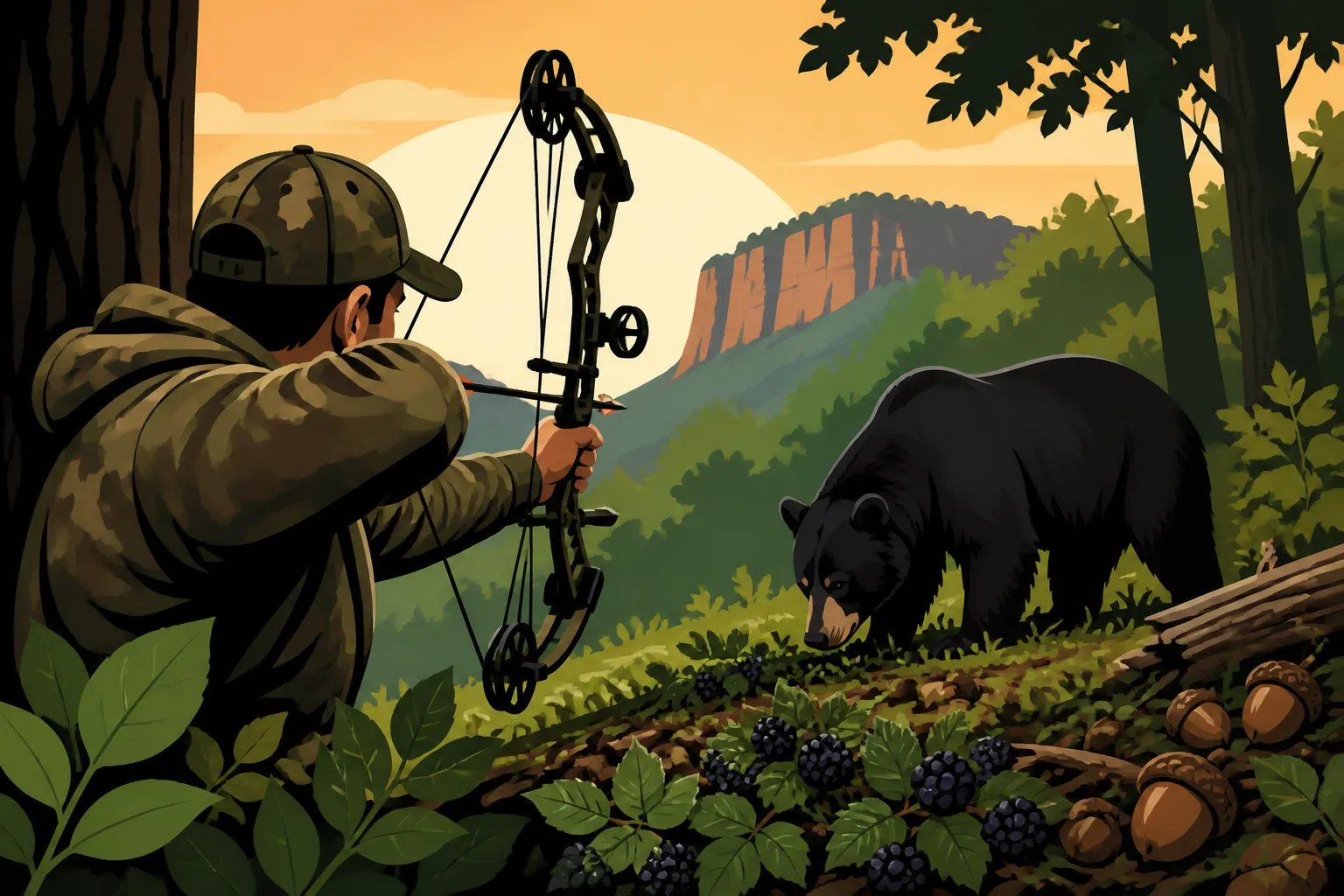
Hunting Arkansas Bear Over Natural Food
Hunting black bears in Arkansas, especially when you're focusing purely on natural food sources, can feel like you're trying to find a needle in a haystack. It’s a rewarding challenge, though, moving away from bait sites and truly learning the land and the animal. This guide is all about equipping you with the knowledge to read the woods, understand bear behavior, and pinpoint those crucial natural feeding areas that will put you in position for a successful, ethical hunt.
Understanding Arkansas Black Bear Ecology and Diet
Black bears in Arkansas are incredible animals, highly adapted to their environment in the Ozark and Ouachita Mountains, as well as parts of the Delta. Unlike some other big game, their diet isn't primarily protein-focused; they're opportunistic omnivores, meaning they'll eat just about anything they can get their paws on. But to hunt them successfully over natural food, you need a deep understanding of what those natural foods are, when they're available, and how bears utilize them. It's less about finding a bear and more about finding their kitchen.
Seasonal Food Preferences of Black Bears
A black bear's diet changes dramatically with the seasons, dictated by what's available in their habitat. In early spring, as they emerge from their dens, their metabolism is slow, and they're looking for easily digestible greens. As the season progresses, they shift to early soft mast and insects. Summer brings a bounty of berries and fruits, building up to the crucial fall period when hard mast like acorns becomes paramount. Understanding these shifts is absolutely critical. Imagine trying to find a deer in a cornfield in April—it just won't happen. The same principle applies here. For a comprehensive overview of where these amazing creatures live, you might want to read more about the Black Bears in the Arkansas Ozarks and Ouachitas.
Spring sees bears primarily foraging on new plant growth, tender shoots, and succulent grasses. They'll flip rocks and logs for grubs, ants, and other insects, which provide a much-needed protein boost after hibernation. As summer approaches, wild berries like blackberries, blueberries, and huckleberries become significant. They'll also consume wild cherries, persimmons (when they ripen), and even some agricultural crops if available near their range. Fall, however, is the king of bear diets. This is when acorns, hickory nuts, and other hard mast sources become the absolute driving force behind bear movement and fattening up for winter. This period is often when hunters have the most success when targeting natural food sources.
Home Range and Movement Patterns
Black bears aren't static creatures. Their home ranges can vary widely depending on food availability, population density, and individual bear characteristics. A boar's home range might be much larger than a sow with cubs, for example. Within these ranges, bears establish patterns of movement, often along ridge lines, creek bottoms, or through thick cover, connecting bedding areas with feeding grounds and water sources. These travel corridors are just as important as the food sources themselves because they tell you how a bear gets to the grocery store.
During times of abundant food, bears might concentrate their activity in a relatively small area. If a particular white oak tree is raining down acorns, multiple bears might frequent that same area. However, if food is scarce, bears will expand their search, sometimes traveling significant distances to find enough calories. This is why knowing where Arkansas Black Bears Live and understanding their habitat is key. Factors like drought can severely impact natural food production, forcing bears to move into less traditional areas or even closer to human habitation in search of sustenance. Understanding these dynamics helps you anticipate where bears might be, even when their usual haunts come up empty.
The Importance of Acorns and Soft Mast
When we talk about hunting bears over natural food in Arkansas, we're talking about acorns. Seriously, acorns are like gold to a bear. They're packed with fat and carbohydrates, providing the necessary energy reserves to survive the winter. While soft mast (berries, wild fruits) is crucial in summer, acorns and other hard mast are the undeniable primary drivers of bear activity in the fall hunting season. A productive oak flat can draw bears from a surprising distance, and they will spend hours, even days, gorging themselves.
However, not all acorns are created equal. Bears often prefer white oak acorns due to their lower tannin content, making them less bitter and more digestible. Red oak acorns, while high in nutrients, are often eaten later in the season after the white oaks have been depleted, or when other options are scarce. Beyond acorns, look for other hard mast like hickory nuts, beech nuts (less common in Arkansas but present), and chinquapin. Soft mast, like ripe persimmons or wild grapes, can also be bear magnets, especially in the early fall when the hard mast might just be starting to drop. Pinpointing these preferred food sources is the foundation of a successful natural food hunt.
Key Natural Food Sources for Arkansas Bears
To effectively hunt bears over natural food, you need to think like a bear. What's ripe? What's available? What's going to give me the most bang for my caloric buck? Arkansas's diverse landscape offers a variety of natural foods throughout the year, but focusing on the most attractive options during the hunting seasons is paramount.
Spring Forage: Green-up and Early Berries
When bears first emerge from their dens, often in late March or April, their digestive systems are just waking up. They're not looking for a steak dinner; they're seeking tender, easily digestible greens. You'll find them grazing on lush new growth in forest openings, along creek bottoms, or in areas where sunlight penetrates the canopy. Look for clover, grasses, and young forbs. They'll also start turning over rocks and logs to find insects like beetle larvae and ants.
As spring transitions into early summer, soft mast begins to ripen. Wild blackberries are a huge draw for bears in late spring and early summer, typically ripening from May into July. You'll find these thorny bushes in clearings, along logging roads, and on the edges of forests. Look for heavily grazed patches, broken branches, and fresh scat loaded with berry seeds. Early season bear hunting, if allowed in your zone, would focus heavily on these areas. Remember that Arkansas Bear Seasons and Zone Quotas will dictate when and where you can hunt.
Summer Bounty: Berries, Fruits, and Insects
By mid-summer, the forest is exploding with natural foods. In addition to blackberries, bears will be feasting on wild cherries, huckleberries, and serviceberries. You might also find them in areas with wild plums or even mulberries if the season is right. These soft mast sources provide essential hydration and quick energy. Bears will spend significant time in dense thickets and clearings where these fruits are abundant.
Insects continue to be a vital part of the summer diet. Bears will tear apart rotting logs for grubs, raid ant hills, and even swat at bees' nests for honey and larvae. This isn't just a snack; it's a calorie-dense protein source. If you're scouting in summer, look for overturned logs, torn-up ant hills, and claw marks on trees near potential honey sources. This tells you bears are actively foraging in the area, which could be a productive spot come fall.
Fall Feast: Acorns, Nuts, and Persimmons
This is the big one for bear hunters in Arkansas. Fall is when bears go into hyperphagia—a period of excessive eating to pack on fat reserves for winter denning. And the primary fuel for this is hard mast, especially acorns. Hunting Arkansas Bear on Acorns is practically its own art form. White oaks, with their less bitter acorns, are often preferred and will be hit first. These acorns typically drop from late August through October. Red oaks, with a higher tannin content, drop later and can sustain bears well into late fall and early winter.
Beyond acorns, don't overlook other nuts like hickory nuts, pecans, and chinquapin. These are also high in fat and protein. Wild persimmons, with their sweet, pulpy fruit, can also be a significant draw, especially as they ripen and fall to the ground in late summer and early fall. Look for persimmon trees near water sources or along field edges. A persimmon patch can be a hot spot for bears, often leaving distinctive purple scat. These dense food sources are precisely where you want to focus your efforts.
Scouting for Bear Sign Related to Natural Foods
Finding where bears are actively feeding on natural foods is the biggest challenge and the most crucial part of a successful hunt. This isn't a "set it and forget it" kind of hunting. It requires diligent, year-round scouting and a keen eye for subtle clues. Don't wait until opening day to start looking; bears move with food availability, and you need to be ahead of them. This is where tools like GoHunt can really shine, helping you map and track potential feeding zones.
Identifying Bear Scat and Tracks
The most obvious signs of bear activity are tracks and scat. Bear tracks are distinctive, with five toes and claw marks often visible, especially in soft ground. Front paws are generally wider and rounder, while hind paws are longer and more human-like. Look for these near water sources, along game trails, and in potential feeding areas. Fresh tracks indicate recent activity.
Scat can tell you a wealth of information about a bear's diet. In spring, scat might be loose and greenish from grasses and forbs. In summer, it will be full of berry seeds and fruit pulp. In fall, it will be packed with acorn fragments, nut shells, or persimmon seeds. The size and freshness of the scat also give clues about the bear. Large, dark, moist scat is a good indicator of recent activity from a mature bear. Pay attention to Finding Bear Sign in the Ozarks as your scouting progresses.
Locating Rubs and Feeding Areas
Beyond tracks and scat, bears leave other tell-tale signs. Rubs, where bears rub their backs or shoulders against trees, often to mark territory or scratch an itch, can be found along travel corridors or near bedding areas. These rubs might have hair caught in the bark or exhibit a dark, oily stain. They can be on small saplings or large trees.
More importantly for natural food hunting are feeding areas. Look for torn-up logs, overturned rocks, and patches of ground that have been dug up where bears have rooted for tubers or insects. In acorn flats, you'll find disturbed leaf litter, chewed acorn caps, and even piles of scat. When scouting persimmon trees, look for dropped fruit that has been crushed or partially eaten. If you find these signs, especially fresh ones, you're in the right neighborhood. This is where GoHunt's mapping features can be a game-changer, allowing you to mark every piece of sign you find and build a comprehensive picture of bear movement and feeding patterns over time.
Using Technology for Scouting
In today's world, technology can be a huge asset in bear hunting, especially when you're trying to locate shifting natural food sources. Satellite imagery, topographical maps, and public land overlays can help you identify potential mast-producing ridges, remote clearings with berry bushes, or dense cover near water where bears might bed. A tool like GoHunt can be a fantastic resource for this, allowing you to mark historical sightings, potential food plots, or even overlay public land boundaries with satellite imagery to identify prime natural feeding zones.
Trail cameras, used judiciously and ethically, can confirm bear presence and pattern their movement. Place them near promising food sources, travel corridors, or water. While you can't use bait on public land or within certain CWD zones, placing a camera on a natural persimmon tree or a white oak raining acorns is perfectly legal and highly effective. Reviewing your camera photos can help you determine the size and sex of bears in the area, as well as their preferred times of travel and feeding. Always consult the latest Arkansas CWD Rules and Carcass Transport regulations before deploying cameras, as rules can change.
Hunting Strategies Around Natural Food
Once you've done your homework and located active natural feeding areas, the real hunting begins. This style of hunting requires patience, stealth, and a deep respect for the bear's senses. You're trying to intercept an animal that's focused on eating, but also one that is incredibly wary.
Stand Placement Near Food Sources
When setting up a stand, whether it's a climbing stand, a ladder stand, or even a well-camouflaged ground blind, your primary goal is to be undetected. Position your stand downwind of the primary feeding area, ideally 20-30 yards away, to give yourself enough space for a shot without being too close to spook a wary bear. Consider the sun's position and how it will affect your visibility and your scent dispersion throughout the day. If you are Hanging a Stand in Bottomland Hardwoods, think about the canopy cover and background.
Look for natural funnels that lead to the food source. Bears, like deer, often use the path of least resistance. A bench on a ridge, a saddle, or a creek crossing can serve as a natural travel corridor leading to an acorn flat. Pay close attention to these natural choke points. Remember to always use a safety harness, no matter how quick or easy the climb seems. Bears are typically most active at dawn and dusk, but during heavy mast years, they might feed throughout the day, so an all-day sit can be productive.
Still-Hunting Through Natural Feeding Areas
Still-hunting is another incredibly effective method for targeting bears over natural food, especially in dense timber or thickets. This involves moving incredibly slowly, pausing frequently to glass ahead, listen, and simply observe the forest. You're not just looking for a bear; you're looking for movement, a flash of black, a subtle sound of crunching acorns or rustling leaves. This method is particularly useful when acorns are widely scattered, or when you're hunting during the mid-day lull when bears might be less concentrated.
The key to successful still-hunting is patience. Take one or two steps, then stop for several minutes, scanning every tree, every shadow, every cluster of brush. Use binoculars to pick apart dense cover. Listen for the subtle sounds of a bear turning over leaves or breaking branches. This is an active form of hunting, forcing you to constantly evaluate the terrain and anticipate where a bear might be. It takes practice to move quietly enough, but the reward of a close encounter earned through stealth is unmatched. When navigating the dense Arkansas woods, understanding Wind and Thermals in Ouachita Hollows can be crucial for staying undetected.
Understanding Wind and Thermals
No matter your hunting method, understanding wind and thermals is paramount when hunting bears over natural food. Bears have an incredible sense of smell, far superior to deer, and if they catch your scent, your hunt is likely over before it begins. Always hunt with the wind in your favor, blowing your scent away from the area you expect bears to approach from.
In mountainous or hilly terrain, thermals play a significant role. In the morning, as the sun warms the earth, air currents (thermals) typically rise uphill. In the evening, as the air cools, they fall downhill. This means your scent will travel accordingly. If you're hunting an Ozark ridge, your morning stand might need to be below the feeding area, letting your scent rise over it. In the evening, you might want to be above it, letting your scent fall away. Always carry a wind checker and use it frequently.
Seasonal Considerations for Natural Food Hunts
Arkansas's bear season typically opens in the fall, coinciding with the peak of hard mast production. However, understanding the nuances of early, peak, and late season can significantly improve your chances of success. Bears behave differently as food availability changes and as winter approaches.
Early Season: Transition from Summer Bounty
Early fall, typically September and October, marks a transition period. Bears are still utilizing some late-season soft mast like ripe persimmons and wild grapes, but their focus is rapidly shifting to hard mast. If a white oak crop is early, bears will be hitting those first. This can be a challenging time if the hard mast hasn't fully dropped yet, as bears might be more spread out, looking for whatever's available.
During this period, focus your scouting on areas where both soft and hard mast might be present. Creek bottoms, draws, and edges of clearings can offer a mix of food sources. Bears are actively trying to pack on calories, so they're often feeding intensely. Pay close attention to the specific Arkansas Bear Seasons and Zone Quotas for your hunting area, as early season dates can vary.
Peak Season: Fall Mast Production
Late October and November usually represent the peak of the fall mast drop, making this the prime time for natural food bear hunting in Arkansas. White oak acorns are likely being heavily utilized, and red oak acorns are starting to hit the ground. Bears will concentrate in areas with abundant hard mast, often becoming very predictable in their feeding patterns. This is the time when you're most likely to find multiple bears in an area or consistently see a particular bear at a specific food source.
This is when aggressive scouting and patience truly pay off. Look for fresh sign daily, as bear activity can shift quickly if a food source runs out or becomes too pressured. Focus on large tracts of timber with a diverse mix of oak species to ensure a continuous food supply throughout the season. Remember, a bear's sole mission at this time is to eat as much as possible before denning.
Late Season: Pre-denning Activity
As the season progresses into late November and December, bears are making their final push to put on weight before denning. White oak acorns may be largely depleted, so bears will shift their focus to red oak acorns, which persist longer on the ground, and any remaining soft mast. They might also begin to seek out denning sites, so their movements could become less focused purely on feeding.
Late season hunting can be tough, as food sources are scarcer, and bears might be less active during daylight hours. However, a hunter who has thoroughly scouted and found a reliable, late-dropping red oak flat or a hidden patch of persimmons might find success. This is also a time when bears are particularly wary, having been pressured throughout the season. Stealth and patience are more critical than ever. Always ensure you are aware of the specific Checking Whether an Arkansas Bear Zone Is Open as seasons can close early if quotas are met.
Regulations, Ethical Practices, and Post-Harvest
Hunting bears, especially large, powerful animals, comes with significant responsibility. Adhering to regulations, practicing ethical hunting, and properly handling your harvest are not just good practices—they are essential.
Arkansas Bear Zone Quotas Explained
Arkansas has specific bear zones, each with its own quotas and season dates. The Arkansas Game and Fish Commission (AGFC) manages these quotas to ensure a healthy and sustainable bear population. Once a zone's quota is met, that zone's season can close early, sometimes within a matter of days. It is absolutely crucial to be aware of the daily quota updates, which are typically available on the AGFC website or through their phone app. For more details, consider reading about Arkansas Bear Zones Explained.
Before you even head to the woods, verify that your chosen zone is open and has not met its quota. Failing to do so could result in a violation. Always carry your license and bear tags, and understand the requirements for checking your bear after harvest. This usually involves reporting it within a specific timeframe and potentially presenting it for physical inspection or biological data collection.
Ethical Shot Placement and Recovery
Ethical shot placement is paramount with bears. Their anatomy is different from deer, with vital organs tucked further forward and lower in the chest. A broadside shot aiming for the shoulder pocket, slightly forward of where you might aim on a deer, is generally the most effective. Use a heavy-for-caliber bullet or broadhead that will penetrate deeply and reliably. Practice shooting your chosen weapon extensively to ensure accuracy under hunting conditions. Learn more about Shot Placement on a Black Bear before your hunt.
Bears can be incredibly tough, and a poorly placed shot can lead to a long, difficult, and potentially dangerous tracking job. If you do shoot a bear, give it plenty of time (at least an hour, preferably more) before taking up the trail, unless you clearly saw it drop. Follow the blood trail meticulously, and be prepared for dense cover. Carry a bright light if you anticipate tracking into the evening. Having a partner for tracking is always a good idea for safety.
Respecting Private Land Boundaries
Much of Arkansas's bear habitat includes a mosaic of public and private land. When hunting over natural food, you might find prime spots near or on private property. Always know your boundaries. Use a reliable mapping app like GoHunt with land ownership overlays to clearly define public and private land. If you suspect a bear is on private land, do not pursue it without explicit permission from the landowner. Trespassing, even to recover an animal, is a serious offense.
Building relationships with private landowners can open up opportunities. Sometimes, a landowner might be happy for you to hunt a nuisance bear on their property, or simply allow access to cross their land to reach public ground. Always ask permission well in advance, respect their property, and leave no trace. This helps maintain a positive image for hunters and can unlock more access in the long run. If you are successful, it is also important to know how to properly handle Handling Bear Meat and Hide to preserve your harvest.
Table: Seasonal Bear Food Guide for Arkansas Hunters
| Season | Primary Natural Food Sources | Bear Behavior | Scouting Focus | Hunting Strategy Implications |
|---|---|---|---|---|
| Spring | Tender grasses, new plant shoots, grubs, ants, carrion | Emerging from dens, slow metabolism, seeking easy calories | Creek bottoms, south-facing slopes, overturned logs, carcass sites | Still-hunting, focus on lush green-ups, limited hunting opportunity |
| Summer | Blackberries, huckleberries, wild cherries, plums, insects | Foraging heavily, building reserves, widely dispersed | Berry patches, clearings, torn-up logs, ant hills | Scouting for fall, identifying consistent food sources, potential early season hunting (if allowed) |
| Early Fall | Persimmons, wild grapes, white oak acorns (early drop) | Transitioning from soft to hard mast, intense feeding | Persimmon trees, white oak flats, travel corridors | Stand placement near prime white oaks/persimmons, still-hunting |
| Peak Fall | White oak acorns, red oak acorns, hickory nuts, pecans | Hyperphagia (excessive eating), concentrated feeding | Mature oak ridges, diverse mast stands, thickets | Stand hunting over active acorn drops, still-hunting through mast-rich areas |
| Late Fall | Red oak acorns, remaining hard mast, tubers | Final push for calories, seeking denning sites, wary | Red oak flats, dense thermal cover, protected areas | Stand hunting remaining hard mast, targeting travel to denning areas |
Disclaimer
Please note that hunting regulations, seasons, and quotas are subject to change by the Arkansas Game and Fish Commission (AGFC). It is the hunter's responsibility to consult the most current AGFC hunting guide and regulations before planning and engaging in any hunting activities. This guide is for informational purposes only and should not replace official sources.