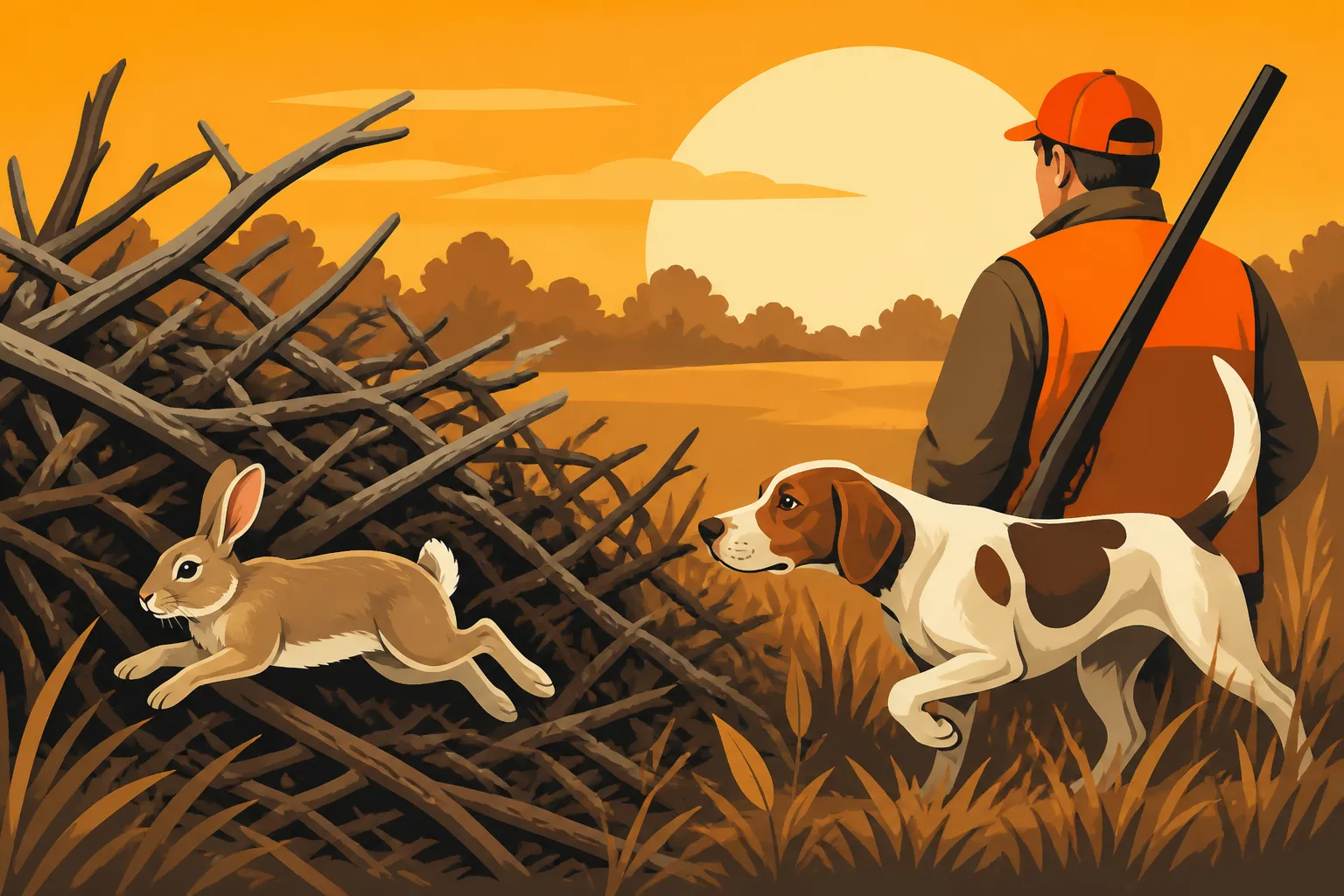
Rabbit Hunting Delta Brush Piles
Hunting rabbits in the Arkansas Delta, especially around those dense, often-overlooked brush piles, can be incredibly rewarding, but it’s a whole different ballgame than walking open fields. Many hunters get frustrated trying to find consistent action in this unique environment, often because they're not quite sure where to focus their efforts or how to navigate the thick cover. This comprehensive guide is designed to unlock the secrets of effectively targeting rabbits in the Delta's brush piles, ensuring you spend less time searching and more time enjoying the thrill of the chase.
Why Delta Brush Piles are Rabbit Havens
The Arkansas Delta is a land of incredible biodiversity, but for a rabbit, survival often boils down to one thing: cover. And nothing provides better, more immediate protection than a tangled, impenetrable brush pile. These unassuming heaps of downed trees, limbs, and undergrowth are absolute magnets for cottontails and swamp rabbits, providing everything they need to thrive.
The Ecosystem of the Delta and Rabbit Needs
Imagine a rabbit’s life in the Delta. It’s a landscape largely defined by agriculture – vast fields of soybeans, rice, and corn. While these fields offer abundant food when crops are mature or recently harvested, they provide little to no cover from predators like hawks, owls, coyotes, and even stray dogs. This is where brush piles become critical. These piles, whether natural accumulations from storms and erosion or man-made clearings, create miniature fortresses. They offer immediate escape routes, dense overhead protection, and often, a slightly elevated, drier spot than the surrounding low-lying terrain.
Furthermore, the edges of these brush piles, where sunlight can still penetrate, are often hotspots for succulent, young vegetation that rabbits love to munch on. Think of briars, honeysuckle, young sprouts, and tender grasses – all within a hop and a skip of absolute safety. The dense nature of the Delta, with its often wet and low-lying areas, also pushes rabbits towards these dry, elevated pockets. During periods of heavy rain or minor flooding, these brush piles can become literal islands of refuge, concentrating rabbits in easily identifiable areas. It's a perfect storm of food, water, and impenetrable security, making them prime real estate for a healthy rabbit population.
Identifying Productive Brush Piles
Not all brush piles are created equal, and knowing how to spot a "hot" one is key to a successful hunt. Productive brush piles typically exhibit certain characteristics that make them more attractive to rabbits. First, consider their origin: natural piles, formed by fallen trees, erosion along creeks, or logging debris, tend to be more established and often part of a larger, more stable habitat. Man-made piles, like those created by farmers clearing fence lines or landowners piling up yard waste, can also be excellent, especially if they’ve been in place for a season or two, allowing vegetation to grow up around and within them.
The most critical step in identification is looking for signs of rabbit activity. Keep your eyes peeled for small, round rabbit droppings around the base of the pile or along nearby trails. Look for clipped vegetation, indicating recent feeding. You might even spot well-worn runways leading into and out of the pile, especially if the ground is soft. Using a mapping app like GoHunt can be invaluable here. You can mark potential piles you spot from the road or during scouting trips, and then investigate them more closely on foot. Pay attention to the surrounding habitat: Is there a food source nearby? Is it close to a water source? The best piles are usually adjacent to crop fields, overgrown fencerows, or creek bottoms. Don't be afraid to walk around the entire pile, inspecting every angle, as rabbits will often have multiple escape routes and preferred entry points. For more detailed information on scouting, check out our guide on Scouting Arkansas Public Land Before Season.
Essential Gear and Canine Companions for Brush Pile Hunting
Rabbit hunting in Delta brush piles isn't a casual stroll with a squirrel rifle. It demands specific gear and, ideally, the company of some dedicated four-legged friends. The dense cover and the nature of the chase mean you need to be prepared for close-quarters action and navigating tough terrain.
Shotgun and Ammunition Choices
When you're busting brush piles, a shotgun is undeniably the weapon of choice. The fast-flushing nature of rabbits in thick cover means you'll often have only a split second for a shot, and the spread of a shotgun pattern is far more forgiving than a single projectile. Most rabbit hunters gravitate towards 12-gauge or 20-gauge shotguns. A 20-gauge offers a lighter carry, which is a blessing when pushing through briars, and its recoil is generally softer, making it a good choice for younger hunters or those sensitive to kick. A 12-gauge, of course, throws a denser pattern, which can be advantageous.
For ammunition, shot sizes 6 or 7.5 are ideal. These pellets are small enough to provide a good pattern density but carry enough energy to cleanly take a rabbit. Avoid anything larger like buckshot, which is completely overkill, and anything smaller like 9s, which might not have the knockdown power. As for chokes, an improved cylinder or modified choke is perfect. You'll be shooting at relatively close ranges, so a tight full choke will pattern too restrictively, making it harder to connect. An open choke allows the pattern to spread quickly, increasing your chances of a hit on a fast-moving target. Always handle your firearm safely, especially in dense cover where visibility can be limited.
The Indispensable Role of Beagles
While you can jump-shoot rabbits without dogs, it's far less effective and certainly less fun, especially in brush piles. This is where the humble beagle shines. Beagles were practically born to chase rabbits; their incredible noses, tireless energy, and melodic voices are perfectly suited for this type of hunting. They excel at working through thick cover, flushing rabbits from hiding spots, and pushing them into more open areas or past waiting hunters. Their slower, deliberate pace often means the rabbits don't blast out at warp speed, giving you a better shot opportunity.
Beyond beagles, other breeds can also be effective. Basset hounds, with their equally impressive noses and distinct bay, can be good, though their shorter legs might struggle in really wet or muddy Delta conditions. Smaller curs or even some terrier mixes can be trained for rabbit work, especially if they have a strong prey drive and are good at navigating dense cover. The key is a dog that is persistent, vocal, and can stick to a rabbit’s scent trail. Training for brush pile hunting involves encouraging the dog to dig into cover, follow scent, and, importantly, learn to "circle" a rabbit back towards the hunter. Our detailed guide on Rabbit Hunting With Beagles offers more insights into working with these fantastic dogs.
Clothing and Navigational Tools
Hunting in Delta brush piles means you'll be slogging through briars, thickets, and potentially muddy or wet ground. Your clothing needs to offer protection first and foremost. Heavy-duty briar pants or chaps are non-negotiable – they’ll save your legs from countless scratches and punctures. A tough, briar-resistant jacket or vest is also a smart choice. Layering is always wise, as you'll be working hard and can shed layers as you warm up. Choose bright hunter orange for safety, which is often required on public land and always a good idea in dense cover, especially with multiple hunters and dogs. For footwear, waterproof boots with good ankle support are essential for navigating uneven and often damp terrain.
Beyond clothing, reliable navigation is critical. It’s incredibly easy to get turned around in dense Delta cover. A GPS unit or a smartphone with a reliable mapping app like GoHunt is invaluable. These tools allow you to mark your vehicle, track your path, and identify property lines, helping you stay found and avoid trespassing. Always carry a compass and know how to use it as a backup. A small first-aid kit for minor cuts and scrapes (for both you and your dogs) is also a wise addition, as are plenty of water and snacks to keep your energy up.
Effective Tactics for Working Delta Brush Piles
Successfully hunting rabbits in brush piles isn't just about showing up with a shotgun and a dog; it's about a coordinated effort, understanding rabbit behavior, and adapting to the terrain.
The Drive and Flush Strategy
The most effective way to hunt brush piles is with a well-orchestrated drive and flush strategy, ideally with two or more hunters and at least one good rabbit dog. The basic idea is to position hunters on likely escape routes while dogs work the pile, pushing rabbits out.
Here’s how it usually works:
- Assess the Pile: Walk around the brush pile beforehand to identify its size, density, and any obvious rabbit runways or escape corridors. Note where the pile meets more open ground, a field edge, or a fencerow – these are prime escape routes.
- Position the Standers: The "standers" are the hunters positioned to intercept rabbits as they bolt from the pile. They should set up 20-40 yards away from the pile, facing the most likely escape routes, often with their backs to thicker cover. Maintain good spacing and visual contact with each other, always aware of your safe zones of fire.
- Deploy the Drivers (and Dogs): The "drivers" (one or two hunters, along with the dogs) will work the pile directly. Start on one side and systematically push through, encouraging the dogs to scent out and flush rabbits. The dogs should be allowed to work deep into the pile, digging and barking to get the rabbits moving.
- Work the Pile Methodically: Don't just blindly crash through. Work the pile in a grid pattern or systematically from one end to the other, ensuring no part of it is left unsearched. Pay extra attention to the densest parts, as rabbits will often burrow deep.
- Anticipate Escape Routes: Rabbits, when flushed, typically run in predictable patterns. They'll often try to circle back to the pile, run along a fencerow, or make a break for the nearest patch of thick cover. Standers need to be ready for these dashes, but also for the possibility of a rabbit simply sneaking out the backside without dogs on its tail. Once a rabbit is jumped, the dogs will give chase, usually with enthusiastic baying, which helps guide the standers to where the action is. Remember, a rabbit driven by dogs often runs a bit slower and in a more predictable circle than one jump-shot by a hunter.
Safety and Communication in Thick Cover
Safety is paramount, especially when hunting in dense brush piles with multiple hunters and dogs. The limited visibility demands constant vigilance and clear communication.
- Hunter Orange: Always wear plenty of hunter orange. This is not just a suggestion; it's often a legal requirement on public lands during deer season, and it's simply smart practice for small game hunting. This highly visible color helps other hunters identify you, significantly reducing the risk of accidents.
- Maintain Contact: Visual contact should be maintained as much as possible, but in really thick cover, that's not always feasible. Use verbal communication – short, clear calls like "Hunter left!" or "Rabbit coming your way!" are critical. Establishing a few agreed-upon calls before the hunt can be very helpful.
- Define Shot Zones: Before starting, clearly define everyone's safe zones of fire. Standers should know which direction they can shoot without endangering others. Never shoot in the direction of a driving hunter or where dogs are actively working. Always be certain of your target and what lies beyond it. When a rabbit bursts out, it's easy to get excited, but taking a moment to identify the target and ensure a safe shot is crucial.
- Dog Safety: Keep an eye on your dogs. They can get tangled in briars, get hurt by sharp sticks, or even run out of sight. Having GPS collars on your dogs, especially in dense Delta cover, is a game-changer. Brands like Garmin Alpha or Tri-Tronics offer excellent tracking capabilities that integrate well with mapping apps, making it easier to monitor their location and safety. Be ready to call your dogs off a chase if it leads into unsafe areas or onto private property where you don't have permission.
Adapting to Weather and Water Conditions
The Arkansas Delta's weather and water conditions can change rapidly and significantly impact rabbit behavior and hunting success. Being able to adapt is key.
- Hunting After Rain: A fresh rain can be a blessing and a curse. It freshens scent trails, making it easier for dogs to track, but it also creates muddy conditions that can be tough on hunters and dogs. Rabbits may also sit tighter in cover if it's wet and cold. Look for rabbits to move to higher, drier ground within or around brush piles after heavy rains.
- Cold vs. Mild Weather: In colder weather, rabbits will often be tucked deep into the densest parts of brush piles, seeking warmth and shelter. This can make them harder to flush but also means they're more concentrated. Mild, overcast days are often ideal, as rabbits may be more active and willing to move. On very hot days, rabbits will be less active, and it's best to hunt early morning or late evening. Remember to hydrate well, regardless of the temperature.
- Understanding Rabbit Movement: Pay attention to how rabbits move in different conditions. If it's windy, they might try to stay on the downwind side of the pile. If it's sunny and cold, they might be on the sunny side, trying to warm up. In areas prone to flooding, like many parts of the Delta, understanding water levels is critical. During periods of high water, such as those that can affect Hunting Arkansas Flooded Green Timber, rabbits will be pushed onto any dry ground available, including the tops of brush piles or levees, making them potentially easier to find. Use mapping tools to identify subtle elevations in the landscape that might become rabbit refuges.
Ethical Considerations and Post-Hunt Practices
As with all hunting, pursuing rabbits in the Delta comes with responsibilities. Ethical considerations, respecting landowners, and proper game care are crucial elements of a good hunting experience.
Respecting Landowners and Regulations
Access to good hunting land is a privilege, not a right. Many productive brush piles in the Delta are found on private land, often adjacent to agricultural fields. Securing permission from landowners is absolutely essential. Never assume you can hunt private property without explicit consent. A friendly knock on a door, a polite conversation, and offering to share some of your harvest can go a long way in building relationships and securing future access. Using detailed mapping layers on your GoHunt app or similar tools can help you clearly identify property lines, preventing accidental trespassing. Remember, the future of hunting often depends on positive landowner-hunter relations.
For those hunting public lands, like certain Wildlife Management Areas (WMAs) in Arkansas, it's critical to be aware of and abide by all specific WMA rules. Some WMAs may have different restrictions on dog hunting, vehicle access, or designated hunting days. Always check the Arkansas Game and Fish Commission (AGFC) regulations for the specific WMA you plan to visit. Understanding Arkansas WMA Rules and Permits is a must for any public land hunter. Additionally, always be mindful of the current Arkansas Small Game Seasons and Limits to ensure you are hunting legally and responsibly. These regulations are in place to manage game populations and ensure sustainable hunting opportunities for everyone.
Field Dressing and Game Care in the Field
Once you've successfully harvested a rabbit, proper field dressing and game care are vital to ensuring the meat is high-quality and safe to eat. Rabbits, like most small game, benefit greatly from being cooled down quickly, especially in the warmer temperatures that can often persist in Arkansas well into hunting season.
The simplest method for field dressing a rabbit is to make a small incision in the abdominal cavity, being careful not to puncture the intestines, and then remove the entrails. Many hunters prefer to skin rabbits in the field as well, which further aids in cooling. This can be done by making a cut around the mid-section, then pulling the skin off in opposite directions, like removing a sweater. Be sure to remove the head and feet. Once field-dressed and skinned, wipe the cavity clean with a paper towel or a bit of grass. If you're hunting in warm weather, our guide on Field Dressing in Arkansas Heat provides excellent tips for preserving your game meat.
Transporting your rabbits correctly is also important. Place them in a cooler with ice, ideally in a separate bag to keep them from getting waterlogged. Getting the meat cooled quickly inhibits bacterial growth, which is crucial for flavor and safety. When you get home, you can butcher the rabbit further, separating the legs and saddles, or simply keep them whole. Rabbit meat is delicious and versatile, perfect for stews, frying, or grilling.
Disclaimer
Always consult the official Arkansas Game and Fish Commission (AGFC) regulations before engaging in any hunting activities, as rules and seasons can change. This guide is for informational purposes only and does not supersede state regulations.