Scouting Arkansas Public Land Before Season
There's nothing quite like the excitement of a new hunting season on the horizon, but let's be honest, that thrill can quickly turn into a knot in your stomach when you think about stepping onto vast, unfamiliar public land. That feeling of being lost, of knowing deer are somewhere but having no idea where to start looking, can be incredibly frustrating and lead to wasted time when the season finally opens. This guide is all about cutting through that uncertainty, giving you the tools and strategies to thoroughly scout Arkansas public land before the season, so you can hunt with confidence and purpose.
Why Pre-Season Scouting is Your Secret Weapon
Many hunters just show up on opening day, hoping for the best, or relying on outdated information. But those who consistently find success, especially on public land, understand that the real work often begins long before the first legal shooting light. Pre-season scouting isn't just an option; it's practically a requirement to put the odds in your favor in a state as diverse as Arkansas. It transforms you from a wanderer into a strategist.
Avoiding the Opening Day Rush
Imagine rolling into a WMA parking lot on opening morning, trucks already overflowing, and you're still trying to figure out which direction to walk. That's a nightmare scenario, and it’s one that pre-season scouting is designed to prevent. When you've put in the time beforehand, you already know your entry and exit routes, where you plan to set up, and crucially, where the deer aren't likely to be.
This proactive approach allows you to navigate the inevitable crowds with a clear head. You might have found a hidden access point, or a less-trafficked ridge top, or a thick block of cover that most hunters overlook because it looks too daunting. Knowing these things lets you slip in quietly and confidently, rather than stumbling around, bumping deer, and leaving a trail of frustration in your wake. It buys you precious minutes of stealth and positions you for success before the general commotion even begins.
Decoding Deer Movement Patterns
Deer aren't just randomly wandering animals, especially mature bucks. They operate on patterns, even if those patterns can shift with food sources, weather, and pressure. Pre-season scouting helps you become a detective, piecing together these puzzles. You're looking for the subtle clues that reveal where they feed, where they bed, where they get water, and how they travel between these essential areas.
By identifying these core needs and travel routes, you can anticipate deer movement rather than simply reacting to it. You'll start to see how a specific bench on an Ozark hillside serves as a bedding area, or how a line of oaks in the Delta provides crucial early season forage. This understanding allows you to pick stand sites that intercept deer along their predictable pathways, turning what might feel like random chance into an educated ambush.
Building Confidence and Reducing Stress
Let's face it, hunting should be enjoyable, but it can be incredibly stressful when you're constantly second-guessing yourself. Did I choose the right spot? Am I wasting my time here? Am I even in the right county? Pre-season scouting systematically erases much of that self-doubt. When you've walked the ground, seen the sign, identified the features, and formulated a plan, you step into the woods on opening day with a profound sense of confidence.
This confidence isn't just about knowing where to go; it's about trusting your instincts and your preparation. It allows you to relax, focus on the hunt itself, and fully immerse yourself in the experience. Instead of feeling overwhelmed by the enormity of public land, you'll feel empowered, knowing you've done the homework and are ready to execute a well-thought-out strategy.
Leveraging Digital Tools for Initial Reconnaissance
In today's world, pre-season scouting doesn't have to mean endless hours of walking. We're incredibly lucky to have a suite of powerful digital tools at our fingertips that can help us narrow down potential hunting spots from the comfort of our homes. Think of it as your first line of defense, a way to eliminate unproductive areas and highlight promising ones without burning valuable boot leather.
Mapping Software for Topographic Analysis
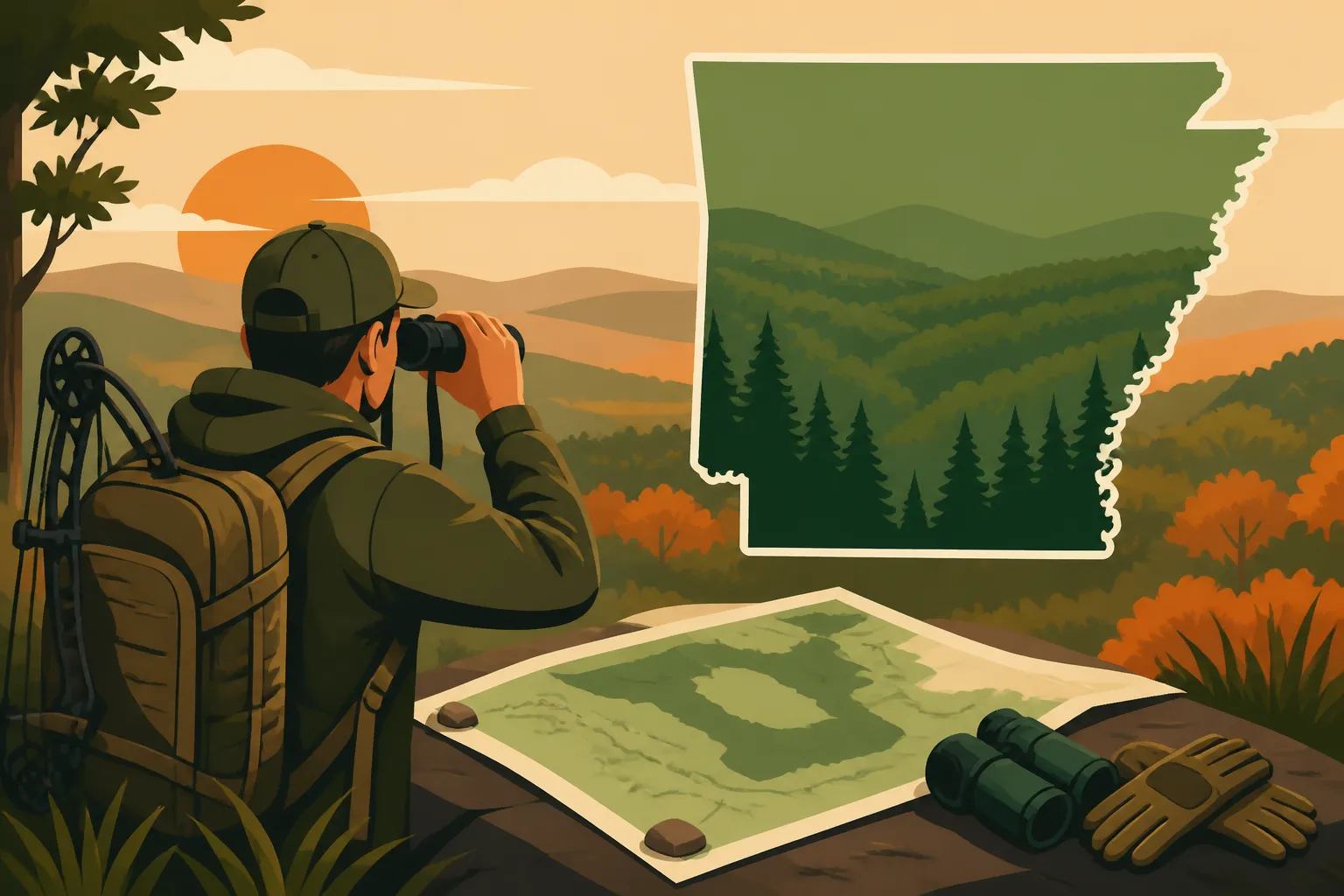
Modern mapping applications are absolute game-changers for public land hunters in Arkansas. Tools like GoHunt, onX Hunt, and even the AGFC's own map tool allow you to delve deep into the terrain before you ever step foot in it. You can examine contour lines to understand elevation changes, identify ridgelines, hollows, saddles, and subtle benches that often serve as natural travel corridors for deer.
For example, when hunting Ozark Ridges and Hollows for Deer, identifying those less obvious benches or flat spots on a steep hillside can be the difference between seeing nothing and seeing a mature buck. GoHunt's detailed topographic maps are excellent for this, allowing you to visualize how deer might move around terrain features, find the path of least resistance, or use elevation for thermal advantages. A keen eye on these maps can reveal overlooked natural funnels or hidden bedding areas that might be invisible from the ground.
Using Aerial Photos to Spot Key Features
Beyond topography, aerial and satellite imagery provides an invaluable bird's-eye view of habitat features that influence deer movement. You can distinguish between dense pine thickets and open hardwood bottoms, identify clearcuts at various stages of regrowth, spot agricultural fields adjacent to public land, and locate water sources like creeks, ponds, or sloughs. This visual information is crucial for understanding the lay of the land.
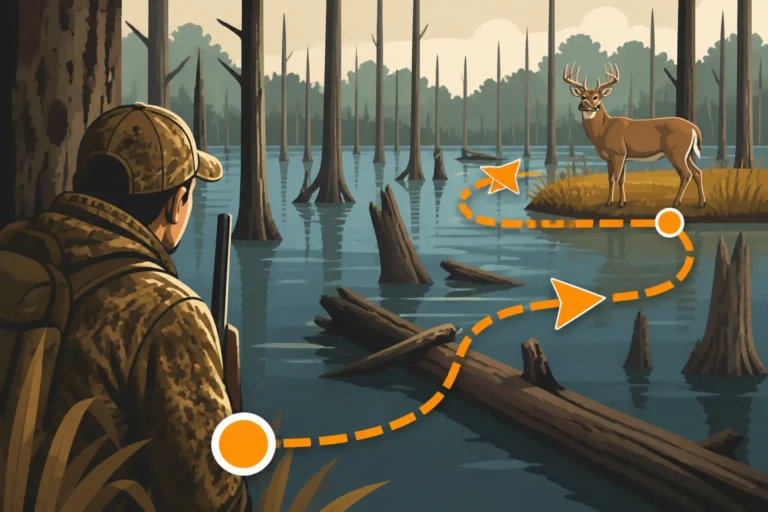
You can learn so much by Reading Aerial Photos for Delta Deer, for instance, discerning subtle changes in timber type that indicate different food sources or cover. Look for edges where different habitat types meet, as these are often high-traffic zones. You might identify old logging roads or faint trails that could serve as easy access for both you and the deer. Pay close attention to any sudden changes in cover density or topography; these "hard edges" are often where deer feel safest and most likely to travel.
Checking Regulations and WMA Rules
This step might seem basic, but it's absolutely non-negotiable and often overlooked until it's too late. Before you even think about where to hang a stand or whether you need a special permit, you need to understand the specific rules for the public land you're eyeing. The Arkansas Game and Fish Commission (AGFC) manages numerous Wildlife Management Areas (WMAs) across the state, and each WMA can have its own unique set of regulations regarding hunting methods, specific season dates, vehicle access, camping, and even stand placement.
While general state regulations apply, WMAs frequently have additional rules. Some might require specific WMA Permits and Draw Hunts, while others might have restrictions on baiting even if it's allowed on private land in the same zone. You'll want to use tools like the Scouting With the AGFC Map Tool and the AGFC website to cross-reference your chosen area with the most current regulations. This diligence prevents potential fines, ensures ethical hunting practices, and ultimately makes for a more prepared and enjoyable experience. Always check for updates, as regulations can change from year to year.
Boots-on-the-Ground Scouting Techniques
While digital scouting gets you started, there's no substitute for putting boots on the ground. The forest floor tells a story that no satellite image can fully capture. It's where you confirm your theories, discover new insights, and truly connect with the habitat you plan to hunt. This is the stage where you transition from armchair strategist to wilderness detective, seeking out the tangible signs of deer activity.
Finding Fresh Sign and Travel Corridors
When you're walking the woods, your primary goal is to find fresh deer sign. This includes tracks, droppings, rubs, and scrapes. Tracks tell you size and direction of travel; look for clear, distinct tracks that haven't been washed out by rain. Droppings, especially piles of soft, green droppings, indicate recent activity. Rubs—where bucks have scraped their antlers on trees—show you a buck's presence and travel routes. Scrapes, patches of bare earth pawed out by bucks, often with an overhanging branch worked above, are communication hubs, particularly important during the rut.
Focus your search on areas that act as natural funnels or pinch points. These could be narrow strips of timber between open fields, saddles in ridges, creek crossings, or breaks in dense thickets. Deer, like humans, often take the path of least resistance. These travel corridors are high-probability areas for an encounter. Even subtle changes in vegetation can create a natural "fence" that funnels deer in a predictable direction, making them prime spots for a stand. For specific insights into these corridors, consider how a Scrape Lines Along a Logging Road can provide consistent buck activity.
Identifying Food and Water Sources
Deer are constantly seeking food and water, and these resources dictate much of their movement. During your scouting, actively look for what deer are currently eating. In early fall, this might be white oak or red oak acorns, persimmons, or wild grapes. Later in the season, they might shift to green browse, honeysuckle, or agricultural crops on adjacent private land. Understanding the availability and quality of these food sources is paramount.
Similarly, identify all available water sources. While deer can go for a while without drinking directly, especially if they're eating succulent browse, reliable water sources like creeks, springs, ponds, or even flooded timber in the Delta, will still draw them in, particularly in dry conditions. The closer you can find a reliable food and water source to quality bedding cover, the better your chances of success. Don't just look for standing water; search for seeps or small depressions that hold moisture, especially on higher ground.
Locating Funnels and Bottlenecks
Funnels and bottlenecks are perhaps the most valuable finds during pre-season scouting. These are natural or man-made features that force deer movement into a concentrated area, making them ideal ambush points. A funnel could be a narrow strip of woods connecting two larger blocks of timber, a saddle in a ridge, or a point where a dense thicket thins out into more open woods. A bottleneck might be a small gap in a fence line, a crossing over a creek, or a point where steep terrain forces deer into a low-lying passage.
By identifying these areas, you're essentially finding where deer are required to travel, rather than simply choosing to. This predictability significantly increases your odds. Look for heavy trails converging into these tight spots, and consider how deer might approach and exit the area. Think about how Reading an Ozark Bench for Deer can reveal subtle funnels caused by terrain, or how Wind and Thermals in Ouachita Hollows might dictate the exact line deer will take through a pinch point. These locations often remain productive year after year, making them valuable long-term assets for your hunting success.
Key Deer Signs and Their Interpretations
| Deer Sign | What It Looks Like | What It Tells You | Best Time to Find |
|---|---|---|---|
| Tracks | Hoof prints in soil or mud | Size of deer, direction of travel, frequency of use (freshness) | Year-round, especially after rain |
| Droppings (Scat) | Piles of pellets or clumps | Recent activity, diet (pellets for browse, clumpy for soft mast) | Year-round, freshness indicates recent use |
| Rubs | Bark scraped off small trees (1-6 inches) | Buck activity, direction of travel, often along travel routes | Late summer through rut |
| Scrapes | Bare patch of ground with overhanging branch | Buck communication hub, sign of rutting activity | Late pre-rut through peak rut |
| Trails | Worn paths through vegetation | Consistent travel routes between bedding, feeding, and water | Year-round |
| Beds | Flattened spots in grass/leaves | Bedding areas, often in thick cover or on sun-exposed slopes | Year-round, especially winter |
| Browsing | Nipped twigs, eaten leaves/acorns | Current food sources, deer presence in an area | Year-round, varies by season |
Understanding Seasonal Changes and Pressure
Arkansas's hunting seasons stretch across months, and deer behavior isn't static during that time. What works in September might be useless in November, and even more so in January. A successful pre-season scouting strategy needs to account for these shifts, understanding how deer will react to changing food sources, breeding cycles, and perhaps most importantly, increasing hunting pressure.
Predicting Early Season Movements
When Arkansas's Archery Deer Season Opens, typically in late September, deer are often still in their late-summer patterns. Their primary focus is on food and security, usually in that order. During this time, scouting should emphasize locating reliable, abundant food sources—think white oak acorns dropping, ripe persimmons, or lush green browse. Deer will often be moving during the cooler parts of the day, meaning dawn and dusk, and will stick close to heavy cover.
Their movements might be predictable, traveling from secure bedding areas to these preferred food plots or natural mast crops. You'll want to identify pinch points or subtle funnels that intercept these movements during legal shooting hours. Remember, early season heat can keep deer more nocturnal, so finding evidence of daytime movement near these food sources is crucial.
How the Rut Changes Everything
The rut is a magical, yet often chaotic, time for deer hunters. It completely throws out many of the predictable patterns you might have identified in early season. Bucks abandon their food-to-bed patterns in favor of chasing does, often moving extensively and during daylight hours they wouldn't normally. Pre-season scouting for the rut means looking for historical sign that indicates a buck's general range and preferred rutting areas.
You'll want to focus on areas where does tend to congregate—thick cover near food sources, or large blocks of undisturbed timber. Bucks will cruise these areas, establishing rub lines and checking scrapes. Even though a scrape you find in August won't be active in November, it tells you a buck used that area in the past and likely will again. Understanding Hunting the Arkansas Rut by Zone can help you pinpoint the peak activity in your specific area, allowing you to focus your efforts when bucks are most vulnerable.
Impact of Hunting Pressure on Deer Behavior
Public land, by its very nature, sees more hunting pressure than most private tracts. This pressure fundamentally changes how deer behave. Once the season opens and hunters start pounding the woods, deer will quickly adapt, becoming more nocturnal, utilizing thicker cover, and retreating to areas with minimal human disturbance—their "sanctuaries." When you're scouting, it's vital to try and anticipate these sanctuary zones.
These might be dense cedar thickets, impenetrable briar patches, steep hillsides, or even islands within swamps that most hunters deem too difficult to access. Often, these are the areas that require the most effort to scout, but they hold the biggest rewards. Identifying Hunting Pressure on Arkansas WMAs and understanding how to counter it is crucial. This is where finding Ground Others Walk Past, those overlooked pockets of cover just a little farther from the parking lot or through a nasty briar patch, really pays off. Your pre-season work in these hard-to-reach spots can give you an incredible advantage when everyone else is bumping deer closer to the truck.
Developing a Dynamic Scouting Plan
Scouting isn't a one-and-done activity; it's an ongoing process that evolves with the season and conditions. A truly effective scouting strategy is dynamic, adaptable, and meticulously documented. It combines your digital reconnaissance with boots-on-the-ground confirmation, creating a comprehensive understanding of your hunting grounds.
Prioritizing Your Scouting Efforts
Public land in Arkansas can be immense, and you simply can't scout every single acre. This is where your digital tools shine in helping you prioritize. After your initial map study, you should have identified several "high-potential" areas: those with good terrain features, promising habitat diversity, and proximity to key resources. Your boots-on-the-ground efforts should focus first on these areas.
Don't be afraid to scratch a spot off the list if ground verification doesn't match your map-based assumptions. Time is precious, so concentrate your physical scouting on confirming the best spots. Look for areas that offer multiple stand locations based on different wind directions, or spots that could serve as both early season food sources and later-season rut cruising lanes. This strategic prioritization saves time and ensures you're investing your energy wisely.
Adapting to Changing Conditions
Even the most thorough pre-season scouting plan needs flexibility. Weather, food source availability, and water levels can change dramatically from late summer to the middle of deer season. A white oak grove loaded with acorns in August might be completely stripped bare by October. A creek that was a reliable water source might dry up, or conversely, a low-lying area might flood after heavy rains.
You might need to make quick decisions in the field. Maybe a new clearcut opened up next door to the public land you scouted, drawing deer away. Maybe a significant cold front pushed deer into heavier cover. Always be prepared to re-scout or at least visually verify conditions closer to or even during the season. This adaptability is what separates good hunters from great ones, allowing them to adjust their tactics to the realities of the woods.
Documenting Your Findings for Future Hunts
This is perhaps the most overlooked aspect of scouting, but it's one of the most powerful. Every time you scout, take notes! Use your mapping app (like GoHunt) to drop pins for rubs, scrapes, beds, food sources, water, and potential stand sites. Take photos with your phone that are geo-tagged to remind you of specific features. Jot down observations about terrain, cover type, and even the direction of prevailing winds or thermals.
This documentation serves as your personal "hunting journal" and is invaluable for future seasons. It helps you remember what worked, what didn't, and why. For example, if you scouted an area in July and marked where to Hang a Camera in Big Timber, your notes from a previous successful hunt might guide your placement. Over time, this cumulative data will build an incredible resource, giving you a deep historical understanding of how deer use your chosen public lands. It's a continuous learning process, and good record-keeping is the cornerstone of that learning.
Disclaimer
Hunting and scouting involve inherent risks. Always prioritize safety, wear appropriate gear, and understand all local, state, and federal regulations before entering public lands. This guide is for informational purposes only and does not supersede official hunting regulations or safety guidelines.