Modern Gun Opening Weekend on Arkansas Public Land
That first Saturday of modern gun season in Arkansas? It's a mixture of pure excitement and, let's be honest, a little bit of dread if you're hitting public land. The woods often feel like a small city has descended upon them, with hunters seemingly behind every tree. This guide is all about navigating that intense pressure, figuring out how to find a pocket of quiet, and increasing your chances of success when everyone else is out there too.
The Unique Challenges of Modern Gun Opening Weekend
Let's not sugarcoat it: modern gun opening weekend on Arkansas public land is tough. It’s an adrenaline rush, for sure, but also a test of patience, planning, and often, sheer stubbornness. The sheer volume of orange vests in the woods means you're not just hunting deer; you're hunting around other hunters, and the deer know it.
The Inevitable Hunter Swarm
From the Delta hardwoods of Bayou Meto to the steep, rocky slopes of the Ozark National Forest, public lands across Arkansas transform into a beehive of activity. Parking lots overflow before dawn, truck doors slam, and headlights cut through the darkness as eager hunters scramble to their spots. You might have scouted a perfect ridge line for months, only to find another hunter's stand already hanging there on opening morning, or hear the distinct crack of a distant shot echoing through what you thought was your pristine sanctuary. It's a frustrating reality that can quickly deflate spirits if you're not prepared for it. This concentrated pressure means that deer are on high alert from the moment the sun peeks over the horizon. They're moving, often in directions you wouldn't expect, simply trying to escape the commotion.
The volume of human scent and noise pushes deer into the thickest, nastiest cover they can find, or sends them running to adjacent private lands if access is easy. It's not uncommon to hear multiple shots within a short span, indicating a flurry of activity, but also confirming that there are many hunters competing for those same animals. Understanding this dynamic is the first step in formulating a successful strategy. It means adapting your usual approach and accepting that the woods won't be quiet and serene. For more context on where these hunters might be, you can always refer to resources on Arkansas Wildlife Management Areas and Public Hunting Land in Arkansas to get a feel for potential hotspots.
Deer Behavior Under Intense Pressure
Deer are incredibly intelligent creatures, and they learn quickly. By the time legal shooting hours begin on opening morning, many deer have already heard trucks, smelled human scent, and likely seen a hunter or two slip into the woods. This immediate pressure changes their patterns drastically. Instead of moving through their usual feeding or bedding areas at predictable times, they become nocturnal, hold tight in dense cover, or move quickly and furtively between parcels of land. They'll often seek out areas that hunters are less likely to penetrate—think deep, nasty thickets, steep ravines, or swampy bottoms that seem impassable.
You'll rarely see deer casually browsing in open timber on opening day after the initial sunrise scramble. Instead, look for them hugging creek bottoms, navigating dense briar patches, or using topographical features to remain unseen. They’re not just trying to escape you; they’re escaping everyone. This is why tactics like still-hunting and understanding wind direction become even more crucial. Their primary goal becomes survival, not food or even breeding (unless the rut is in full swing). Recognizing this shift in behavior is critical for planning your hunt, as it dictates where deer will go and how they'll move.
Pre-Season Strategies for Public Land Success
Success on modern gun opening weekend on public land isn't about luck; it's about preparation. You can't control the number of other hunters, but you can control how well you've prepared and how effectively you adapt. This often means doing things differently than you might on private land or during less pressured seasons.
Digging Deep with Digital and Physical Scouting
Your pre-season scouting needs to go beyond just finding fresh sign. On public land, especially for opening weekend, it's about finding unpressured sign. This means using a combination of digital mapping tools and extensive boot-on-the-ground scouting to identify areas that other hunters are likely to overlook or find too difficult to access. Digital tools like GoHunt are invaluable here, allowing you to pour over satellite imagery, topographical maps, and property boundaries from the comfort of your home. Look for isolated pockets of timber, small drainage systems, or benches on steep hillsides that are a good distance from common access points. Consider spots that require a long walk, a difficult climb, or a challenging wade. These are the places most casual hunters will avoid.
Once you’ve identified potential areas on a map, it’s crucial to get boots on the ground. Visit these spots multiple times before the season, if possible. Don't just look for tracks; look for escape routes, pinch points, and hidden bedding areas that deer would use when pressured. Pay close attention to water sources and any natural funnels or barriers that might direct deer movement. Sometimes, what looks like an impenetrable thicket on a map is actually accessible, but just enough of a deterrent to keep most hunters out. For more detailed information, check out my guide on Scouting Arkansas Public Land Before Season. It also helps to cross-reference with tools like the AGFC Map Tool, which provides specific WMA boundaries and regulations that could affect your planning.
Identifying Overlooked Sanctuaries
The key to public land success on opening weekend often lies in finding those overlooked sanctuaries – pieces of ground that are too inconvenient, too difficult, or simply too far from common entry points for most hunters. These aren't always pristine, untouched wilderness. Sometimes, it's a dense clearcut a few years old, now a thorny tangle, or a small, overlooked slough in a river bottom WMA that's a half-mile walk through mud and briars. Deer know these spots intimately, and they will gravitate towards them when pressure mounts. You can learn a lot about finding these hidden gems by reading up on Finding Ground Others Walk Past.
Think about topographical features: steep inclines, deep ravines, or areas with significant water obstacles often deter less dedicated hunters. In flat delta country, look for small, elevated islands of dry ground within larger swamps or dense cane breaks that are just a little harder to reach. In the Ozarks, it might be a small, rocky bench on a steep bluff face that nobody wants to climb to. These are the places where deer will lie up and wait out the storm of hunters. Using GoHunt's 3D mapping features can help you visualize these terrain changes and identify potential travel corridors that exploit difficult topography. The more inconvenient it is for a human to access, the more likely it is a deer sanctuary.
On-the-Ground Tactics When the Woods Are Buzzing
Once opening day arrives, your pre-season planning needs to translate into smart, adaptable on-the-ground tactics. The woods will be alive with human activity, and your strategy must account for it. Forget about calling deer into open fields; focus on subtle movements and reading the woods.
Silent Movement and Situational Awareness
On a high-pressure opening weekend, stealth is paramount. Every rustle, every crunch of a leaf underfoot, could alert a deer that's already on edge. This isn't the day for crashing through the woods. Instead, embrace a slow, methodical approach, often referred to as still-hunting. Move ten steps, stop for five minutes, and intently scan your surroundings. Use your binoculars more than your feet. Let the woods "settle" around you before taking another slow, deliberate step. This allows any deer you might have bumped to calm down and for you to pick up on their subtle movements. Your movements should be as fluid and quiet as possible, treating every branch and every step with deliberate care.
Situational awareness extends beyond just looking for deer. You need to be aware of other hunters, their locations, and their potential impact on deer movement. Listen for distant shots, voices, or the sound of someone moving through the timber. Sometimes, another hunter unknowingly pushes a deer right into your lap. Positioning yourself downwind of likely bedding cover or escape routes, especially those leading away from common access points, can be a highly effective strategy. Consider reading more about Modern Gun Tactics on Arkansas Public Land for additional insights into hunting during this busy time.
Leveraging Mid-Day Lulls and Terrain Features
Many hunters are early birds, heading out before first light and then retreating to camp or their trucks by mid-morning. This often creates a significant lull in hunting pressure during the middle of the day, from around 10 AM to 2 PM. This can be a golden window of opportunity. While other hunters are eating lunch or taking a break, the deer, having been pressured all morning, might finally feel confident enough to move, stretch, or even grab a quick bite. This is when your still-hunting strategy, coupled with a willingness to stay out longer than others, can pay off big time. Instead of heading back to the truck, find a strategic spot near a travel corridor or dense bedding area and hunker down, staying absolutely motionless and vigilant.
Furthermore, effectively using terrain features to your advantage can be a game-changer. Deer will naturally use ridges, creek beds, dense thickets, and elevation changes to travel undetected. They will often choose the path of least resistance for them, which is usually the path of most resistance for humans. If you’ve used tools like GoHunt to identify these funnels and bottlenecks, you can position yourself where deer are likely to be pushed through or forced to expose themselves. A subtle ridge line, a small saddle, or a dense stand of pines between two more open areas can become a superhighway for pressured deer. Understanding Wind and Thermals in Ouachita Hollows or how deer use subtle elevation changes in flat country can give you a significant edge.
Essential Gear and Uncompromising Safety
Even the best-laid plans can go awry if you're not properly equipped or if safety isn't your absolute top priority. Public land, especially on opening weekend, demands attention to both.
Packing Smart for a High-Pressure Hunt
Given the potentially long walks into unpressured areas, and the need to stay out longer, your gear choices are critical. You'll need a comfortable, well-fitting pack that can carry all your essentials without weighing you down. This includes ample water, high-energy snacks, a reliable headlamp (even if you plan to be out before dark), a sharp knife, and game bags for quartering if you're deep in the woods. A GPS device or a robust mapping app on your phone (like GoHunt) with downloaded offline maps is non-negotiable for navigating unfamiliar terrain and ensuring you don't accidentally trespass onto private property. A small, lightweight climbing stand or saddle can be advantageous if you find a promising spot away from established setups, offering a better vantage point. Don't forget your deer tag, a pen, and zip ties for immediate tagging after a harvest.
Additionally, consider a small, lightweight first-aid kit, whistle, and a power bank for your phone. When it comes to clothing, layers are key in Arkansas's often unpredictable fall weather. And, of course, your hunting weapon should be sighted in and ready. Make sure you understand the specific WMA regulations regarding stands and blinds, which can vary significantly across the state, by checking out Arkansas WMA Rules and Permits. Being prepared allows you to focus on the hunt, not on logistical worries.
Prioritizing Hunter Safety Above All Else
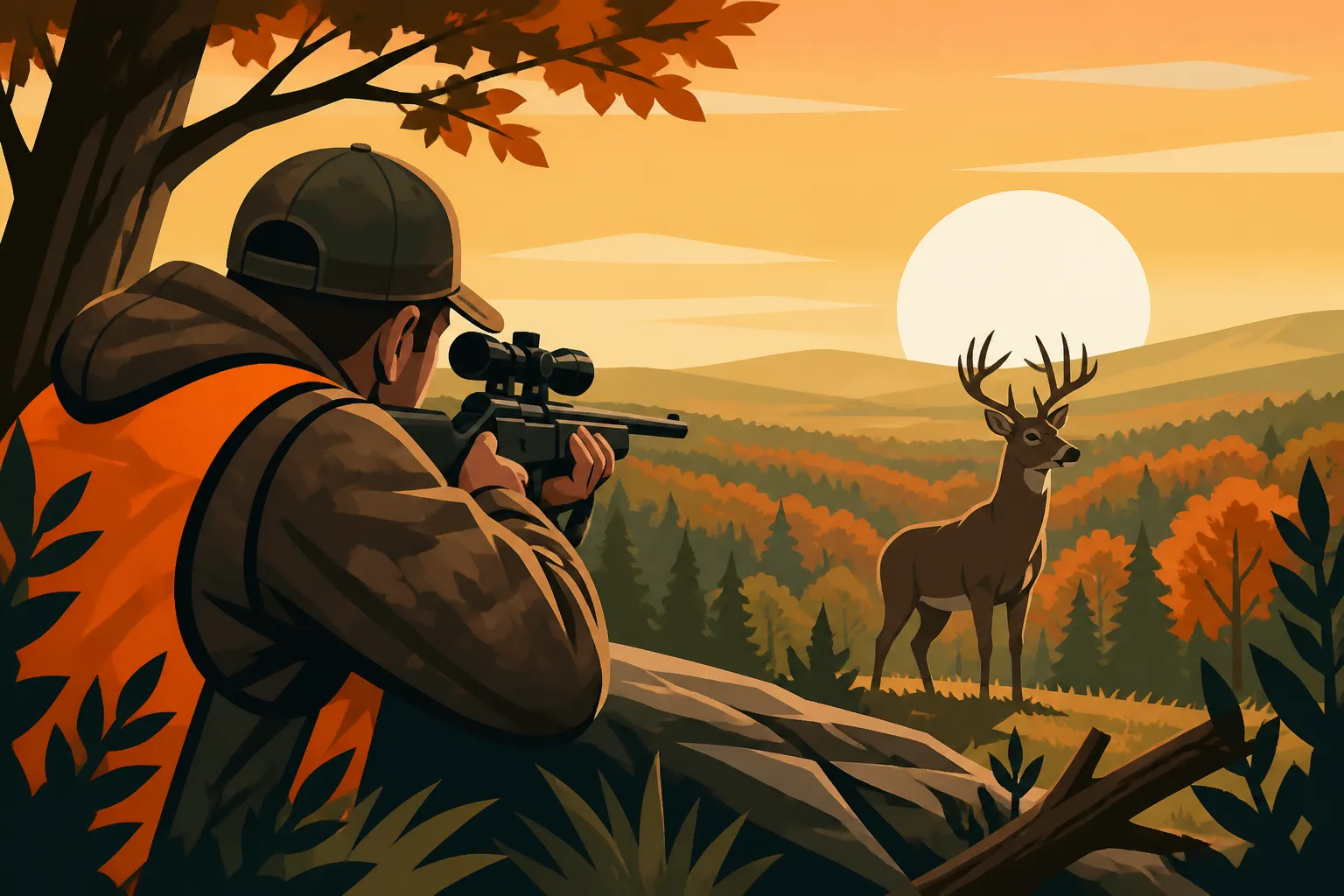
On a crowded opening weekend, hunter safety isn't just a suggestion; it's a lifeline. The sheer number of people in the woods, some of whom may be less experienced or less careful, means you have to be extra vigilant. Wearing hunter orange is not just a legal requirement in many situations but a critical safety measure, making you visible to other hunters. Always positively identify your target and what's beyond it before you even think about putting your finger on the trigger. Err on the side of caution every single time. Never shoot at sound or movement alone. It's a fundamental rule that becomes even more important when surrounded by others. For clarity on specific requirements, review the Arkansas Hunter Orange Rules.
Communicate your hunting plans to someone reliable, letting them know where you're going and when you expect to return. This is especially important if you're venturing deep into remote areas. Carry a fully charged cell phone, but don't rely solely on it for navigation or emergencies, as signal can be spotty in many public land areas. If you're fortunate enough to harvest a deer, the process of Field Dressing in Arkansas Heat can be strenuous, so stay hydrated and be mindful of your physical limits. Remember, no deer is worth risking your life or the life of another hunter. Take your time, be smart, and come home safe.
Disclaimer
The information provided in this guide is for general informational purposes only and does not constitute legal advice. Hunting regulations in Arkansas can change, and it is the hunter's responsibility to review and comply with all current Arkansas Game and Fish Commission (AGFC) regulations and local ordinances. Always consult the official AGFC website or their latest hunting guide for the most accurate and up-to-date information before planning any hunt.