Hunting the Delta Rut in January
Trying to pin down the whitetail rut in Arkansas can feel like chasing a ghost sometimes, especially when you start looking at the Delta region. While much of the state sees peak breeding activity in November, many hunters find themselves scratching their heads when December rolls around and mature bucks are still seemingly locked down. But for those in the know, January in the Delta isn't just a bitter cold afterthought; it's prime time for a second rut, a phenomenon that offers unique challenges and incredible rewards if you know how to navigate it. This guide will deep dive into understanding and successfully hunting the Delta rut in the cold, often wet, days of January.
Understanding the January Rut in the Arkansas Delta
The Arkansas Delta is a world unto itself when it comes to deer behavior. While many hunters across the Ozarks and Ouachitas are focused on the traditional mid-November breeding frenzy, the flat, fertile lands of eastern Arkansas often tell a different story. The delayed rut in this region isn't a myth; it's a very real biological adaptation that savvy hunters can exploit.
Why the Rut Runs Late in the Delta
The primary reason for the delayed rut in the Delta boils down to genetics and environmental factors. Deer herds in the Delta, particularly in the southern and eastern counties, often have different genetic lineages compared to their counterparts in the mountainous regions of northern and western Arkansas. These genetic differences can lead to a later estrus cycle in does, naturally pushing the peak breeding activity further into the calendar. Think of it like a natural biological clock set to a different time zone.
Beyond genetics, the sheer abundance of food sources in the Delta also plays a role. With vast agricultural fields providing rich forage year-round, does might not experience the same nutritional stress that could trigger earlier estrus in other areas. This delayed nutrient-driven trigger, combined with lower hunter pressure after the general modern gun season closes, can create a fantastic opportunity for those willing to brave the January chill. It's a completely different ballgame than hunting the Arkansas Christmas Modern Gun Days in other zones.
Deer Behavior During the Delta's January Rut
Don't expect the same frenzied, chasing-every-doe-in-sight behavior you might witness in October or November. The January rut often manifests as a more subtle, yet equally intense, period of activity. Bucks are still very much looking for does, but the population dynamics have changed. Many of the earlier estrus does have already been bred, meaning those still coming into heat are fewer and farther between. This scarcity can make bucks even more driven and desperate, leading them to cover extensive ground and respond aggressively to calling.
You'll see bucks moving during daylight hours, often cruising edges, timber lines, and thick cover in search of that last receptive doe. Scrape lines might get freshened up, and new rubs will appear as bucks continue to mark their territory and express their dominance. These bucks have also survived the earlier hunting seasons, making them incredibly wary, so understanding their movements and bedding habits becomes paramount. They're not just moving; they're moving with a purpose, often through areas like where Delta bucks bed in standing water.
Key Strategies for Delta Rut Hunting in January
Hunting the January rut successfully requires a shift in mindset and tactics from your typical early season or even mid-rut strategies. The cold weather, potentially high water, and often dense cover demand a more calculated and patient approach.
Scouting and Stand Placement in Late Season
Scouting remains critical, even in January. While leaves are off the trees, offering better visibility, finding fresh sign amidst the often-damp Delta landscape can be tricky. Look for fresh rubs that are still shiny, indicating recent activity. Freshened scrapes, especially those along field edges, pinch points, or near known bedding areas, are like flashing neon signs. The GoHunt app can be an invaluable tool here, allowing you to mark these observations, analyze historical deer movement patterns based on past hunts or trail camera data, and identify key travel corridors. Using the app to pore over aerial photos for Delta deer can reveal subtle terrain features, hidden ditches, or subtle elevation changes that funnel deer, especially when they're actively seeking.
When it comes to stand placement, focus on areas where does are likely to be found, as bucks will be drawn to them. Think about secondary food sources still available, such as remaining beans or corn in fields, or late-dropping acorns in flooded timber. Set up on transition lines between bedding and feeding areas, or along pinch points that bucks must travel through. Consider hunting the edge of a cutover two years after logging, as these often provide excellent cover and browse for does. Remember, bucks will be covering ground, so intercepting them along these natural travel routes is key. Also, don't overlook areas where deer can get out of the wind and find thermal cover. In the open Delta, this might be a dense briar patch, a thicket of young growth, or a levee row lined with dense vegetation.
Tactics for Flooded Timber and Agricultural Fields
The Delta is a mosaic of agricultural fields and bottomland hardwoods, often flooded in January. Each environment demands specific tactics.
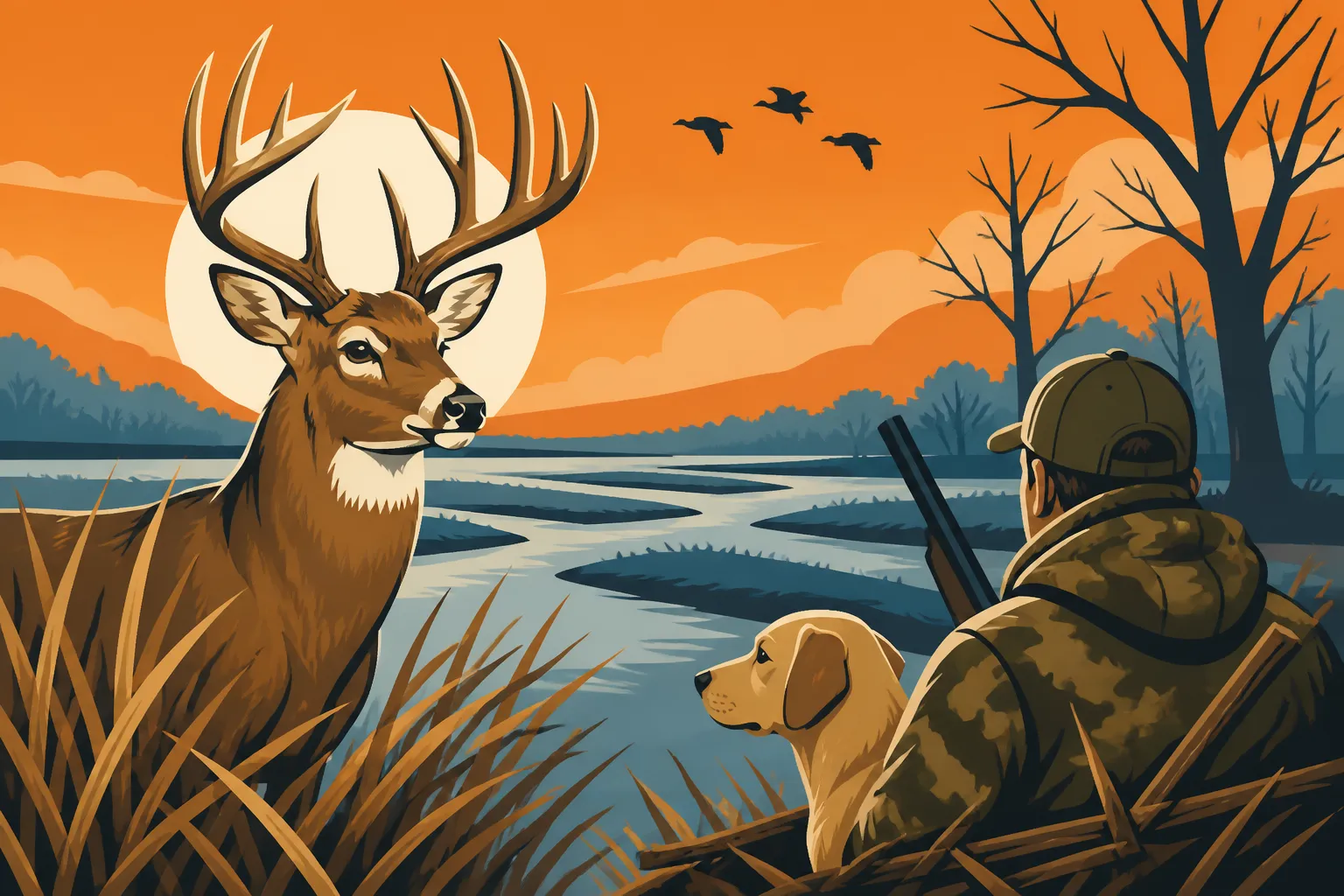
In flooded green timber, the game changes entirely. Deer often utilize subtle rises or "islands" of higher ground within the flood plain for bedding, moving through the shallower water or along slight natural levees to access food. Your entry and exit routes become paramount to avoid spooking deer that are already wary. Consider using a small boat or a kayak to access your stand, minimizing human scent and noise. Setting up a stand overlooking a "hardwood island" or a travel corridor through slightly shallower water can be incredibly effective. Understanding how to call ducks in tight Arkansas timber is one thing, but deer in the flooded woods require a different kind of stealth. Grunt calls in Arkansas river bottoms can still be effective, especially a softer, inquisitive grunt to draw in a cruising buck who might be just out of sight in the dense timber.
For agricultural fields, bucks will cruise the edges, especially downwind, checking for does. If you're hunting standing corn and beans in the Delta that haven't been harvested, these fields offer excellent cover and food, making their edges prime locations. If fields are cut, deer will often move quickly across them, using ditches, fencerows, or tree lines for cover. Setting up a ground blind brushed into a fencerow or levee can offer a great vantage point, especially on cold, windy days. Think about hunting the Arkansas rut by zone, and how the Delta's open fields present unique challenges compared to the tight woods of the Ozarks. Rattling volume in thick cover needs to be adjusted; in more open Delta terrain, you might get away with slightly more aggressive rattling, but always err on the side of caution. A GoHunt map could show you precisely where subtle elevation changes exist along these fields, providing dry bedding spots or preferred travel paths.
Gear and Preparations for Cold, Wet January Hunts
January hunting in the Delta isn't for the faint of heart. Cold, damp conditions are the norm, and being unprepared can quickly turn a promising hunt into a miserable one. Proper gear is non-negotiable.
Essential Cold Weather Clothing and Waders
Layering is your best friend. Start with a good moisture-wicking base layer against your skin, followed by insulating layers like fleece or down, and topped with a waterproof and windproof outer shell. Quality waterproof boots are a must, but if you're dealing with flooded timber or often-soggy field edges, a good pair of chest waders will be invaluable. Brands like Lacrosse and Frogg Toggs offer durable, insulated waders that can keep you dry and surprisingly warm, allowing you to traverse areas that would be otherwise inaccessible. Hand warmers and foot warmers are also highly recommended – they can make a significant difference in your ability to stay on stand comfortably for extended periods.
Don't forget a warm hat and gloves. You lose a significant amount of body heat through your head, and cold hands make it difficult to operate your weapon or other gear. A balaclava or face mask can also help protect against biting winds and keep your face warm, while also breaking up your outline. Remember, staying comfortable is key to staying focused and patient, which is exactly what you need when a wary Delta buck finally makes an appearance.
Transportation and Safety Considerations
Accessing hunting spots in the Delta can be challenging due to muddy conditions and potential flooding. An ATV or a UTV with good ground clearance and four-wheel drive might be necessary, especially on private lands or less-maintained public land roads. For flooded timber hunts, a small, stable jon boat or a canoe is often essential. Always be mindful of water levels, currents, and submerged obstacles. Let someone know your exact hunting location and your expected return time, especially when venturing into remote or flooded areas.
Carrying a dry bag with essential safety items is also crucial. This should include a first-aid kit, a fully charged cell phone (in a waterproof case), a headlamp, fire-starting materials, and extra layers of clothing. Navigational tools, whether it's the GoHunt app on your phone or a dedicated GPS unit, are critical for maintaining your bearings in featureless bottomland or vast fields. Understanding entry routes through flooded timber is not just about stealth; it's about safety, knowing where you're going and how to get back, especially if you're tracking a deer after dark in Arkansas.
Reading Sign and Adapting to Conditions
The Delta in January presents a unique set of challenges that require constant observation and adaptability. Deer patterns can shift quickly based on weather and water.
Fresh Sign and Shifting Patterns
Even in January, fresh sign is the most reliable indicator of recent deer activity. Pay close attention to fresh tracks along field edges, ditch banks, or mud flats in timber. The soft ground in many Delta areas can make tracks incredibly clear, telling you not only about the deer's presence but also its direction and speed of travel. Look for fresh droppings and, of course, active rubs and scrapes. Bucks will often revisit scrapes, especially community scrapes, to check for does. A scrape that was inactive in December might be getting torn up again in January.
Weather patterns, particularly temperature swings and precipitation, can dramatically influence deer movement. A cold front followed by stable temperatures might ignite daylight movement, while a sudden warm spell could slow things down. Still-hunting after a Delta rain can be incredibly effective, as the ground will be soft and quiet, and deer might be up and moving after a period of hunkering down. Be prepared to change your strategy daily, even hourly, based on what the deer and the weather are telling you.
Dealing with Water Levels and Hunting Pressure
Water is the lifeblood and, at times, the bane of Delta hunting. Rising water levels can push deer out of low-lying bedding areas, concentrating them on higher ground or force them to travel specific elevated paths. Conversely, falling water can open up new feeding areas and expose old travel routes. Always check local river gauges and flood predictions, especially on rivers like the Arkansas, White, or Cache. Knowing how to read water levels on the White River, for example, can give you a significant advantage in predicting where deer will be moving.
Hunting pressure, even late in the season, can also play a role. While the crowds of modern gun season are long gone, local hunters who understand the January rut might still be out. If you suspect an area is getting pressured, consider moving to thicker cover or more remote sections that other hunters might overlook. The GoHunt app can sometimes show public/private land boundaries and even identify less-traveled areas on larger public tracts. The goal is to find those secluded spots where mature bucks feel safe enough to cruise during daylight hours, knowing that their chances of encountering a receptive doe are higher there.
Conclusion
The January rut in the Arkansas Delta offers a fantastic, albeit challenging, opportunity for dedicated deer hunters. It's a time when many have hung up their gear, but for those willing to brave the cold and understand the unique biological rhythms of Delta deer, the rewards can be truly exceptional. By focusing on understanding the delayed rut, employing smart scouting and stand placement, adapting to the diverse terrain of flooded timber and agricultural fields, and ensuring you're properly geared for the elements, you can unlock some of the most exciting and memorable whitetail hunting Arkansas has to offer.
Disclaimer
Hunting is an inherently dangerous activity. Always prioritize safety, follow all local and state regulations set forth by the Arkansas Game and Fish Commission (AGFC), and obtain the necessary licenses and permits before heading into the field. This guide provides general information and should not replace professional guidance or personal experience.