Finding Bear Sign in the Ozarks
There’s nothing quite like the thrill of knowing a black bear is in the area, but the dense, rugged terrain of the Arkansas Ozarks can make finding their sign feel like searching for a needle in a haystack. These incredible animals are notoriously secretive, often leaving only subtle clues of their presence. This guide is dedicated to helping you decipher those mysteries, providing detailed strategies for locating bear sign and increasing your chances of an encounter, whether you're scouting for a hunt or simply trying to observe these magnificent creatures in their natural habitat.
Understanding Arkansas Black Bear Behavior in the Ozarks
Before you can even begin to look for sign, you've got to think like a bear. The Arkansas Ozarks offer a unique blend of habitat, and understanding how black bears utilize this environment throughout the year is your first step to success. These animals are incredibly adaptable, but their movements are primarily driven by two things: food and security.
Seasonal Movements and Food Sources
Arkansas black bears are opportunistic omnivores, meaning their diet shifts dramatically with the seasons, and so do their travel patterns. Knowing what they're munching on at any given time is critical for predicting where they might be.
In the spring, as bears emerge from their dens, they're looking for easily digestible greens and the first flush of new growth. Think tender shoots, grasses, and clovers in open, sunny areas. You'll often find them near old logging roads or clearcuts where sunlight can penetrate and encourage this early vegetation. As the weather warms, they'll start tearing into rotting logs and turning over rocks in search of grubs, insects, and larvae, which are crucial protein sources after a long winter fast. This is a great time to look for turned-over rocks and disturbed soil. You might also find them checking out what’s left of last year’s mast crop if it wasn't completely consumed. Understanding these early season food sources is key to Hunting Arkansas Bear Over Natural Food.
Summer brings an abundance of soft mast – berries, berries, and more berries! Blackberries, raspberries, blueberries, and wild grapes become prime targets. Bears will spend hours gorging themselves in dense thickets and along forest edges where these fruits ripen. This means you might find them in areas that are otherwise incredibly difficult for humans to navigate. Keep an eye out for flattened patches of berry bushes or droppings filled with berry seeds. As summer progresses into early fall, harder mast, particularly acorns from various oak species, becomes the absolute king of their diet. This is when bears really start to pack on the pounds for winter. They'll follow the acorn crop, often moving considerable distances to find the best mast producers, and this focus on fall food sources is a major driver of their activity.
Prime Habitat Features for Ozark Bears
The Ozarks are characterized by steep, rugged terrain, deep hollows, and vast expanses of mixed hardwood and pine forests. Bears thrive in this kind of environment because it offers both plentiful food and crucial security cover.
One of the most defining characteristics of prime bear habitat in the Ozarks is dense, often impenetrable, cover. Think thickets of greenbriar, cedar glades, and young timber stands. These areas provide safe havens for bedding, raising cubs, and escaping human disturbance. Bears are naturally reclusive, and they'll always gravitate towards the security that thick cover provides. They might feed in more open areas but will almost always retreat to a secure bedding area within a short distance. When you're thinking about Ozark National Forest Hunting, remember that these remote, brushy spots are goldmines for bear sign.
Water sources are another critical component. While bears don't necessarily need to be right next to a perennial stream, they do need access to water for drinking and cooling off, especially during the warmer months. Look for areas with reliable springs, seepages, or small creeks in deep hollows. These damp areas often hold a higher concentration of insect life and succulent plants that bears feed on. Additionally, bears love to wallow in muddy areas, which can leave distinct impressions. The remoteness of many Ozark hollows, combined with consistent water, makes them ideal bear magnets.
Identifying Fresh Bear Sign on the Ground
Now that you know where to look, let's talk about what to look for. Finding fresh bear sign is like reading a story written in the dirt and trees. The more you learn to interpret these clues, the better you'll become at pinpointing their current movements.
Tracks and Trails
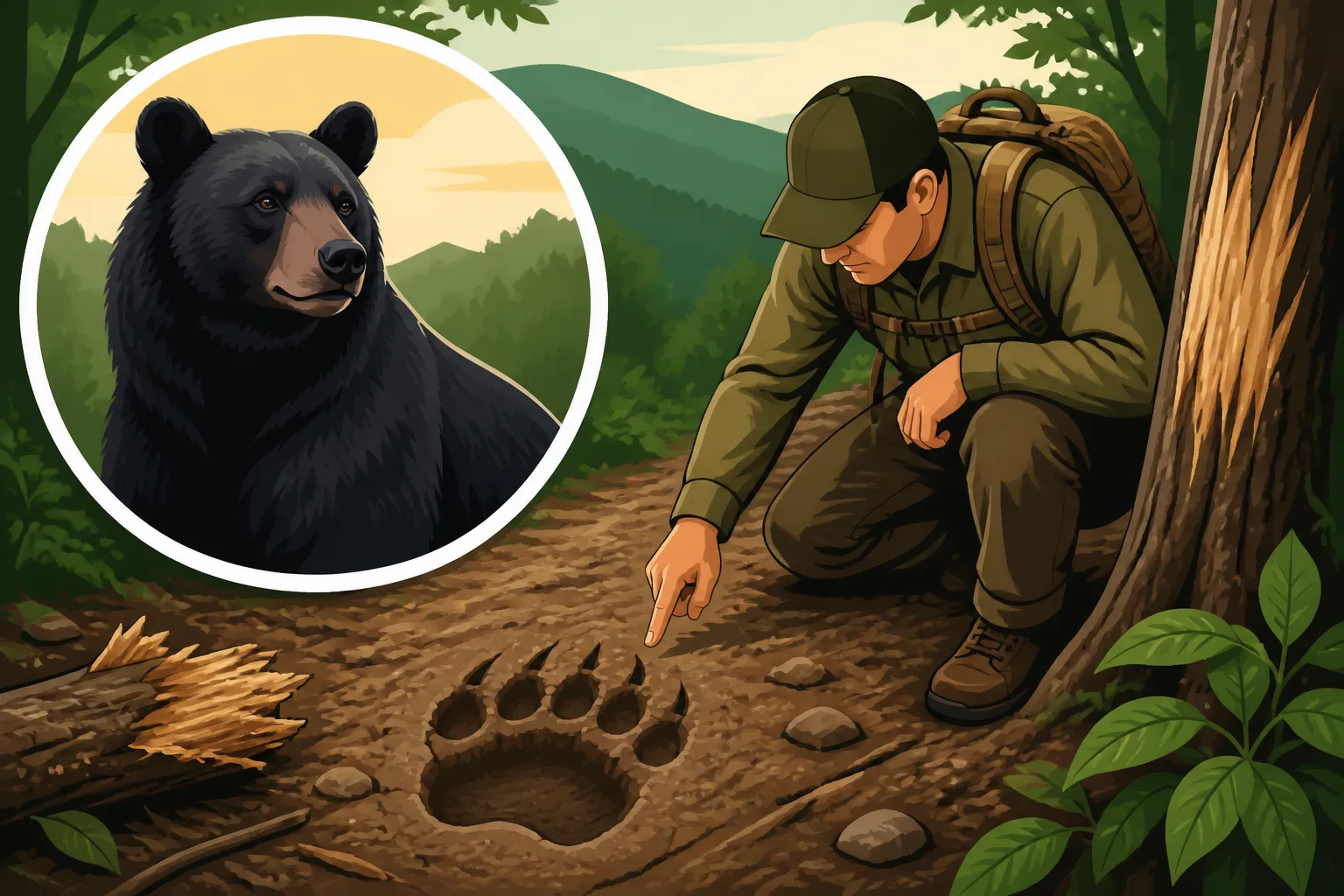
Bear tracks are unmistakable once you know what to look for, and finding them is often the most direct evidence of a bear's presence. Unlike deer, which have cloven hooves, bears leave a distinct five-toed impression with a prominent heel pad.
A bear's front paw is generally broader and more rounded, while the hind paw is longer and more human-like, sometimes with the heel pad not fully registering, making it look like a large human foot. Look closely for claw marks, which often register ahead of the toe pads, especially on the front feet. The size of the track can give you an idea of the bear's size; a mature sow might have a track around 4-6 inches long, while a large boar could leave a track 7 inches or more. Muddy areas, creek banks, and soft soil on old logging roads are prime places to find tracks. When a bear is moving purposefully, it will often "direct register," meaning its hind foot steps directly into the print left by its front foot, creating a cleaner, more elongated track. Heavily used game trails, especially those connecting feeding areas to dense bedding cover, are excellent places to scout. You can learn a lot about animal movement by observing game trails on Scouting Arkansas Public Land Before Season.
Scat and Feeding Evidence
Bear scat (droppings) is an incredibly valuable source of information, telling you not only that a bear was there, but also what it's been eating. The appearance of scat varies wildly depending on their diet.
In the spring and early summer, scat might be looser and filled with plant fibers, insect parts, or small bone fragments if they've found carrion. Later in the summer, you'll see droppings packed with berry seeds and pulp, often purple or red in color. Come fall, scat will be firm, dark, and frequently crammed with acorn fragments. The size of the scat also gives clues about the bear's size. Fresh scat will appear moist and have a distinct, somewhat sweet but earthy odor. Beyond scat, look for other feeding signs:
- Log Rolls: Bears will often roll over rotting logs or large rocks to access insects underneath, leaving clear evidence of disturbance.
- Torn-up Stumps: They'll rip apart old stumps or dead trees to get to grubs, leaving shredded wood and claw marks.
- Broken Branches: In berry thickets or fruit trees, bears will break branches to reach higher fruit. Look for snapped branches with fresh breaks.
- "Bear Beds" in Fields: If bears are feeding in fields of corn or other crops, they'll often flatten down areas to rest and feed, leaving distinct "beds" or trails.
Rubs, Scratches, and Bedding Areas
Bears use trees not just for climbing, but also for communication and marking their territory. These signs can persist for a long time, indicating consistent bear activity in an area.
Rub Trees: Bears will rub their backs and shoulders on trees, often leaving behind hair, musky scent, and sometimes even mud if they've been wallowing. These rub trees, frequently pines or cedars, might have worn bark and be stained with a dark, oily residue. The height of these rubs can sometimes give you an idea of the bear's stature. They often revisit the same rub trees year after year, especially along travel corridors or near dense cover.
Claw Marks: While they use rubs for scent marking, bears will also climb trees, leaving visible claw marks. These are typically on softer-barked trees like sassafras or young pines. You might find parallel vertical scratches indicating a climb, or horizontal scratches where they’ve been reaching for a branch. These marks are different from deer rubs, which typically occur lower and are made by antlers, not claws. Look for these signs particularly in areas where bears are foraging for nuts or fruit in trees, or simply using them as escape routes.
Bedding Areas: Finding a fresh bear bed is like hitting the jackpot. Bears prefer dense, thick cover for bedding, often on north-facing slopes or in stream bottoms where it's cooler, or on sunny slopes in cooler weather to warm up. They'll flatten down an area, often in a thicket of briars or young pines, to create a temporary resting spot. These beds can be hard to spot but look for flattened vegetation and possibly a slight depression in the duff. They might choose a spot with good visibility downwind to detect approaching threats. This is especially true after a good meal, and if you’re trying to understand Arkansas Bear Denning Behaviour, you'll see they pick spots that offer maximum security.
Using Technology and Tools for Scouting
In today's world, hunters and wildlife enthusiasts have access to an incredible array of tools that can dramatically improve scouting efficiency. Leveraging these technologies can help you pinpoint high-potential areas before you even set foot on the ground.
Topographical Maps and Aerial Imagery
Gone are the days of relying solely on paper maps. Digital mapping applications are game-changers for identifying likely bear habitat in the rugged Ozarks. Tools like GoHunt or the AGFC Map Tool allow you to layer detailed topographical maps with aerial imagery, giving you a bird's-eye view of the landscape.
Start by looking for remote areas with minimal road access. These are often undisturbed zones where bears feel safest. Identify dense canopy cover, which appears dark green in aerial photos; these are your potential bedding thickets. Then, overlay topography to find steep hollows and ridges that might serve as travel corridors or escape routes. Bears often follow the path of least resistance when possible, so look for benches, saddles, or gradual slopes that connect different habitat types. Pay close attention to the confluence of different cover types – for instance, where a dense pine stand meets a mature hardwood ridge that produces acorns. This transition zone is often a hotspot for bear activity. GoHunt, for example, offers detailed satellite imagery and terrain features that can help you visualize these connections and plan your approach routes more effectively.
Trail Cameras for Remote Monitoring
Trail cameras are an invaluable tool for confirming bear presence and understanding their movement patterns without constant human disturbance. Placement is key to getting good results.
Place cameras on known game trails, especially those entering and exiting dense cover, or leading to obvious food sources like a heavily acorn-producing oak stand. Look for natural funnels where bears are likely to pass through, such as narrow points between ridges or along a creek bottom. Setting cameras near rub trees can also yield great results. While baiting is not allowed in many areas and has specific rules (check Bear Baiting Rules and Tactics in Arkansas), using natural attractants like a strong-smelling curiosity lure, if legal in your hunting zone, can sometimes draw a bear into camera range. Secure your cameras well above ground level, around 6-8 feet high and angled down, to prevent curious bears from damaging them. This higher placement also makes it harder for other animals or people to tamper with them. Monitoring these cameras over several weeks or months can reveal consistent travel routes, preferred feeding times, and even specific individual bears, giving you insight into Where to Hang a Camera in Big Timber that will capture the most activity.
Practical Tips for Scouting Success
Even with all the knowledge and tools in the world, practical application makes all the difference. Scouting for bears in the Ozarks requires patience, persistence, and a healthy dose of woods savvy.
Timing Your Scouting Efforts
The "when" of scouting can be almost as important as the "where." Bears are active year-round, but certain seasons offer better opportunities to find and interpret their sign.
Spring, shortly after bears emerge from their dens, is an excellent time. The undergrowth is less dense, making tracks and other ground sign easier to spot. Plus, bears are very hungry and actively foraging. As you learn about How Many Black Bears Arkansas Has and their habits, you'll find that early season efforts pay off. Summer can be challenging due to thick vegetation, but it's prime time for finding berry-filled scat and broken branches in fruit trees. Fall, however, is arguably the best time to scout. Bears are in hyperphagia, meaning they're eating almost constantly to put on weight for winter. They're heavily focused on hard mast, so finding acorn-producing ridges and the trails leading to them is critical. The ground is often softer from rain, making tracks more visible, and many plants are starting to die back, improving visibility. If you're planning for Arkansas Bear Seasons and Zone Quotas, fall scouting gives you the most current information on bear movement before the hunt. Even late winter, after the leaves have fallen and before new growth explodes, can be productive for finding older sign and identifying key terrain features more easily.
Safety and Awareness in Bear Country
While black bears are generally shy and avoid humans, it's crucial to always prioritize safety when scouting in their territory. The Ozarks is indeed bear country, and awareness is your best defense.
Always carry bear spray, know how to use it, and have it readily accessible. Make noise as you walk, especially in thick cover or around blind corners, to avoid surprising a bear. Most bears will hear you and move away long before you ever see them. Pay attention to the wind and thermals; understanding Wind and Thermals in Ouachita Hollows can help you approach areas quietly and avoid being winded by animals, but also avoid accidentally stumbling onto a bear. Travel with a partner if possible, and let someone know your plans and expected return time. Be aware of your surroundings, constantly scanning for fresh sign and potential escape routes for yourself. If you do encounter a bear, remain calm, make yourself look as large as possible, speak in a firm voice, and back away slowly. Never run, as this can trigger a chase instinct. While aggressive encounters are rare, preparation and awareness are paramount for a safe and enjoyable experience in the Ozark wilderness.
| Type of Bear Sign | Description | What It Tells You | Best Time to Find |
|---|---|---|---|
| Tracks | Distinct five-toed paw prints with a heel pad (front: rounded, hind: human-like), often with claw marks ahead of toes. | Bear's presence, size, direction of travel, frequency of use for trails. | Year-round, especially in soft soil, mud, or snow. |
| Scat (Droppings) | Varies greatly with diet (berry-filled, acorn fragments, insect parts). Can be loose or firm. | Bear's recent diet, freshness of sign, approximate size of bear. | Year-round, easiest to identify when fresh. |
| Feeding Evidence | Rolled logs, torn-up stumps, broken branches, flattened crop fields. | Bear's foraging activity, specific food sources being exploited. | Spring (insects/roots), Summer (berries), Fall (acorns). |
| Rub Trees | Trees with worn bark, hair, and musky scent from bears rubbing on them. | Bear's territorial marking, common travel routes. | Year-round, can indicate consistent long-term use. |
| Claw Marks | Vertical or horizontal scratches on tree bark, often on softer wood. | Bear climbing activity, may indicate a food source in the tree. | Year-round, more visible on certain tree species. |
| Bedding Areas | Flattened depressions in dense cover, typically in thickets or secluded spots. | Bear's resting spots, indicates recent presence in a secure area. | Year-round, easier to spot when vegetation is sparse. |
Disclaimer
Please remember that hunting regulations and wildlife management practices can change. Always consult the latest Arkansas Game and Fish Commission (AGFC) regulations before engaging in any hunting or scouting activities. Safety should always be your top priority when in the wilderness.