Hunting Arkansas Bear on Acorns
It's incredibly frustrating when you spend countless hours in the woods, hoping to cross paths with an Arkansas black bear, only to come up empty-handed. Often, the missing piece isn't just luck, but a deep understanding of what truly drives these magnificent animals: their stomach. This comprehensive guide is here to shed light on one of the most effective, yet often underestimated, strategies for bear hunting in Arkansas: focusing on the annual acorn crop and the natural food sources that dictate where bears will be.
Understanding Bear Behavior and Acorn Cycles
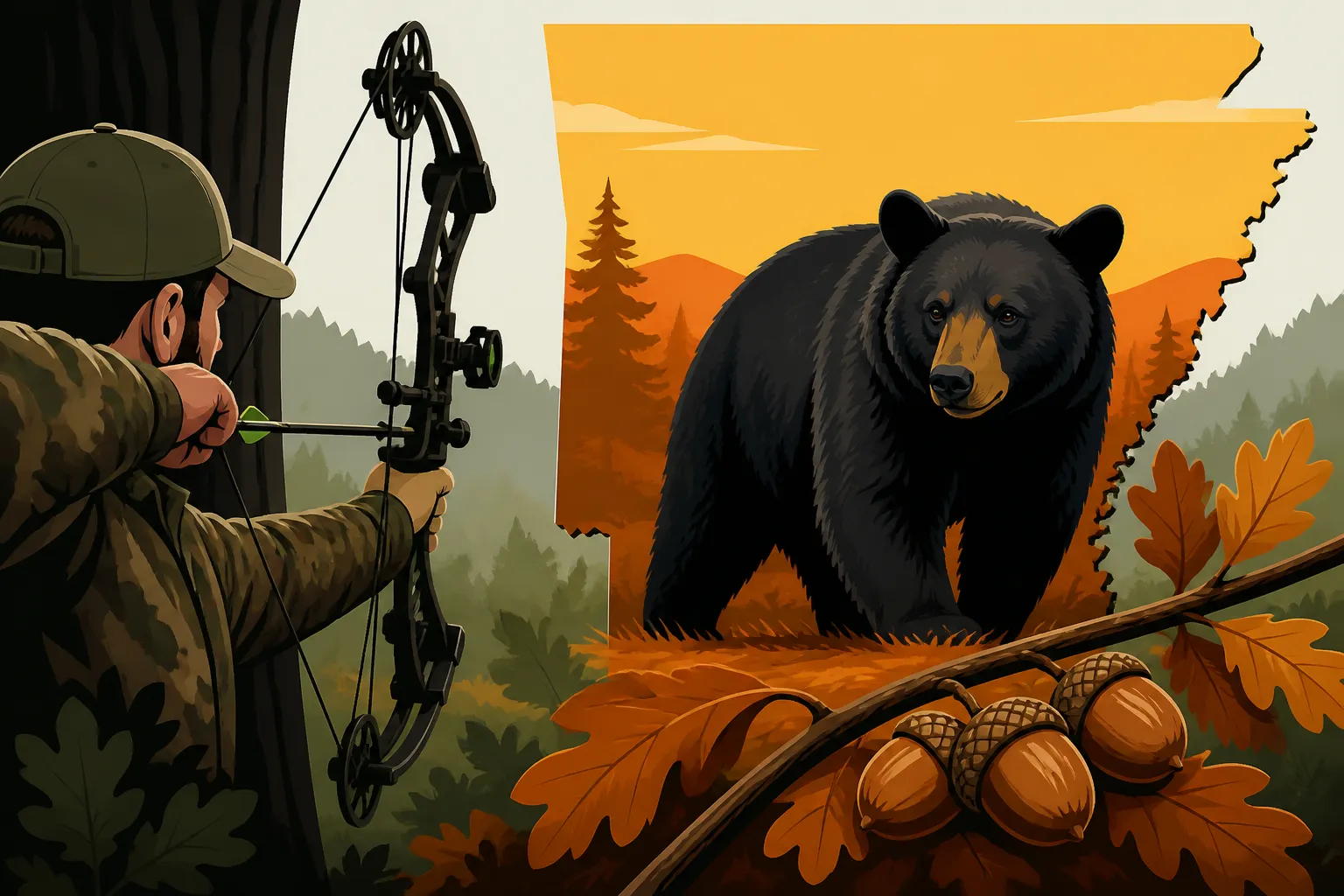
Arkansas black bears are opportunistic omnivores, but their diet heavily shifts with the seasons. When it comes to putting on fat for the winter denning period, nothing beats a bumper crop of acorns. Understanding this fundamental behavior is key to successfully Black Bear Hunting in Arkansas.
The Importance of Hard Mast for Bears
Think of acorns as nature's energy bar for bears. These little powerhouses are packed with carbohydrates and fats, providing the essential calories a bear needs to pack on pounds before the lean winter months. Unlike fruits and berries that are often available earlier in the season and can be more scattered, a good acorn crop can concentrate bears into very specific areas. This isn't just about survival; it's about efficiency. Bears will gravitate to the easiest, most calorie-dense food sources they can find, and when the acorns are dropping, that's often where you'll find them. This natural bounty is a primary reason why The Arkansas Black Bear Restoration has been so successful.
Different Oak Species and Their Appeal
Not all acorns are created equal, and discerning hunters know the difference. Arkansas is blessed with a diverse array of oak trees, each with its own characteristics. Generally, oaks are divided into two main groups: white oaks and red oaks.
- White Oaks: These include species like white oak, post oak, and water oak. Their acorns typically mature and drop earlier in the fall, often from late August through September. Critically, white oak acorns tend to have lower tannin content, making them less bitter and more palatable to bears (and deer, for that matter). Bears will hit white oak flats hard as soon as the acorns start dropping. This early availability makes them a prime target during the opening weeks of the bear season.
- Red Oaks: This group encompasses species such as southern red oak, black oak, and pin oak. Red oak acorns take two years to mature and usually drop later in the fall, from October into November, and sometimes even into early December. They have a higher tannin content, which gives them a more bitter taste, but they also tend to last longer on the ground and persist even after frosts. As the white oak acorns are depleted, bears will transition to red oak stands, especially as the colder weather sets in. Knowing this transition is crucial for sustained success throughout the season.
Understanding the timing and preference can dictate your hunting strategy, allowing you to follow the food source as the season progresses.
Scouting for Bear Sign and Acorn Crops
Finding bears isn't about blind luck; it's about diligent scouting, focusing on food availability, and recognizing fresh sign. Your efforts during the off-season and leading up to the hunt will dramatically increase your chances. Tools like the AGFC map tool or even a premium mapping app like GoHunt can be invaluable in this phase, allowing you to pinpoint potential oak stands from afar.
Locating Productive Oak Stands
Before you even step foot in the woods, spend some time studying aerial maps. Look for large stands of mature hardwoods, especially on ridges, benches, and along creek bottoms. In the Ozarks and Ouachitas, these will often be mixed oak forests. In other areas, you might find more concentrated stands. Once you've identified potential areas, it's time for boots-on-the-ground reconnaissance.
Look for areas with a good mix of both white and red oaks. This ensures a consistent food source throughout the bear season. Pay attention to topography—bears will often travel along natural funnels, saddles, and benches that connect feeding areas to bedding cover. Sometimes, the most productive areas might be tucked away in remote hollows or on less accessible ridges that other hunters overlook. Using a reliable mapping application can help you mark these potential hotspots and plan your access routes.
Identifying Bear Sign Related to Acorns
Once you're in a promising oak stand, start looking for physical evidence that bears are present and actively feeding. Finding Bear Sign in the Ozarks involves more than just looking for tracks.
- Scat: This is perhaps the most obvious sign. Bear scat found in an oak flat during the fall will often be dark, semi-solid, and clearly filled with acorn fragments. The freshness of the scat is key—look for glistening, moist droppings to indicate recent activity.
- Tracks: Look for large, five-toed paw prints in soft ground, especially near creek beds, muddy trails, or areas where bears might cross. Pay attention to the direction of travel to understand how bears are moving between feeding and bedding areas.
- Rooting and Digging: Bears don't just eat acorns off the surface; they'll also root around in the leaf litter to find buried nuts. Look for disturbed leaves and shallow excavations around the base of oak trees. They'll also flip rocks and tear apart rotting logs looking for grubs, but acorn-related digging will be more widespread in productive areas.
- Broken Branches and Claw Marks: While bears will climb trees for various reasons, if you see freshly broken branches in oak trees, particularly higher up, it might indicate a bear climbing to reach acorns that haven't dropped yet. Fresh claw marks on the bark, especially on larger, mature oak trees, are another strong indicator.
- Rub Trees: Bears often rub against trees to leave their scent, mark territory, or even just to scratch an itch. Look for areas of bark rubbed smooth, or even sap oozing from fresh rubs. While not directly tied to acorns, a rub tree near an oak stand confirms a bear's presence.
Scouting isn't a one-and-done deal. Acorn crops can vary significantly year to year and even ridge to ridge. What was a hotspot last season might be a bust this year. Keep tabs on the acorn fall in the weeks leading up to your hunt. A good resource like GoHunt can also integrate private land boundaries with public land maps, helping you avoid accidental trespass while pinpointing prime hunting locations.
Acorn Preference by Oak Species
To help visualize the difference in acorn types and their appeal, here's a quick reference:
| Oak Species Group | Common Examples | Acorn Drop Period | Tannin Content | Bear Preference | Persistence on Ground |
|---|---|---|---|---|---|
| White Oaks | White, Post, Water, Bur, Chinkapin | Late August – September | Low | High (Early Season) | Short |
| Red Oaks | Southern Red, Black, Pin, Scarlet | October – December | High | High (Late Season) | Long |
This table provides a general guideline, but remember that local conditions and individual tree production can vary. Always trust your on-the-ground scouting over general rules.
Tactics for Hunting Bears Over Natural Food
Once you've done your homework and found those golden acorn groves, it's time to put a hunting strategy into action. Hunting Arkansas Bear Over Natural Food requires patience, stealth, and a keen understanding of bear habits. Remember, Arkansas Bear Baiting Rules and Tactics in Arkansas are different and often restricted, making natural food hunting all the more important.
Still-Hunting and Stalking Oak Flats
Still-hunting is an incredibly effective method when bears are actively feeding on acorns. It involves moving slowly, taking a few steps, then pausing for several minutes to scan and listen. Bears, even large ones, can be surprisingly quiet as they root through leaf litter. You need to be even quieter.
- Wind is King: Always pay attention to Wind and Thermals in Ouachita Hollows. Bear noses are incredible, and they will bust you if your scent carries to them. Hunt into the wind, or with a crosswind that carries your scent away from where you expect bears to be. In mountainous terrain, remember that thermals will typically rise in the morning and fall in the evening.
- Slow and Steady: Take small, deliberate steps. Watch the ground for crunching leaves and choose your footing carefully. Use binoculars to thoroughly scan the area before moving. Look for dark shapes, movement, or anything out of place. Bears can often appear as a dark blob against the forest floor.
- Listen: Stop frequently and listen for the sounds of bears. This might be the rustle of leaves as they move, the crunch of acorns, or even vocalizations like huffing or chomping.
- Visibility: In thick oak timber, visibility can be limited. Plan your route to take advantage of natural openings or areas where you can see further. Consider wearing hunter orange, especially during gun seasons, to remain visible to other hunters while still-hunting. Always be sure to know Checking Whether an Arkansas Bear Zone Is Open and follow all regulations.
Ambush Hunting Over Active Acorn Drops
If you've pinpointed a specific area where acorns are raining down and fresh bear sign is abundant, setting up an ambush point can be highly successful. This usually involves a ground blind or a tree stand.
- Tree Stand Placement: Position your stand downwind of the most active feeding areas, preferably where you have good shooting lanes and can see a decent distance. Look for mature trees that offer good concealment. An ideal spot might be overlooking a saddle between two ridges, a travel corridor leading to a bedding area, or directly over a particularly productive white oak. Be mindful of legal requirements for stands on public land, which you can often check using a mapping app like GoHunt.
- Ground Blind Advantages: Ground blinds offer excellent concealment and scent control, especially if brushed in well. They're great for areas where a tree stand isn't practical or if you prefer to hunt from the ground. Set your blind up several days, or even a week, before your hunt to allow bears to get accustomed to its presence. Again, position it downwind, covering potential approach routes.
- Patience is a Virtue: Bears might feed at different times of the day. Be prepared for long sits, especially during the middle of the day when many hunters are out of the woods. Early mornings and late evenings are often productive, but don't rule out midday activity, especially on cooler, overcast days.
- Shot Opportunity: Bears can present challenging shot angles. Always prioritize a broadside or quartering-away shot into the vitals. Be intimately familiar with Shot Placement on a Black Bear before you head into the woods. A poorly placed shot can lead to a long, difficult, and potentially unsuccessful recovery.
No matter your chosen tactic, always ensure you're aware of the specific Arkansas Bear Seasons and Zone Quotas for your hunting area. Bear season structures can be complex and may close early if quotas are met, so staying informed is paramount.
Post-Harvest Considerations and Ethical Practices
Successfully harvesting a bear on natural food is a rewarding experience, but the work isn't over when the animal hits the ground. Proper care of the game and adherence to regulations are crucial.
Bear Checking and Carcass Transport
After you've successfully harvested a bear, one of the first and most critical steps is to properly check it. In Arkansas, all harvested bears must be checked within 24 hours of harvest. This can typically be done through the Arkansas Game and Fish Commission's website, phone app, or by calling a toll-free number. You'll need to provide details about the harvest location, date, and sometimes the sex of the animal. Make sure you understand Arkansas Bear Checking Requirements before you head out.
Transporting a bear carcass requires some consideration, especially in warmer temperatures. While it's tempting to want to show off your trophy, the priority is cooling the meat. Field dress the bear as quickly as possible. If you're in a remote area, having a plan for extraction is vital. Some hunters will quarter the bear in the field to make it easier to pack out.
Care for Meat and Hide
Bear meat, when properly handled, is delicious and versatile. However, it's generally fattier than deer meat, and the fat can go rancid quickly if not cooled.
- Cooling: After field dressing, get the carcass or quarters cooled down as rapidly as possible. If temperatures are warm, even in the 40s or 50s, using ice to cool the meat is highly recommended. Pack the body cavity with ice or place quartered meat in coolers filled with ice, ensuring proper drainage. You'll want to avoid the meat sitting in water.
- Skinning and Processing: Plan to skin and process the bear as soon as you can. Many local processors in hunting communities are experienced with bears. If you plan to do it yourself, be sure you know how to properly skin the animal, especially if you intend to get a rug or skull mount. For taxidermy, the hide should be frozen or taken to a taxidermist promptly.
- Trichinosis: Bear meat can carry trichinosis parasites, just like wild hog meat. This is why it's absolutely crucial to cook bear meat thoroughly to an internal temperature of at least 160°F (71°C). Never consume bear meat raw or undercooked. Freezing the meat can kill some parasites, but it's not a guarantee for trichinosis, so always cook it well. For detailed information on Handling Bear Meat and Hide, consult AGFC resources or experienced hunters.
Taking a bear on natural food in Arkansas is a testament to your scouting and hunting prowess. It connects you to the wild rhythms of the forest and provides some fantastic wild game. Always prioritize safety, ethical hunting, and proper game care to ensure a positive experience and respect for the animal.
Disclaimer
Please be aware that hunting regulations can change frequently. Always consult the most current Arkansas Game and Fish Commission (AGFC) regulations handbook before planning any hunt. This guide is for informational purposes only and does not supersede official AGFC regulations.