Hunting Arkansas Raccoons at Night
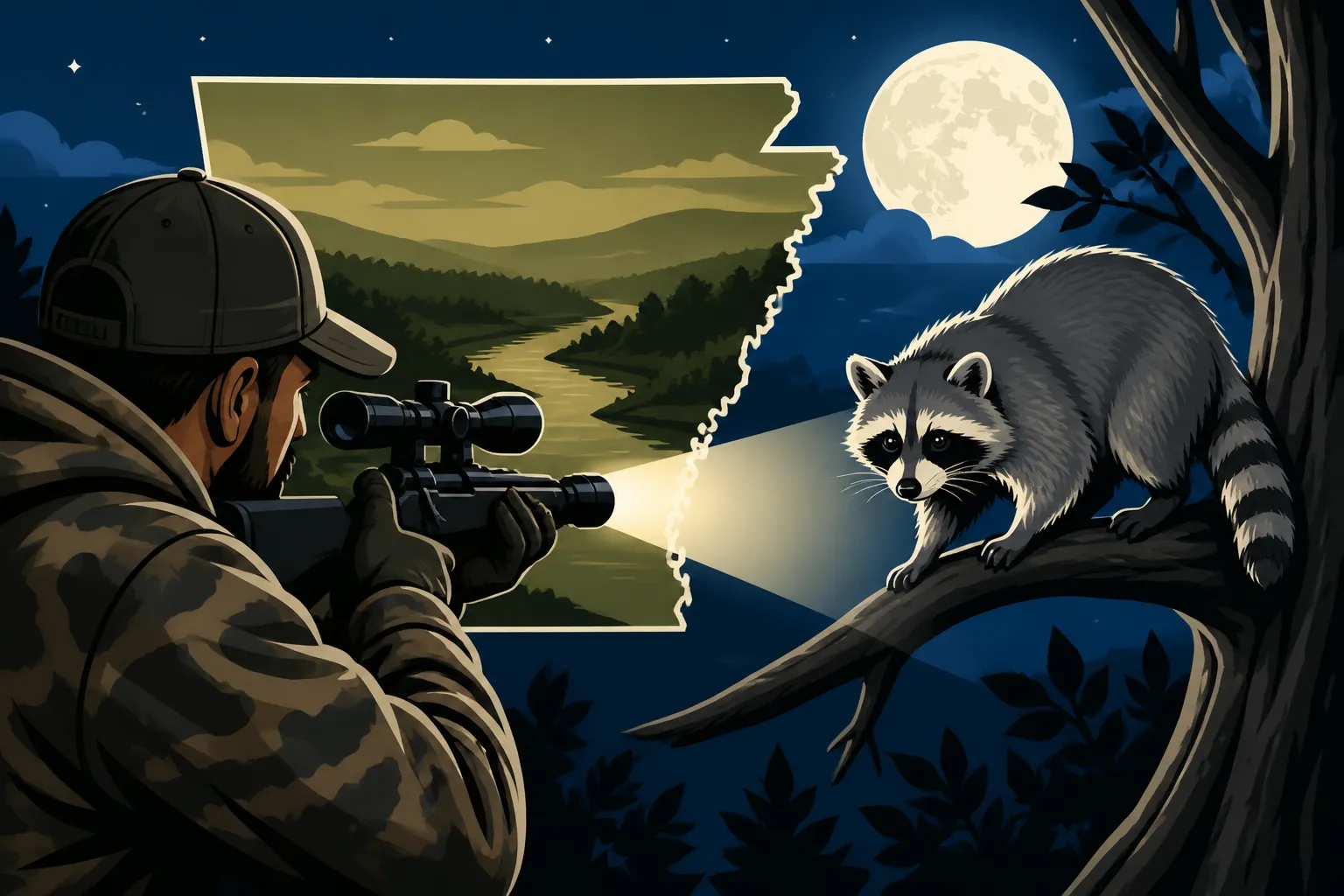
The hum of the night woods, the excited bawl of a good hound, and the focused beam of a spotlight cutting through the darkness – for many Arkansas hunters, there’s nothing quite like the thrill of a raccoon hunt after sundown. But if you’re new to this classic Southern pursuit, it can feel like stepping into a whole different world, fraught with challenges from navigating unfamiliar terrain in the dark to understanding the specific regulations. This comprehensive guide is here to walk you through everything you need to know about successfully and safely hunting Arkansas raccoons at night.
Why Chase Raccoons After Dark in Arkansas?
Night hunting for raccoons isn't just a tradition; it's a practical and often thrilling way to engage with the natural world, particularly for those who cherish the unique challenge it presents. Raccoons are primarily nocturnal, meaning they're most active, and therefore most available, once the sun goes down. This behavior dictates the "when" of raccoon hunting, turning it into a specialized pursuit that offers a distinct set of experiences compared to daytime hunting.
Embracing the Nocturnal Nature of Raccoons
Raccoons are incredible opportunists, adapting to nearly any environment Arkansas has to offer, from the dense bottomland hardwoods of the Delta to the rocky hollers of the Ozarks. Their nocturnal habits are a survival mechanism, allowing them to avoid many predators and human activity, while also exploiting a time when their food sources are abundant and accessible. When the stars come out, raccoons emerge from their dens in hollow trees, rock crevices, or abandoned structures to forage for everything from acorns and berries to crayfish and insects. Hunting them during this active period means you're engaging them when they are naturally on the move, increasing your chances of a successful encounter. This aspect alone makes night hunting the most effective method, rather than a mere preference.
The Thrill of the Chase and Dog Work
For many, the true heart of night raccoon hunting lies in the partnership with a well-trained hound. The sound of a dog striking a track, the building excitement as the chase intensifies, and finally, the distinct change in bay that tells you a raccoon has been treed – these are the sounds and sensations that define the experience. It’s a testament to the incredible instincts and training of breeds like Bluetick Coonhounds, Treeing Walkers, and Redbones, which are specifically bred for this kind of work. Watching a dog unravel a cold track in the dark, using their nose and intelligence to locate the quarry, is a deeply rewarding experience. This form of hunting is less about stealth and more about working in concert with your canine companions, relying on their keen senses to guide you through the darkness. It’s a primal dance, connecting hunter, dog, and quarry in a way that’s hard to replicate in other hunting scenarios.
Essential Gear for a Successful Night Raccoon Hunt
Successfully navigating the dark woods and safely harvesting a raccoon requires a specific set of tools. You can't just head out with your deer rifle and a flashlight; you need specialized equipment designed for the unique challenges of night hunting. The right gear not only increases your chances of success but, more importantly, ensures your safety and the ethical treatment of the animal.
Lighting the Way: Headlamps and Spotlights
The most crucial piece of gear for night hunting, beyond your weapon, is quality lighting. You'll need more than just a small camping headlamp. A good hunting headlamp, often with a powerful main beam and a dimmer red or green light option, is indispensable. The red or green light helps preserve your night vision, allowing your eyes to adjust to the darkness when the main beam is off, and also tends to spook game less than a bright white light. Many hunters use a bright handheld spotlight, sometimes referred to as a "coon light" or "cap light," often powered by a battery pack worn on a belt. These lights are powerful enough to illuminate the highest branches of a tree to spot a hidden raccoon. Look for models with adjustable beams and long battery life. Consider brands like Streamlight or Cyclops for reliable performance. Having a backup light source, whether it's an extra headlamp or spare batteries, is always a wise decision when you're deep in the woods after dark.
Canine Companions: The Indispensable Hounds
You truly cannot discuss raccoon hunting in Arkansas without talking about the dogs. A well-bred, well-trained coonhound is arguably the most vital piece of "gear" you'll have. These dogs are specifically developed for their tracking ability, their "treeing" instincts, and their distinct vocalizations. Different breeds have different attributes:
- Bluetick Coonhounds are known for their cold noses and methodical tracking.
- Treeing Walkers are celebrated for their speed and hard treeing instincts.
- Redbone Coonhounds are prized for their endurance and beautiful, deep chop.
- Black and Tan Coonhounds offer excellent cold trailing and a distinct bay.
A good hound will pick up a raccoon's scent, follow it through varying terrain, and then "tree" the animal, signaling its location with a distinct change in their bay, often a rapid, excited chop. Training a coonhound is a significant commitment, often taking years, but the bond formed and the effectiveness they bring to the hunt are unparalleled. Remember that proper care and training of your dogs are not just about hunting success, but about ethical animal husbandry.
Choosing Your Firearm: Precision and Safety
For night raccoon hunting, precision and minimal disturbance are key. The most common firearm choices reflect this:
- .22 LR Rifle or Pistol: A suppressed .22 LR is often the preferred choice for its quietness, accuracy, and minimal pelt damage if you're keeping the hide. A headshot with a .22 is sufficient to dispatch a raccoon humanely.
- Small Gauge Shotgun: Some hunters prefer a .410 or 20-gauge shotgun with small shot sizes (like #4, #5, or #6 shot). This offers a wider pattern, which can be useful when a raccoon is high in a tree and visibility is limited, or if you're dealing with multiple raccoons in one tree. However, it can cause more pelt damage if fur is your goal.
Regardless of your choice, ensure your firearm is sighted in and you are proficient with it, especially under low-light conditions. Safety is paramount; always know your target and what's beyond it, even if it's just a tree.
Navigation Tools and Personal Safety
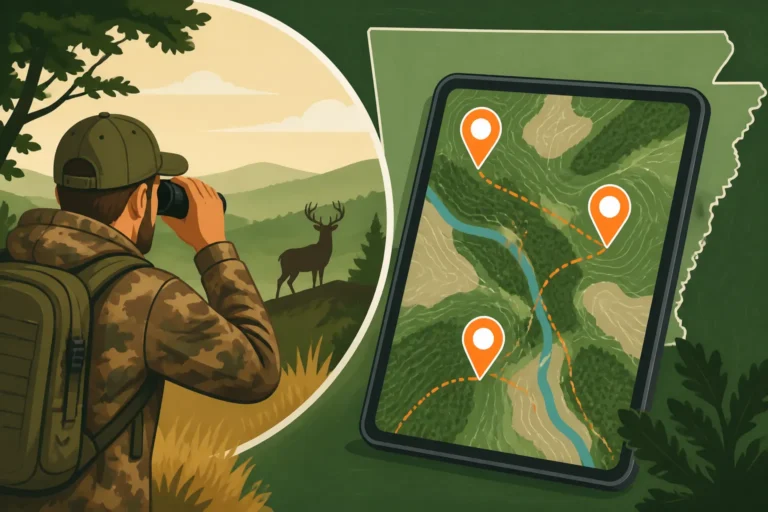
Hunting at night, particularly in unfamiliar territory, demands robust navigation. A reliable GPS unit or a smartphone with a quality mapping app like GoHunt is essential. Apps like GoHunt allow you to download offline maps, mark your vehicle, dog release points, and even tree locations, which can be lifesavers when you're deep in an unlit forest. Given Arkansas's varied terrain, from the dense swamps of the Delta to the steep ravines of the Ouachitas, knowing your exact location and how to get back is critical.
Beyond navigation, consider these safety items:
- First-Aid Kit: For both yourself and your dogs. Sprains, cuts, and punctures are common.
- Knife: A good sharp knife is always useful.
- Whistle or Air Horn: For signaling other hunters or calling your dogs.
- Water and Snacks: Especially important for long hunts.
- Appropriate Clothing: Dress in layers for changing temperatures, and wear sturdy, waterproof boots. You might be wading through water or thick brush. While not always legally required for raccoon hunting, wearing some visible orange, perhaps on your vest or dog collars, can't hurt, especially if hunting near roads or other hunters.
Tactics and Strategies for a Successful Raccoon Hunt
Raccoon hunting at night is a dynamic pursuit that blends scouting, dog handling, and careful shot execution. It's not just about turning dogs loose; it's about understanding raccoon behavior and working effectively with your hounds to locate and harvest your quarry.
Scouting and Identifying Prime Raccoon Habitat
Even though your dogs do the bulk of the "scouting" during the hunt, effective pre-season scouting can significantly increase your success rates. Raccoons are creatures of habit, often frequenting areas with reliable food sources and denning opportunities. Look for:
- Water Sources: Raccoons thrive near rivers, creeks, ponds, and swamps. The Delta region of Arkansas, with its abundance of waterways and flooded timber, is prime raccoon country.
- Food Sources: Pay attention to mast crops like acorns (especially white oak acorns) in the fall, cornfields after harvest, and areas rich in berries or small invertebrates.
- Den Trees: Look for large trees with hollows, especially near water. Old growth timber in areas like the Ozark National Forest can provide excellent denning sites.
- Tracks and Sign: Fresh tracks along muddy banks, scat, or disturbed areas where they've been foraging can tell you where they're active.
Using mapping tools like GoHunt during your daytime scouting can help you mark these potential hot spots. These marked locations can then guide where you release your dogs at night, focusing your efforts on high-probability areas. Understanding features like "Running Hounds in the Ouachitas" or "Hunting Arkansas Flooded Green Timber" can offer insights into different terrain types.
The Art of Running Hounds in the Dark
Once you've identified a promising area, the real fun begins. Releasing your dogs is a moment of anticipation. They will quickly start casting, sniffing for a scent.
- "Striking": When a dog picks up a fresh track, their bark will change, signaling they've "struck" a scent. This is where the chase begins.
- "Trailing": The dogs will follow the track, often vocalizing as they work it. You'll learn to distinguish the excited babble of a dog on a hot trail from the more deliberate barks of one working a colder scent.
- "Treeing": The ultimate goal is for the dogs to "tree" the raccoon. When this happens, their bark will change dramatically – a loud, consistent, rapid "chop" or "bawl" directed upwards, indicating the raccoon has gone up a tree. This is your cue to move in.
Following the dogs in the dark is part of the adventure. It requires careful footing, listening intently to their barks to gauge their progress and direction, and using your navigation tools. Sometimes the raccoon will run for a long distance, sometimes it will tree quickly. Patience is key. If you're hunting with multiple dogs, learning how to tell their individual barks apart can be incredibly helpful for knowing which dog is doing what.
Locating the Raccoon and Ethical Shot Placement
Once your dogs have treed, the challenge shifts to finding the raccoon in the canopy. Approach the tree quietly to avoid spooking the animal. Use your powerful spotlight to systematically scan the branches, looking for the tell-tale glowing eyes or the dark, bushy outline of the raccoon. They can be incredibly adept at hiding, often flattening themselves against a limb or tucked into a fork. Take your time and be thorough.
Once located, ethical shot placement is paramount. A headshot with a .22 LR is generally preferred for a quick, humane dispatch and to minimize pelt damage. If using a shotgun, aim for the head and neck area. Ensure you have a clear shot and a safe backdrop. Always be aware of your dogs below; never take a shot if there's any risk to them. If the raccoon is in a position where a safe, ethical shot isn't possible, it's better to move on and let the dogs find another. Respect for the animal and safe hunting practices should always take precedence over filling a bag.
Arkansas Regulations and Best Practices for Night Hunting
Hunting raccoons at night in Arkansas, like all hunting activities, is governed by specific regulations set forth by the Arkansas Game and Fish Commission (AGFC). It’s crucial to understand and adhere to these rules not only for legality but also for safety and the conservation of wildlife. Familiarizing yourself with "Night Hunting Rules for Arkansas Predators" is a must.
Legal Seasons and Methods
In Arkansas, raccoons are classified as furbearers and typically have a generous hunting season that often runs from early fall well into winter and even early spring. This allows ample opportunity for night hunting. There is generally no bag limit on raccoons, reflecting their robust population and occasional designation as nuisance animals, especially in agricultural areas. However, always check the current AGFC regulations each year, as dates and specific rules can change.
For night hunting raccoons, the use of artificial lights is explicitly permitted to locate the animal once it has been treed by dogs. The primary method remains using well-trained hounds to track and tree the raccoons. Unlike some other game species, you don't typically need to worry about antler point restrictions or specific checking requirements for harvested raccoons. However, if you plan on selling the furs, you will need to be aware of "Trapping and Furbearer Rules" and any specific permits required for commercial fur harvest.
Dog Hunting Regulations and Considerations
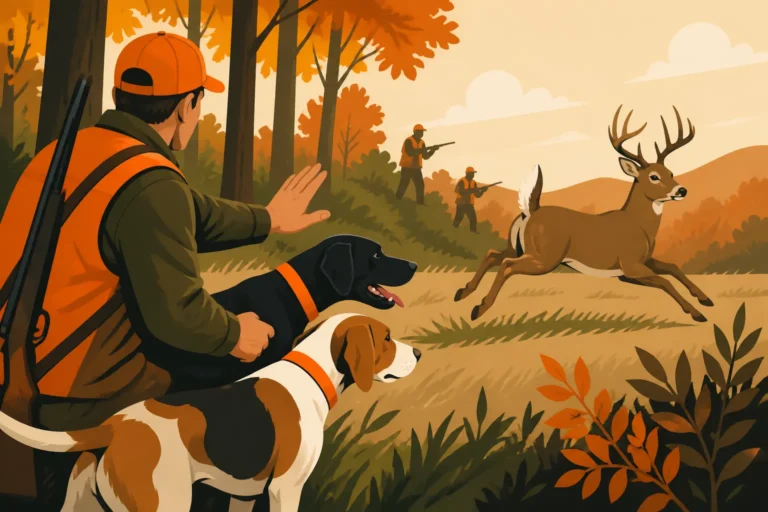
Using dogs for raccoon hunting is a time-honored tradition in Arkansas, but it comes with its own set of rules. While "Running Deer Dogs in Arkansas" has strict limitations, running dogs for raccoons at night is generally well-established. Make sure your dogs are properly licensed and that their collars display your contact information. It’s also important to understand that public lands, such as Wildlife Management Areas (WMAs), may have specific regulations regarding dog use, or even be closed to dog hunting at certain times or for specific species. Always check the individual WMA regulations before heading out. For instance, some areas may have restrictions on ATVs or require special permits, as outlined in the general "Arkansas WMA Rules and Permits."
When hunting private land, securing "Getting Private Land Permission in Arkansas" is not just good manners, it's legally required. Even if your dogs are on a track, you cannot cross private property lines without permission. Mapping apps like GoHunt can again prove invaluable here for identifying property boundaries. Respecting property rights is a cornerstone of ethical hunting.
Safety and Ethical Practices
Night hunting carries inherent risks due to limited visibility and uneven terrain. Prioritize safety:
- Communication: Hunt with a partner or at least inform someone of your hunting plans and expected return time. Carry fully charged cell phones or a satellite communication device.
- Weapon Handling: Always treat your firearm as if it's loaded. Keep the muzzle pointed in a safe direction, even when traversing brush. Only load your firearm when you are ready to shoot and have a clear target.
- Environmental Awareness: Be mindful of slippery conditions, steep drops, and dense undergrowth. The sounds of the night can be deceiving, so move slowly and deliberately.
- Respect for Wildlife: While raccoons may be abundant, always strive for a clean, humane kill. Do not waste meat if you plan to consume it, and properly dispose of carcasses if not.
Raccoon Hunting Quick Reference
| Feature | Description |
|---|---|
| Primary Method | Using trained coonhounds to track and tree raccoons, followed by hunter approach and harvest. |
| Seasonality | Generally robust, often extending from early fall through late winter/early spring. Check current AGFC regulations annually. |
| Bag Limit | Typically no bag limit for raccoons in Arkansas. |
| Legal Hours | Night hunting is expressly permitted for raccoons (furbearers). |
| Required Gear | Powerful headlamp/spotlight, GPS/mapping app (e.g., GoHunt), .22 LR rifle/pistol or small gauge shotgun, trained coonhounds, sturdy boots, first-aid kit. |
| Dog Regulations | Dogs must be licensed. Specific rules for public lands (WMAs) may apply. Private land requires permission. |
| Ethical Focus | Humane dispatch with headshots, respect for private property, safety in low-light conditions, responsible dog handling. |
| Notable Areas | Dense bottomland hardwoods, river and creek bottoms, agricultural areas (cornfields), areas with abundant mast crops, throughout the Ouachita and Ozark National Forests, and other "Public Hunting Land in Arkansas". |
Disclaimer
Hunting involves inherent risks, and rules and regulations can change. This guide is for informational purposes only and does not constitute legal advice. Always consult the most current Arkansas Game and Fish Commission regulations and local ordinances before engaging in any hunting activity. Ensure you have the proper licenses, permits, and landowner permissions. Prioritize safety, ethical conduct, and responsible wildlife management at all times.