Handling Dogs in a Deer Drive
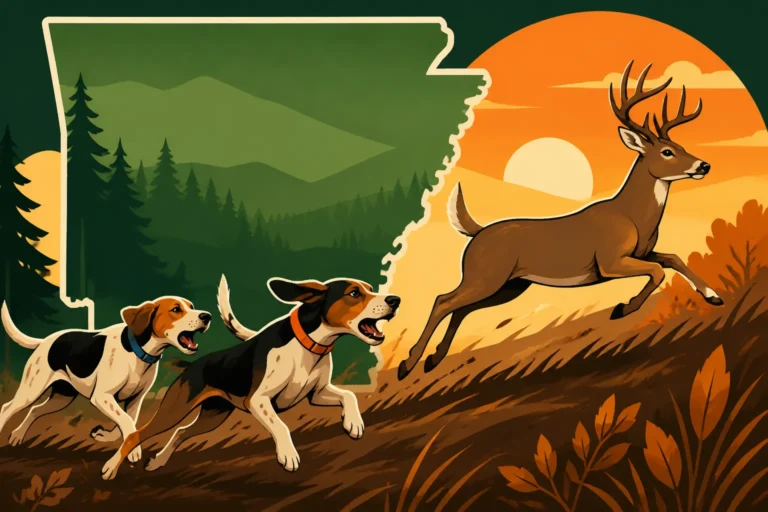
Many Arkansas hunters have experienced the unique blend of thrill and challenge that comes with trying to move deer out of dense cover. When you introduce deer dogs into that equation, the complexity can feel like it triples, bringing with it a whole new set of considerations from keeping track of your valuable hounds to ensuring a safe and effective deer movement. This guide is dedicated to navigating the often-tricky world of handling dogs during a deer drive in Arkansas, offering practical advice to make your next hunt smoother, safer, and ultimately, more successful.
Understanding Deer Drives with Dogs in Arkansas
Deer drives utilizing dogs are a time-honored tradition in many parts of Arkansas, particularly in the flatter, thicker timber of the Delta. However, it's not simply a matter of turning dogs loose and hoping for the best. There’s an art and a science to it, heavily influenced by the diverse landscapes we hunt and the specific rules we must follow. Getting a successful drive off the ground requires a deep understanding of these factors.
The Unique Challenges of Arkansas Terrain for Dog Drives
Arkansas is a state of stunning, yet challenging, contrasts, and each region presents its own unique set of headaches when you're trying to orchestrate a deer drive with dogs. In the vast, sprawling bottomland hardwoods, sloughs, and cypress breaks of the Arkansas Delta, you're constantly battling standing water, seemingly impenetrable briar thickets, and deep, mucky swamps. Dogs can quickly become bogged down, lose scent trails in the water, or get tangled in the nearly impassable undergrowth, making communication with them nearly impossible. Hunters on foot, pushing through this type of terrain, might find it incredibly difficult to keep up or maintain their designated lanes, leading to chaotic drives.
Consider those massive cutovers or older clearcuts that dot our landscape—they're absolute magnets for bedding deer, offering incredible security cover. However, they're also a nightmare for dogs and handlers alike. Navigating tangles of downed timber, dense saplings, and vicious briars can quickly wear out your dogs, making it incredibly tough to hear their barks or communicate with them, let alone keep track of their precise location. Even with the best GPS technology, knowing exactly where your dogs are when they're buried in such dense cover is a constant struggle, making a planned push extremely difficult.
Then, shift your focus to the rugged Ozarks and Ouachitas, and you're dealing with an entirely different beast: steep, rocky inclines, deep hollows, and slick creek beds that can put even the most conditioned dog out of commission if they're not physically prepared. Sound behaves differently in this topography, echoing and distorting, making it even harder to distinguish a dog's bark from an echo or to communicate effectively with other hunters. Deer in these areas are masters of using elevation to their advantage, slipping silently over a ridge and into another drainage before you even realize they're gone. A successful drive here isn't just about pushing deer; it's about understanding how your dogs and the deer interact with these specific, demanding landscapes. If you're hunting the high ground, understanding how to read an Ozark Bench for Deer becomes paramount to positioning your standers.
Legalities and Ethics of Dog Drives in Arkansas
Before you even think about putting dogs on the ground for a deer drive, you absolutely must be intimately familiar with the rules. Arkansas has very specific regulations about using dogs for deer hunting, and these can vary significantly by zone, by season, and even within specific Wildlife Management Areas (WMAs). It's not a free-for-all, and pleading ignorance of the law is never a valid excuse for a violation. Always, and I mean always, double-check the current Arkansas Game and Fish Commission (AGFC) regulations for the season you plan to hunt and the precise area you'll be in. These regulations typically specify which zones allow dog hunting and during what periods, so a quick check of the regulations on Arkansas Dog Deer Hunting Rules is the first step in planning any hunt.
Beyond the letter of the law, there's the critical ethical component of dog drives. It's fundamentally about respecting the game, the land you're hunting, and your fellow hunters. A truly well-executed dog drive isn't about haphazardly running deer until they're exhausted; it's a strategic maneuver designed to move deer from dense, inaccessible cover into pre-determined shooting lanes where standers are positioned. This requires immense discipline from every hunter involved, as well as from the dogs themselves. Our aim should never be to create chaotic or unsafe situations that could endanger deer, our dogs, or even ourselves. This also means being incredibly mindful of private land boundaries, especially if you're hunting adjacent to properties where dog hunting isn't permitted or appreciated.
The perception of deer hunting with dogs can be quite polarizing, with strong opinions on both sides. To ensure that this deeply rooted hunting tradition continues to be viable and accepted in Arkansas, responsible hunting practices are not just important—they are absolutely paramount. This includes rigorous dog training, meticulous drive planning, crystal-clear communication among all participants, and the commitment to ensuring quick, ethical harvests. No one wants to see a deer that has been run to exhaustion for miles, or a beloved dog that has been injured, or a neighboring landowner becoming justifiably upset by dogs trespassing onto their property. Adhering to these ethical guidelines and understanding the specific rules about running deer dogs on Arkansas Public Land helps preserve this method of hunting for generations to come.
Essential Preparations for a Successful Dog Drive
The success of any deer drive, especially one involving dogs, hinges almost entirely on the preparation that happens long before a single boot hits the ground. It’s about meticulous planning, proper training, and ensuring every member of your hunting party, canine and human, knows their role. Skipping these vital steps is a recipe for frustration and potential mishaps.
Selecting and Training Your Deer Dogs
Choosing the right dogs for a deer drive in Arkansas is a decision that shouldn't be taken lightly. While a variety of breeds can be trained for tracking and pushing deer, certain breeds truly excel in the dense cover and often challenging terrain found across our state. For smaller game like rabbits, Beagles are fantastic, but for deer, you're generally looking towards specific hounds or hound crosses known for their incredible endurance, keen scenting ability, and, crucially, their distinctive voices. Breeds like Black and Tan Coonhounds, Plotts, Redbones, or various "curs" with strong tracking lines are often favored. You need dogs that can cover significant ground, stick tenaciously to a scent trail, and ideally, "chop" or "open up" on a track with a clear, distinguishable bark that instantly tells you they're on a hot trail and where they're headed.
Training these dogs is a continuous, year-round commitment; it's certainly not a one-time event that ends once they're out of puppyhood. They need to be physically conditioned to handle long, grueling days in some of the toughest terrain imaginable, which means much more than just a casual walk in the park. Consistent exercise, a high-quality nutritional diet, and regular veterinary care are non-negotiable foundations for healthy, effective deer dogs. More importantly, they need to learn to "handle" – meaning they respond reliably to your commands, can be called off a track if necessary, and are generally well-behaved both in the field and back at camp. This specialized training often begins with early exposure to deer scent and controlled tracking exercises, gradually building their confidence, their drive, and their obedience.
Beyond basic obedience, specialized training for deer drives focuses on encouraging their natural instinct to pursue deer while simultaneously teaching them boundaries. This includes desensitizing them to gunshots, getting them accustomed to working cooperatively with other dogs in a pack, and crucially, teaching them to return to the handler or a designated recovery point. Many modern hunters now utilize GPS tracking collars, like those offered by GoHunt, which have become indispensable tools for monitoring your dogs' movements and ensuring their safety, especially when they disappear into a deep Ozark hollow or a vast, sprawling Delta thicket. Investing in robust, ongoing training and reliable technological gear isn't just an expense; it's a vital investment in both successful hunts and the long-term well-being of your entire pack.
Hunter Positioning and Communication Strategies
A deer drive with dogs is only as strong as its weakest link, and all too often, that weak link can be attributed to poor communication or a haphazard approach to hunter positioning. Before a single person or dog steps foot into the woods, a detailed plan must be laid out, ideally using a comprehensive map. This plan needs to clearly identify the starting point for the "drivers" (those accompanying the dogs), the precise boundaries of the push, and the exact, safe locations for the "standers" (those positioned to intercept the deer). Always consider natural funnels, known pinch points, and the most likely escape routes that deer in that specific area are known to use. It is absolutely crucial to scout these areas extensively beforehand; understanding elements like Reading an Ozark Bench for Deer or Where Delta Bucks Bed in Standing Water can genuinely make all the difference in where you place your standers for optimal success.
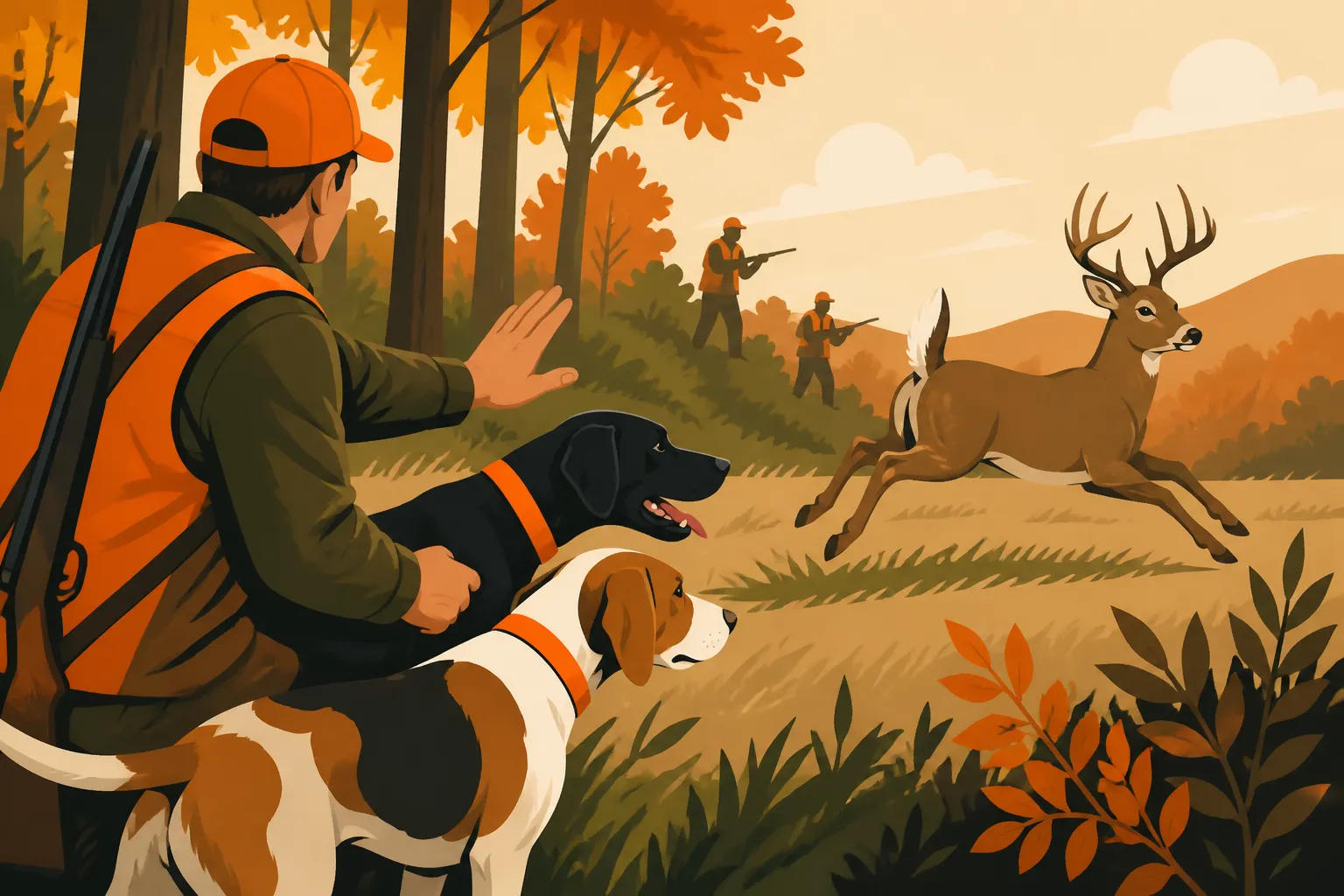
Standers must be positioned with utmost strategy and purpose, not just in convenient spots. Their locations should offer clear, unobstructed shooting lanes, a safe backdrop beyond the target area, and anticipate the most probable deer movement patterns based on the drive direction and local terrain. Pay close attention to wind direction and thermal currents, especially in hilly or mountainous country, as these can dramatically influence how deer move and whether they scent an approaching hunter. Every single person in the hunting party needs to know the exact whereabouts of every other hunter, both for paramount safety and for the most effective deer movement. This often means designating specific lanes, sectors, or clear fields of fire for each stander, ensuring no cross-shooting or unsafe angles.
Effective communication during the entire drive is absolutely paramount. Handheld radios or, if cellular service is reliable, cell phones are invaluable tools for coordinating the movements of drivers and standers. Establish clear signals, codewords, or specific phrases before the hunt begins – for example, a specific call or radio message meaning "deer crossing," or "dogs heading directly your way." Modern mapping and GPS apps, such as those found on GoHunt, can further enhance this coordination, allowing everyone to visualize each other's positions in real-time. This significantly reduces the risk of accidents and dramatically improves the overall efficiency of the drive. The more informed and interconnected every member of your hunting party is, the safer and far more effective your deer drive will ultimately be. You'll also want to make sure everyone understands Arkansas Hunter Orange Requirements for safety.
Executing the Drive: Dog and Hunter Coordination
Once the planning is done and everyone is in position, the real work begins. Executing a successful deer drive with dogs is a dynamic process that demands constant coordination, keen observation, and a deep understanding of both canine and deer behavior. This stage is where all your preparation truly pays off.
Releasing and Managing Dogs During the Drive
The moment you release the dogs to start the drive is a critical point. Dogs should be released precisely at the designated start of the drive, ideally in an area where they can quickly and easily pick up a fresh track. Avoid the temptation to simply turn them loose indiscriminately; their initial burst of energy should be directed towards known deer bedding areas or prime cover you intend to push. The drivers, the hunters accompanying the dogs, should follow at a safe and manageable pace, providing consistent encouragement and helping to maintain a general, planned direction for the push. This isn't a footrace; it's a carefully controlled maneuver designed to systematically move deer.
Managing your dogs effectively during the actual drive involves a delicate and finely tuned balance. You want them to be enthusiastic, vocal, and driven on the track, but critically, not so out of control that they blow past your standers or push deer into unsafe or unintended areas. GPS collars are, without a doubt, your best friend in this scenario. By constantly monitoring their movement on your handheld device, you can anticipate exactly where deer might break from cover and guide your standers to be ready. For those using GPS tracking systems, platforms like GoHunt provide real-time updates that allow drivers to see exactly where their dogs are, helping to guide the push effectively. If a dog starts to get too far off course, or gets onto a track you don't want it pursuing (perhaps a non-target species or, more critically, onto private property where you don't have permission), knowing how and when to call them back is absolutely crucial. This is precisely where all that consistent, year-round training truly pays dividends.
The drivers themselves also need to maintain acute awareness of their own surroundings, not just their dogs. Continuously look for fresh deer sign, listen intently for any changes in the dogs' barking intensity or rhythm, and communicate frequently and clearly with the standers. The primary role of the driver is to keep the momentum of the push going, effectively covering the designated cover, and subtly guiding the dogs as much as possible without overly interfering with their natural tracking instincts. Remember, the overarching goal here is to gently, but persistently, persuade deer to move out of cover and towards the standers, rather than simply scaring them into a full-blown, uncontrolled panic. Consider the techniques used in Two-Person Drives on Small Tracts, as many of the principles of coordinated movement apply to larger groups as well.
Post-Drive Protocol and Dog Retrieval
Once a deer has been harvested, or the drive reaches its planned conclusion, the work for the hunting party is far from over. The absolute first priority must always be hunter safety – ensuring all firearms are made safe, unloaded, and accounted for before anyone begins to move to retrieve game or dogs. Only then can you shift focus to recovering the harvested deer and, just as importantly, gathering all your dogs. This latter task can often prove to be the most challenging part of the entire operation, as an enthusiastic dog might continue tracking a deer even after it has left the immediate drive area or if the deer was missed.
Having a meticulously clear and well-rehearsed plan for dog retrieval is absolutely essential. This often involves designating specific meeting points for handlers, having backup handlers available, and, without question, relying heavily on those indispensable GPS tracking devices. If a dog is still hot on a track, handlers may need to follow their GPS signal, sometimes for considerable distances, through challenging terrain. Always carry spare batteries for all your GPS units and handheld radios – nothing is worse than a dead battery when you're trying to locate a lost dog. Strategically placing a vehicle on the far side of the drive can also greatly assist in quickly retrieving dogs that have gone a bit further than anticipated. Understanding how to track a deer in Ozark Rock or perform Blood Trailing After Dark in Arkansas can be vital skills for both game and dog recovery.
Finally, always prioritize the well-being of your canine hunting partners. After a strenuous and often grueling drive, your dogs will be tired, thirsty, and quite possibly scratched up. Provide them with ample fresh water immediately, thoroughly check them over for any injuries (thorns, cuts, scrapes, and especially ticks), and ensure they get a good, nourishing meal. Proper care and attention after the hunt not only ensure they're healthy and ready for your next outing but also reinforce their eagerness and loyalty as valuable hunting partners. It's a significant commitment of time and effort, but witnessing your well-trained pack working seamlessly together in the field to help you harvest game is an incredibly rewarding experience for any dedicated Arkansas hunter.
| Aspect of the Drive | Key Considerations for Success | Potential Challenges | Mitigation Strategies |
|---|---|---|---|
| Terrain Navigation | Understanding local topography, water levels, and vegetation density | Dense briars, deep water, steep rocky inclines, thick timber | Pre-scouting, appropriate footwear, GPS mapping (e.g., GoHunt), physical conditioning |
| Dog Selection | Endurance, scenting ability, distinctive bark, pack mentality | Overly aggressive dogs, lack of stamina, silent trailers, independent runners | Proper breed selection, consistent training, conditioning, GPS tracking |
| Hunter Placement | Strategic positioning for safe shooting lanes, anticipating deer escape routes | Unsafe shooting angles, missed opportunities, uneven coverage | Detailed map planning, pre-hunt briefing, visual confirmation of positions |
| Communication | Clear, concise, and consistent information exchange during the drive | Poor radio reception, confusion over terminology, lack of updates | Radios with fresh batteries, agreed-upon codewords, GPS sharing apps |
| Dog Management | Guiding dogs to maintain drive direction, calling off unwanted tracks | Dogs getting lost, pursuing non-target game, crossing private land | GPS collars, recall training, designated handlers, backup retrieval plan |
| Retrieval | Locating dogs and harvested deer efficiently post-drive | Lost dogs, difficult terrain for deer extraction, darkness | Designated meeting points, extra batteries, game carts, blood trailing skills |
Disclaimer
Hunting is an inherently dangerous activity. Always prioritize safety, adhere to all Arkansas Game and Fish Commission regulations, and respect private property. The information provided in this guide is for educational purposes only and should not replace proper hunter education or professional guidance.