Hunting Turkeys in Ouachita Pine
There's nothing quite like the sound of a gobbler hammering at first light, but if you've spent any time chasing those elusive birds in the vast, often daunting, pine forests of the Ouachita Mountains, you know it's a completely different ballgame. The dense timber, confusing terrain, and unique turkey behavior in these areas can leave even seasoned hunters scratching their heads. This guide is here to walk you through the specifics of hunting wild turkeys in the Ouachita pine country, helping you unravel its mysteries and hopefully put a big tom on your shoulder.
Understanding the Ouachita Pine Ecosystem for Turkeys
Let's be honest, the Ouachitas aren't the classic hardwood river bottoms often associated with booming turkey populations and easy visibility. These mountains are characterized by extensive pine plantations, mixed with scattered hardwoods, steep terrain, and thick undergrowth in many areas. It's a challenging but rewarding landscape if you know what to look for and how to adapt.
How Pine Plantations Differ from Hardwoods
When you step into a mature pine plantation in the Ouachitas, the first thing you'll notice is the difference in light, sound, and understory. Hardwood forests, especially mature ones, often have a more open understory, allowing sound to travel further and giving you better visibility. Turkeys in hardwoods also rely heavily on mast crops like acorns and pecans, which dictate their movements through the fall and can be key attractants in the spring.
Pine plantations, on the other hand, especially younger ones, can be incredibly thick with briars, privet, and other dense vegetation. This makes walking tough, visibility next to nothing, and gobblers might sound close when they're actually a good distance away, or vice-versa. Mature pine stands can be more open on the forest floor, with a carpet of needles, but they still lack the diverse food sources of a true hardwood bottom. Gobblers might strut along old logging roads or in small openings, but they're usually much more reclusive than their river bottom cousins. It's a completely different rhythm, and trying to hunt them like you would birds in the Delta will lead to a lot of frustration.
Key Food Sources in Ouachita Pine
Turkeys still need to eat, even in the "green deserts" of pine. While mast isn't as prevalent as in richer hardwood areas, it’s not entirely absent. You’ll find scattered oaks, particularly on ridges and in creek bottoms, providing acorns that turkeys will absolutely key in on when they drop. Beyond that, turkeys in pine country are insectivores and omnivores. They'll scratch through the pine needle duff for grubs, beetles, and other invertebrates. They also seek out tender green shoots, berries, and seeds from various plants that manage to grow in the filtered sunlight. Think about small clearings, pipeline rights-of-way, old firebreaks, and the edges of established pine stands where sunlight reaches the forest floor, promoting diverse plant growth. These are often the places where turkeys will spend time foraging. During certain times of the spring, if you can find areas with lush green growth, especially near water sources, you've likely found a turkey feeding hotspot.
Roosting Habits in Pine Forests
Just like in other habitats, turkeys in the Ouachitas will seek out tall, sturdy trees to roost in at night for safety. While they might occasionally use a large hardwood if available, the towering pines themselves offer excellent roosting opportunities. Look for the tallest trees on a ridge line or overlooking a valley, especially those with strong horizontal limbs. Turkeys often fly up into the canopy from a lower perch, so look for "fly-up" and "fly-down" areas where the ground cover is disturbed or droppings are concentrated.
Understanding their roosting habits is paramount for an effective morning hunt. If you can pinpoint a roost location the evening before, you can plan your approach to be within striking distance before they fly down, often before sunup. Remember, sound carries differently in pine, so getting closer than you might in hardwoods without spooking them is often key. You don't want to be caught trying to cover too much ground once they hit the forest floor.
Scouting and Locating Turkeys in Pine Timber
Scouting in the Ouachitas, especially in pine, is absolutely critical. This isn't a place where you can just wander in and expect to bump into birds around every corner. The sheer vastness and uniformity of pine stands can make finding turkeys feel like finding a needle in a haystack. But with the right approach, you can narrow down your search. If you're looking for more general knowledge on scouting before the season, take a look at our article on Scouting Arkansas Public Land Before Season.
Interpreting Sign in Pine Plantations
The ground in pine plantations is often covered in a thick layer of needles, which can make spotting tracks or subtle scratchings difficult compared to bare dirt or leaf litter in hardwoods. However, if you know what to look for, the sign is still there. Turkey droppings are a dead giveaway, especially those distinct j-shaped droppings from gobblers. Look for them on old logging roads, around potential dusting bowls (often dry, sandy spots), and under potential roost trees.
Dusting bowls, while harder to spot under a blanket of pine needles, will still be shallow depressions where turkeys have fluffed up. Focus your search for these in sunnier, drier areas, or along the edges of clearings. Scratch marks where turkeys have raked through the needles for food will also be visible if you pay close attention, especially in areas where the needle cover is thinner. Don't forget to look for wingtip drag marks in dusty areas or mud along roads where a strutting gobbler has been showing off.
Using Technology for Scouting
In these vast Ouachita pine forests, technology is your best friend. Relying solely on your eyes and ears will leave you exhausted and frustrated. This is where tools like GoHunt really shine. I mean, seriously, trying to navigate these mountains without a solid mapping app is like trying to find a specific pine tree in a forest of millions without a compass. GoHunt, for example, allows you to download offline maps, mark potential roost sites, food sources, and travel corridors like old logging roads or creek drainages.
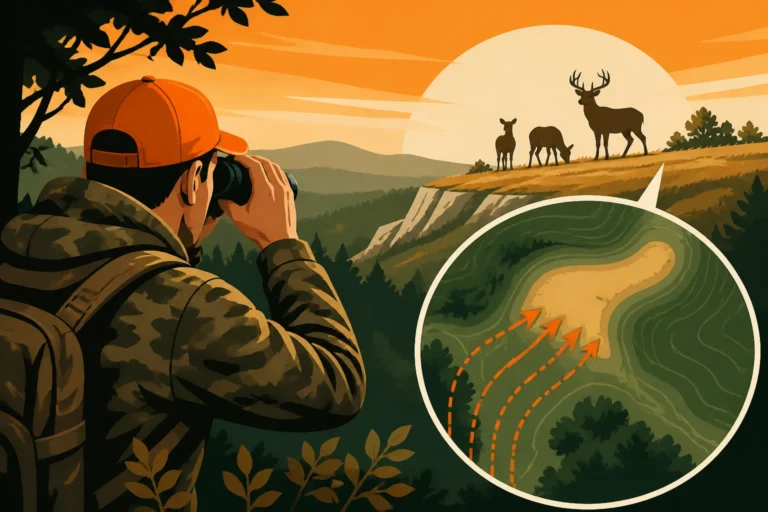
Before you ever set foot in the woods, use these apps to study topographical maps. Look for subtle changes in elevation, saddles, and benches that turkeys might use as travel routes. Identify areas where pine transitions into mixed hardwoods, as these "edge" habitats often concentrate game. The Arkansas Game and Fish Commission's own Using the AGFC Map Tool is also an invaluable resource for identifying public land boundaries and specific WMA regulations, ensuring you're hunting legally and effectively. Using these resources to mark waypoints for potential setups or to find hidden clearings can drastically cut down on your in-the-field guesswork.
Listening for Gobblers in Vast Pine Stands
The silence in a pine forest can be deceiving. Sound behaves differently here. The dense, vertical structure of the pines can absorb and muffle sound, making a gobbler sound further away than he actually is, or making him seem louder right next to you. This is one of the biggest frustrations, trying to pinpoint a bird when the sound is just… everywhere.
Your best bet for locating birds by sound is often at first light, before they fly down. Position yourself on a high point or an advantageous ridge to try and hear those initial tree gobbles. Even then, you might only get a faint clue. Don't be afraid to move, quietly and slowly, trying to get a better read on the direction of the gobble. Sometimes, the only way to confirm a bird's location is to move closer and listen again. Remember that Wind and Thermals in Ouachita Hollows can also play a huge role in how sound travels, so be mindful of the conditions.
Effective Calling and Setup Strategies
Once you've located a bird, or at least a general area, the real challenge begins: getting him to commit. Turkeys in the Ouachita pines can be notoriously tight-lipped and wary, especially if they've been pressured.
Adapting Your Calling to Pine Environments
The thick cover of a pine forest means you generally need to be more aggressive with your calling volume, at least initially, to cut through the density. However, once a bird acknowledges you, you should scale back to softer, more subtle calls. A gobbler in thick pine isn't necessarily going to come running on a string; he might approach cautiously, trying to pinpoint the source of the sound without exposing himself.
Focus on calls that project well, like box calls or crystal/slate calls, for initial locator calls. Once you get a response, switch to softer purrs, clucks, and lost hen yelps to draw him in. The key is to sound like a lonesome hen that's just out of sight, but not too far away. Remember, in these dense woods, a gobbler's world is often limited to a few dozen yards of visibility. If he thinks he can see the hen, he'll likely hang up. Softening your calls and being patient can make all the difference. Sometimes, less is more when he's close.
Choosing a Smart Setup Location
This is where many hunts are won or lost. In thick Ouachita pine, your setup location is even more critical than in open country. You need to maximize your visibility while minimizing the turkey's ability to see you. Look for natural openings, old logging roads, firebreaks, or subtle changes in terrain like a bench or a small saddle where you might get a clear shot.
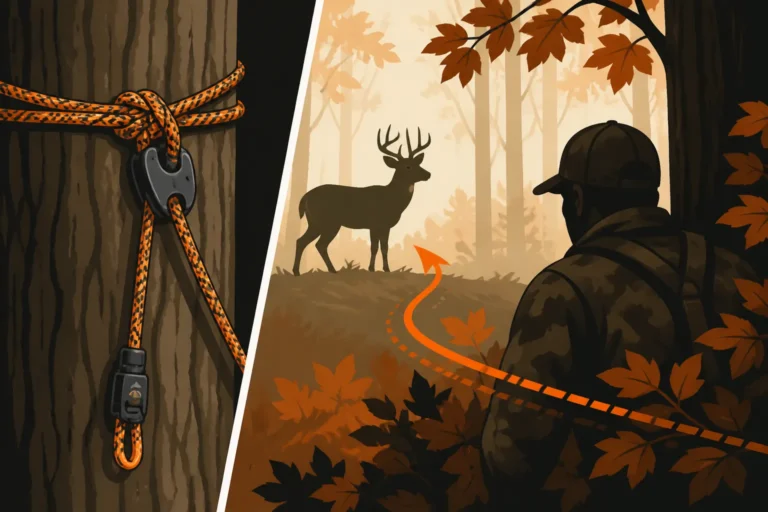
When a gobbler answers your call, try to get into a position where he has to come around an obstacle – a thick clump of pines, a small rise, or a bend in the road – before he sees your setup. This buys you those precious extra seconds to get your gun up. Always set up with a tree wider than your shoulders to your back, breaking up your outline. For an idea of how to think about this, consider reading Setting Up Against a White Oak, even if it's for a different tree, the principles of concealment remain the same.
Decoy Use in Pine Timber
Decoys can be a double-edged sword in pine country. On one hand, they offer a visual stimulant that might convince a hesitant gobbler to close the distance. On the other hand, their limited visibility in dense pine means they might not be seen until the gobbler is already in close, often having circled your position.
If you decide to use a decoy, place it in an area where it has the best chance of being seen from the direction you expect the turkey to approach, but not so far out that you can't get a shot. A single hen decoy or a jake decoy can work well. The jake decoy can sometimes infuriate a dominant gobbler enough to come stomping in looking for a fight. However, be extremely cautious with decoys on public land, especially in areas with other hunters. Hunter safety is paramount. If you're going to use one, ensure your back is to a thick enough cover that you don't become the decoy.
Here’s a quick comparison of hunting strategies between traditional hardwoods and Ouachita pine:
| Feature | Traditional Hardwoods | Ouachita Pine |
|---|---|---|
| Visibility | Generally open understory, good sight lines | Often dense, limited visibility |
| Sound Travel | Travels well, echoes often give good direction | Muffled, direction can be deceiving |
| Food Sources | Primarily mast (acorns, pecans), greens, insects | Insects, sparse acorns, berries, green shoots |
| Roosting | Large hardwoods (oaks, sycamores) | Tall pines on ridges/overlooks, some hardwoods |
| Calling | Can be subtle, responsive birds close easily | Initial volume, then subtle; often requires patience |
| Setup | Focus on clear shot lanes, broad obstacles | Maximize your visibility, minimize theirs; use terrain bends |
| Decoy Use | More visible, can be very effective | Limited visibility, use cautiously in openings |
| Movement | More open travel, can cover ground faster | Slower, quieter, more deliberate movement needed |
Navigating the Challenges of Ouachita Pine Hunting
Hunting turkeys in Ouachita pine isn't for the faint of heart. It requires patience, strategic thinking, and a willingness to embrace the grind. This isn't always the "run-and-gun" style of turkey hunting you might see in more open terrain, though that can be a tactic at times. If you are interested in Run-and-Gun on Arkansas Public Land, check out our guide on that.
Dealing with Limited Visibility
The limited visibility is probably the number one frustration for hunters in pine timber. You hear a gobble, you set up, you call, and he comes in… but hangs up just out of sight behind a curtain of pines. It happens. A lot. The key here is patience and strategic micro-movements. If a bird hangs up, sometimes a subtle change in your calling—a soft purr, a light scratch on the ground—might draw him those last few yards.
However, often the best solution is to anticipate this. When you hear a gobbler, visualize his approach and where he might hang up. Can you move quietly to a position that gives you a better vantage point, or forces him to expose himself more fully? Sometimes, it means playing cat and mouse, letting him think the hen is moving away slightly to draw him closer. Always be ready for a quick, close-range shot, as you might only get a small window of opportunity.
Understanding Turkey Movement Patterns
Turkeys in the Ouachitas, much like deer, often utilize the easiest path of travel through the dense woods. This means old logging roads, firebreaks, and creek beds are prime areas for finding sign and ambushing birds. They'll also use ridge lines and saddles as natural travel corridors, especially when moving between feeding and roosting areas. Don't underestimate the power of these topographical features.
Pay close attention to where you hear birds gobble from the roost. They often have preferred fly-down areas, and then they'll move to feed, dust, or strut. If you can identify these patterns, you're halfway there. For instance, a gobbler might roost on a high ridge, fly down to a small clearing or an old road to strut, and then move along a creek bottom to feed. Understanding these consistent routes can help you intercept a bird that isn't eager to come to a call.
Safety Considerations in Thick Pine
While spring turkey hunting generally doesn't require hunter orange like deer season, safety is still paramount, especially on Ouachita National Forest Hunting land or other public areas where other hunters might be present. The limited visibility works both ways, making it hard to see other hunters. Always assume there are other hunters in the woods, even if you haven't seen them.
When calling, never stalk toward a gobble if you haven't confirmed the location of the bird. That sound could be another hunter. Always identify your target clearly and be absolutely certain it's a wild turkey before taking a shot. If you're moving through dense cover, consider wearing a small amount of blaze orange, even if not required, when you're not actively set up to call, just as an added precaution. It's about making it home safe and ensuring everyone else does too.
Disclaimer
Please note that hunting regulations, seasons, and licensing requirements can change. Always consult the most current Arkansas Game and Fish Commission (AGFC) regulations before planning any hunting trip. This guide is for informational purposes only and does not supersede official AGFC guidelines.