Setting Up Against a White Oak
The crisp air of an Arkansas autumn, the rustle of fallen leaves underfoot—it’s a magical time to be in the woods, but also a frustrating one if you’re not seeing deer. We all know deer gravitate towards food, and in many parts of our state, especially the hard timber, nothing pulls them in quite like a mature white oak dropping its bounty. This guide will walk you through the nuances of identifying prime white oak locations, interpreting the subtle signs deer leave behind, and strategically setting up your stand to maximize your chances when those precious acorns hit the ground.
The Irresistible Pull of Arkansas White Oaks for Deer
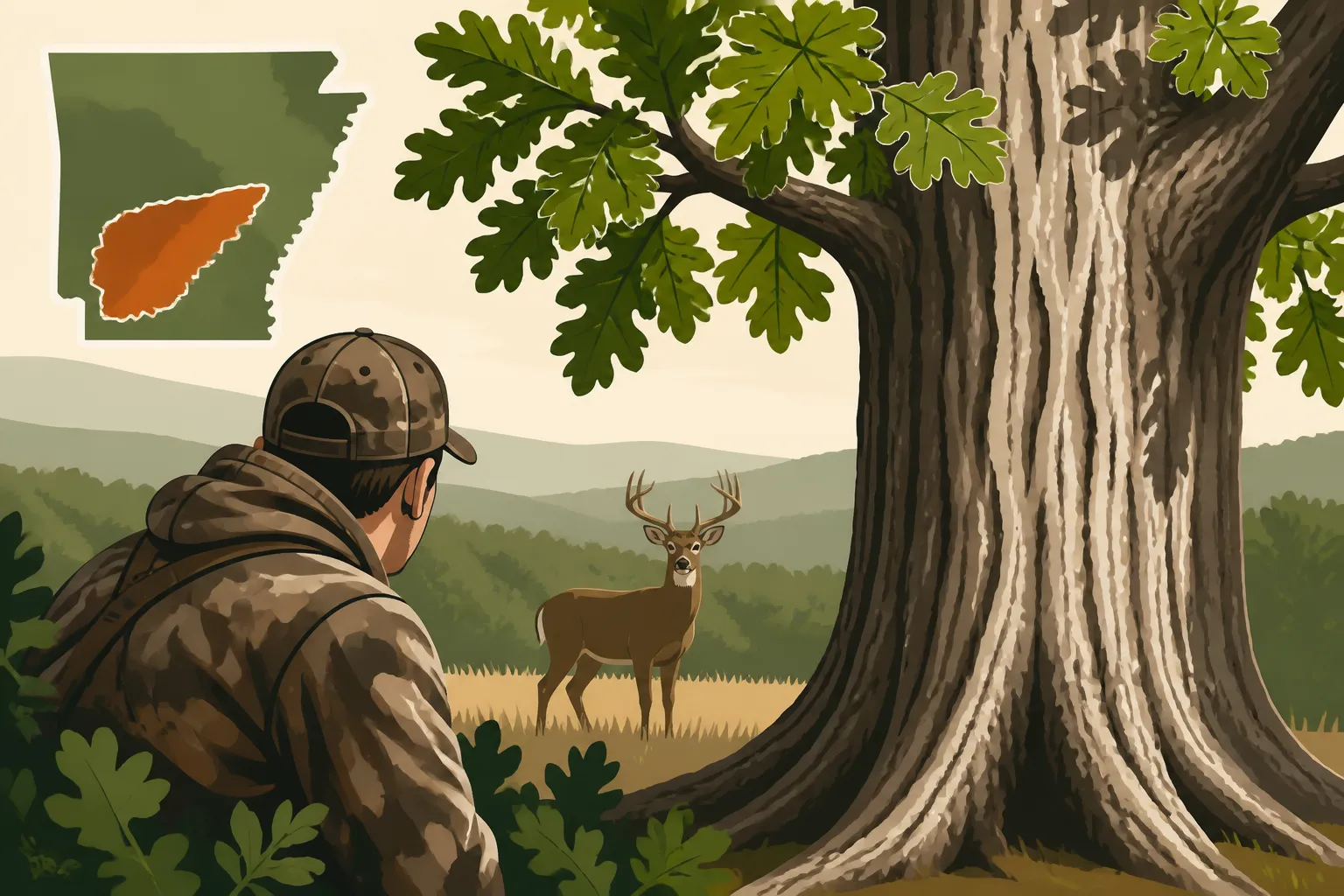
For any deer hunter in Arkansas, understanding the local food sources is paramount, and the white oak reigns supreme for much of the early to mid-season. Deer aren't just eating acorns because they're there; they're actively seeking out white oak acorns due to their superior nutritional value and palatability compared to other mast. If you can locate a productive white oak, you've likely found a temporary deer hotspot.
Why White Oak Acorns Are Deer Magnets
Deer simply love white oak acorns. It’s not just an old hunter’s tale; there’s solid biological reasoning behind it. White oak acorns generally have a lower tannin content than their red oak cousins. Tannins are bitter compounds that, in high concentrations, can be unappetizing and even difficult for deer to digest. Imagine having a choice between a sweet, easily digestible snack and a bitter, tougher one – you'd pick the sweet one every time, right? Deer are no different. This makes white oak acorns a highly preferred food source, especially in the early fall when they first start to drop.
This preference for white oaks provides crucial energy for deer, helping them pack on fat reserves needed for the upcoming rut and the lean winter months. For bucks, this is particularly important as they will expend a tremendous amount of energy during the breeding season. For does, robust fat reserves are vital for carrying fawns through the winter. So, when you find a stand of white oaks raining acorns, you're not just finding a feeding area; you're finding a critical nutritional hub that deer will visit frequently, especially around dawn and dusk.
Identifying Productive White Oak Trees
Not all white oaks are created equal when it comes to dropping acorns, and not all white oaks will drop at the same time every year. This variation can be a real head-scratcher for hunters. The first step is to correctly identify the trees themselves. White oaks typically have leaves with rounded lobes, in contrast to the pointed, bristle-tipped lobes of red oaks. Their bark is often a lighter, ash-gray color, sometimes appearing scaly or flaky, especially on older trees.
When you're out scouting, look for older, larger trees with wide, expansive crowns. These majestic trees tend to be the most prolific mast producers. A healthy tree with good sunlight exposure and adequate moisture will usually produce more acorns. Remember, acorn production is often cyclical – a "boom or bust" pattern where a tree might have a massive crop one year and a sparse one the next. This is where consistent scouting, even in the offseason, pays off. You can use mapping applications like GoHunt to identify hardwood ridges and potential white oak stands on public land, then put boots on the ground to confirm species and production. It’s a great way to narrow down your search and focus your energy on the most promising areas.
Decoding Deer Sign Around Your Chosen White Oak
Finding a white oak is only half the battle; the real work begins in determining if deer are actively using it and, more importantly, how. Deer sign isn't just a confirmation that deer are present; it tells a story about their habits, their preferred travel routes, and even their size and sex. Learning to read these clues will be your biggest asset.
Fresh Cuttings and Droppings
The most definitive proof that deer are feeding on white oak acorns is finding fresh acorn caps with clear deer teeth marks, or even partially eaten acorns. Deer don't just swallow acorns whole; they often crush them to get at the nutritious meat inside. If you see numerous fresh cuttings scattered beneath a tree, you've hit the jackpot. This indicates recent, heavy feeding activity.
Coupled with cuttings, fresh droppings are another critical indicator. Pay attention to the size, shape, and consistency of the droppings. Pelleted, firm droppings typically indicate a deer that has been eating acorns or other dry forage. Softer, clumped droppings suggest a more succulent diet. The color and moisture content can tell you how recent the activity was. A pile of dark, moist droppings means a deer was likely there very recently, perhaps even within the last few hours. The sheer volume can also give you a sense of how many deer are utilizing the area. This kind of detailed observation can help you pinpoint the precise "hot zone" under the tree where deer are spending the most time.
Trails, Rubs, and Scrapes
Once you've confirmed active feeding, it's time to expand your search for other types of deer sign that reveal their movements and social behavior. Well-worn trails leading directly to and from your chosen white oak are invaluable. These aren't just random paths; they represent established travel corridors that deer use repeatedly. These trails often follow natural contours of the land, such as benches on hillsides or subtle rises through bottomland. Observing these can also help you with Reading an Ozark Bench for Deer, as deer will naturally use the easiest path between bedding and feeding.
During the pre-rut and rut, look for rubs and scrapes in the vicinity. Rubs, where bucks strip bark from saplings, indicate their presence and territorial marking. While not always directly under a white oak, finding fresh rubs on the approach trails or nearby cover signals that bucks are in the area and likely visiting the food source. Scrapes, patches of disturbed earth where bucks urinate and leave scent, are a definitive sign of mature buck activity. These are often found along travel corridors or on the edges of feeding areas. If you find a fresh scrape line near a dropping white oak, you've found a high-odds setup, especially when considering Hunting the Arkansas Rut by Zone. The freshest sign, whether it's a rub still oozing sap or a scrape with overturned moist earth, is always the most valuable.
Timing the Acorn Drop
One of the biggest challenges with white oak hunting is timing. White oaks in Arkansas typically begin dropping their acorns from late September through October, but this can vary significantly based on the specific species of white oak, elevation, soil moisture, and even localized weather patterns. Some years, a specific grove might start dropping early, while another holds its nuts longer.
To time it right, regular scouting is key. Make trips to your identified white oak areas every week or two as fall approaches. Listen for the subtle thump-thump of acorns hitting the forest floor. Look for other wildlife, especially squirrels, as they are often the first to key into dropping acorns. A flurry of chattering squirrels gorging themselves can be your best indicator that the feast has begun. Pay attention to the condition of the acorns you find – are they fresh and plump, or shriveled and old? Knowing when the primary food source becomes available allows you to adjust your hunting schedule and capitalize on the peak activity. Don't forget that squirrels are also after these acorns, and their activity can be a good clue, but also a distraction if you're not careful. This ties into understanding Squirrel Hunting Arkansas Hardwoods and their habits.
Here's a quick comparison of common Arkansas oak species and their typical acorn drop characteristics:
| Oak Species | Acorn Characteristics | Drop Timing (Arkansas) | Deer Preference |
|---|---|---|---|
| White Oak | Sweet, less bitter, oval | Late Sept – Mid-Oct | High (Early Season Favorite) |
| Northern Red Oak | Bitter, high tannins, round | Mid-Oct – Late Nov | Moderate (Later Season) |
| Pin Oak | Small, very bitter, round | Late Oct – Dec | Low (Emergency food) |
| Water Oak | Small, dark, slightly elongated | Mid-Sept – Early Dec | Moderate (Common in Lowlands) |
| Willow Oak | Small, similar to water oak | Mid-Oct – Late Dec | Moderate (Often overlooked) |
Strategic Stand Placement for White Oak Success
Once you've pinpointed a productive white oak and confirmed deer activity, the next critical step is positioning your stand. This isn't just about getting high in a tree; it's about playing the wind, planning your entry and exit, and making sure you have a clean shot at a deer that might be focused solely on its meal.
Wind Direction and Scent Control
This is, without a doubt, the most important factor in stand placement. Deer have an incredible sense of smell, and even the slightest whiff of human scent can send them bolting. You should never hunt a white oak with your scent blowing directly into the feeding area or, just as critically, into the anticipated travel routes leading to it. Check the wind direction before every hunt, and if it's not favorable for your chosen stand, have a backup plan or relocate.
Understanding thermals is also crucial, especially in hilly terrain like the Ozarks or Ouachitas. As the sun rises, warm air begins to ascend, carrying your scent uphill. In the evenings, as temperatures drop, cool air sinks, carrying your scent downhill. If you're hunting in an area where Wind and Thermals in Ouachita Hollows are a significant factor, you'll need to adjust your stand placement or hunt times accordingly. For example, an evening hunt on a ridge might require a stand on the downwind side of the oak relative to a downhill bedding area, accounting for the sinking air. Always use scent-eliminating sprays or ozone generators, but never rely on them as your primary defense against a deer's nose.
Optimal Approach and Exit Routes
An often-overlooked aspect of stand placement is how you get in and out of your hunting area. A perfect stand can be ruined if your approach spooks deer before you even climb up, or if your exit scatters them, making future hunts unproductive. Your approach should be as stealthy and unnoticed as possible. Use natural terrain features like creek beds, ditches, or dense thickets for cover. Avoid walking directly through known bedding areas or across open fields.
For morning hunts, plan an approach that gets you to your stand well before daylight, allowing the woods to settle down before deer become active. For evening hunts, aim to arrive a couple of hours before dusk. Consider the amount of noise you make; crunchy leaves can sound like a freight train to a deer. Wearing soft clothing and moving slowly can mitigate this. When your hunt is over, your exit should also be planned to minimize disturbance. Try to exit away from bedding areas, or wait until well after dark to retrieve your gear. This type of strategic thinking is also vital when Scouting Arkansas Public Land Before Season to prevent educating deer to your presence.
Choosing Your Stand Type and Location
The type of stand you use and its precise location relative to the white oak will depend on several factors: the tree's size, surrounding cover, and your hunting style. Hang-on stands or climbing stands offer excellent mobility, which is a huge advantage when scouting multiple white oaks and needing to adjust based on where the acorns are dropping or where the freshest sign is found. You might find a "honey hole" oak one week, but if the acorns run out or pressure builds, you need to be able to move.
Position your stand 15-25 yards from where you expect deer to feed most heavily. This distance provides a comfortable bow or rifle shot while still being close enough to observe deer behavior. Always consider your shooting lanes; trim branches that obstruct potential shots, but do so minimally and discreetly. A good backdrop of dense foliage behind your stand will help break up your silhouette. If the tree is large enough, or if you prefer a more concealed approach, a ground blind can be an excellent option, especially for Youth Deer Hunt Dates and Rules or if you're dealing with a particularly wary deer. Remember to brush in your ground blind naturally to blend it into the surroundings. For broader insights, principles from Treestand Setups in Delta Hardwoods can apply even to white oak stands outside the Delta.
Maximizing Your Chances: Patience and Persistence
Hunting around white oaks is often a game of patience. Deer might not show up exactly when you expect them, and conditions can change rapidly. To consistently tag deer, you need to be adaptable and persistent.
Hunting the Right Conditions
Certain weather conditions can significantly influence deer activity around white oaks. Cold fronts, especially the first few of the season, often trigger increased feeding as deer instinctively prepare for colder weather. A sudden drop in temperature can mean deer are on their feet longer and more actively seeking out high-energy foods like acorns. Rain can also be your friend; a light rain can quiet the woods, making your approach quieter and masking your scent. Deer often move during or immediately after a rain shower.
During the rut, a white oak still dropping acorns can be an absolute magnet. Bucks will cruise through feeding areas checking for receptive does. Even if the does aren't actively feeding, they might pass through, and the bucks will follow. Understanding how the Arkansas Deer Seasons and Zone Limits overlap with peak rut activity in your specific zone is crucial for capitalizing on these windows of opportunity. Don't be afraid to try rattling or grunting tactics, especially if you're set up on a travel corridor near the oak, mimicking the sounds bucks make to attract or challenge others.
Being Patient and Flexible
It's easy to get discouraged if deer aren't showing up right away. Deer movement can be unpredictable, especially if there's hunting pressure or if other food sources become available. Be prepared for long sits and resist the urge to move too quickly. Sometimes, the deer you're after will arrive late in the morning or just before dark. Always keep your focus, and use tools like GoHunt to mark alternative white oak locations or other food sources in your area. This flexibility allows you to adapt to changing deer patterns. If one white oak stops dropping or gets too much pressure, having another option nearby can save your hunt.
Post-Shot Considerations
Even with the perfect setup and a well-placed shot, the work isn't over. Tracking a deer, especially in dense Arkansas timber, can be challenging. Always give a deer enough time after the shot before you begin tracking, particularly if you suspect a marginal hit. Knowing when to track immediately and when to back out and return later can make the difference between recovery and a lost animal. Consider the weather; if temperatures are warm, as they often can be during the early white oak drop, prompt recovery is essential to prevent spoilage, tying into Field Dressing in Arkansas Heat. Always carry a reliable flashlight, even if you plan to be out before dark, as tracking often takes longer than anticipated.
Disclaimer
Hunting is an inherently dangerous activity. Always prioritize safety and adhere to all Arkansas Game and Fish Commission (AGFC) regulations. This guide provides general information and should not replace proper hunter education or professional guidance. Hunting conditions and regulations can change, so always verify current rules before heading afield.