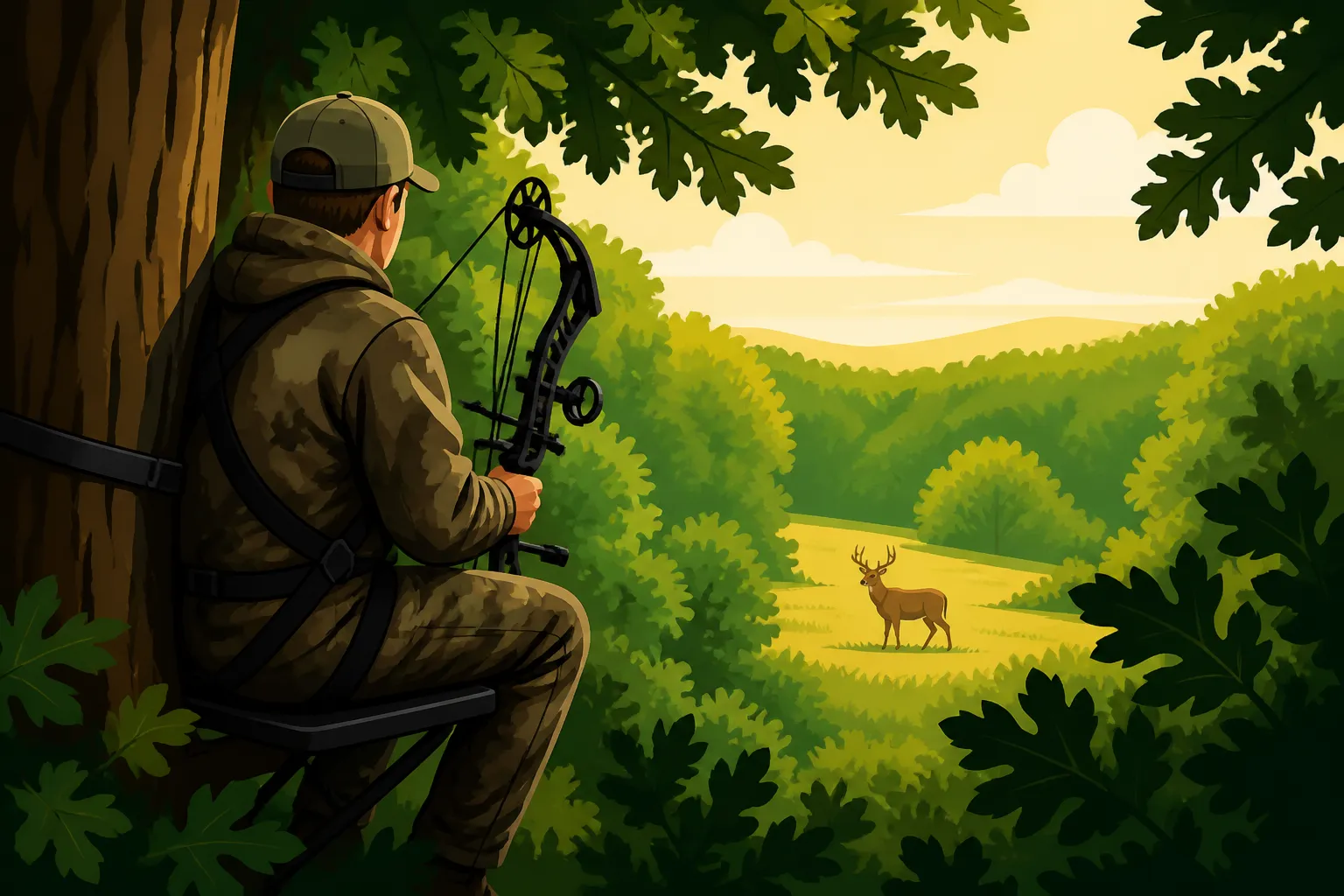
Setting Up on a Canopy Opening
It’s a frustration many of us know all too well: you’re deep in the timber, the woods are thick, and you can barely see twenty yards, let alone get a clean shot. Deer are notoriously good at vanishing in dense cover, and finding a spot that offers both concealment for you and visibility for a shot can feel like finding a needle in a haystack. This guide is all about turning those challenges into opportunities, teaching you how to identify, scout, and set up effectively in canopy openings across Arkansas.
Understanding Canopy Openings and Why Deer Use Them
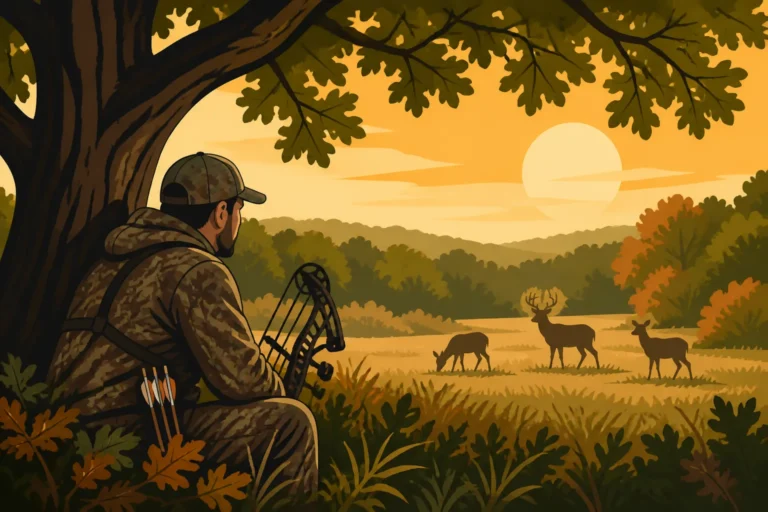
When we talk about a "canopy opening," we're really just describing a break in the otherwise continuous tree cover. Think of it as a skylight in the forest, where sunlight can finally reach the forest floor. These aren't always vast, sprawling clearings, but often smaller, more subtle gaps created by fallen trees, natural clearings, or even older logging operations that have partially grown back. Deer, and other game, are drawn to these spots for very specific, survival-driven reasons.
The Allure of Sunlight and Growth
The most immediate benefit of a canopy opening is the sunlight. When sunlight hits the forest floor, it acts like a natural growth accelerator, encouraging a flush of new, tender vegetation. We're talking about forbs, young saplings, briars, and all sorts of browse that deer absolutely love to munch on. These areas essentially become mini-food plots, offering a buffet of nutrient-rich plants that aren't available under the dense, shaded canopy. Imagine a deer picking its way through sparse, dry leaves in the deep woods, only to stumble upon a vibrant patch of green goodness. That's a canopy opening, and they'll seek it out, especially in late summer and early fall when natural food sources might be dwindling elsewhere. This abundance of forage creates a natural draw, establishing predictable feeding patterns that can be key to your hunting success.
Strategic Bedding and Travel Corridors
Beyond just food, canopy openings often serve critical functions for deer as strategic bedding and travel corridors. Many of these openings, particularly those created by wind-thrown trees or small-scale timber cuts, develop into thickets of young trees and briars. This dense cover provides excellent thermal regulation, keeping deer cool in the summer and offering shelter from the wind and cold in winter. More importantly, it offers a sense of security from predators, including us hunters. Deer will often bed down right on the edge of these openings or even within the thicker parts, using the dense growth as a natural fortress. Furthermore, these openings can interrupt the continuous canopy, forcing deer to alter their travel routes. They might skirt the edges of an opening, creating well-worn trails that funnel their movement directly past a prime ambush point. Understanding these patterns is crucial for any hunter, whether you're deer hunting with dogs in Arkansas or quietly still-hunting the pine country.
Overlooked Hideouts in Pressured Areas
One of the biggest advantages of targeting canopy openings, especially on public land or areas with significant hunting pressure, is that they often get overlooked. Many hunters focus on obvious food plots, major travel corridors, or easily accessible areas. However, a small, subtle canopy opening deep in dense timber can be a hidden gem. These spots might not look like much on a satellite map, but on the ground, they can reveal themselves as sanctuaries where deer feel safe enough to move during daylight hours. When the pressure ramps up during the season, deer become incredibly nocturnal and wary. They'll seek out the path of least resistance from human disturbance, and a well-hidden canopy opening offers just that—a place to feed, bed, and move without constantly being on high alert. This is particularly true in areas where the deer might be accustomed to the drone of distant traffic or the sounds of other hunters.
Effective Scouting for Canopy Opening Opportunities
Finding these prime canopy openings isn't always as simple as spotting a bare patch on a map. It requires a combination of digital reconnaissance and good old-fashioned boots-on-the-ground effort. Knowing what to look for and how to interpret the landscape will significantly increase your odds.
Digital Reconnaissance with Mapping Tools
Before you ever step foot in the woods, the best place to start your search is from the comfort of your home with digital mapping tools. Platforms like GoHunt, OnX Hunt, or even Google Earth can be incredibly powerful for identifying potential canopy openings. Zoom in on satellite imagery, looking for areas within dense timber that show lighter green or brown patches, indicating less canopy cover. Pay close attention to subtle variations in tree height and density. Areas where you see a distinct change from dark, uniform canopy to a more mosaic pattern often signal an opening.
Cross-reference these visual cues with topographic maps. Steep slopes or drainages can sometimes lead to natural rock outcroppings or areas where tree growth is naturally stunted, creating openings. Also, look for historical logging operations. Even if an area was logged 10-15 years ago, the regenerating forest will often feature distinct canopy openings and different timber ages, providing excellent deer habitat. Many states, including Arkansas, have mapping layers showing timber cuts. Using tools like GoHunt, you can often add layers that show public land boundaries, WMA sections, and even recent timber harvests, helping you narrow down your search before you hit the field. This initial "Scouting Arkansas Public Land Before Season" can save you countless hours of unproductive walking.
Boots-on-the-Ground Verification
Once you've identified a handful of promising spots on your map, it's time to put boots on the ground. There's simply no substitute for walking the actual terrain. What looks like a small opening on a map might be an impenetrable briar patch, or it could be a perfectly manicured deer buffet. When you get to an identified opening, don't just walk to the center and look around. Instead, approach it from multiple directions, mimicking how a deer might move. Look for trails leading into and out of the opening, paying attention to how they connect with other features like ridges, creek bottoms, or larger clearings.
Check the edges of the opening carefully. Deer rarely venture far from cover, so the transition zone between the thick timber and the opening is often where you'll find the most activity. Look for rub lines, scrape lines, and fresh droppings. Note the type of vegetation present – is it browse that deer prefer? Is there evidence of heavy browsing? Also, consider the accessibility of the area for you. Can you get a stand in there quietly? Is there a good approach route that keeps the wind in your favor, particularly when you're dealing with varying thermals in Ouachita Hollows? These ground-level observations will tell you if your digital scouting paid off and if the opening is truly a huntable spot.
Interpreting Deer Sign in Openings
Once you're on the ground, reading the sign left by deer is critical. Within and around a canopy opening, look for a concentration of deer activity. Fresh droppings, tracks, and browse lines are obvious indicators. Pay particular attention to saplings with rubbed bark, especially if they show signs of recent activity during the rut. These rub lines along a logging road or the edge of an opening can signal a buck's travel path and aggression.
Scrapes are another vital piece of the puzzle. Bucks will often establish scrape lines on the edges of openings or where multiple trails converge, using them as communication hubs. A fresh scrape, often found under a low-hanging limb, indicates current buck activity. Don't forget to examine the trails themselves. Are they well-worn and deeply cut? Are there signs of large deer, indicated by wider, deeper tracks? The presence of bedding areas, often characterized by matted-down vegetation or visible beds in thick cover within the opening, suggests that deer are not just passing through but spending significant time there. The more fresh and abundant the sign, the higher the probability that this canopy opening is a high-value spot worth investing your time in.
Strategic Stand and Blind Placement within Openings
Once you've identified a promising canopy opening, the next step is perhaps the most critical: placing your stand or blind effectively. This isn't just about finding a tree; it's about considering shot angles, wind direction, cover, and your approach and exit strategy.
Treestand Placement for Optimal Shots
When choosing a tree for a treestand in a canopy opening, think about angles and visibility. You want a tree that offers good shooting lanes into the opening, but also provides some background cover to break up your silhouette. A common mistake is to pick a lone tree right on the edge of the opening, which can make you stick out like a sore thumb. Instead, look for a tree just inside the surrounding timber, perhaps 10-20 yards back from the immediate edge of the opening. This gives you deeper concealment while still providing a clear view.
Consider the prevailing wind and thermals. Your ideal setup will have the wind blowing your scent away from where you expect deer to approach or feed. In hillier terrain, thermals will rise in the morning and fall in the evening, so understanding these local air currents is just as important as the prevailing wind. Also, think about your entry and exit routes. Can you get to and from your stand without spooking deer in the area? A thick fenceline, a creek bed, or a slight ridge can offer excellent cover for discreet movement. Remember, the goal is to be invisible and odorless to the deer, even in a relatively open setting. You might even consider having a couple of different stand setups for varying wind directions, which is a tactic often discussed for hanging a stand in bottomland hardwoods.
Ground Blind Advantage in Thicker Spots
While treestands are popular, ground blinds can offer a significant advantage, especially within certain types of canopy openings. If your opening is characterized by a dense thicket of briars, young pines, or brushy regrowth, a ground blind can offer superior concealment. These thick spots, often created by old clearcuts or natural blowdowns, provide immediate cover for a blind. The key is to brush in your blind thoroughly, making it blend seamlessly with the natural surroundings. Cut local vegetation and pile it around the blind to break up its outline.
One major benefit of a ground blind is the ability to move a bit more without being detected, which is often a challenge when perched 20 feet up a tree. This can be particularly useful if you're hunting with kids or introducing new hunters, as the confined space can help manage movement. When using a ground blind on an Arkansas WMA, always check specific WMA rules regarding temporary structures. Place your blind well in advance of your hunt, if possible, to allow deer to get accustomed to its presence. Position it where you have clear shooting lanes, but where the deer are likely to feel comfortable feeding or traveling past, often leveraging the thicker cover for their own sense of security.
Wind, Thermals, and Approach Routes
The wind is your most critical factor when hunting any canopy opening. Deer rely heavily on their sense of smell, and a gust of wind carrying your scent can ruin a hunt before it even begins. Always check the wind direction before heading out, and have multiple setup options if possible. As mentioned earlier, thermals play a significant role in mountainous or hilly regions, like the Ouachitas and Ozarks. In the mornings, air warms and rises, carrying your scent uphill. In the evenings, air cools and falls, taking your scent downhill. Understanding these patterns is as crucial as the prevailing wind.
Your approach and exit routes are equally vital. Plan a route that keeps you downwind of your target area and utilizes natural cover to obscure your movement. Avoid walking directly through known bedding areas or feeding zones. If you're hunting a morning sit, consider approaching in the dark from a direction that puts the rising thermals in your favor. For an evening hunt, plan an exit that won't bust deer feeding into the opening. The less disturbance you create, the more likely deer are to use that opening consistently.
| Setup Type | Advantages in Canopy Opening | Disadvantages in Canopy Opening | Best Use Cases |
|---|---|---|---|
| Treestand | Elevates scent, offers wide view, better long-range visibility | Requires suitable tree, more exposed silhouette, harder to adjust | Openings with mature trees on edges, clear shooting lanes, consistent wind patterns, Hunting Ozark Ridges and Hollows for Deer |
| Ground Blind | Excellent concealment in thickets, comfortable, good for movement | Limited visibility, scent can pool, takes up space | Openings with dense brush or young regrowth, close-range encounters, introducing new hunters, flexible setup locations, Using a Ground Blind on an Arkansas WMA |
Hunting Strategies to Maximize Success in Openings
Once your setup is in place, the hunt truly begins. How you approach the actual hunt in a canopy opening can make all the difference between seeing deer and punching your tag, or coming home empty-handed.
Timing Your Entry and Exit
This goes hand-in-hand with wind and thermals, but it's worth emphasizing. For morning hunts, be in your stand or blind well before first light. Deer often move during the twilight hours, and you want to be settled and quiet as they transition from nocturnal feeding to their bedding areas. Approaching in the dark minimizes your visual impact. For evening hunts, plan to be in your spot several hours before dark. Deer often filter into feeding areas slowly, testing the wind and their surroundings. Being patient and still is key.
Your exit is just as important as your entry. If you blow deer out of an opening as you're leaving, you might educate them and make them wary of that spot for days or even weeks. For morning hunts, wait until the woods are fully awake and deer have likely moved off to bed. For evening hunts, wait until it's completely dark before climbing down, and then use your planned exit route, moving slowly and quietly. Sometimes, it's better to stay a bit longer and ensure a clean exit than to rush out and risk bumping a deer you might have otherwise seen the next day. This level of patience is often rewarded, especially when hunting the Arkansas rut by zone.
Calling and Decoying Considerations
Canopy openings, especially those with good visibility, can be excellent locations for employing calling and decoying tactics. The natural funneling effect of the opening means a buck might approach your setup from a predictable direction, giving you the upper hand. During the rut, rattling and grunting in Arkansas can be incredibly effective. A buck might hear the sounds of a fight or a hot doe and come to investigate, especially if he thinks he can quickly scan the clearing for the source of the noise.
If the opening is large enough, a single buck decoy or a doe decoy can be a game-changer. Position it where it's visible but not directly under your stand, forcing an approaching buck to present a broadside shot as he circles to investigate. The key is realism and subtlety. Don't overcall, especially in pressured areas. A few soft grunts or a subtle rattle sequence, followed by long periods of silence, can often be more effective than continuous calling. Remember, you want to pique their curiosity, not alarm them.
Adapting to Changing Conditions
Arkansas weather, as any seasoned hunter knows, can be fickle. A beautiful, calm morning can quickly turn windy, or a warm front can roll in overnight. Being able to adapt to these changing conditions is vital for success in canopy openings. If a strong wind shifts unexpectedly, don't be afraid to adjust your setup if it means staying downwind. Sometimes, this might mean moving to an alternative tree or even switching to a ground blind if the cover allows.
Pay attention to recent rain or changes in natural food sources. A fresh rain can wash away scent, making it a great time to move, but it can also make noisy leaves even louder. If a new food source, like a heavy acorn drop, suddenly becomes available nearby, deer patterns might shift away from the browse in your canopy opening. Use your GoHunt app or other tools to check weather forecasts and observe changes in the landscape. Being flexible and having a backup plan—or even multiple canopy openings scouted and ready—will drastically increase your odds throughout the season, whether you're Hunting Arkansas Cutovers and Clearcuts or focusing on specific food sources. Ultimately, the more you understand and react to the environment, the more successful you'll be.
Disclaimer
Hunting is an inherently dangerous activity. Always prioritize safety, understand and follow all Arkansas Game and Fish Commission regulations, and be familiar with your equipment. This guide is for informational purposes only and does not substitute for proper hunter education or professional guidance.