Decoy Numbers for Timber Holes
There's a unique challenge that comes with setting up for ducks in Arkansas's flooded timber: the intimate, often cramped, nature of a "timber hole." Unlike wide-open fields or sprawling reservoirs, these tight, canopied pockets demand a nuanced approach to decoy placement and, crucially, how many you actually put out. Throw too many, and you've got a cluttered mess that looks unnatural; too few, and you might not catch the eye of those high-flying mallards. This guide is all about helping you dial in the perfect decoy numbers for those quintessential timber holes, increasing your chances of ducks in the decoys and boots on the ground.
The Intimate World of Arkansas Timber Holes
Hunting green timber in Arkansas is an iconic experience, but it’s vastly different from hunting open water or rice fields. The environment itself dictates so much of your strategy, from how you call to where you set up, and especially how you approach your decoy spread. The tight confines of these flooded woods mean you can’t just throw out a hundred blocks and expect magic to happen.
Defining the "Hole" in Flooded Timber
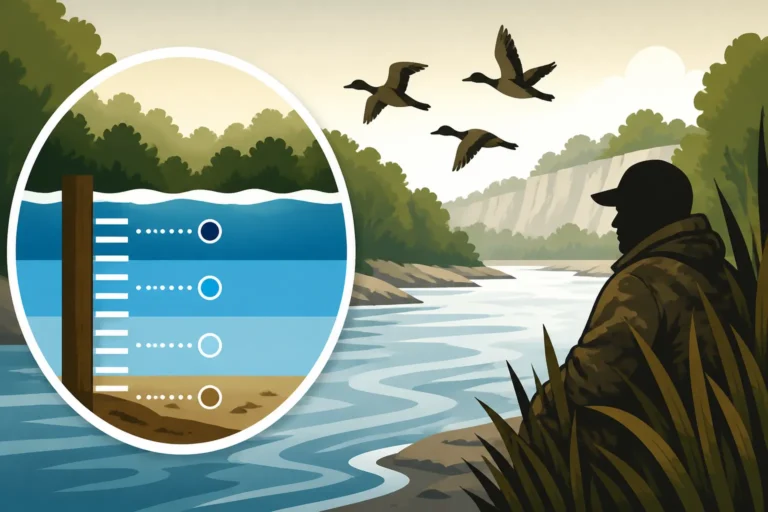
When we talk about a "timber hole," we're not talking about a huge expanse. We're referring to those smaller, often irregular openings in the flooded forest canopy where light penetrates, and ducks feel comfortable landing. These can be natural sloughs that wind through the trees, small clearings where a few trees have fallen, or even subtle breaks in the timber line along a deeper channel. The key characteristic is that they offer a landing zone, but one that is significantly more constrained than an open field. The water might be anywhere from a few inches deep to several feet, often influenced by the Reading Water Levels on the White River or other major river systems. Understanding these variations is crucial, as a hole that’s too shallow won’t attract many ducks, while one that’s too deep might not offer comfortable loafing spots. Hunters often find these prime locations by spending hours Scouting Arkansas Public Land Before Season or by utilizing mapping tools like GoHunt to pinpoint potential openings and water depths.
The Behavior of Ducks in Timber
Ducks, particularly mallards, are drawn to flooded timber for very specific reasons. It offers shelter from wind and predators, abundant natural food sources like acorns (especially red oak acorns, which are a mallard favorite), and a sense of security. They're looking for quiet, protected spots to feed, rest, and preen. When ducks commit to a timber hole, they’re often coming in low and slow, looking for very clear, unmistakable signs of other ducks on the water. They don't typically buzz a timber hole multiple times like they might a field spread; instead, they often make one or two passes, then either commit or move on. This means your decoy spread needs to be convincing and natural from the first glance. The density of the timber itself means ducks have less time to see your spread and make a decision, making realism over sheer numbers paramount. This intimate setting also influences How Timber Calling Differs From Open Water, often requiring softer, more subtle calls to draw birds in.
Factors Influencing Your Decoy Count
Deciding on the "right" number of decoys isn't a one-size-fits-all answer. It's a dynamic calculation based on several crucial variables present in your specific hunting scenario. Ignoring these can lead to over-decoying, under-decoying, or simply having a spread that doesn't quite look right to a duck.
The Size and Visibility of Your Hunting Hole
This is perhaps the most critical factor. A small pocket of open water, say 10×15 feet, simply can't accommodate two dozen decoys. It would look like a duck convention gone wrong, completely unnatural. For these smaller, more common timber holes, a minimalist approach is always best. Think about how many ducks would naturally be in such a tight space. Usually, it's a small family group or a few pairs. As the hole opens up, perhaps to a 30×40 foot clearing or a wider slough, you can gradually increase your numbers.
Consider also the visibility. Is it a dense canopy where the sun barely filters through, or a more open area where birds can spot your spread from a bit higher up? In very dense timber, ducks are almost on top of you before they fully commit, meaning your decoys need to be placed precisely within their short sight window. The surrounding timber also acts as natural "decoys" by creating defined edges for ducks to funnel into. For spots where you can actually see a fair distance through the timber, like a wider slough or a "run-out" that connects to larger water, you might be able to stretch your numbers a bit more to create a more visible focal point.
Understanding Hunting Pressure and Duck Habits
Arkansas's flooded timber can be some of the most heavily hunted waterfowl habitat in the world. Ducks learn fast, and pressure changes their behavior drastically. On WMAs like Bayou Meto WMA or Dave Donaldson Black River WMA, where ducks hear calls and see spreads almost daily during Arkansas Duck Season Dates, subtlety becomes your best friend. Heavily pressured birds are extremely wary of anything that looks "off." A massive, bustling spread might work on opening day in a fresh spot, but by mid-season, those same birds have seen it all.
In these high-pressure scenarios, reducing your decoy count can make your spread look less threatening and more natural. A small, loose group of five or six decoys often appears more inviting than a crowded, static spread. Ducks that have been shot at repeatedly are often looking for isolated, undisturbed pockets. You might even consider forgoing motion decoys entirely on super-pressured days, or using them very sparingly. The goal is to mimic what an unmolested group of ducks would look like, not a bustling feed lot.
Weather Conditions and Decoy Effectiveness
Weather plays a huge role in how ducks decoy and, consequently, how many blocks you should throw.
- Calm, Bluebird Days: These are notoriously tough days for duck hunting. Without wind, decoys sit lifelessly, making them look stagnant and unnatural. On these days, motion is king, but too many decoys can still look "dead." You're better off with fewer, more active decoys (think jerk strings and quiver butts, or even just a few carefully placed spinners) to create the illusion of life. A small, realistic spread with subtle movement is far more effective than a large, static one on a calm day. This is also when Hunting Timber on a Bluebird Day often requires extra patience and subtle calling.
- Windy Days: Wind adds natural movement to your decoys, making them appear more lifelike without much effort on your part. On windy days, you can sometimes get away with a few more decoys, as the movement helps break up the static look. The wind also helps distribute scent and sound, making ducks more aware of your presence. However, too many decoys can still get tangled or blown into unnatural positions in strong winds, so balance is key. The wind also helps carry calls, but remember that the timber itself will dampen sound more than open water.
- Rain and Overcast: Low light and drizzly conditions often bring ducks down lower and make them more comfortable moving. Visibility might be reduced, so having a slightly larger, more spread-out (but still natural) group of decoys could help them spot your hole earlier. The muted light also makes decoys look a bit more realistic.
Here's a quick guide to general decoy numbers based on hole size and conditions:
| Timber Hole Size & Type | Hunting Pressure | Weather Conditions | Recommended Decoy Count | Notes |
|---|---|---|---|---|
| Small Pocket | Low/Medium | Calm/Overcast | 3-6 | Mimic a small, loafing family group. Focus on realism and subtle motion (jerk string). |
| (Up to 20' diameter) | High | Any | 2-4 | Extreme minimalism. Focus on hyper-realism. |
| Medium Clearing | Low/Medium | Calm/Overcast | 6-12 | Allows for a bit more separation. Can add 1-2 spinners or quiver butts. |
| (20-40' diameter) | High | Any | 4-8 | Slightly larger groups, but still open and natural-looking. |
| Large Slough/Open Area | Low/Medium | Calm/Overcast | 12-24 | Can handle a bigger spread. Create clear landing zones. Spread decoys out. |
| (40'+ diameter) | High | Any | 8-15 | Focus on a few distinct "pods" rather than one big blob. Emphasize landing zones. |
| Wood Duck Hole | Any | Any | 3-6 (wood ducks) | Often in very tight, shallow water. A few dedicated wood duck decoys are very effective. |
Crafting the Ideal Decoy Spread for Timber
Once you understand the context, it's time to build your spread. The goal isn't just to throw out X number of decoys; it's to arrange them in a way that tells a story to incoming ducks—a story of safety, food, and comfort.
Minimalism is Key for Realistic Spreads
In a timber hole, less really is more. You're trying to create a welcoming, natural scene, not a party. A small, loose group of 4-8 decoys can often be far more effective than a dozen or more. Think about how a few ducks would naturally gather in a flooded wood—they aren't usually packed shoulder-to-shoulder. They're often spaced out, feeding, preening, or simply loafing.
When placing your decoys, avoid perfect symmetry or straight lines. Ducks are not organized. Create small, natural-looking clusters, leaving plenty of open water—your landing zone—where you want the ducks to finish. Often, setting up a "J" or "U" shape, with the open end facing into the wind (where ducks will naturally want to land), works wonders. Position your blind or hide at the bend of the "J" or "U" to allow for shots as ducks commit to the open water. This approach is paramount for Setting Decoys in Timber Holes. Using mapping software like GoHunt can help you visualize the open water area and plan your spread before you ever set foot in the woods. This foresight can save precious time and effort in the pre-dawn darkness.
Incorporating Motion and Realism
Since numbers are often kept low, the realism of each decoy, and the introduction of movement, becomes paramount.
- Motion Decoys: On calm days, motion decoys like spinning wing decoys (SWDs) or quiver butts are incredibly effective at bringing a static spread to life. However, use them judiciously in timber. One or two spinning wing decoys, placed strategically at the back of your spread or in a more open area where they can be seen from a distance, are usually sufficient. Too many can look unnatural or even scare wary birds. Jerk strings are another fantastic option, allowing you to create intermittent, realistic ripples and movement with a simple tug. Place a few of your most realistic decoys on a jerk string to mimic feeding ducks.
- Feeder Decoys: Incorporating a few "feeder" decoys (heads down, appearing to dabble for food) adds another layer of realism. These show incoming birds that the spot is rich with food, which is precisely Why Mallards Use Flooded Timber.
- Species Variation: While mallards are often the primary target, adding a few wood duck decoys can be very effective, especially in heavily timbered areas with shallower water. Wood ducks are almost always present in these environments, and their bright colors can add a pop of visibility without looking out of place. This small variety can sometimes tip the scales for wary birds. Remember the Arkansas Duck Daily Bag Limit for different species when considering what you might encounter.
Species-Specific Decoy Considerations
While mallards are the bread and butter of Arkansas timber hunting, other species will also frequent these areas.
- Mallards: These are your primary focus. Use high-quality, realistic mallard decoys. Mix drakes and hens, but don't overdo the drakes, as too many can look aggressive to incoming birds. A 60/40 hen-to-drake ratio often looks more natural.
- Wood Ducks: As mentioned, wood ducks are common in timber. A few wood duck decoys can be a great addition. They're often found in the tighter, shallower edges of a hole.
- Pintails/Wigeon: While less common in the deepest timber, these birds might visit more open sloughs. If you're consistently seeing them in your area, one or two pintail or wigeon decoys at the very edge of your spread, or slightly separated, can add realism. They tend to be a bit more wary, so don't overdo it.
Dynamic Adjustments for Maximum Success
No two timber hunts are exactly alike. The true art of timber hunting lies in your ability to read the situation and adapt your strategy, including your decoy spread, on the fly.
Reading the Ducks and Your Environment
Pay close attention to how ducks are reacting to your spread. Are they flaring off well before committing? Are they circling high and not dropping down? Or are they coming in, but landing just outside your shot range?
- Flaring High: If ducks are consistently flaring high, your spread might look too crowded, too unnatural, or perhaps your motion decoys are too aggressive. Try reducing numbers, especially spinners, or changing their speed. Consider if your hide is too exposed.
- Landing Short/Long: If birds are landing consistently short or long of your decoys, it often means your landing zone isn't clearly defined enough, or it's not where they feel safest. Adjust your decoys to open up a larger, more obvious landing strip directly in front of your blind. Sometimes, adding a single, isolated "confidence" decoy 10-15 yards out from your main spread can convince wary birds to commit closer.
- Ignoring the Hole: If ducks are flying past without even glancing your way, you might need more visibility. This doesn't necessarily mean more decoys, but perhaps better placement, or making sure your motion decoys are visible. This could also be a sign to adjust your calling or even try a new Entry Routes Through Flooded Timber to a different hole.
When to Add or Subtract Decoys
Don't be afraid to make changes during a hunt. If you're not getting the desired results, experiment.
- Subtracting Decoys: If ducks are working fine but seem hesitant to land, or are flaring at the last second, try pulling a few decoys in. Less can truly be more, especially as the day progresses and ducks become warier. This is often the most common adjustment needed in timber.
- Adding Decoys: This is less frequent in timber, but if your hole is particularly large and you're getting no attention, or if conditions are extremely windy and you need to increase visibility, you might add a few more, spreading them out widely. Ensure they maintain a natural, loose appearance.
- Moving Decoys: Sometimes, it's not about the number, but the placement. If ducks keep landing in a specific spot consistently, adjust your decoys to funnel them into your preferred landing zone. This often means moving decoys slightly to open up the area where birds want to drop. Remember, your aim is to create a pocket of comfort where they feel safe enough to land.
Ultimately, mastering decoy numbers for timber holes comes down to experience and a keen observation of duck behavior. Start small, aim for realism, and always be ready to adapt to what the ducks are telling you. Your ability to read the water and the birds will pay off far more than a truckload of decoys.
Disclaimer
Hunting is an inherently dangerous activity. Always prioritize safety, follow all local, state, and federal regulations, and obtain proper licenses and permits before heading into the field. The information provided in this guide is for informational purposes only and should not replace professional guidance or personal judgment. Be aware of your surroundings and hunt ethically and responsibly.