Blood Trailing After Dark in Arkansas
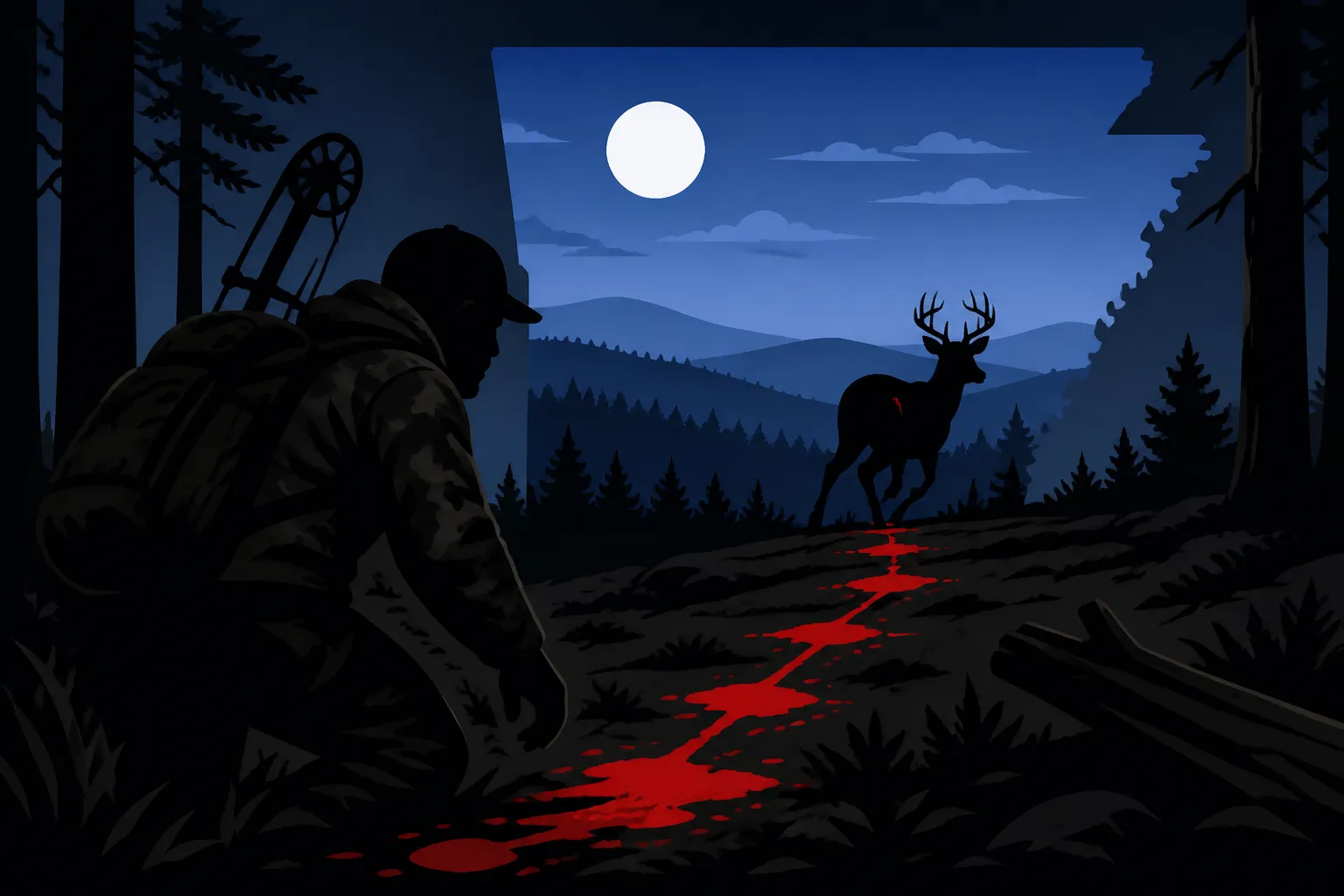
That heart-stopping moment when you make a shot, the deer bolts, and then, as you step off the stand, a quick check of the sky tells you darkness is falling fast. It’s a gut-wrenching feeling, knowing you have a wounded animal out there and the clock is ticking against dwindling daylight. The pressure is immense, and the fear of not recovering your deer is a heavy burden. This guide is here to walk you through the often-stressful, but sometimes necessary, process of blood trailing after dark in the diverse terrain of Arkansas.
The Unique Challenges of Night Trailing in Arkansas
Arkansas hunting can be incredibly rewarding, but it also throws some curveballs, especially when it comes to blood trailing once the sun dips below the horizon. What might seem like a straightforward task in daylight becomes a complex puzzle under the cover of night. We’ve all been there, squinting at the ground, wondering if that dark spot is blood or just a wet leaf.
Diminished Visibility and Terrain Obstacles
The most obvious hurdle is, of course, the lack of light. What felt like a familiar path a few hours ago can suddenly transform into a maze of shadows and indistinct shapes. In the dense Delta bottomlands, every cypress knee and clump of palmettos seems to multiply, creating endless hiding spots for a faint blood trail. The shadowy depths make it nearly impossible to pick out those tiny, crucial drops.
Then there are the rocky, uneven hillsides of the Ozark and Ouachita National Forests. During the day, you might easily spot a turned rock or a scuff mark. At night, those rocks become trip hazards, and the blood, if it lands on a dark, wet stone, can become almost invisible. Even in the more open pine plantations of South Arkansas, the uniform needle litter can swallow up a blood trail, making it feel like you’re searching for a needle in a haystack, only darker. The ability to see any subtle sign, whether it's blood, a turned leaf, or even a single hair, is drastically reduced.
Environmental Factors and Contamination
Arkansas’s environment is beautiful, but it can be a real adversary to a blood trailer. Imagine a cool, clear night after a warm November day. The dew settles heavy, washing away or significantly diluting delicate blood specks on leaves and grass. A sudden rain shower, common in any Arkansas hunting season, can completely obliterate a trail in minutes, turning your careful search into a desperate scramble.
Beyond weather, you’re often contending with other creatures. Feral hogs are rampant in many parts of the state, and their constant rooting and travel can churn up the ground, mixing their tracks with deer tracks and smearing what little blood might be there. Coyotes are always on the prowl, and while they might not directly interfere with your immediate search, their presence adds to the urgency of recovery. There's nothing worse than finding your deer only to discover that scavengers have already begun their work. It's a race against nature, and sometimes, you feel like you're losing from the start.
Emotional and Ethical Considerations
Let’s be honest, losing a wounded animal is one of the worst feelings a hunter can experience. The urgency to recover your deer is deeply personal and ethical. You’ve made the commitment to harvest, and that includes making every reasonable effort to retrieve. When darkness descends, that urgency intensifies, sometimes leading to hasty decisions that can actually harm your chances. The frustration of losing the trail, the doubt creeping in about your shot placement, and the sheer exhaustion of searching in the dark can all take a toll.
It's a heavy responsibility, and sometimes the best thing you can do for the animal, and for yourself, is to approach the task with a clear head and the right tools. The last thing you want is to give up, only to find the deer the next morning just a few yards from where you quit. Your ethical obligation means pushing through that frustration and knowing when to call it a night if necessary, with a plan to return at first light.
Essential Gear for a Successful Night Trailing Expedition
You wouldn't head into the woods without your rifle or bow, and you shouldn't embark on a night blood trail without the right equipment. Having these tools ready can make the difference between a successful recovery and a lost deer. This isn’t about just having a flashlight; it’s about having the right tools for the job.
Lighting the Way
Your primary tool for night trailing is, without a doubt, a good light source. Forget that tiny keychain light; you need serious illumination. High-lumen headlamps are a game-changer. They keep your hands free, which is absolutely critical when you’re leaning down, pushing branches aside, and trying to mark the trail. Look for headlamps with at least 500-1000 lumens and a good battery life, or carry spare batteries. Fenix, Petzl, and Black Diamond make excellent options that stand up to the rigors of the Arkansas woods.
Beyond standard white lights, specialized blood tracking lights can be incredibly helpful. These lights, often featuring specific filtered LEDs, are designed to make blood stand out against natural backgrounds. While actual blood doesn't "glow" under UV light like some might think, these specialized lights enhance the contrast, making faint red or brown spots much more visible. It’s like magic sometimes, turning a seemingly blank patch of leaves into a clear sign of where your deer went. Some hunters also swear by red or green light filters on their headlamps, believing they preserve night vision better, though their effectiveness for blood trailing itself can be debated. Having a powerful handheld flashlight in addition to your headlamp provides a focused beam for really scrutinizing the ground.
Navigation and Marking Tools
Once you find a speck of blood, you need to mark it, and you need to know where you are. This is where modern technology shines. GPS devices or mapping apps on your smartphone, like GoHunt, are indispensable. As soon as you find blood, drop a waypoint. Find the next drop, drop another. This creates a virtual breadcrumb trail that allows you to backtrack, consult your path, and ensure you’re moving in a logical direction without getting disoriented. It’s a huge psychological boost to know exactly where you’ve been and how far you've traveled.
Beyond digital markers, good old-fashioned trail marking tape, in a bright color like orange or pink, is essential. Tie a piece to a branch at every confirmed blood sign. These physical markers help you maintain your line of travel and can be seen with your headlamp from a distance. For more temporary marking, especially if you're doing a quick sweep, reflective tacks or even glow sticks can be handy, as they're easy to spot and remove later. Just remember to pick up all your markers when the job is done – leaving them behind is a definite no-no on public lands.
Protection and Comfort
Even if it was warm at sunset, Arkansas nights can get surprisingly chilly, especially if you’re moving slowly or standing still for long periods. Dress in layers appropriate for the dropping temperatures and moisture. Rain gear is always a good idea, even if it's not raining initially; better safe than sorry. Sturdy, waterproof boots are critical for navigating the often-wet and uneven terrain of the Delta or the rocky slopes of the Ozarks.
You’ll also want to protect yourself from Arkansas's ever-present insect population. Mosquitos and ticks can be active even into the cooler months, especially in bottomland areas. A good insect repellent is a must-have. Don't forget a small first-aid kit for minor cuts, scrapes, or blisters, which are all too common during a strenuous night search. Finally, bring water and a high-energy snack. A long blood trail can be physically and mentally draining, and staying hydrated and fueled will keep your focus sharp.
Step-by-Step Night Trailing Strategies
When you're faced with a night trail, panic is your worst enemy. A systematic, patient approach will yield far better results than a frantic, disorganized search. Here’s how to tackle it, step by step.
Assessing the Shot and Waiting Period
The very first thing you need to do, before you even think about grabbing your headlamp, is to calmly assess the shot. Where did the deer appear to be hit? What was its reaction? Did it run hard, or did it stumble? Did you hear a crash? This initial information is paramount for deciding your next move. If you suspect a gut shot, a liver hit, or a single lung, waiting is absolutely critical. A deer hit in these areas will often bed down nearby and stiffen up. Pressing it too soon will only push it further, making recovery nearly impossible.
In Arkansas, especially in early season with warm temperatures, the waiting period can be agonizing. For a suspected gut shot, waiting 6-8 hours, or even until first light, is often recommended. If you're confident it was a heart or double-lung shot, the deer is likely down within 100 yards, and you might start trailing after 30-60 minutes. But even then, if darkness falls, you still need to be cautious. The decision to wait or go immediately is the most crucial call you'll make, balancing the need for recovery with the risk of pushing the animal. In many cases, especially when the light is failing, waiting until morning is the most ethical and effective choice, despite the anxiety.
Systematic Grid Searching and Marking
Once you’ve decided to hit the trail, whether it's an hour after the shot or at first light, precision and patience are key. Start at the exact point of impact. Look for any sign: a pile of hair, a blood spray, a piece of bone, or even a scuffed-up patch of earth. Mark this spot immediately with your trail tape and a waypoint on your GoHunt app. From there, move slowly. Resist the urge to rush.
Work in a methodical grid pattern. If you lose the trail, go back to the last confirmed blood sign. From that point, fan out in concentric circles or a series of ever-widening sweeps. Keep your headlamp beam low and scan from side to side. Blood often reflects differently than wet leaves. Look for not just obvious drops, but also disturbed leaf litter, broken twigs, turned rocks, and even subtle changes in vegetation. Sometimes, a deer will leave a swipe of blood on the side of a tree or a low-hanging branch. When you find the next sign, mark it, and repeat the process. This meticulous approach, though slow, is incredibly effective in unraveling a difficult trail.
Advanced Techniques and When to Call for Help
If the trail becomes truly sparse, don't despair. Try using multiple light sources. If you have a hunting partner, one person can hold a light high, casting long shadows that might reveal subtle disturbances, while the other sweeps the ground. Getting down on your hands and knees, often called a "quadruped" search, brings your eyes closer to the ground, allowing you to see faint specks of blood that are invisible from an upright position.
Sometimes, despite all your efforts, the trail just vanishes. This is when a fresh set of eyes can make all the difference. If you have a buddy, call them. Two people covering the same area, or even splitting up to cover adjacent lines, can be much more effective. And then there's the ultimate tool: a tracking dog. While not always readily available, a trained tracking dog can follow a scent trail that is completely invisible to the human eye, even hours or days later. Check Arkansas regulations regarding the use of tracking dogs, as rules can vary, but if allowed and available, it can be a game-changer. There are dedicated services in Arkansas, and knowing one or two in your area ahead of time is wise. Remember, this is about ethical recovery, and using every available resource is part of that commitment.
Maximizing Your Chances: Tips for Arkansas Conditions
Arkansas’s varied topography means that what works in one part of the state might be less effective in another. Tailoring your approach to the specific conditions you're facing is crucial.
Reading the Terrain at Night
Each region of Arkansas presents its own unique challenges for night trailing. In the rocky, undulating terrain of the Ozarks, blood can be incredibly hard to spot on dark, wet rocks or amidst patchy moss. Here, you’ll often need to rely more on disturbed ground, scuff marks, and broken vegetation. Think about how a wounded deer would move: generally downhill, often seeking the path of least resistance or dense cover. You might use the Reading an Ozark Bench for Deer principles even in the dark, knowing a deer might follow natural contours.
Conversely, the soft, rich earth and leaf litter of the Delta bottomlands can hold tracks much better, making them a primary indicator alongside blood. However, blood can soak quickly into damp leaves or muddy areas, becoming nearly indistinguishable. In areas prone to flooding, like some of the Delta WMAs, a wounded deer might head towards higher ground or dense thickets. If you’re familiar with the Where Delta Bucks Bed in Standing Water, you know they often seek islands of cover. In pine plantations, the uniform carpet of needles can be a nightmare for blood visibility. Here, looking for disturbed needles, broken twigs, or blood on the underside of pine branches becomes paramount. Understanding the likely travel routes of deer in these environments, even at night, will significantly boost your chances.
Utilizing Technology with GoHunt
Modern hunting apps are not just for scouting or finding property lines; they are invaluable during a blood trail. GoHunt is a prime example of a tool that can drastically improve your odds. As mentioned, dropping a waypoint every time you find a confirmed sign allows you to build a detailed map of the trail. This is especially helpful if you lose the trail and need to return to the last known point. Instead of just guessing, you have precise coordinates.
Beyond marking blood, use your GoHunt app to track your own path. This prevents you from inadvertently walking in circles or getting disoriented in unfamiliar woods, which is an easy mistake to make in the dark. If you're hunting with partners, many apps allow you to share your location and waypoints in real-time, enabling a coordinated search. Imagine one person finding a sign, marking it, and then instantly showing their partner exactly where to pick up the trail. This kind of communication and precision is a game-changer for night trailing. Knowing your Scouting Arkansas Public Land Before Season efforts have been supplemented by digital tools gives you a real edge.
Preservation of the Trail
It's tempting to rush in, but a careful approach is key to preserving the trail. Whenever possible, avoid walking directly on the blood trail itself. You don't want to smear or destroy valuable signs, especially if you might need to bring in a tracking dog later. Try to walk parallel to the suspected path, always keeping an eye out for the next sign. This also reduces the amount of human scent on the actual trail, which can sometimes deter a wounded animal from bedding down or make it harder for a dog to work.
If you suspect rain is coming, or if you're leaving the trail overnight, try to protect the last confirmed blood sign. This might mean gently covering a small area with a large leaf or a piece of bark, or marking it extensively so it's easy to relocate even if the blood washes away. Being mindful of these details, even in the stress of the moment, can make a huge difference in whether you ultimately recover your deer. The attention you pay to Field Dressing in Arkansas Heat or Blood Trailing After Dark in Arkansas speaks volumes about your commitment.
| Lighting Option | Pros | Cons | Best Use Case |
|---|---|---|---|
| High-Lumen Headlamp | Hands-free, wide beam, essential | Can wash out faint blood if too bright/white | Primary illumination, general navigation |
| Powerful Handheld Flashlight | Focused beam, high lumens, flexible | Occupies one hand | Scrutinizing specific spots, backup light |
| Dedicated Blood Tracking Light | Enhances blood contrast, makes faint signs visible | Can be costly, only useful for blood | Locating sparse blood, confirming faint signs |
| UV (Blacklight) | Some hunters claim it works | Blood itself doesn't fluoresce well | Generally not recommended for blood trailing |
| Red/Green Light Filters | Preserves night vision (subjective) | Reduces overall brightness, can alter blood color | For general navigation, minimal impact on blood color |
Disclaimer
This guide is for informational purposes only and should not be considered a substitute for local regulations. Always consult the latest Arkansas Game and Fish Commission regulations regarding hunting, tracking, and recovery methods before heading afield. Safety should always be your number one priority.