Alternative Firearms Deer Hunting in Arkansas
Hunting deer in Arkansas is a time-honored tradition, but sometimes the hustle and bustle of modern gun season can feel a little overwhelming, or you might just be looking for a different kind of challenge. Many hunters are discovering the unique rewards of alternative firearms seasons, which offer extended opportunities, a different pace, and a chance to connect with the hunt on a deeper, more intentional level. This guide will walk you through everything you need to know about pursuing whitetails with alternative firearms in the Natural State.
What Exactly Are Alternative Firearms for Deer in Arkansas?
When we talk about "alternative firearms" in the context of Arkansas deer hunting, we're stepping outside the realm of your typical centerfire rifle. These methods require a different approach, often a closer shot, and a deeper understanding of your equipment. It's not just about what you shoot, but how you shoot it and the unique seasons dedicated to these tools.
Defining the Alternative Category
The Arkansas Game and Fish Commission (AGFC) clearly defines what constitutes an "alternative firearm" for deer hunting. Primarily, this category includes muzzleloaders and specific high-powered air rifles. It’s important to distinguish these from the broader archery season or the general modern gun season because the regulations, open dates, and even the mindset shift quite a bit.
For muzzleloaders, we're talking about firearms loaded from the muzzle, typically using black powder or a black powder substitute, and a single projectile. This can range from traditional flintlocks and percussion cap rifles to more modern in-line muzzleloaders. The essence is that it's a single-shot affair, slower to reload, and often limited in effective range compared to a cartridge-firing rifle. The appeal for many lies in this challenge and the historical connection to hunting.
High-powered air rifles, on the other hand, are a more recent addition to the alternative firearms category for deer in Arkansas, gaining popularity as technology has advanced. To be legal for deer, an air rifle must be a .40 caliber or larger and produce at least 400 foot-pounds of energy at the muzzle. This isn't your backyard plinking airgun; these are serious, potent hunting tools, usually Pre-Charged Pneumatic (PCP) systems. They offer a different set of advantages and challenges, often being much quieter than a firearm and with virtually no recoil, but requiring precise shot placement and a deep understanding of their ballistic limitations.
It’s worth noting that while these are the primary "alternative firearms," the broader umbrella of "alternative methods" might sometimes include archery and crossbows during specific seasons. However, for the purpose of this article, when we say "alternative firearms," we're zeroing in on those muzzleloaders and air rifles that give you a special season window.
Why Hunters Choose Alternative Methods
So, why would a hunter, with all the conveniences of modern firearms, choose to pick up a muzzleloader or a high-powered air rifle? The reasons are as varied as the hunters themselves, but they often boil down to a few core motivations that resonate deeply with the hunting spirit.
Firstly, there's the extended season opportunity. The alternative firearms seasons typically run outside or alongside the more crowded modern gun seasons. This means more time in the woods, often during periods when deer patterns might be more predictable or less pressured, giving you a chance to hunt when others can't. It's a huge draw for folks who live for those crisp fall mornings and want to maximize their time afield. These seasons are often less crowded, allowing for a more serene and solitary hunting experience, a welcome escape from the opening weekend rush you might find in some areas during modern gun hunts.
Then there's the personal challenge. Modern rifles, with their flat trajectories and powerful optics, can make long-range shots relatively straightforward. Muzzleloaders and air rifles demand more. You're typically dealing with shorter effective ranges, more pronounced bullet drop, and the need for meticulous preparation. This forces you to become a better hunter – more focused on scouting, closer stalking, and more precise shot placement. It's about earning that deer, feeling that connection to the roots of hunting, and proving to yourself that you can succeed with a more primitive tool. It’s a rewarding feeling that many find addictive.
Tradition and nostalgia also play a significant role, especially with muzzleloaders. Many hunters feel a connection to their ancestors who relied on similar tools to put food on the table. The smell of black powder, the smoke after a shot, the deliberate loading process – it all evokes a sense of history and respect for the hunting heritage. It's a way to slow down, disconnect from the instant gratification of modern life, and immerse oneself in a more primal hunting experience.
Finally, for some, it’s about escaping the crowds. While some WMAs can still see pressure, the alternative firearms seasons generally experience less hunter density than the main modern gun seasons. This can lead to a more relaxed hunt, with less competition for prime spots and deer that might be less wary. If you're tired of parking lots full of trucks and the constant crack of high-powered rifles, an alternative season might be your peaceful refuge. For those using tools like the GoHunt mapping system, identifying these less-pressured areas becomes a strategic advantage during these alternative seasons.
The Arkansas Alternative Firearms Deer Seasons
Understanding when and where you can hunt with alternative firearms is absolutely critical. The Arkansas Game and Fish Commission sets specific dates and regulations for these seasons, and they can vary slightly from year to year, as well as by deer zone. Being informed is your first step to a successful and legal hunt.
Understanding the Calendar and Zones
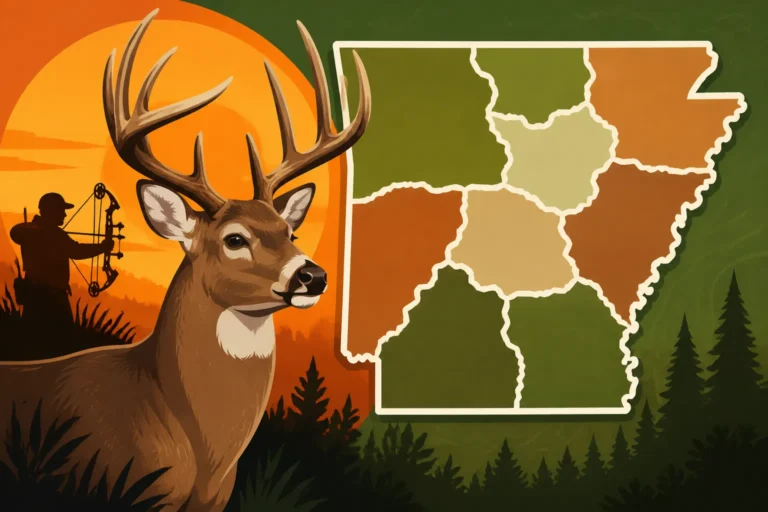
Arkansas is divided into numerous deer zones, and each zone has its own set of regulations and season dates. While there are general statewide seasons for alternative firearms, it's paramount to check the current AGFC regulations for the specific zone you plan to hunt. Typically, the alternative firearms season, often called the muzzleloader season, offers a window between the archery season and the modern gun season, and sometimes additional days during the late season.
For example, a common structure might see an archery season running from late September through February. A dedicated muzzleloader season might open for a week or two in mid-October, offering an exclusive period for these firearms. Then, the modern gun season might kick off in mid-November. This structure allows hunters to leverage different tools at different times, often catching deer in varying phases of the rut or feeding patterns. It’s a thoughtful way to spread out hunter pressure and provide diverse opportunities.
It's crucial to remember that these dates are subject to change annually based on deer population management goals and biological data. Always consult the most recent AGFC Deer Regulation Guidebook before planning your hunt. You can find detailed information on Arkansas Deer Seasons and Zone Limits directly from the AGFC website or their app. Don't rely on last year's calendar; those dates are just placeholders until the new regulations are released! Using a robust mapping system like GoHunt can help you overlay these zone boundaries with public land access, making your planning even more precise.
Bag Limits and Tagging Requirements
Just like with any other deer season in Arkansas, there are strict bag limits and tagging requirements that apply to alternative firearms hunting. These are designed to manage the deer population sustainably and ensure accurate harvest data.
The statewide bag limit for deer applies across all seasons. This means any deer taken with an alternative firearm counts towards your overall annual bag limit. The specific number of antlered bucks and antlerless deer you can harvest will depend on the deer zone you're hunting in. Some zones are more restrictive on antlered bucks (e.g., the three-point rule in some areas), while others might allow for more antlerless deer harvest to help manage local populations. Always review the bag limits for your specific zone.
Once you harvest a deer with an alternative firearm, the tagging process is the same as for modern gun or archery. You must immediately validate your tag by cutting out the month and day of harvest. This tag must remain affixed to the deer until it is processed for consumption or taxidermy. Within 24 hours of harvest, or before processing or leaving the state, you must check your deer in with the AGFC. This can be done online through their website, via their mobile app, or by phone. It's a quick and easy process, but it's legally required. For a deeper dive into this, check out our guide on Arkansas Deer Checking and Tagging.
It's also important to ensure you have the correct licenses and stamps. In Arkansas, a general hunting license and a deer tag are usually sufficient, but always confirm any additional stamps or permits that might be required for specific WMAs or specific game types. Non-residents will have different license structures, often including short-term options that cover specific periods. Understanding these requirements beforehand will prevent any unwanted surprises in the field.
Muzzleloading for Deer in Arkansas
Muzzleloader hunting is a fantastic way to extend your deer season and truly connect with the tradition of the hunt. It slows things down, demanding patience and precision. If you’ve never tried it, there’s a learning curve, but it’s incredibly rewarding.
Types of Muzzleloaders and Ammunition
The world of muzzleloaders offers a good bit of variety, each with its own quirks and benefits. You'll primarily encounter two main types: traditional and in-line.
Traditional Muzzleloaders harken back to the days of pioneers and frontiersmen. These often feature an exposed hammer and a percussion cap or flintlock ignition system. Loading is typically done with a round ball or a patched conical bullet, requiring a bit more finesse and historical appreciation. They often have slower twist rates, which are better suited for round balls or shorter conicals. For many, the charm of a traditional muzzleloader lies in its authenticity and the challenge it presents. You're working with simpler iron sights, and the effective range is generally shorter, pushing you to become a better woodsman.
In-line Muzzleloaders are the more modern iteration, designed for easier use, better accuracy, and improved reliability, especially in adverse weather. They get their name from the firing pin being "in-line" with the bore, which improves primer ignition. Most in-lines use 209 shotgun primers, which are hot and reliable. These rifles often come drilled and tapped for scopes, and their faster twist rates are ideal for shooting modern saboted bullets (a plastic sleeve holding a smaller-diameter bullet, like a .45 bullet in a .50 caliber sabot). Brands like CVA and Traditions are popular choices, offering a range of models from entry-level to high-end. In-lines have significantly extended the effective range of muzzleloaders, blurring the line with modern rifles in some respects, but they still retain the single-shot, muzzle-loading characteristic.
When it comes to ammunition, you'll be dealing with black powder or one of its many substitutes. Traditional black powder (FFg or FFFg, depending on caliber) is the classic choice, known for its distinctive smell and smoke. However, it’s corrosive and requires thorough cleaning soon after shooting. Substitutes like Hodgdon Triple Seven or Blackhorn 209 offer similar ballistic performance with less residue and easier cleanup, which is a huge advantage for hunters. They are also less sensitive to humidity. Always use the recommended powder for your specific muzzleloader, and pay close attention to the load data – measuring your powder charge precisely is critical for safety and accuracy.
Projectiles vary widely. For traditional muzzleloaders, round balls or pure lead conicals (like Lee REAL bullets) are common. For in-lines, saboted bullets are king. These can be pistol bullets (like .45 caliber XTPs in a .50 caliber sabot) or specially designed muzzleloader bullets (like Barnes Spit-Fire T-EZ). These allow for better aerodynamics, expansion, and accuracy at longer ranges. The key is to find a bullet that shoots accurately in your muzzleloader with your powder charge. It’s a bit of experimentation to find the perfect combination, but that’s part of the fun.
Preparing for a Muzzleloader Hunt
Getting ready for a muzzleloader hunt is more involved than just grabbing a box of cartridges and heading out. It requires meticulous preparation, practice, and a keen eye for detail.
First and foremost, practice, practice, practice! You need to know how your specific muzzleloader shoots with your chosen powder and projectile combination. Ballistics are different from modern rifles; there's more drop, and wind drift can be more pronounced. Spend time at the range, shooting from various positions (off-hand, supported, kneeling) and at different distances (50, 75, 100 yards). Understand your effective range – the maximum distance at which you can consistently hit a vital zone with confidence. For most, this will be within 150 yards, often much closer.
Loading procedures are critical. You'll need a powder measure to ensure consistent charges, a bullet starter, and a ramrod. Consistency is key for accuracy. Develop a routine: swab the bore, pour powder, seat the bullet, prime the action. For percussion caps, a capper tool makes life easier, especially with cold fingers. For 209 primers, ensure they seat firmly. Many hunters carry a "speed loader" or two in the field – a pre-measured powder charge and seated bullet in a waterproof tube – for a quicker follow-up shot if needed, though speed is relative with a muzzleloader.
Cleaning and maintenance are paramount. Black powder and its substitutes can be corrosive, especially if moisture is introduced. After every shooting session and certainly after a hunt, clean your muzzleloader thoroughly. Hot soapy water, specialized bore solvent, and plenty of patches are your friends. Disassemble the breech plug and clean it thoroughly. A well-maintained muzzleloader is a reliable muzzleloader. Neglect will lead to rust, pitting, and misfires.
Finally, consider your essential gear for the field. Beyond the muzzleloader itself, you'll need your pre-measured powder charges (in a waterproof container!), a supply of primers or flints, extra bullets, a bullet starter, a cleaning jag and patches, and perhaps a small bottle of bore lubricant. A rain cover for your rifle is a smart idea to keep the bore and ignition system dry. Many hunters also carry a compact cleaning kit to swab the bore between shots during a range session or to perform a quick field clean if necessary. Being prepared for Arkansas Muzzleloader and Alternative Firearms Tactics is about attention to these small but critical details.
Air Rifle Hunting for Deer in Arkansas
Hunting deer with a high-powered air rifle is a relatively new frontier for many, and it's certainly a unique challenge. Arkansas is one of the states that has embraced this method, but with very specific requirements to ensure ethical hunting.
Legal Requirements and Specifications
Before you even consider purchasing an air rifle for deer in Arkansas, you must be absolutely certain it meets the state's legal requirements. The Arkansas Game and Fish Commission is quite clear: an air rifle must be .40 caliber or larger and produce a minimum of 400 foot-pounds of energy (FPE) at the muzzle to be legal for deer hunting. This isn't a suggestion; it's a hard and fast rule.
Many standard air rifles, even those considered "high-powered" for small game, won't come close to meeting the 400 FPE requirement. You're almost exclusively looking at PCP (Pre-Charged Pneumatic) air rifles for deer hunting. These systems use a separate air tank that's filled to very high pressures (typically 2,000 to 4,500 PSI) and then regulated down to deliver consistent power with each shot. Spring-piston or gas-piston air rifles simply cannot achieve the necessary energy levels.
When choosing a PCP air rifle, look for models from reputable manufacturers known for their big-bore hunting capabilities, such as Umarex, AirForce, Seneca, or Benjamin. Many of these will advertise their muzzle energy, but it's always a good idea to verify by checking independent reviews or chronograph data with your chosen projectile. Calibers like .45, .50, or even .58 are common for big game air rifles. The larger caliber typically means a heavier slug, which in turn helps achieve that critical 400 FPE threshold.
The AGFC defines "What Counts as an Alternative Firearm," so make sure you read those regulations carefully. This includes ensuring your air rifle isn't modified in a way that would render it illegal or unsafe. These aren't toys; they are powerful hunting instruments that demand respect and adherence to all regulations, just like any other firearm. Carrying proof of your rifle's capabilities, if available, such as a manufacturer's spec sheet or chronograph data, might not be required but could be helpful in a conversation with a game warden.
Equipment and Technique for Air Rifle Deer Hunting
Once you've got a legal air rifle, the equipment and technique for hunting deer with it become paramount. This method requires a very disciplined approach, emphasizing close-range shots and pinpoint accuracy.
Your primary piece of equipment, the PCP air rifle, will be at the core of your setup. Alongside it, you'll need a reliable air source. This usually means a high-pressure carbon fiber tank (often called a "scuba tank" or "buddy bottle") that you'll use to refill your rifle's onboard air reservoir in the field. Hand pumps are available but are incredibly strenuous and time-consuming for these large-capacity reservoirs. An electric compressor is the ultimate convenience but is a significant investment. Make sure you have enough air to top off your rifle several times, as most big-bore PCPs only get a handful of full-power shots per fill.
Projectiles for air rifles come in two main types: pellets and slugs. For deer hunting, you'll almost exclusively be using heavy lead slugs. These are solid lead projectiles, shaped like miniature bullets, that retain energy better and offer deeper penetration than traditional waisted pellets. Again, selecting a slug that your particular rifle shoots accurately is critical. Experiment with different weights and designs.
Optics are essential. While some air rifles might come with open sights, a good quality scope with a ballistic reticle will greatly aid in accuracy, especially when accounting for the significant pellet/slug drop at varying ranges. Remember, air rifle trajectories are much more parabolic than centerfire rifles, so knowing your holdovers or using a rangefinding scope is beneficial.
The technique for air rifle deer hunting emphasizes ethical shot placement above all else. Because air rifle projectiles typically have lower velocities and energies than centerfire bullets, shot placement must be absolutely precise. A shot to the vitals (heart and lungs) is imperative. Avoid shoulder shots or any shot that might hit heavy bone, as penetration could be compromised. This means waiting for the perfect broadside or slightly quartering-away shot at a comfortable, known distance.
Range estimation is crucial. Most ethical air rifle deer hunters limit their shots to under 50 yards, and often much closer, 20-30 yards, to ensure maximum energy transfer and accuracy. This means your hunting strategy will need to focus on still-hunting, stalking, or setting up in areas where deer are likely to pass within close range. Think dense cover, pinch points, or food plots where you can minimize the distance to your target. The quiet nature of air rifles can be an advantage here, allowing for multiple shots if needed (within legal limits) without spooking the entire area, or for subsequent follow-up shots on the same animal if the first wasn't immediately lethal.
Strategic Approaches to Alternative Firearms Hunting
Hunting with alternative firearms isn't just about the tool; it's about the entire approach. Because of their inherent characteristics – shorter effective ranges, slower reload times, unique ballistics – you'll need to adjust your strategy significantly compared to modern gun hunting.
Scouting and Stand Placement Specifics
Effective scouting is always important, but with alternative firearms, it becomes absolutely non-negotiable. You're committed to closer shots, which means you need to know exactly where deer are moving and how to get into their personal space without being detected.
Intensive pre-season scouting should focus on identifying travel corridors, primary food sources (acorns, agricultural fields, browse), bedding areas, and pinch points. Look for fresh sign: tracks, rubs, scrapes, and droppings. During the alternative seasons, deer might be less pressured than during modern gun season, but they are still wary. Understanding their daily routine – from bedding to feeding and back – is key.
When it comes to stand placement, think "up close and personal." Whereas a modern rifle hunter might set up on a food plot edge hoping for a 200-yard shot, an alternative firearms hunter is aiming for 50 yards or less, ideally closer. This means your stands need to be positioned for tight encounters. Consider natural funnels where deer movement is concentrated: saddles in ridgelines, creek crossings, edges of thick cover, or narrow strips of timber between fields.
With a muzzleloader, consider the plume of smoke after a shot. While not usually an issue for the shot itself, it can obscure your vision for a second, and the noise, while less than a rifle, is still significant. With an air rifle, the incredibly quiet report allows for faster follow-up shots on a deer that hasn't run far, but the minimal effective range means you really need deer to commit to your position.
A valuable tool for this kind of detailed scouting is a good mapping app like GoHunt. It allows you to overlay property lines, topo maps, and aerial imagery to pinpoint these critical features. You can mark bedding areas, trails, and potential stand sites, giving you a clear visual strategy. For more on this, check out our guide on Scouting Arkansas Public Land Before Season. Whether you're hunting Ozark Ridges and Hollows for Deer or contemplating Treestand Setups in Delta Hardwoods, the core principle remains: closer is better.
Adapting to Weather and Terrain
Arkansas weather can be famously unpredictable, and its diverse terrain presents a range of challenges. Both significantly impact alternative firearms hunting.
Weather considerations are particularly important for muzzleloaders. Humidity and rain are the enemy of black powder and percussion caps/flints. Moisture can cause misfires or squib loads. To mitigate this, ensure your powder and primers are kept completely dry. Many hunters use waterproof containers for their powder and carry a small, sealed pouch for primers. A good quality waterproof cover for your muzzleloader's lock and bore is also highly recommended, especially when sitting in a stand. In cold weather, ensure your primers are properly seated, as cold can sometimes affect the flexibility of caps.
For high-powered air rifles, cold weather can impact air pressure and, consequently, muzzle velocity. While most modern PCP systems are relatively stable, extreme cold can cause slight drops in FPE, so it's wise to test your rifle's performance in similar conditions. Additionally, ensure O-rings and seals are in good condition, as they can become less pliable in the cold, potentially leading to slow leaks. Battery life for illuminated reticles or rangefinders can also deplete faster in cold temperatures.
Terrain adaptation means choosing your hunting grounds wisely based on your chosen firearm's capabilities. If you're using a muzzleloader with open sights or an air rifle with a limited range, open fields and vast timber blocks might not be your best bet. Instead, focus on areas with dense cover, rolling hills, or river bottoms that naturally limit sight lines and encourage closer encounters.
- Ozark Mountains: The steep, broken terrain of the Ozarks often creates natural funnels and saddles where deer move. Setting up on these features can present closer shots. The challenging topography means you'll be doing a lot of hiking, so a lighter muzzleloader might be preferred.
- Delta Lowlands: The flat, often thick bottomlands of the Delta can be ideal for alternative firearms. Dense vegetation naturally limits visibility, forcing deer into closer quarters. Creek and river drainages, logging roads, and field edges offer prime opportunities. However, water management and standing water can affect access and deer movement, so be prepared for wet conditions.
Understanding the subtle nuances of wind and thermals is also magnified with alternative methods, as deer will be much closer. In hilly terrain, thermals rise in the morning and fall in the evening. In flat country, prevailing winds are more dominant. Always set up to keep your scent away from where you expect deer to approach.
| Feature | Muzzleloader (Traditional/In-line) | Air Rifle (PCP .40+ Cal) |
|---|---|---|
| Caliber | .45, .50, .54 (most common) | .40, .45, .50, .58 (legal min .40) |
| Effective Range | 100-150 yards (in-line), <75 yards (traditional) | 20-50 yards (optimal for deer) |
| Muzzle Energy | 1000-2000+ FPE (depending on load) | 400+ FPE (legal minimum for deer) |
| Noise | Moderate to loud bang, smoke plume | Very quiet "thwack" |
| Recoil | Moderate to heavy | Very low to negligible |
| Reload Speed | Slow, multi-step process | Fast (if rifle has magazine or quick load feature) |
| Ammunition | Black powder/substitutes, conical/saboted bullets | High-pressure air, heavy lead slugs |
| Season Length | Dedicated "Muzzleloader Season" (specific dates) | Dedicated "Alternative Firearms Season" (check AGFC) |
| Complexity | Moderate (cleaning, loading) | Moderate (air refills, specialty equipment) |
Understanding Ethical Considerations and Shot Placement
When using alternative firearms, the margin for error is significantly reduced. This means a heightened focus on ethical considerations, particularly around shot placement and understanding the limitations of your equipment.
Maximizing Ethical Harvests with Slower Projectiles
Alternative firearms, by their nature, often launch projectiles at slower velocities and with less kinetic energy than modern centerfire rifle rounds. This isn't to say they aren't lethal – they absolutely are – but it means that shot placement becomes even more critical for a quick, humane harvest. The primary goal is to ensure the projectile passes through the vital organs, causing massive hemorrhage and rapid incapacitation.
With a muzzleloader, especially a traditional one, projectiles are typically pure lead and expand differently than jacketed modern bullets. Even with in-lines using sabots and modern bullets, the velocities are lower, which can affect bullet expansion and penetration. This means aiming for the classic heart and lung shot is paramount. A broadside shot, targeting the crease behind the shoulder, provides the largest and most forgiving target for this vital area. Avoid attempting quartering-to or quartering-away shots unless you are absolutely confident in your ability to angle the projectile into the vitals without hitting heavy bone that could stop or deflect it.
For air rifles, this ethical imperative is even more pronounced. The 400 FPE minimum is enough to ethically harvest a deer, but it leaves little room for error. An air rifle slug needs to disrupt the central nervous system or vital organs to bring an animal down quickly. A shot anywhere other than the heart or lungs, or perhaps a precise head/neck shot if you are extremely proficient and at very close range, risks a prolonged and unethical recovery. Therefore, waiting for a perfect, calm, broadside shot with the deer unaware of your presence is not just recommended, it's essential. This means passing on marginal shots you might consider with a modern rifle.
Always practice at varying distances within your intended hunting range. Understand the bullet drop of your specific load and projectile. If you're comfortable with a 75-yard shot on a target, that might translate to a 50-yard ethical shot in the field when adrenaline is pumping and conditions are less than ideal. Self-imposed range limits, usually stricter than those for modern firearms, are a hallmark of an ethical alternative firearms hunter.
Tracking and Recovery Differences
The characteristics of alternative firearms – slower projectiles, often pure lead, and sometimes smaller wound channels – can lead to differences in how deer react to the shot and, crucially, in the blood trail they leave. This impacts your tracking and recovery strategy.
A deer hit with a muzzleloader might not react as dramatically as one hit with a high-velocity rifle. While a good hit will still cause a significant reaction, the exit wound might be smaller, or the bullet might not exit at all, especially with heavier, non-expanding lead projectiles. This can result in a less robust blood trail. For air rifles, the wound channel is typically smaller than a centerfire bullet, and while slugs are designed to expand, internal damage is the primary factor. Again, a good blood trail might be less guaranteed, making patience even more vital.
After the shot, the first rule is patience. Do not immediately pursue the deer. Give it at least 30 minutes, and ideally an hour or more for a questionable shot, to allow the animal to lie down and expire. Pushing a wounded deer too soon can cause it to run further, making recovery much harder. With slower projectiles, even a mortal wound might not drop the deer on the spot.
Once you begin tracking, be methodical. Look for every sign: tracks, broken twigs, hair at the shot site, and any blood. With a potentially sparse blood trail, you might need to grid search the area where you last saw the deer. If it's legal in your area, and you're confident in your dog's training, a blood-trailing dog can be an invaluable asset. Using a mapping app to mark the last known location and every sign you find can help you stay oriented and prevent you from circling.
If you are blood trailing a deer after dark, it can be a challenging endeavor, but sometimes necessary. Always bring powerful lights and extra batteries. Move slowly, marking each spot of blood. If the trail is too faint or disappears, consider backing out until morning, as long as temperatures are cool enough to prevent meat spoilage. Leaving a deer overnight in warm Arkansas temperatures can lead to significant meat loss. For detailed advice, see our guide on Blood Trailing After Dark in Arkansas. This entire process reinforces the need for meticulous planning, calm execution, and unwavering ethics.
Public Land Opportunities for Alternative Firearms
Arkansas boasts an incredible amount of public land, offering fantastic opportunities for alternative firearms hunters. While the crowds on opening weekend of modern gun season can be daunting, the alternative seasons often provide a more serene and less pressured experience.
Identifying Suitable WMAs and National Forests
Arkansas's public lands include numerous Wildlife Management Areas (WMAs), acres upon acres of National Forest land (Ozark and Ouachita), and National Wildlife Refuges. Many of these areas allow alternative firearms hunting during their designated seasons, but it's crucial to check specific WMA regulations, as some may have unique rules or even prohibit certain methods.
National Forests like the Ozark National Forest and the Ouachita National Forest are massive, encompassing millions of acres. These vast tracts of timber, hills, and hollows are ideal for the still-hunter or the patient stand hunter using alternative firearms. The sheer size means you can often find solitude and less pressured deer, especially if you're willing to hike away from road access. The varied terrain also provides natural funnels and bedding areas that are perfect for setting up a close-range ambush.
Wildlife Management Areas (WMAs) are managed by the AGFC and often have specific habitat enhancement projects aimed at deer and other wildlife. Some WMAs, particularly in the Delta, might be known for their flooded timber for ducks, but many also offer excellent deer hunting. Look for WMAs that have a mix of timber, thickets, and food plots. During alternative seasons, the pressure can be significantly lower than during modern gun season. Examples of WMAs that often provide good deer hunting opportunities, even during alternative seasons, include larger tracts like White Rock WMA in the Ozarks or some of the more extensive timbered WMAs in the river bottoms.
A fantastic resource for finding suitable hunting spots is the AGFC Map Tool. This online interactive map allows you to view WMA boundaries, public/private land ownership, roads, and even topographic features. You can plan your approach, identify potential stand locations, and find areas that might be overlooked by other hunters. Third-party apps like GoHunt also offer detailed map layers that can enhance this planning, showing public land boundaries, habitat types, and even historical hunter pressure data. This kind of detailed information is invaluable for finding those less-pressured pockets where a close-range alternative firearm hunt can truly shine.
Rules and Regulations on Public Land
Hunting on public land, while offering great access, comes with its own set of rules and regulations that must be meticulously followed. These are in addition to the statewide hunting laws.
WMA-Specific Regulations: Each WMA can have its own specific rules regarding hunting methods, vehicle access, camping, and even antler restrictions. Always consult the AGFC hunting guide for the specific WMA you plan to hunt. Some WMAs may require a WMA general use permit or have special draw hunts that don't apply to alternative firearms season but are good to be aware of. Pay close attention to vehicle restrictions; many WMAs limit vehicle access to designated roads, and ATVs might be restricted to specific trails or prohibited altogether.
Hunter Orange Requirements: During any modern gun or alternative firearms season, hunter orange is generally required on public land in Arkansas. This means wearing at least 400 square inches of hunter orange above the waist, including a visible orange head covering. This is a crucial safety regulation that protects hunters, especially in areas where visibility can be limited. Always check the current regulations for exact requirements, as they can change. Our guide on Arkansas Hunter Education and Safety Rules provides more details on this.
Stand and Blind Rules: When hunting on public land, there are typically rules regarding tree stands and ground blinds. Permanent stands are generally prohibited. Portable stands usually must be removed daily or within a certain timeframe (e.g., 2 weeks after the close of the season). Make sure your stand is clearly marked with your name and AGFC ID number. Always use a safety harness when hunting from a tree stand; gravity doesn't discriminate between modern rifle and muzzleloader hunters.
Baiting and Feeding: On most public lands in Arkansas, baiting or feeding deer is prohibited. This means you cannot place corn, mineral blocks, or other attractants to draw deer to your hunting location. This is important to remember as baiting is legal in some areas of Arkansas on private land, but generally not on public land.
The beauty of public land alternative firearms hunting is the freedom it offers, but that freedom comes with the responsibility of knowing and adhering to all rules. A little pre-hunt research and planning using the AGFC resources can make all the difference in having a safe, legal, and successful hunt. If you're used to Modern Gun Tactics on Arkansas Public Land, remember to adjust your approach for the unique demands of alternative firearms.
Disclaimer
Please remember that hunting regulations, season dates, and specific rules for firearms and public lands can change annually. It is your responsibility as a hunter to consult the most current Arkansas Game and Fish Commission (AGFC) regulations and guidebooks before embarking on any hunting trip. This guide provides general information and should not be considered a substitute for official AGFC documentation. Always prioritize safety, ethical hunting practices, and legal compliance.