Squirrel Hunting Arkansas Hickories
Finding those elusive squirrels in Arkansas, especially when they're tucked away in their favorite hickory groves, can feel like searching for a needle in a haystack for many hunters. You spend hours walking, eyes straining, only to hear the tell-tale bark after you've passed the sweet spot. This guide is all about cutting down on that frustration, helping you pinpoint and effectively hunt the abundant squirrels that call Arkansas's hickory stands home.
Why Hickories Are Squirrel Hotspots in Arkansas
When you're chasing squirrels in Arkansas, especially the feisty fox squirrels and the ever-present gray squirrels, you quickly learn they have their favorite diners. And nine times out of ten, that's a hickory tree. These trees are absolute magnets for squirrels, offering a high-energy food source that's critical for them to thrive, especially as seasons change and they need to pack on the pounds.
Understanding the Hickory Lifecycle and Squirrel Preferences
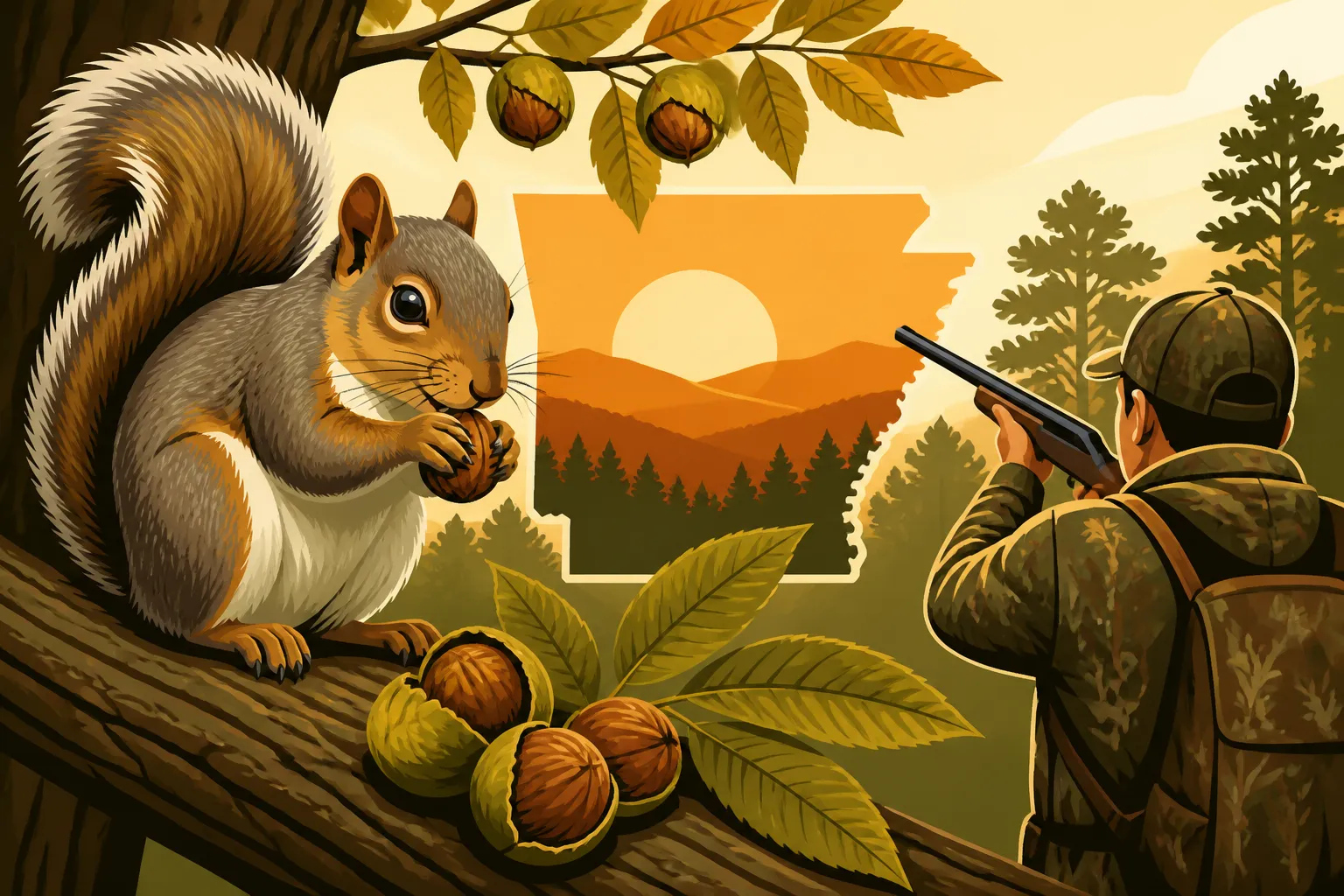
Hickory nuts are a powerhouse of nutrition for squirrels, packed with fats and proteins they absolutely need to survive the colder months and sustain their active lives. There are several species of hickory scattered across Arkansas, each with slightly different nut characteristics, but they all share one thing in common: squirrels adore them. We've got shagbark hickories with their shaggy bark and distinct nuts, mockernut hickories, pignut hickories, and more. Each one drops its bounty at slightly different times, creating a prolonged buffet for our bushy-tailed friends.
The season for hickory nuts typically kicks off in late summer and early fall. This is prime time for squirrels. As soon as those nuts start to mature and hit the ground, squirrels are on them. They'll spend their days burying them, cracking them open, and generally making a racket. If you're out in the woods during this period, you'll hear the constant crunch-crunch-crunch as they peel back the husks. This intense feeding period is crucial for them to store up energy, and it's also a fantastic time for hunters to capitalize on their predictable behavior. Understanding this cycle helps you anticipate when and where the action will be hottest.
Identifying Key Hickory Stands
So, how do you find these squirrel magnets? It's all about observation and knowing what to look for. First, recognize the trees themselves. Hickories are deciduous hardwoods, often growing quite tall. The shagbark, as its name implies, is pretty easy to spot with its peeling, shaggy bark. Others might be harder, but they generally have strong, straight trunks and dense canopies. But even if you're not a dendrologist, you can still find them by looking for the tell-tale signs of squirrel activity.
The biggest giveaway is "cuttings" – the discarded husks and shell fragments left behind by squirrels after they've eaten a nut. If you find a patch of ground littered with these fresh cuttings, you've found an active feeding area. They often look like little piles of shredded wood chips under a tree. You'll also want to look for drey nests, which are those messy-looking leaf nests high up in the tree canopy. While squirrels build them in many trees, a high concentration of dreys in a hickory stand is a good indicator of a healthy, resident squirrel population.
When you're Scouting Arkansas Public Land Before Season, specifically target areas with a good mix of hardwoods, paying close attention to ridges and creek bottoms where hickories often thrive. These areas provide both food and cover, making them ideal squirrel habitats. Using a mapping app can also be a game-changer here, as they often allow you to identify tree types or at least areas of dense hardwoods that you can then explore on foot.
Essential Tactics for Hunting Hickory-Loving Squirrels
Hunting squirrels in hickory country isn't just about walking around hoping for the best. It requires a blend of patience, stealth, and a keen eye. Whether you prefer the slow, methodical approach or setting up for an ambush, understanding these tactics will significantly increase your chances of success.
Still-Hunting Through the Hickory Bottoms
Still-hunting is perhaps the most rewarding way to chase squirrels in these dense hickory stands. It’s a slow dance with the forest, where you move incrementally, stopping frequently to listen and observe. Think of it as stalking, but with a lot more emphasis on being a part of the environment rather than actively pursuing.
Start by entering your chosen hickory grove quietly, long before you expect to see any activity, ideally at first light or late in the afternoon. Take one or two steps, then pause. Listen intently. You might hear the distinctive scratch-scratch-scratch of claws on bark, the rustle of leaves as a squirrel digs for a buried nut, or the gentle thump of a newly fallen nut hitting the forest floor. These sounds, even subtle ones, can give away a squirrel's position long before you see it.
As you move, always be scanning the canopy and the ground. Squirrels will often freeze when they detect movement, blending perfectly with the bark or the leaves. Look for unnatural bumps on branches, the flick of a tail, or the slight twitch of an ear. When you spot one, try to get a clear shot without making any sudden movements. If it's on the far side of the tree, sometimes just waiting will work, as curiosity or a desire for another nut will often bring them around. This method demands extreme patience, but it allows you to cover more ground and interact with the woods in a truly immersive way. You might even find yourself observing other wildlife while waiting for a squirrel to reveal itself, adding to the overall experience. This slow approach is also excellent for Reading Cuttings Under an Oak and other trees, not just hickories, helping you confirm active feeding zones.
Setting Up and Waiting Near Active Trees
Sometimes, the best approach is to let the squirrels come to you. If you've identified a particularly active hickory tree or a small cluster of them—marked by abundant fresh cuttings, multiple dreys, or visual confirmations of squirrels coming and going—setting up an ambush can be incredibly effective.
Choose a spot downwind from the active trees, if possible, although scent isn't as critical for squirrels as it is for deer. Ensure you have good visibility of the prime feeding areas but also enough cover to break up your silhouette. A comfortable folding chair or even just leaning against a sturdy tree trunk can make a long sit more enjoyable. Position yourself so the sun isn't directly in your eyes, especially during those early morning or late afternoon hunts.
Once settled, remain as still as possible. Let your eyes do the work. Squirrels, especially the cunning fox squirrels and gray squirrels, have excellent eyesight and will quickly spot any fidgeting. Often, it takes a good 15-20 minutes for the woods to settle down after you've moved into position before the squirrels resume their normal activities. Listen for the sound of falling nuts or gnawing, which will help you pinpoint their exact location. This waiting game can pay off big, especially if you're targeting a specific, highly productive area. It’s a fantastic way to observe squirrel behavior up close and personal.
The Role of Small Caliber Firearms and Shotguns
When it comes to equipment for squirrel hunting in Arkansas's hickory forests, you've got a couple of excellent choices: small-caliber rifles, typically a .22LR, or a shotgun. Each has its strengths and weaknesses, and the "best" choice often comes down to personal preference, hunting style, and local regulations.
A .22LR rifle is the classic squirrel gun. It's accurate, quiet (especially with subsonic rounds), and the ammunition is inexpensive. It truly shines when still-hunting or sitting, allowing for precise headshots that preserve meat and minimize disturbance to other nearby squirrels. However, a .22 requires a steady hand and a clear shot; shooting through dense foliage can be tricky, and a miss means the squirrel likely vanishes. For a beginner, mastering the .22 can be incredibly rewarding.
Shotguns, on the other hand, offer a wider pattern, making them more forgiving, especially for squirrels on the move or obscured by leaves. A 20-gauge or even a .410 loaded with light game loads (like 6 or 7.5 shot) is perfect. They are excellent for those jump-shooting scenarios when a squirrel suddenly appears and is quickly trying to escape. The downside is they are louder, and while you can still get headshots, it's less consistent, and body shots can damage more meat. Many hunters carry a .22 for headshots and a shotgun for fleeing targets, though that might be cumbersome for some. Always double-check Arkansas's Long Squirrel Season Explained for any specific regulations regarding firearms or ammunition in certain areas.
Here's a quick comparison to help you weigh your options:
| Feature | .22LR Rifle | Shotgun (e.g., 20 Gauge) |
|---|---|---|
| Accuracy | High, for precise headshots | Moderate (spread of shot) |
| Range | Longer effective range (50+ yards) | Shorter effective range (25-40 yards) |
| Noise | Low (especially with subsonic ammo) | High |
| Meat Damage | Minimal with headshots | Potentially more with body shots |
| Learning Curve | Requires more precision | More forgiving for moving targets |
| Ammunition Cost | Very low | Higher |
| Use Case | Still-hunting, patient waits, clear shots | Jump shooting, squirrels in thick cover or on the move |
No matter your choice, always practice safe gun handling. Be absolutely sure of your target and what lies beyond it before taking a shot, especially when hunting in dense woods where visibility can be limited.
Leveraging Technology and Seasonal Timing
Modern technology has changed the game for hunters, and squirrel hunting is no exception. Combine that with a deep understanding of seasonal patterns, and you're set up for consistent success in Arkansas's hickory country.
Using Mapping Tools for Scouting and Navigation
Gone are the days of relying solely on paper maps and intuition. Digital mapping apps have become indispensable tools for hunters. Platforms like GoHunt, along with the AGFC's own mapping tools, offer incredible advantages when you're targeting specific habitats like hickory stands.
With a high-quality mapping app, you can use satellite imagery to identify areas of dense hardwoods, which are prime candidates for hickories. Look for darker green canopies in the summer months that stand out from pine plantations or open fields. You can mark potential hickory groves, plan your routes in and out, and even identify access points and property boundaries (critical for distinguishing public land from private). Before you ever step foot in the woods, you can scout dozens of potential spots from your living room, saving you valuable time and effort. Many hunters utilize GoHunt to drop pins on potential hotspots, access historical satellite data, and even check public land ownership layers, making their pre-hunt planning incredibly efficient. This proactive approach significantly enhances your chances compared to simply wandering aimlessly. When you're using the AGFC Map Tool or other apps like GoHunt, look for those subtle differences in tree canopy that indicate prime squirrel habitat.
These apps also help with in-field navigation. It's easy to get disoriented in dense timber, but with your phone or GPS device, you can always know your exact location, track your path, and find your way back to your vehicle. Some layers, like those offered by GoHunt or onX, will even show you topographical changes, which can help you anticipate where squirrels might be traveling or feeding, such as along a ridge line or near a water source in a low-lying area. Effective use of these tools, combined with good old-fashioned boot leather, will give you a significant edge. In fact, many successful hunters credit their ability to pinpoint precise feeding areas to the advanced features found in these modern mapping applications.
Best Times to Hunt Arkansas Hickories
Timing is everything when it comes to hunting squirrels in hickory stands. Their activity levels are heavily influenced by the availability of nuts and the prevailing weather conditions.
- Early Season (Late Summer/Early Fall): This is arguably the absolute best time to hunt hickories. As soon as the nuts start dropping, usually from late August through September and into early October, squirrels go into a feeding frenzy. They're trying to gather and bury as many nuts as possible before the ground freezes. This is when you'll find them most active on the forest floor, constantly moving, digging, and cracking nuts. The downside is that the foliage is still very thick, making visual sightings challenging. You'll rely heavily on your ears during this period. The Bowhunting Arkansas in September Heat period often coincides with this, offering excellent opportunities for keen observers.
- Mid-Season (Late Fall): Once the leaves start to drop, typically from late October through November, squirrel hunting changes. The visibility dramatically improves, making it easier to spot squirrels in the trees. However, much of the initial hickory crop might have already been harvested or buried. You'll still find active trees, especially those that drop later, but squirrels might also start diversifying their diet, moving to acorns or other food sources. Still, don't overlook hickories entirely; some trees will hold nuts longer, and squirrels will revisit buried caches.
- Late Season (Winter): As winter sets in and temperatures drop, squirrel activity generally decreases. They'll spend more time holed up in their dreys or tree cavities. However, on warmer, sunny winter days, they will often emerge to forage, especially for buried nuts or any remaining on the branches. While less consistent, these late-season hunts can still be productive, especially if you find a sheltered, sunny hickory stand. Remember that the behavior of Gray Versus Fox Squirrels in Arkansas can differ slightly in colder weather, with fox squirrels sometimes being more visible.
Always pay attention to weather forecasts. Squirrels are most active on clear, calm days. Rainy, windy, or excessively cold weather tends to keep them tucked away. Plan your hunts for those perfect, crisp fall mornings or mild winter afternoons when they're most likely to be out and about.
Disclaimer
Please note that hunting regulations, seasons, and licensing requirements can change. Always consult the latest regulations from the Arkansas Game and Fish Commission (AGFC) before planning any hunting trip. This guide is for informational purposes only and does not supersede official legal requirements.