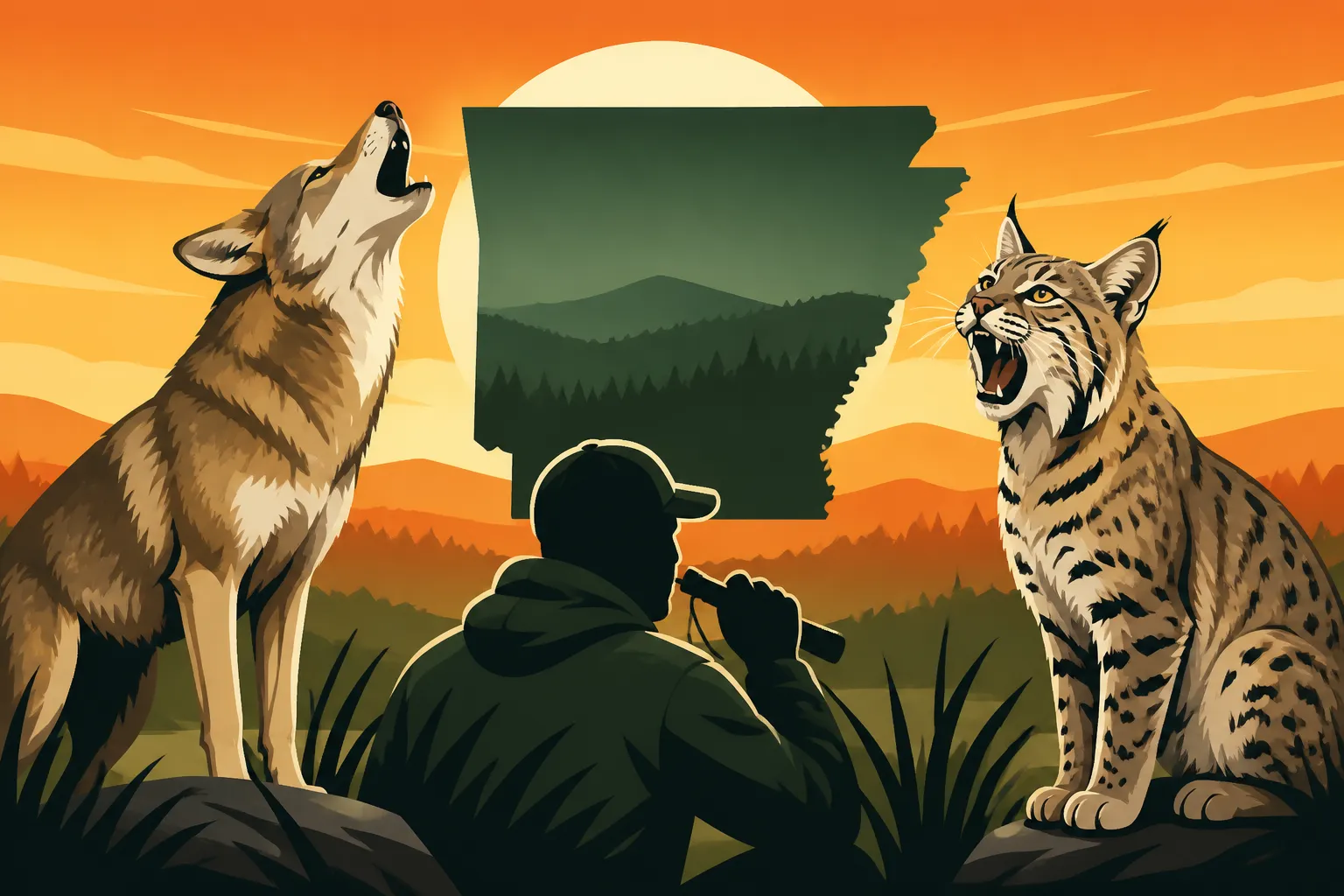
Coyote and Bobcat Calling in Arkansas
Arkansas hunters often find themselves in a unique situation, battling elusive predators like coyotes and bobcats that can be incredibly challenging to outsmart. Whether you're aiming to manage local populations, protect livestock, or simply enjoy the thrill of the hunt, these cunning animals demand a specific skillset and a deep understanding of their habits. This comprehensive guide will walk you through everything you need to know about effectively calling coyotes and bobcats in Arkansas, from understanding their behavior to mastering calling techniques, choosing the right gear, and setting up for success in our diverse terrain.
Understanding Your Quarry: Arkansas Coyotes and Bobcats
Before you can hope to call a coyote or bobcat into range, you really need to understand what makes them tick. These aren't your average deer or ducks; they're intelligent, adaptable, and incredibly wary. Knowing their habits, preferred foods, and how they interact with their environment is the foundation of a successful predator hunt in Arkansas.
Coyote Behavior and Range in Arkansas
Coyotes are perhaps the most adaptable predators in Arkansas, found everywhere from the sprawling farmlands of the Delta to the rugged ridges of the Ozarks. Their diet is incredibly varied, consuming everything from small mammals like rabbits, mice, and voles, to insects, fruits, and even deer fawns or weak adults. This broad diet allows them to thrive in almost any habitat, which is why you can encounter them almost anywhere you hunt, sometimes even in suburban areas.
They are highly intelligent and possess an uncanny ability to learn and adapt to hunting pressure. While they are often associated with packs, especially when howling, coyotes frequently hunt alone or in small family groups. When a lone coyote responds to a call, it might be checking out a potential meal, or a competitor, but it's likely approaching cautiously, using cover and wind to its advantage. Understanding the general Coyote and Bobcat Range in Arkansas is crucial, as their specific densities and behaviors can vary significantly between, say, a wide-open bean field in eastern Arkansas and the dense timber of the Ouachita National Forest. They rely heavily on their senses of smell and hearing, making wind direction and sound projection paramount in your calling strategy.
Bobcat Characteristics and Habitat Preferences
Bobcats are a different beast entirely. While coyotes are often seen as opportunistic and bold, bobcats are the epitome of stealth and reclusiveness. They are solitary creatures, masters of camouflage, and prefer dense cover such as thickets, brush piles, rocky outcrops, and heavy timber. This preference for concealment makes them incredibly difficult to spot and even harder to call in. You might hunt an area for years and never see a bobcat, even if they are present.
Their diet consists mainly of rabbits, squirrels, and various birds, but they are also known to take rodents and even smaller deer fawns. Unlike coyotes, which can cover vast distances, a bobcat's territory is generally smaller and more intensely patrolled. When they do respond to a call, it's usually with extreme caution, often circling downwind for a scent check before making themselves visible. Calling bobcats requires a whole new level of patience and subtlety. You're not looking for a bold charge; you're hoping for a ghost to materialize out of the shadows.
Essential Gear for Calling Predators
Going after coyotes and bobcats isn't just about showing up with a gun. The right gear can make all the difference, enhancing your stealth, extending your effective range, and helping you draw in even the most cautious predators. From the calls themselves to what you're peering through and shooting with, every piece plays a vital role.
Calls: Electronic, Mouth, and How to Choose
The heart of predator hunting is the call itself. You've got two main categories: electronic calls and mouth calls, each with its own set of advantages and disadvantages.
Electronic calls are incredibly versatile. Brands like FoxPro, Primos, and Lucky Duck offer a wide array of pre-recorded sounds, from various rabbit and bird distress calls to coyote howls, pup distress, and even specific bobcat vocalizations. The beauty of an e-caller is its ability to project sound at varying volumes over long distances, and you can place the caller away from your position, drawing the predator's attention away from you. This is a huge advantage, especially for wary animals. Many modern e-callers can be controlled remotely, allowing you to change sounds and adjust volume without moving, which is critical for maintaining stealth. For hunters who rely on detailed mapping and scouting, GoHunt's mapping overlays can sometimes help identify terrain features that aid in sound projection, ensuring your electronic call reaches where it needs to.
Mouth calls, on the other hand, require more skill but offer a level of realism and intimacy that e-callers sometimes can't match. Hand calls, like open reeds or closed reeds, produce distress sounds (rabbit, fawn, bird) through breath control. Diaphragm calls, typically used for turkey hunting, can also mimic mouse squeaks and other small rodent sounds, which are excellent for enticing curious bobcats. The main advantage of mouth calls is their portability and simplicity; there are no batteries to die, and they're lightweight. However, projecting sound over long distances and varying volume smoothly can be challenging, especially for beginners. The choice between electronic and mouth calls often comes down to personal preference, the type of terrain you're hunting, and your budget. Many seasoned hunters carry both, using an e-caller for initial long-range attention-grabbing and a mouth call for subtle, close-in finishing touches.
Here's a quick comparison of call types:
| Feature | Electronic Calls | Mouth Calls |
|---|---|---|
| Sound Variety | Extensive, pre-recorded, highly realistic | Limited by skill, can be highly realistic |
| Volume Control | Precise, remote adjustable | Manual, requires practice |
| Placement | Can be placed away from hunter | Must be held by hunter |
| Ease of Use | Beginner-friendly, press-and-play | Requires practice and skill |
| Portability | Bulkier, heavier, battery-dependent | Lightweight, compact, no batteries |
| Cost | Higher initial investment | Generally lower cost |
| Stealth Impact | Keeps attention off hunter | Can draw attention directly to hunter |
Optics and Stealth Considerations
When you're calling predators, good optics aren't a luxury; they're a necessity. Coyotes and bobcats can approach silently, often appearing out of nowhere. A quality pair of binoculars (10×42 or 10×50 are popular choices) is crucial for scanning the landscape before and during your calling sequence. You need to identify movement, even subtle flickers of an ear or tail, at a distance. Don't just scan where you expect the animal to appear; scan all around your setup, especially downwind.
Beyond binoculars, if you're engaging in night hunting for predators in Arkansas, thermal or night vision optics become indispensable. These allow you to spot animals that are completely invisible to the naked eye, giving you a critical advantage. Many states, including Arkansas, have specific regulations regarding night hunting and the use of artificial lights or thermal/night vision devices, so always check the latest rules. Even during the day, maintaining stealth is paramount. This means wearing effective camouflage that breaks up your outline, staying absolutely still, and utilizing natural cover. Any unnecessary movement or glare from exposed skin or equipment can send a wary predator running before you even know it's there.
Firearms and Ammunition Choices
Selecting the right firearm and ammunition for predator calling depends on the species you're targeting, your personal preference, and the terrain you're hunting. For coyotes, which can present longer shots, a flat-shooting rifle is often preferred. Popular calibers include the .223 Remington, .22-250 Remington, .204 Ruger, and even the .243 Winchester. These calibers offer a good balance of accuracy, minimal recoil, and sufficient energy to humanely dispatch a coyote. When choosing ammunition, look for bullets designed for rapid energy transfer, often called "varmint" or "predator" bullets, which expand quickly to reduce the chance of ricochet and ensure a clean kill.
For bobcats, especially in thick cover where shots are typically closer and faster, a shotgun can be an excellent choice. A 12-gauge or 20-gauge loaded with high-density shot (like #4 buckshot or even heavier turkey loads) can be devastating at ranges out to 40-50 yards. The wider pattern offers a bit more forgiveness if the bobcat is darting through brush. However, if you anticipate longer shots at bobcats, a rifle in a smaller caliber like a .22 Hornet or .17 HMR can also be effective, especially if you're aiming for minimal pelt damage for taxidermy. Regardless of your choice, practice extensively with your chosen setup to ensure you're confident in your ability to make an ethical shot under pressure.
Mastering Calling Techniques in Arkansas
Once you have your gear sorted, the real art begins: knowing what to say, how to say it, and when. Predator calling isn't just about blasting sounds; it's about crafting a narrative that draws the animal in, making them believe there's an easy meal or a threat worth investigating.
Sound Selection and Sequence for Coyotes
Coyotes respond primarily to distress calls, territorial howls, and pup distress. The key is to understand when and how to deploy each.
Distress Calls: Rabbit distress (cotton-tail, jackrabbit), fawn distress, and various bird distress calls are the bread and butter of coyote calling. These sounds mimic an animal in trouble, signaling an easy meal. Start your calling sequence with a series of loud, frantic distress calls for about 30-60 seconds, then go silent for a few minutes. If nothing shows up, repeat the sequence, varying the intensity and duration. Some hunters like to add a "bark" or "yote howl" after a few minutes to mimic a coyote responding to the distress, making it sound even more realistic. Vary your distress calls; don't just stick to one. If a coyote hears the same exact rabbit squeal every time it's hunted, it'll learn.
Pup Distress and Howls: These are powerful tools, especially during certain times of the year. Pup distress, mimicking a lost or injured pup, can trigger a strong maternal or territorial response from adult coyotes. Howls, whether lone howls or group howls, can be used to locate coyotes or challenge territorial animals. A well-placed howl early in the morning can often elicit a response, letting you know where coyotes are holding. You can also use howls as a confidence call; if you've been calling distress for a while without success, a quick howl can sometimes stir things up. Remember, the goal is to convince the coyote that coming to your sound is in its best interest, either for food or to defend its territory. GoHunt's detailed maps can sometimes help you visualize potential travel corridors where coyotes might move in response to a howl, allowing you to set up strategically.
Specific Strategies for Tricky Bobcats
Calling bobcats requires a much more nuanced approach than coyotes. They are incredibly wary and approach with extreme caution, often using every bit of available cover.
Subtle and Sparse Sounds: Forget the loud, frantic distress calls you might use for coyotes. Bobcats prefer subtle, high-pitched sounds that mimic their primary prey: mice, voles, and small birds. Mouse squeaks, bird chirps, and even soft, dying rabbit cries are excellent choices. Play these sounds at a lower volume and for shorter durations. Think about replicating the sound of a small, vulnerable creature struggling nearby.
Patience is a Virtue: Unlike coyotes that might come charging in, a bobcat will often take its sweet time. It might sneak in, stop, observe, and listen, completely hidden from your view, before taking another step. Your calling sequence for a bobcat might be 15-20 minutes, or even longer, with long periods of silence broken by short, soft bursts of calling. Expect them to circle downwind for a scent check. This means your setup needs to provide a clear shooting lane downwind, but also good concealment. If you think you've called a bobcat in, but haven't seen it, wait five or ten more minutes before moving. They often materialize silently.
Reading the Wind and Terrain for Success
Perhaps no single factor is more critical to predator calling success than understanding and utilizing the wind and terrain. Coyotes and bobcats both possess an incredible sense of smell, and they will almost always circle downwind of your call to scent-check the source.
Wind Direction is Everything: Always, and I mean always, position yourself so the wind is blowing from the direction you expect the predator to approach towards you. This way, your scent is blowing away from their likely approach path. If the wind is swirling or unpredictable, it's often best to pack up and try another day or location. A slight breeze is generally preferable to dead calm, as it helps carry your sound and can mask minor movements. For instance, when Hunting Ozark Ridges and Hollows for Deer, wind and thermals are paramount. The same principles apply to predator calling; understanding how air currents move through valleys and over ridges is vital.
Utilizing Terrain for Concealment and Sound: Terrain plays a dual role: it provides concealment for you and influences how sound travels. Position yourself with your back against a thick brush pile, a large tree, or a natural rise. This breaks up your silhouette and gives you a solid backdrop. Look for natural funnels like creek beds, fence lines, or timber edges that might guide a predator's approach. If you can anticipate where an animal will emerge, you can better prepare for the shot. Use elevation to your advantage; calling from a slight rise can help project sound further, but be mindful of silhouetting yourself. For navigating and understanding the lay of the land, especially on public ground, GoHunt's mapping features can be invaluable for identifying key terrain features and planning your approach.
Setting Up for Success: Location and Approach
Calling is only half the battle. Your success hinges equally on where you set up and how you get there. A perfect calling sequence can be utterly wasted if your position gives you away or if you choose a location devoid of animals.
Identifying Prime Calling Locations
Finding the right spot to set up your call is paramount. You want areas that offer good visibility, natural cover, and signs of predator activity. Look for the edges of different habitats: where timber meets a field, where a dense thicket borders a more open area, or along creek bottoms that serve as travel corridors. These transition zones are often where coyotes and bobcats hunt for food.
Scouting is Key: Before you even think about calling, spend time scouting. Look for tracks, scat, and other sign. If you're on public land, Scouting Arkansas Public Land Before Season can reveal these prime areas. Use aerial maps and topo maps (services like GoHunt offer excellent tools for this) to identify potential ambush points, thick cover, and travel routes. Think about where a coyote or bobcat would likely bed down during the day and where they would hunt during low light. Setting up within earshot of these areas, but out of their direct line of sight, is ideal. Don't be afraid to try different locations on the same property; what works one day might not the next.
Entry and Exit Strategies
Your approach to and departure from a calling stand is almost as important as the call itself. A clumsy entry can alert every animal in the vicinity before you even get set up.
Be a Ghost: Always approach your calling location quietly, slowly, and against the wind. Avoid walking through open areas if possible; stick to the edges of cover. Try to arrive at your stand at least 15-20 minutes before you plan to start calling, allowing the area to settle down after your disturbance. This also gives you time to get comfortable, scan the area, and double-check your shooting lanes.
Scent Control is Critical: Predators live and die by their nose. Use scent-eliminating sprays on your clothes and gear. Pay attention to the wind direction during your entry and exit to ensure your scent isn't wafting into areas you intend to call. After a calling sequence, remain still for a few minutes before moving. Sometimes a curious predator will hold back, observing the area for longer than you might expect. When you do move, do so slowly and quietly, continuing to scan for any animals that might have been circling or waiting.
Using Decoys Effectively
Decoys add a visual element to your auditory calling, appealing to a predator's sense of sight and often drawing their attention away from you. This can be a game-changer, especially for cautious animals.
Motion Decoys are Best: The most effective predator decoys are those with movement. A simple fur or feather flag that twitches or spins can mimic a struggling bird or small mammal, instantly grabbing a predator's attention. Remote-controlled motion decoys, like the Primos Wobbling Weasel or Mojo Critter, are popular choices. They create a convincing illusion of prey in distress.
Placement is Key: Place your decoy 20-40 yards upwind and slightly in front of your position. This achieves two critical things:
- Distraction: The predator's eyes will be fixed on the decoy, not on your position. This allows you to make subtle movements to get your firearm ready or adjust your aim without being detected.
- Direction: Since predators often circle downwind, placing the decoy upwind forces them to expose themselves as they try to get a scent check or approach the "prey." This gives you a better chance for a broadside shot. Ensure your decoy is visible from the likely direction of approach but isn't obscured by heavy brush.
Seasonal and Environmental Considerations
Arkansas weather and the seasonal changes in prey availability have a huge impact on predator behavior and, consequently, your calling success. Adapting your tactics to these ever-shifting conditions is crucial for consistent results.
Calling During Different Seasons
The effectiveness of various calling techniques can change significantly with the seasons in Arkansas.
Fall and Winter: These are generally considered the prime seasons for predator calling. As the temperatures drop, coyotes and bobcats become more active in their search for food to maintain their energy reserves. Natural food sources like rodents and rabbits may be less abundant or harder to find under snow cover (if we get any significant snow in Arkansas). Furthermore, this is when the fur is prime, making these animals more attractive to hunters who wish to sell pelts or have taxidermy done. During late fall and early winter, young-of-the-year coyotes are dispersing and often less wary than older, more educated animals. The crisp, still air of a cold winter morning can also help your calls carry further and more clearly.
Spring and Summer: Calling in spring and summer can still be productive, but the tactics shift. In early spring, territorial disputes can make howls and challenge calls effective. Later in spring, during denning season, pup distress calls can be incredibly potent, as adult coyotes will aggressively defend their young. However, in summer, thick foliage makes visibility challenging, and higher temperatures mean animals are often less active during the day. Consider hunting earlier in the mornings or later in the evenings when temperatures are cooler and predators are more likely to be on the move. Also, be mindful of "Arkansas Furbearer Permit Rules" and season dates, as some species may have closed seasons during certain parts of the year.
Adapting to Weather Conditions
Weather is a significant factor in Arkansas, and knowing how to adapt your calling strategy to different conditions is vital.
Calm, Clear Days: These are often ideal. Sound travels well, and animals are generally more active. However, calm conditions also mean your scent can hang in the air, making strict wind discipline even more critical.
Windy Days: A light to moderate breeze can actually be your friend, helping to carry your call sounds and mask your approach and scent. However, very strong winds can make it hard for predators to hear your calls and can make them more hesitant to move. On very windy days, try calling in sheltered areas, like creek bottoms or the lee side of ridges, where the wind's effect is lessened.
Rain and Snow: Light rain or snow can be excellent times to hunt. The precipitation dampens sound, but it also washes away human scent and often puts predators on the move as they seek shelter or capitalize on vulnerable prey. Heavy rain or blizzards, however, are usually poor conditions for calling, as visibility is reduced, and most animals hunker down. If hunting in adverse weather, ensure your gear, especially electronic calls, is waterproof or adequately protected.
Night Hunting Rules for Arkansas Predators
Night hunting for certain predators, including coyotes and bobcats, is legal in Arkansas, but it comes with a very specific set of regulations you absolutely must understand and follow to avoid legal trouble. These rules are outlined by the Arkansas Game and Fish Commission (AGFC) and can change, so always check the latest guide.
Generally, specific permits and equipment restrictions apply. For example, while artificial light is allowed for hunting coyotes and bobcats on private land at night, there might be wattage limitations or other stipulations. On public lands, rules often differ, and the use of lights or thermal/night vision optics can be severely restricted or outright prohibited. This is an area where specific knowledge of "Night Hunting Rules for Arkansas Predators" is not just helpful, but mandatory.
When planning a night hunt, you'll need specialized gear, including quality thermal or night vision optics, and appropriate lighting if allowed. Safety is paramount: know your target and what's beyond it, and clearly communicate with your hunting partners. The reduced visibility at night makes target identification much harder, so absolute certainty of your target is non-negotiable. Always carry a copy of your current Arkansas Hunting Licenses and What They Cost, along with any necessary Furbearer permits. Misinterpreting the rules can lead to serious consequences, so if in doubt, contact the AGFC directly.
Disclaimer
Hunting is an inherently dangerous activity. This guide provides general information and recommendations but cannot cover every scenario. Always prioritize safety, adhere to all local, state, and federal hunting regulations, and consider taking a hunter education course. The author and publisher are not responsible for any accidents, injuries, or legal issues that may arise from using the information in this guide. Always confirm current regulations with the Arkansas Game and Fish Commission before heading afield.