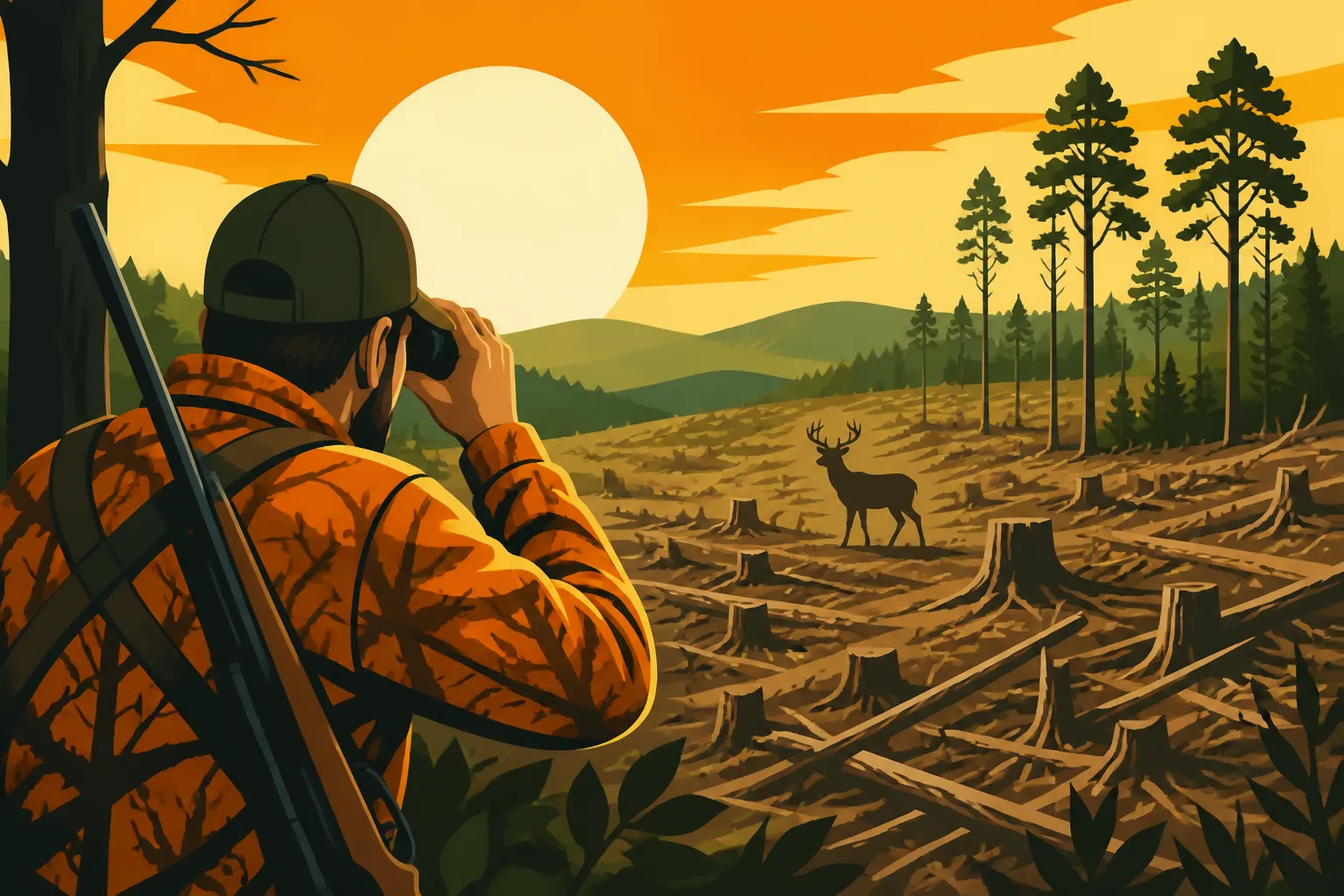
Hunting Arkansas Cutovers and Clearcuts
Hunting the thick, tangled wilderness of an Arkansas cutover or clearcut can feel like stepping into a confusing labyrinth. Many hunters shy away from these areas, seeing them as impenetrable messes of briars and downed timber, but they're missing out on some of the best opportunities for mature deer and other game in the state. This guide will take you deep into understanding these unique habitats and equip you with the strategies, gear, and timing knowledge needed to turn these challenging landscapes into your next hunting hotspot.
Unraveling the Mystery of Arkansas Cutovers and Clearcuts
Before you can hunt them effectively, you need to truly understand what a cutover or clearcut is, and why they attract so much wildlife. These aren't just barren landscapes; they're dynamic, evolving ecosystems that offer specific advantages to deer, bears, and even turkeys, throughout the year. The initial shock of seeing a freshly logged area might be off-putting, but for a savvy hunter, it's a sign of future success.
What Defines a Cutover or Clearcut Habitat?
At its simplest, a cutover is any area of timber that has been harvested, leaving behind stumps, logging debris, and often, a dense proliferation of new growth. A clearcut is a specific type of cutover where nearly all the trees in a given area are felled. This isn't just about timber companies making a profit; it's a part of forest management that, while sometimes looking brutal, creates vital habitat. You'll find different types in Arkansas, from the large-scale industrial clearcuts in the Ouachita and Ozark National Forests, often managed by companies like Weyerhaeuser, to smaller, selective cuts on private land in the Delta. The key characteristic is the drastic change from mature forest to open sunlight, which kickstarts a natural regeneration process. This regeneration is what makes these spots so appealing to wildlife.
Initially, a fresh clearcut might look like a barren wasteland, but give it a few months, and you'll see a vibrant explosion of plant life. Sunlight, once blocked by a dense canopy, now reaches the forest floor, awakening dormant seeds and spurring rapid growth from existing root systems. This includes everything from briars and brambles to young saplings, shrubs, and forbs. This dense, often prickly, vegetation creates a completely different environment than the mature, open woods most hunters prefer to walk through. It's tough, it's noisy, and it's where deer often feel safest from predators, including us.
Why Wildlife Thrives in These "Messy" Areas
Deer, in particular, are drawn to cutovers like magnets, and for very good reasons. Think of it from a deer's perspective: survival is all about food and cover. A mature forest, while beautiful, often lacks the dense undergrowth and diverse food sources that deer prefer, especially at ground level. A fresh cutover, however, is a buffet and a fortress all rolled into one.
First, the food. The explosion of new growth provides an incredible amount of forage. Young saplings, tender shoots, various forbs, and the ever-present briars (like greenbrier, a deer favorite) offer a smorgasbord of nutrient-rich browse. Deer can spend hours in a relatively small area, feeding on a wide variety of plants that simply wouldn't be available in a closed-canopy forest. This high-density food source is a major draw, especially from late spring through fall. Beyond browse, many cutovers will also have residual acorns or other mast from trees that either weren't cut or were dropped during logging, adding another layer to the food pantry.
Second, and perhaps even more critically, is the cover. The sheer density of vegetation, coupled with logging debris, creates almost impenetrable security. A deer can disappear into a cutover and feel virtually invisible. This dense cover provides excellent thermal regulation, offering shade in the hot early season and protection from harsh winds and cold in the late season. It's where does feel safe to fawn and where bucks feel secure enough to bed down during the day, especially when hunting pressure ramps up. They can hear you coming long before you see them, and they have countless escape routes through the tangled mess. This combination of abundant food and unparalleled security makes cutovers prime real estate for white-tailed deer. You'll also find smaller game like rabbits and quail flocking to these areas, along with predators like coyotes and bobcats who follow the food chain.
The Dynamic Stages of Post-Logging Regeneration
A cutover isn't a static environment; it changes dramatically over time, and understanding these stages is crucial for effective hunting. What worked in a one-year-old cutover won't necessarily work in a five-year-old one.
- Years 0-2 (The Initial Explosion): Immediately after logging, you'll find a lot of exposed ground, logging roads, and piles of brush. Within months, sunlight hits, and seeds germinate. You'll see a tremendous amount of herbaceous growth – weeds, grasses, tender shoots. This is a very attractive food source. Cover is still somewhat limited to the logging debris, but deer will start utilizing it heavily for feeding and quick security. Access is often easier here due to fresh logging roads. This stage is fantastic for early season bowhunting, as deer will often venture out into the openings to browse.
- Years 2-5 (The Briar Patch Kingdom): This is often the most challenging, yet most productive, stage for hunting. The tender herbaceous growth gives way to a dense jungle of briars, brambles, and young saplings, often chest to head high. This is where the term "thick as thieves" truly applies. Food is still abundant, but the cover is now truly exceptional, making it very difficult for hunters to navigate. Deer will spend a significant amount of their time bedded and feeding within this cover. This stage is perfect for still-hunting the edges, or for more aggressive tactics like small, organized deer drives to push deer out of the nearly impenetrable core. If you want to learn more about a specific growth stage, check out our guide on Hunting a Cutover Two Years After Logging.
- Years 5-10+ (Young Forest and Transition): As the saplings grow taller, they start to shade out the undergrowth, reducing the density of briars and forbs on the forest floor. The area transitions from prime food and bedding cover to a young forest. Deer will still use these areas, especially for bedding, but the concentrated feeding opportunities might diminish unless specific food plots or other disturbances are introduced. Hunting becomes more about identifying travel corridors and transition zones where deer move between this growing cover and more open feeding areas. Access might be easier as some logging roads become more defined trails.
Understanding which stage a particular cutover is in helps you anticipate deer behavior and choose the right tactics. A freshly cut area might offer great sight lines on the edges, while a five-year-old briar patch will require more deliberate, close-quarters hunting.
Mastering the Art of Scouting These Tangled Havens
Hunting a cutover blind is like trying to find a needle in a haystack blindfolded. You need to put in the time and effort to scout these areas effectively, both from your computer and with boots on the ground. The sheer density makes visual scouting challenging, but subtle clues will tell you where deer are moving, feeding, and bedding.
Digital Reconnaissance with Mapping Tools
Your scouting begins long before you set foot in the woods, often from the comfort of your home. Modern mapping tools are absolute game-changers for identifying and analyzing cutovers and clearcuts in Arkansas. Tools like GoHunt or the AGFC Map Tool (which is excellent for public land) allow you to zoom in on aerial imagery and topographic maps to spot potential hotspots.
Look for areas with distinct color changes in the satellite view, indicating recent logging. Old logging roads will often appear as lighter lines snaking through the timber, providing potential access points and travel corridors. Pay close attention to the edges where the cutover meets mature timber, agricultural fields, or water sources. These "transition zones" are critical deer pathways. Identify any "islands" of unlogged timber within the cutover – these are often overlooked bedding areas or staging points. Also, note any natural funnels or pinch points created by terrain features, creeks, or changes in vegetation density. Consider how far these areas are from known pressure points like main roads or popular trailheads. The more remote and difficult to access, the more likely it is to hold undisturbed deer. While not directly about cutovers, our guide on Reading Aerial Photos for Delta Deer can offer broader strategies for using mapping tools to identify promising deer habitat.
Using your mapping app, mark potential entry and exit routes, likely bedding areas, feeding zones, and specific spots where the cover looks particularly appealing. Having these waypoints saved before you hit the field will save you invaluable time and effort, guiding your ground scouting efforts to the most promising locations.
Ground Scouting: Deciphering the Signs on Foot
Once you've done your digital homework, it's time for boots on the ground. Be prepared for a physical challenge; scouting cutovers means pushing through briars, climbing over downed trees, and navigating dense vegetation. Wear durable clothing, and always carry a good compass or GPS, as it's easy to get disoriented in the thick cover.
Focus your efforts on the edges and along any discernible deer trails. Look for fresh tracks, especially larger ones, indicating a mature buck. Follow these tracks to see where they lead – are they heading to a specific food source, a bedding area, or a natural funnel? Pay close attention to scat; fresh droppings indicate recent activity. As you penetrate deeper into the cutover, look for rubs and scrapes, particularly on the few larger trees that might have been left standing or along the interior travel paths. Rubs are especially telling, as mature bucks often rub smaller trees within their bedding areas to mark territory and work out aggression.
The ultimate prize in ground scouting is finding bedding areas. These will often be slightly elevated spots within the densest cover, offering the deer a vantage point while remaining completely hidden. Look for flattened spots in the vegetation, often with a clear exit route. Finding multiple fresh beds in close proximity indicates a preferred bedding area. The presence of these key signs will confirm that deer are not just passing through, but actively living within the cutover. Our guide on Scouting Arkansas Public Land Before Season provides further tips that can be adapted to these specific environments.
Pinpointing Key Features and Travel Routes
Within the seeming chaos of a cutover, deer still operate with purpose. Your job as a scout is to find the predictable patterns. Look for the "soft" edges where the dense cutover transitions into slightly more open woods, or where it meets a hardwood drain. These are natural travel corridors. Deer will often utilize old logging roads or skid trails, even if overgrown, as they offer slightly easier travel.
Identify any natural funnels, which could be anything from a narrow strip of timber between two sections of cutover, a small creek bottom, or a bottleneck created by terrain features. These are choke points where deer movement is concentrated. Similarly, look for "pinch points" – areas where two different habitat types or dense cover forces deer into a narrow travel path. These are prime locations for setting a stand.
Don't forget water sources. While cutovers themselves may not have standing water, deer will often travel to nearby creeks, springs, or even puddles. A well-used trail leading from the cutover to a water source can be a consistent ambush point. By meticulously mapping these key features and travel routes during your scouting trips, you're not just finding deer sign; you're developing a comprehensive understanding of how deer use that particular cutover. This insight is what separates successful cutover hunters from those who just get tangled in the briars.
Strategic Hunting Approaches: Navigating the Chaos
Hunting cutovers is not for the faint of heart, but with the right tactics, it can be incredibly rewarding. You'll need to adjust your approach from what you might use in more open timber. Patience, stealth, and a willingness to get into the thickest stuff are paramount.
Still-Hunting: The Slow and Deliberate Dance
Still-hunting is perhaps the most effective tactic for smaller groups or individual hunters in cutovers. It's an exercise in extreme patience and situational awareness. The goal is not to move quickly, but to move silently and deliberately, pausing frequently to observe and listen. In these noisy environments, every sound is amplified, and deer are highly alert.
Take one or two steps, then stop for several minutes. Scan every patch of cover, looking for horizontal lines, flicking ears, or the subtle outline of a deer. Use binoculars to peer into the dense foliage. The wind is your absolute best friend here; always hunt into the wind or with a slight crosswind. This helps mask your scent and allows you to hear deer before they hear you. Pay close attention to thermals, especially in the mornings and evenings, as they can carry your scent uphill or downhill. Our guide on Wind and Thermals in Ouachita Hollows offers valuable insights that apply to similar terrain in cutovers.
Focus on edges, small openings, and the slightly less dense pockets within the cutover. Deer will often be bedded down in the thickest stuff, but they might stand up or move slightly when they hear a distant sound, offering you a brief window for a shot. The key is to be so slow and quiet that you blend into the environment, appearing as just another part of the slow-moving forest. This style of hunting requires immense discipline but can bring you face-to-face with a big buck that feels secure in the tangle.
Setting Up for Success: Stands and Blinds on the Edges
While still-hunting gets you into the action, sometimes the best strategy is to let the deer come to you. Stand hunting in cutovers typically means setting up on the edges or in transition zones where deer enter and exit the dense cover. Look for pinch points, funnels, or old logging roads that deer are using as travel corridors between the cutover and adjacent mature timber or food sources.
When choosing a stand site, prioritize concealment and wind direction. In the early stages of a cutover, where trees might be sparse, a ground blind brushed into the edge can be incredibly effective. Later, as saplings grow, a tree stand can offer a better vantage point over the dense undergrowth. Look for the tallest, most suitable tree on the edge of the thickest cover, preferably one that allows you to see down into a well-used trail or an opening within the cutover itself. Consider how deer will approach the stand, and set up for the most likely shot angles. Our guide on Hanging a Stand in Bottomland Hardwoods offers tips on stand placement that can be adapted for cutover edges, focusing on stealth and visibility.
It's also worth looking for those "islands" of mature timber mentioned earlier. If you can find a suitable tree in such an island, you might be able to intercept deer moving through the surrounding thicket. Patience is crucial here, as deer may appear suddenly from the dense cover.
Organized Drives: Pushing the Unreachable Cover
For larger groups or when facing particularly impenetrable cutovers, an organized deer drive can be a highly effective, albeit labor-intensive, tactic. The goal is to safely and strategically push deer out of the dense cover towards hunters positioned on the perimeter. This is a tactic often seen in areas with high deer density and extensive thick cover.
Safety is paramount during a deer drive. All participants, both drivers and standers, must wear ample hunter orange. Communication is key; know exactly where everyone is positioned and what their responsibilities are. The standers should be placed in strategic locations, such as pinch points, clearings, or along escape routes where deer are likely to exit the cutover. Drivers should move through the cutover systematically, making noise and pushing deer in a controlled direction.
The number of drivers versus standers will depend on the size and density of the cutover. For smaller patches, 2-3 drivers and 2-3 standers might suffice. For larger areas, you'll need more people. The drivers should move slowly enough to avoid pushing deer out too quickly, allowing standers time to react. Deer, when pushed, will often follow the path of least resistance or try to circle back through the cover they know. Understanding these tendencies can help you position standers more effectively. While a specific guide on cutover drives isn't available, our general guidance on Deer Drives in Arkansas Bottomland can provide foundational principles for safe and effective group hunting. This method works well when deer are hunkered down and not moving much on their own, especially during late season or high-pressure periods.
Essential Gear and Logistics for the Dense Cover
Hunting cutovers is a specialized endeavor that demands specialized gear and a solid logistical plan. The environment will test your equipment and your resolve, so being prepared is non-negotiable.
Clothing and Protection: Braving the Briars and Bugs
The most immediate challenge in a cutover is the sheer density of vegetation, particularly briars and thorns. Standard hunting clothes often won't cut it. You need durable, rip-resistant clothing. Look for brush pants, chaps, or bibs made from tough materials like Cordura or heavy canvas. Layering is still important for temperature regulation, but the outer layer needs to be a fortress against punctures and tears. Long-sleeved shirts are a must, even on warmer days, to protect your arms.
Snake boots are highly recommended, especially in warmer months when snakes are active and visibility is limited. A good pair of waterproof, durable boots will also protect your feet from thorns and unseen obstacles. Don't forget bug repellent! Ticks, chiggers, and mosquitoes thrive in these dense, humid environments. Treat your clothing with permethrin before the season, and carry insect repellent for exposed skin. Hunter orange is absolutely critical for visibility, particularly if you're hunting with a group or in a high-pressure area. The dense cover can make it incredibly difficult to see other hunters, making visibility aids paramount for safety.
Weapon Choices for Close-Quarters Engagements
When you're hunting in a cutover, shots are often close, fast, and through small windows of opportunity. This dictates certain weapon choices. Long-range precision rifles, while excellent in open fields, can be cumbersome and overkill in a briar patch.
- Shotguns with Slugs: A pump-action or semi-automatic shotgun loaded with slugs is an excellent choice. They offer quick follow-up shots, are relatively short and maneuverable, and slugs deliver tremendous knockdown power at the close ranges common in cutovers.
- Lever-Action Rifles: Classic lever-action rifles, chambered in calibers like .30-30 or .45-70, are also fantastic. Their compact size and quick cycling action make them ideal for fast, close-range shooting. They handle well in dense cover and are powerful enough for deer.
- Archery Gear: Bowhunters often find cutovers to be prime spots, especially during the early season. A compact compound bow or a traditional recurve/longbow is maneuverable. Shots will likely be under 30 yards, so practice at those distances. Broadhead choice is also important, prioritizing penetration through potential small deflections. Our guide to Bowhunting Arkansas's Five-Month Archery Season discusses general bowhunting strategies that apply here.
- Optics: Don't get carried away with high-magnification scopes. A low-power variable scope (1-4x or 2-7x) or even a red dot sight on a rifle or shotgun is often more practical. Quick target acquisition is more important than extreme magnification. For bowhunters, a multi-pin sight is common, but keep it simple for speed.
Regardless of your weapon, ensure it's sighted in for close ranges and that you are proficient with it in quick-shot scenarios.
Getting Your Game Out: Retrieval Challenges and Solutions
Successfully harvesting a deer in a cutover is only half the battle; getting it out can be an even greater challenge. The same dense cover that attracts deer makes retrieval a beast.
- Game Carts and Drags: For flatter terrain, a sturdy game cart can be invaluable, but even the best carts struggle in really thick, uneven cutovers. A heavy-duty deer drag is always a good idea, especially if you have a partner. You'll likely be pulling over downed trees and through briars.
- Quartering in the Field: Often, the most practical solution is to field dress and quarter your deer in situ. This significantly reduces the weight and bulk you need to drag out. Carry a good game bag system and a sharp knife. This is especially true if you're deep in a large cutover or if temperatures are warm. Our guide on Field Dressing in Arkansas Heat can offer specific advice on this, which is often a necessity in these challenging environments.
- Planning Routes: Before you even start hunting, identify potential extraction routes on your map. These might be old logging roads, creek beds, or paths of least resistance. Knowing your exit strategy can save you hours of struggle. If hunting with a group, coordinating retrieval efforts is key. Don't underestimate the difficulty; a 150-pound deer in a thick briar patch can feel like 500 pounds.
Timing Your Hunt: When Arkansas Cutovers Shine
Just like any other habitat, cutovers have peak times when they are most productive. Understanding these windows of opportunity based on the season and deer behavior will significantly increase your chances of success.
Early Season: Abundant Browse and Seclusion
The early archery season in Arkansas, usually starting in September, can be fantastic for hunting cutovers. At this time, the new growth from spring and summer is at its peak, providing lush, highly nutritious browse for deer. Bucks and does will be actively feeding in these areas, often just inside the dense cover or along the edges where they can quickly melt away if disturbed.
Temperatures can still be warm, and the dense cover provides shade and a degree of thermal regulation for deer. Hunting during this period means focusing on identifying feeding patterns. Look for fresh tracks and droppings in the mornings and evenings along the edges. Set up stands or blinds downwind of these feeding areas, or still-hunt slowly through less dense sections where visibility is still somewhat manageable. The deer haven't faced much hunting pressure yet, so they might be a bit more predictable. This is a great time for bowhunters to capitalize on deer that are still in their summer patterns, relying heavily on abundant food sources within the thickets.
The Rut: Bucks Seeking Cover and Does
As the Arkansas rut approaches and peaks (which varies by zone, but often late October through November), cutovers become even more critical, especially for mature bucks. While bucks will be cruising open timber looking for does, they also use the dense cover for several key reasons.
Firstly, does often retreat to the security of cutovers when they are being chased or when they need to escape intense buck pressure. If you can find a hot doe in a cutover, you can bet bucks will be close by, cruising the edges or even pushing deep into the thicket to find her. Secondly, older, wiser bucks often use cutovers as sanctuaries during the day, especially once hunting pressure increases. They know they can bed down in these impenetrable areas and feel safe, only venturing out at dusk to search for does.
Hunting during the rut in a cutover means being patient and watching transition lines. Bucks will move along the edges, through old logging roads, and sometimes, even directly through the densest cover if they believe a receptive doe is there. Rattling and grunting can sometimes draw a curious buck out of the cover, especially if you're set up on a good vantage point. Our guide on Hunting the Arkansas Rut by Zone provides specific information on when to expect peak activity, which can inform your cutover hunts.
Late Season: Crucial Thermal and Security Cover
When the temperatures drop and winter sets in, cutovers provide critical thermal cover and security for deer. The dense network of briars and young trees helps block wind and trap what little warmth there is, making these areas ideal bedding spots during cold snaps. Food sources might be reduced, but deer will still seek out any remaining browse or forbs that persist, particularly if there are adjacent food plots or agricultural fields.
During the late season, deer are often highly pressured and will seek the absolute thickest, most inaccessible cover they can find. This makes cutovers even more attractive as bedding and security areas. Hunters who are willing to brave the cold and push into these thickets can find success. This is an excellent time for organized deer drives, as deer are less likely to move on their own and will be hunkered down. Still-hunting slowly and meticulously through the thickest parts can also pay off, as deer might be less inclined to move far once jumped. Focus on sunny slopes or areas with south-facing exposure where deer can bask in the sun while remaining hidden. The late modern gun season, especially the Arkansas Christmas Modern Gun Dates, can be a prime time for these tactics, as deer are highly patterned and seeking sanctuary.
Safety First: Navigating the Hazards
Hunting cutovers presents unique challenges that underscore the importance of safety. The dense cover and rugged terrain require heightened awareness and adherence to safety protocols to ensure a safe and successful hunt.
Maintaining Situational Awareness and Communication
In a cutover, visibility can be reduced to just a few yards, making it incredibly easy to lose track of companions or get disoriented. This environment demands constant situational awareness. Always wear plenty of hunter orange, even if not legally required for your specific hunt type, to make yourself as visible as possible to other hunters. It’s not just about meeting the minimum; it’s about maximizing safety.
If hunting with a group, establish clear communication protocols. Use two-way radios with earpieces or whistles to signal intentions or alert others to deer movement. Before starting a hunt, clearly define your hunting area, the direction of movement, and any safety zones. Know precisely where your partners are at all times, especially if conducting a deer drive. Never take a shot without being absolutely certain of your target and what lies beyond it. The dense cover can obscure objects and people, making target identification challenging.
Respecting Boundaries and Regulations
Cutovers can often span across property lines, both public and private. It is absolutely critical to know exactly where you are and to respect all land boundaries. Use a reliable GPS device or a mapping app like GoHunt with property line overlays to prevent accidental trespassing. This is particularly important on public lands like the National Forests or WMAs where cutovers may border private parcels. Our guide on Asking an Arkansas Landowner for Permission emphasizes the importance of understanding property rights.
Beyond property lines, be aware of specific regulations that might apply to the area you are hunting. Some WMAs have special rules regarding vehicle access, stand placement, or even specific hunting dates within a cutover section. Always check the latest Arkansas Game and Fish Commission regulations for the zone and WMA you plan to hunt. Be mindful of Chronic Wasting Disease (CWD) zones and any specific carcass transport rules that might be in effect, as cutovers often attract deer from a wide area.
Ethical Shooting and Tracking in Dense Cover
The close-range, often fleeting shot opportunities in cutovers demand a high degree of shooting discipline and ethical consideration. It can be tempting to take a marginal shot when a deer bursts from cover, but always prioritize a clean, ethical kill. Wait for a clear, unobstructed shot at a vital area. A wounded deer disappearing into the dense briars of a cutover can be incredibly difficult, if not impossible, to recover.
If you do take a shot, mark the exact spot where the deer was standing and where you last saw it. Even if you believe it was a perfect shot, stay put for at least 30 minutes to an hour to allow the deer to expire. Tracking in a cutover is exceptionally challenging. The dense vegetation and uneven ground make blood trailing difficult. Move slowly, meticulously looking for every drop of blood, disturbed leaves, or broken twigs. If you lose the trail, spread out and grid search the area. Having a partner to help track is invaluable. Don't give up prematurely; often, a deer will only run a short distance into the thickest cover before bedding down. Our guide on Blood Trailing After Dark in Arkansas can provide critical tips for these tough scenarios, which are all too common in cutovers.
Disclaimer
Always consult the latest Arkansas Game and Fish Commission (AGFC) regulations before planning any hunting trip, as rules and seasons are subject to change annually.