Hunting Arkansas Reservoir Points
Hunting Arkansas reservoir points can feel like a whole different ballgame compared to slipping through flooded timber or navigating dense Ozark ridges. You’ve got water, often a lot of it, dictating how deer move and where they feel safe. It’s a unique challenge, for sure, trying to figure out how to effectively hunt those fingers of land jutting out into a lake. This guide is all about diving deep into the specifics of reservoir point hunting in Arkansas, helping you decode deer behavior in these watery landscapes and giving you the strategies you need to find success.
Understanding Reservoir Dynamics and Deer Behavior
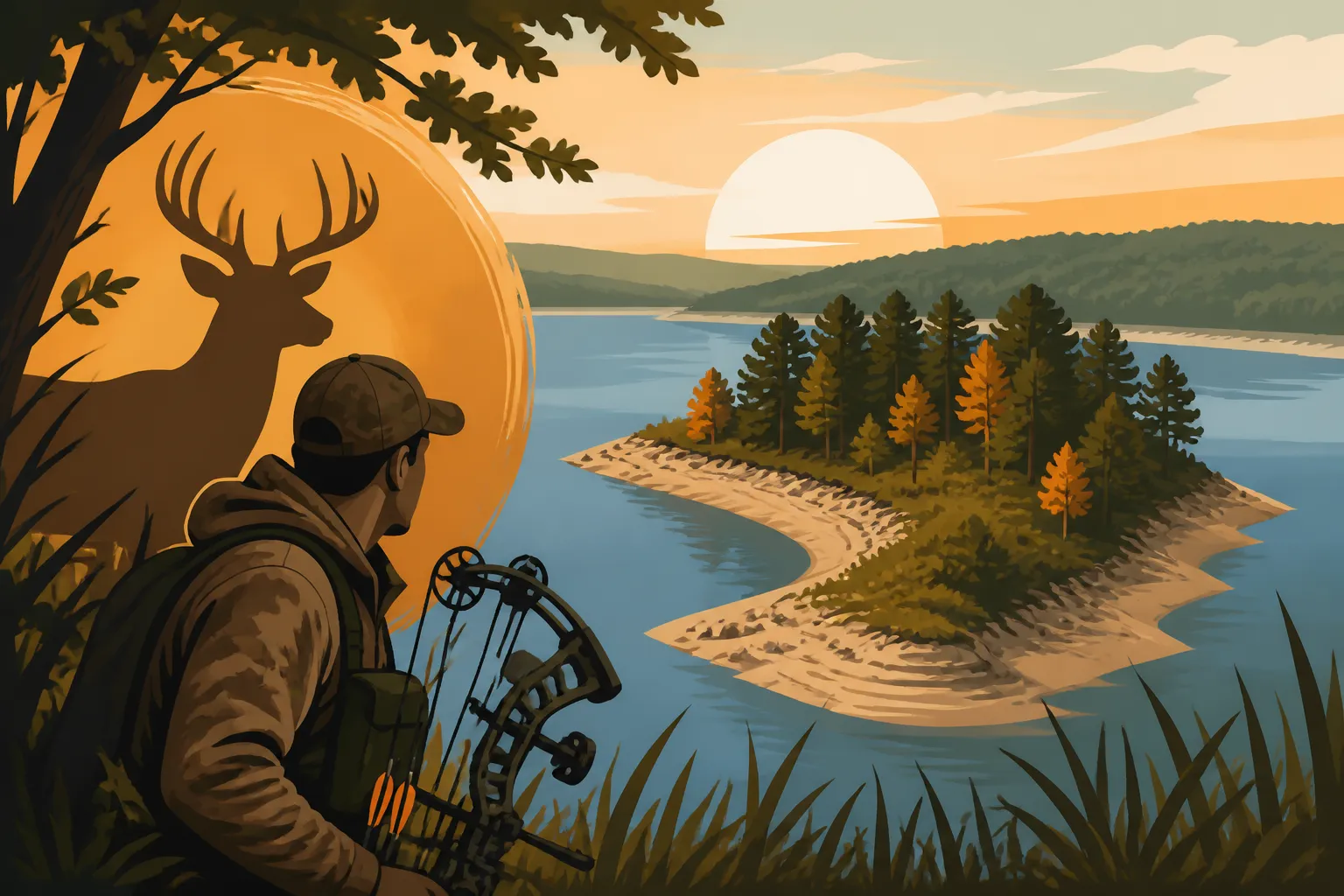
Reservoir points, those narrow strips of land extending into a lake, are fascinating habitats. They’re often overlooked by hunters who prefer the seemingly more traditional woods, but deer use them constantly for travel, bedding, and feeding. The key to unlocking their potential lies in understanding how the water itself influences the deer and how they adapt to these unique landscapes.
Water Fluctuations and Their Impact
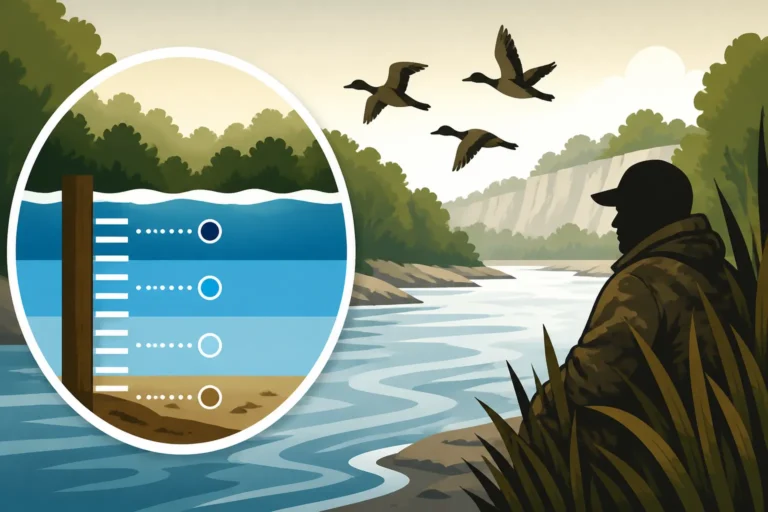
One of the biggest factors in hunting reservoir points is the water level. Unlike a static pond or river, reservoirs like Beaver Lake, Greers Ferry, or Lake Ouachita are managed for various purposes – power generation, flood control, recreation – which means water levels can change significantly throughout the hunting season. A point that was a promising travel corridor in early archery season might be completely submerged by modern gun season, or conversely, a point you ignored earlier might become prime real estate as the water drops, exposing new food sources or creating pinch points.
It’s crucial to monitor the water levels of the specific reservoir you’re hunting. Deer are creatures of habit, but they’re also incredibly adaptable. When water rises, they'll be pushed to higher ground, often concentrating on the remaining dry portions of points or retreating further inland. Conversely, when water drops, new shorelines and vegetation are exposed, creating fresh browsing opportunities. This can draw deer out onto those points, especially during the colder months when other food sources are scarce. Keep an eye on local forecasts and dam release schedules; this information can be gold for predicting deer movement.
Deer Movement Patterns on Points
Deer utilize reservoir points for a variety of reasons, making them strategic locations for ambush. Think of a point as a natural funnel or a highway. Deer will often travel along these land fingers to avoid swimming larger expanses of open water, or simply because it’s a direct route to a bedding area or food source on the other side. They offer cover along their edges, especially where timber meets the water, providing a sense of security.
During the rut, bucks will cruise these points, scent-checking for does that might be moving along the shoreline or staging for a crossing. Does, in turn, use points as escape routes or bedding areas, especially if there's thick cover on the tip. You’ll often find sign—tracks, rubs, scrapes—concentrated along the spine and edges of these points. Understanding when and why deer are using these routes is paramount. They might use them predominantly at dawn and dusk for feeding, or during midday to bed down in the relative seclusion of a brushy tip, especially during times of high hunting pressure. Observing these patterns through scouting is critical.
Scouting Reservoir Points Effectively
You can’t just show up on opening morning and expect to connect with a mature deer on a reservoir point. These unique habitats demand a focused, multi-faceted scouting approach. You’ve got to blend modern mapping tools with old-fashioned boots-on-the-ground effort to truly understand how deer are using these watery landscapes.
Reading Topographic and Aerial Maps
Before you ever set foot in the woods, spend significant time poring over maps. This is where tools like GoHunt or the AGFC map tool become invaluable. Look for points that are particularly long, narrow, or have distinct features. Are there saddles or low spots along the point that might funnel deer even further? Do any points have a sudden drop-off into deeper water, creating a natural barrier that concentrates movement?
Pay close attention to topography. Steep, rocky points might not be as appealing as those with gentler slopes and thicker vegetation. Use aerial imagery to identify cover – dense cedar thickets, brush piles, or standing timber at the tip of a point are all potential bedding or staging areas. Look for how these points connect to larger blocks of timber or agricultural fields further inland. These connections are vital travel corridors. By identifying these features on a map, you can prioritize which points to investigate in person, saving you precious time and effort. It’s also wise to check for Arkansas WMA Permits and Draw Hunts if your target area is a WMA, as specific regulations may apply.
Boots-on-the-Ground Reconnaissance
Once you've identified promising points on your maps, it's time for real-world validation. Visit these areas, preferably during the off-season or well before hunting pressure mounts. Walk the entire length of the point, paying meticulous attention to deer sign. Are there fresh tracks along the shoreline or in muddy areas? Look for rubs on trees, particularly on the outer edges of the point where bucks might be marking their territory. Scrapes are another dead giveaway of active deer usage.
Don't just stick to the main path; push into any thick cover you identified on your aerial maps. Often, deer will bed down right on the tip of a point, taking advantage of the water as a barrier and using the wind to detect approaching danger. Look for worn trails, droppings, and browse lines. If you find multiple signs of active deer, you’ve hit a sweet spot. Consider how the wind and thermals will behave on this specific point. For instance, understanding Wind and Thermals in Ouachita Hollows can give you an edge, even on reservoir points, as air currents behave similarly around terrain features.
Tactics for Hunting Reservoir Points
Once you’ve done your homework and found some promising reservoir points, it’s time to put a solid hunting strategy into action. The unique environment of a point requires specific considerations for stand placement, wind, and even how you approach the hunt itself.
Stand Placement and Wind Consideration
The wind is your most critical factor when hunting reservoir points. Since points are exposed on multiple sides to water, wind patterns can be tricky and unpredictable. You'll often find that the wind behaves differently over water than it does over solid land, sometimes creating swirling eddies or updrafts. Always hunt with the wind in your favor, positioning yourself downwind of where you expect deer to approach or travel. If the wind is consistently shifting, it might be better to choose a different point or hunt another day.
When placing your stand, whether it’s a hang-on, climber, or even a ground blind, think about the most likely travel routes for deer along the point. Are they skirting the water's edge, using the highest ground, or cutting through a specific thicket? Position your stand to intercept them without being directly in their path, offering you time for a shot. For a detailed look at setting up in similar environments, check out Treestand Setups in Delta Hardwoods. Remember, deer on points often feel more secure because they have water as a barrier, so you might be able to get away with a slightly less concealed setup if it provides a better shot opportunity and you're meticulous about scent control.
Still-Hunting and Stalking Approaches
While stand hunting is effective, reservoir points also lend themselves beautifully to still-hunting and stalking, especially during the quieter times of the day or after a fresh rain. If you’ve identified a point with plenty of thick cover on its tip or along its sides, slowly working your way through it can be incredibly productive. Move into the wind, taking only a few steps at a time, pausing to scan thoroughly with your binoculars.
The advantage of a point for still-hunting is that you often have predictable boundaries – the water. This can help you anticipate where a deer might move if spooked, or where it might feel safe to bed down. Focus on the transition areas where different types of cover meet, or where exposed rock gives way to dense brush. During the rut, a stealthy approach might catch a buck cruising the point looking for does. Just be mindful of your scent and your silhouette against the open water, which can easily give you away. For longer hunts, especially during modern gun season, consider the full scope of Arkansas Modern Gun Deer Hunting.
Gear and Considerations for Reservoir Hunting
Hunting reservoir points brings its own set of gear requirements and safety considerations. You're often dealing with more exposed conditions, potential water crossings, and the need for durable, reliable equipment. Thinking ahead about what you'll need can make all the difference between a frustrating trip and a successful, comfortable one.
Essential Gear for Water-Bound Hunts
Since you'll be operating close to or sometimes even in water, waterproof gear is paramount. Good quality waterproof boots are non-negotiable; nothing ruins a hunt faster than wet, cold feet. Consider hip waders or chest waders if you anticipate crossing shallow sections or needing to access hard-to-reach parts of a point. A dry bag for your electronics, wallet, and other essentials is also a smart investment, just in case of an unexpected dunk.
Beyond the waterproof basics, don't forget the other hunting essentials. Quality binoculars are key for spotting deer in dense cover or across open water. A rangefinder is always useful, especially if shots might be over water, which can play tricks on your depth perception. If you're using a boat to access points, ensure you have all required safety gear: life jackets, throwable cushions, and a fully charged cell phone. Even if you don’t have a boat, a reliable headlamp or flashlight is crucial for safe entry and exit, especially if you plan to be out during legal shooting hours. Knowing What an Arkansas Hunting License Covers and having all the necessary stamps is, of course, a given.
Safety and Ethical Practices
Hunting near water bodies, especially large reservoirs, introduces unique safety challenges. Always tell someone exactly where you're going and when you expect to return. If you're using a boat, wear your life jacket, even in calm water. Water temperatures can be dangerously cold outside of summer months, and an accidental fall overboard can quickly become life-threatening. Be aware of changing weather conditions; storms can blow up quickly on large lakes, making navigation hazardous.
Ethical hunting practices remain as important as ever. Always make sure of your target and what's beyond it, especially with the open sightlines over water. If you make a shot, do your absolute best to recover the animal. Tracking a deer near water can be challenging, but it’s your responsibility. If a deer goes into the water, assess the situation carefully before attempting a retrieval. Knowing how to safely and effectively retrieve a deer, even from tough spots like those described in Getting a Deer Out of an Ozark Hollow, is a skill worth having. Also, be mindful of private property lines around reservoir edges, even if they're submerged at the time. Tools like GoHunt can help you identify property boundaries right on your phone, preventing accidental trespass.
Reservoir Point Hunting Considerations
| Feature | Advantages | Disadvantages | Best Use |
|---|---|---|---|
| Long, Narrow Points | Natural funnels, limited escape routes for deer. | Exposed to wind, can be over-pressured if obvious. | Ambush travel routes, especially during the rut. |
| Brushy, Thick Points | Excellent bedding cover, secluded feeling for deer. | Difficult to still-hunt, limited visibility for stands. | Still-hunting slowly and meticulously, or setting up ground blinds. |
| Rocky, Steep Points | Often less pressure, good vantage points. | Tough terrain, deer may avoid. | Scouting for less-used travel corridors, early morning sunning spots. |
| Points with Food Source | Deer will actively feed here, predictable movement. | Can be seasonal (e.g., acorns), highly sought after. | Targeting specific feeding times, especially late season. |
| Points Near Mainland | Connects to larger deer populations and resources. | More human activity, potentially less secluded. | Intercepting deer moving between mainland and water’s edge. |
Conclusion
Hunting Arkansas reservoir points is a rewarding challenge that pushes you to think differently about deer behavior and strategy. It's a game of understanding water levels, reading subtle terrain changes, and adapting your tactics to an environment that's constantly shifting. By diligently scouting with maps and on the ground, paying close attention to the wind, and preparing with the right gear, you can unlock some truly unique and exciting hunting opportunities. Don't let the water intimidate you; embrace the challenge, and you might just find your new favorite hunting spot. For general preparation, don't forget the importance of Scouting Arkansas Public Land Before Season to give yourself the best possible chance wherever you hunt.
Disclaimer
The information provided in this guide is for general informational purposes only and does not constitute professional hunting or safety advice. Hunting regulations and conditions can change rapidly. Always consult the latest Arkansas Game and Fish Commission (AGFC) regulations and local ordinances before engaging in any hunting activity. Safety should always be your top priority.