Filling an Antlerless Tag Late in Arkansas
It’s a common scenario across Arkansas: you’ve tagged out on your preferred buck early in the season, maybe during the archery opener or a prime modern gun weekend. But as the calendar pages flip towards December and January, that antlerless tag in your pocket can start to feel like a nagging obligation. The easy deer are gone, the woods are pressured, and those does and fawns that seemed everywhere a month ago are now ghosts. It can be incredibly frustrating trying to fill an antlerless tag when the conditions get tough, and deer have seemingly vanished. This guide is all about giving you the proven strategies and real-world insights you need to adapt to late-season conditions and finally punch that remaining antlerless tag.
Understanding Late-Season Deer Behavior
By the time late season rolls around, the deer in Arkansas have seen it all. They've been hunted, pressured, and their routines completely upended. What worked in October or November probably won't cut it now. To consistently fill an antlerless tag, you first need to get inside their heads and understand how their world has changed.
Impact of Hunting Pressure
Imagine living in a house where, for two or three months, people are constantly trying to come in and disrupt your peace. That's essentially what a deer experiences during hunting season, especially on public land or smaller private tracts that get a lot of attention. The cumulative effect of this constant intrusion is a drastic shift in their behavior patterns.
Initially, deer might move about relatively freely, perhaps even showing some curiosity. But as the bowhunting season stretches into its later months, and certainly after the modern gun seasons have come and gone, those deer become incredibly wary. They learn to associate human scent, vehicle noise, and even subtle changes in the landscape with danger. This intense pressure pushes them into a highly nocturnal existence, meaning their primary movement, especially feeding, will occur under the cover of darkness. Daytime movements become shorter, more deliberate, and often limited to the absolute thickest, nastiest cover they can find. They’ll stick to hidden travel corridors, often deep within dense creek bottoms or through the center of pine plantations, avoiding open areas they once frequented. This makes it challenging, but not impossible, to catch them during legal shooting hours. You’ll need to anticipate where they feel safest and adjust your approach accordingly.
Food Source Changes
Early season deer hunting often revolves around predictable food sources like fresh acorn drops or lush green food plots. But as winter progresses across Arkansas, these primary food sources either dry up or are heavily consumed. Red oak acorns, a favorite, are usually long gone by December, and even the harder white oak acorns might be sparse. This forces deer to drastically alter their diets, and understanding this shift is paramount to finding them.
Late-season deer will gravitate towards secondary, often less palatable, food sources that offer sustained nutrition. Think about the remaining waste grain in harvested agricultural fields – isolated patches of soybeans or corn that weren't picked clean by combines. Even a small patch can be a magnet. Beyond agriculture, deer rely heavily on natural browse. Look for areas rich in honeysuckle, greenbrier, and young saplings, especially those that hold their leaves or offer tender new growth during colder months. In some parts of the state, particularly the river bottoms and less managed areas, these natural browse lines become critical. Any green food plot that still has some life, like brassicas or specific clover blends, will also draw deer, particularly during a cold snap. The key is to scout actively and identify what's left on the menu in your specific hunting area, because what they ate last month isn't what they're eating now.
Weather's Influence on Movement
Arkansas weather can be a bit of a rollercoaster, especially as fall transitions into winter. One day it's mild and sunny, the next it's a bone-chilling cold front. For late-season antlerless hunting, keeping a close eye on the forecast is non-negotiable, as weather has a profound impact on deer movement.
When a significant cold front rolls through, bringing with it a sharp drop in temperature, it can trigger increased deer activity. Deer need more calories to stay warm, and this often translates into more daytime feeding, even if it's just for short bursts. These cold snaps, especially after a period of mild weather, are prime opportunities. Similarly, while rare, if Arkansas experiences any snow or ice, it can act like a giant funnel, concentrating deer around the few accessible food sources. A dusting of snow also makes fresh tracks incredibly easy to spot, providing invaluable scouting information. On the flip side, heavy rain or strong winds can depress deer movement. However, these conditions can also be a golden opportunity for the patient hunter. The wind and rain mask human scent and noise, allowing for aggressive still-hunting or stalking tactics that would be impossible on a calm, clear day. Always check the forecast and plan your hunts around these weather patterns; they can be your best friend when trying to fill an antlerless tag.
Effective Late-Season Antlerless Tactics
Once you understand why deer are acting a certain way, you can start developing tactics that actually work. Late season demands a more precise and often more aggressive approach than the early weeks of the season.
Locating Hidden Bedding Areas
By late season, pressured deer aren't bedding in the same comfortable, somewhat open spots they might have used in October. They've learned that safety lies in the densest, most impenetrable cover they can find. To find antlerless deer now, you have to find their bedrooms. This means focusing your scouting and hunting efforts on areas that look almost too thick for a human to walk through, because that's exactly why deer feel secure there.
Think about areas like freshly cutover timber, especially two or three years after logging when the briars and saplings have grown into an impenetrable maze. These cutovers offer both thick cover and abundant browse. Similarly, deep creek bottoms with tangled vines, downed timber, and dense undergrowth are prime candidates. Pine plantations, particularly those with rows planted too close together or those that haven't been thinned, offer excellent thermal cover and visual security. Even small, isolated pockets of briar patches within larger timber can hold deer. Using tools like the GoHunt mapping platform can be a game-changer here. You can identify these types of cover from aerial photos and then zoom in to look for subtle funnels or pinch points within them. Once you've identified a likely bedding area, scout the fringes for fresh tracks, droppings, and faint trails leading into and out of it. Your approach needs to be meticulously quiet and mindful of the wind, as deer will be hypersensitive. Don't be afraid to put in the effort to get deep into what might seem like unpleasant territory; that's where the deer will be. Understanding how deer react to Hunting Arkansas Cutovers and Clearcuts can be particularly helpful for this type of strategy.
Targeting Remaining Food Sources
With the buffet of acorns gone, late-season deer become incredibly particular about where they feed. Your success hinges on finding the few remaining high-quality food sources and understanding when and how deer access them. It’s no longer about general areas; it’s about specific patches.
Scout extensively for any standing crops in harvested agricultural fields. Sometimes, a farmer might leave a small section of corn or soybeans unharvested, or simply enough waste grain remains to make it an irresistible draw. Deer will hit these fields, often under the cover of darkness, but a cold front can push them out earlier in the evening or later in the morning. Natural browse, as mentioned before, is vital. Honeysuckle thickets along creek banks or steep bluffs, and patches of greenbrier or blackberry canes, offer much-needed sustenance. If you have access to private land, any food plots planted with winter-hardy crops like brassicas (turnips, radishes) or clover can be absolute magnets. These plots retain their nutritional value and attractiveness even in freezing temperatures. Look for fresh sign: tracks, droppings, and browse lines that indicate recent feeding. The freshest sign will tell you which specific spots are active. Remember, deer might only spend a short time feeding, so your setup needs to be precise.
Stand Placement and Approach
Late-season hunting is all about minimizing your footprint and maximizing your advantage. With deer being incredibly wary, your stand placement and how you approach and leave it are more critical than ever. You’re often working with a much smaller margin for error.
The most effective late-season stand setups are often very close to bedding cover. If deer are only moving for a short period during daylight, you want to intercept them as they emerge from or return to their sanctuary. For an evening hunt, setting up on the downwind side of a dense bedding area, along a natural travel corridor leading to a food source, is ideal. For morning hunts, consider setting up between their likely feeding area and the bedding cover, but be extremely cautious not to bump them as you go in. Natural funnels – saddles, narrow strips of timber between fields, creek crossings – become even more critical, as deer will often use the path of least resistance when moving between cover and food. Don’t overlook the utility of a well-placed ground blind. They offer excellent concealment, can be set up quickly in new spots, and help contain your scent.
Regardless of your setup, scent control is paramount. Dress in clean clothes, use scent-eliminating sprays, and always play the wind. In areas with varied topography, like the Ouachita Mountains or portions of the Ozarks, understanding Wind and Thermals in Ouachita Hollows is crucial. Thermals will typically fall in the morning and rise in the afternoon, potentially carrying your scent directly to deer. Plan your entry and exit routes meticulously, choosing paths that minimize your chances of being detected or leaving scent in a high-traffic area. The less aware a deer is of your presence, the higher your chances of filling that antlerless tag. For more insight on effective strategies, considering reading about Still-Hunting Arkansas Pine Country if you find yourself in such habitats.
Strategic Considerations for Success
Late-season hunting isn't just about tactics; it's also about mindset and leveraging every available resource. The challenges are real, but so are the rewards of finally filling that tag.
Patience and Persistence
Let's be honest, late-season deer hunting in Arkansas can test your resolve. The woods are quieter, the deer numbers might seem lower, and the weather can be downright miserable. It's easy to get discouraged after a few slow hunts, but this is precisely when patience and persistence become your greatest assets. You have to be willing to put in the time, knowing that opportunities might be few and far between.
Unlike the early season, when deer might move throughout the day, late-season opportunities are often concentrated during brief windows around dawn and dusk, or during specific weather events. This means you might need to commit to longer sits in your stand, even if you’re not seeing much action. Don't give up just because one spot is slow; conditions for deer movement can change quickly with a new cold front or a shift in food availability. Consistently getting out, even for short hunts, and diligently scouting for fresh sign will eventually lead to success. It's a grind, no doubt, but the satisfaction of punching that late-season antlerless tag after working hard for it is incredibly rewarding. Keep your spirits up, stay warm, and trust that your efforts will pay off.
Using Technology for Edge
In today's hunting world, technology isn't just a convenience; it's a vital tool, especially when you're dealing with pressured, late-season deer. Leveraging these resources can give you a significant advantage in figuring out the puzzle of where deer are and what they're doing.
Mapping applications, such as those offered by GoHunt, are indispensable. They allow you to study aerial photos to identify those dense bedding areas, remaining food sources, and subtle terrain features (like saddles and pinch points) that deer will use as travel corridors. You can mark potential stand locations, track your movements, and even analyze property boundaries. The Arkansas Game and Fish Commission also provides valuable digital resources; learning Using the AGFC Map Tool can significantly enhance your planning. Trail cameras are another game-changer. Position them strategically over identified food sources or along known travel routes to confirm deer movement patterns, identify specific individuals (if you're trying to pick out a mature doe), and most importantly, determine the precise times they are active. This intelligence allows you to fine-tune your hunt times and minimize wasted effort. And, of course, reliable weather apps are crucial for monitoring those cold fronts, wind shifts, and precipitation patterns that influence deer activity. Combining these technologies allows you to make more informed decisions, drastically increasing your odds of success. When Scouting Arkansas Public Land Before Season always remember to integrate these technological tools for a more efficient and effective plan.
Ethical Shot Placement and Recovery
The ethical responsibility to make a clean, humane kill and recover every animal you shoot is paramount in hunting, and this holds especially true in the late season. Conditions can be challenging – colder temperatures, low light, and often thicker cover – which means you need to be extra diligent.
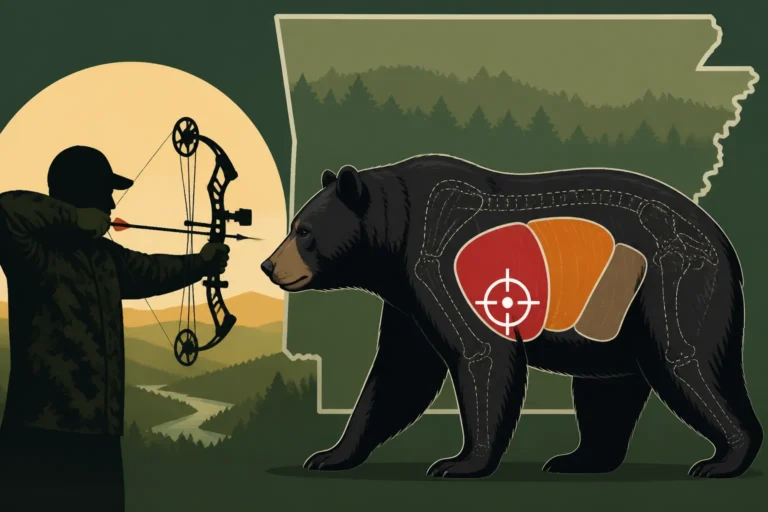
Always ensure you have a clear, unobstructed shot at the vital organs before you release an arrow or pull the trigger. Wait for the deer to present a broadside or slightly quartering-away shot. Double-check your surroundings for any small branches or twigs that could deflect your projectile. In colder temperatures, blood trails can sometimes be less abundant, and the ground might be frozen, making tracking more difficult. If you make a shot that feels marginal, resist the urge to immediately pursue the animal. Give it ample time – often several hours, or even overnight if conditions allow and you’re confident in the shot – to expire and stiffen up. This greatly increases your chances of a successful recovery. Equip yourself with a good tracking light or headlamp for evening hunts, and consider having a tracking dog on standby if you have access to one. Every hunter knows the gut-wrenching feeling of a lost animal, so do everything in your power to make an ethical shot and ensure a full recovery. And remember, even when hunting late into the season, preparing for Field Dressing a Deer in Warm Weather is good knowledge to have, as unexpected temperature spikes can occur.
Late-Season Deer Hunting Differences
To recap, here's a quick comparison of how early and late-season deer hunting often stack up in Arkansas:
| Feature | Early Season (Oct-Nov) | Late Season (Dec-Jan) |
|---|---|---|
| Deer Behavior | More active, less pressured, often follow general patterns | Highly nocturnal, wary, pressured, seek dense cover |
| Food Sources | Acorns, lush food plots, readily available browse | Waste grain, dormant browse, specific hardy food plots |
| Hunter Pressure | High, especially early in season and on weekends | Often lower, but deer are more educated to human presence |
| Weather | Mild to cool, generally comfortable | Cold, potentially freezing, windy, chance of snow/ice |
| Movement Times | Can be active throughout the day | Primarily dawn/dusk, short bursts during cold fronts |
| Ideal Tactics | Sit over food, funnels, rut cruising lanes | Hunt bedding areas, precise food sources, still-hunting |
| Scent Control | Important, but less critical than late season | Absolutely critical due to wary deer |
| Patience Level | Often less needed due to higher activity | Essential; long sits, fewer opportunities |
When considering specific areas, knowing the nuances of Deer Rules in the Arkansas Delta Zones versus Deer Rules in the Arkansas Ozark Zones can help you tailor your late-season approach even further, as terrain and typical deer behavior vary significantly between these regions.
Disclaimer
Please remember that hunting regulations and seasons can change. Always consult the most current Arkansas Game and Fish Commission (AGFC) regulations before heading into the field. This guide provides general information and recommendations, but it is your responsibility to know and abide by all applicable laws and regulations.