What Counts as a Legal Arkansas Buck
One of the trickiest parts of deer hunting in Arkansas, especially for folks new to our beautiful state or even seasoned hunters in unfamiliar zones, is truly understanding what makes a buck "legal." You don't want to make a mistake in the field, because those regulations are there for a reason, and nobody wants a wildlife violation. This guide is all about breaking down the official rules, clarifying those often-confusing antler restrictions, and helping you hunt with confidence.
Understanding Arkansas's Antlered Deer Regulations
It's easy to get overwhelmed when you first dive into the Arkansas Game and Fish Commission (AGFC) regulations. You flip through pages, see different zones, and suddenly that "simple" deer hunt starts to feel like a legal exam. But trust me, once you break it down, it's not nearly as complicated as it seems on the surface. The AGFC puts a lot of thought into these rules, balancing hunter opportunity with sound deer management principles to ensure our herd stays healthy and robust for generations. It’s all about creating a sustainable future for deer hunting in Arkansas.
The Importance of Antler Restrictions
You might wonder why the AGFC even bothers with antler restrictions. Isn't a buck just a buck? Well, not exactly. These rules are a crucial tool in managing the overall health and age structure of the deer herd. Without them, there's a tendency for hunters to disproportionately harvest younger, smaller-racked bucks, simply because they're often the first ones seen or present an easier shot. This "high-grading" can lead to a less balanced buck population with fewer older, more mature animals, and potentially impact the genetics over time. By implementing rules like the three-point restriction, the AGFC encourages hunters to pass on those younger bucks, allowing them to age another year or two. This results in more mature bucks on the landscape, often with larger antlers, leading to a more thrilling hunt and a healthier breeding population. It's a long game, but one that benefits everyone who loves to hunt deer.
The Statewide Definition of a Legal Buck
Before we even get into specific zone rules, let's nail down the basic, foundational definition of a legal antlered buck that applies across Arkansas. Generally speaking, if you're hunting in an area without specific antler restrictions, a legal buck is defined as any deer with at least one antler that is visible above the natural hairline. That's right, even a little spike buck where you can just see a couple of inches of antler above its head is considered a legal buck in zones where more restrictive rules aren't in place. It's the most basic threshold, often applying to some of the state's most remote or less-pressured areas where the goal might be more focused on managing overall deer numbers rather than fine-tuning buck age structure. Always double-check your specific hunting zone in the current regulations before heading afield, as rules can change annually.
Diving Deeper into the Three-Point Rule
While the general statewide definition is a good starting point, many of Arkansas's most popular deer hunting areas, both public and private, fall under a more specific regulation: the three-point rule. This rule has been a game-changer for deer hunting in Arkansas, significantly impacting hunter strategy and the quality of the bucks seen in certain areas. It's arguably the most important antler restriction to understand if you plan on hunting deer here.
Zones Where the Three-Point Rule Applies
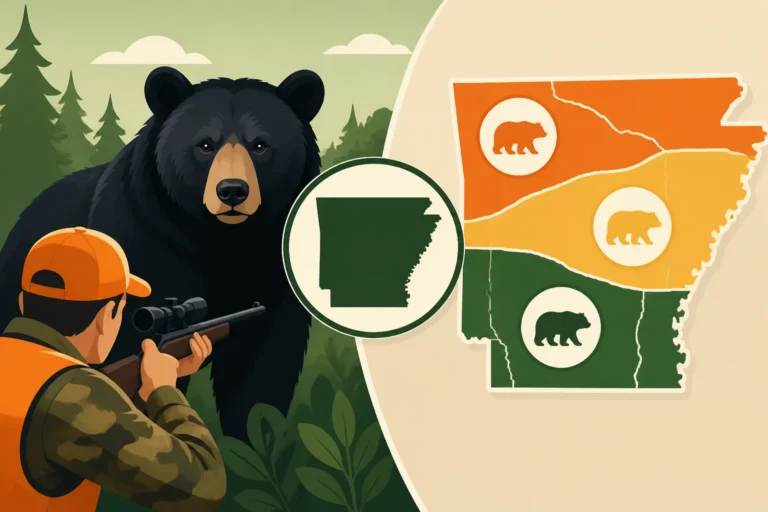
The three-point rule isn't universal across all of Arkansas, but it's prevalent in a significant portion of the state, particularly in the Ozark and Ouachita Mountain regions, and some of the more intensely managed Wildlife Management Areas (WMAs). These are areas where the habitat, deer density, and hunter pressure necessitate a more focused approach to buck management. The AGFC identifies these zones specifically, and it's absolutely critical to know which zone you're in before you ever climb into your stand. For instance, many counties in the north and west fall into categories like Zone 1, Zone 2, Zone 3, Zone 4, and Zone 5, which often carry this regulation. If you're planning a trip to the Ouachita National Forest Hunting or one of the many state WMAs, chances are good you'll encounter the three-point rule. Using resources like the AGFC's interactive map tool or a mapping application like GoHunt, which overlays current regulations, can be incredibly helpful to determine specific boundaries and rules for each zone. This really helps hunters visualize where the various rules apply, reducing the chance of accidental violations.
How to Accurately Count Points
This is where the rubber meets the road, and sometimes, where hunters get tripped up. The three-point rule dictates that an antlered buck must have at least three points on one side of its rack. "Points" are defined as projections from the main beam that are at least one inch long. This one-inch minimum is key! It means those tiny little bumps or "nubs" that aren't truly an inch don't count towards the three-point total. The brow tines, G2s, G3s, and so on, all contribute, as long as they meet that length requirement. A common mistake is to count tiny bumps that are less than an inch, or to confuse a broken tine for a legal point. You need to be able to clearly identify three distinct, one-inch-plus points on one side, even if the other side is a spike or only has one point. Practice judging antlers in the field before the season, perhaps with trail camera photos or even by looking at shed antlers. A buck with three points on one side and two on the other is a legal buck; a buck with two points on each side is not a legal buck under this rule. This rule directly impacts how many deer you can take in Arkansas, so understanding it is paramount.
What the Three-Point Rule Did to Arkansas Bucks
Since its implementation, the three-point rule has had a noticeable impact on the deer herd, particularly the buck age structure in Arkansas. Hunters, wildlife biologists, and even casual observers have seen changes. Initially, there was a dip in overall buck harvest numbers in some areas as hunters adjusted to passing younger deer. However, over time, many zones saw an increase in the number of older age class bucks harvested. This means more 2.5-year-old and even 3.5-year-old bucks walking around, which often correlates with larger antler growth and more challenging hunts. It’s an example of how specific regulations can effectively influence the quality of the hunting experience and the health of the herd. This shift has also changed hunting strategies, encouraging hunters to spend more time scouting and being selective, rather than just filling a tag with the first buck that walks by. Many believe this rule has contributed significantly to improving the quality of the hunting experience and the potential for a trophy buck, something reflected in discussions around the Buck Age Structure Under the Three-Point Rule.
Navigating Specific Scenarios and Exceptions
Just when you think you've got it all figured out, Arkansas's deer regulations, like most states', throw in a few curveballs. There are specific situations and types of deer that require extra attention to ensure you're hunting legally and ethically. It’s not always black and white, and understanding these nuances can save you a lot of headache in the field.
Spike Bucks and Button Bucks
This is where a lot of confusion often creeps in. Let's clarify:
- Spike Bucks: As mentioned earlier, in zones without the three-point rule, a spike buck (a young male deer with unbranched antlers, often just two straight "spikes" visible above the hairline) is generally a legal buck. However, if you're in a three-point rule zone, that spike is not a legal buck, regardless of how long those spikes are, because it doesn't meet the "three points on one side" criterion. The only exception to this, as we'll discuss, might be during specific youth hunts.
- Button Bucks: This is perhaps the most critical distinction. A button buck is a young male deer, often a fawn, where the antlers are just beginning to form but have not yet broken through the hide or are barely visible as small "buttons." These are typically considered antlerless deer by the AGFC, NOT antlered bucks. If you shoot a button buck during an antlered buck-only season or if you've already filled your antlerless tag, you could be facing a violation. It's incredibly important to be absolutely sure of your target and to accurately identify what you're seeing before pulling the trigger. When in doubt, let it walk! This is especially important during the early buck-only archery days when mistakenly taking an antlerless deer can lead to issues.
Youth Hunts and Special Provisions
Arkansas recognizes the importance of getting the next generation involved in hunting, and with that comes some special provisions to make their experience enjoyable and less restrictive. During designated Youth Deer Hunt Dates and Rules, the antler restrictions, including the three-point rule, are often relaxed or waived entirely for eligible youth hunters. This means a youth hunter might be able to take any antlered buck, regardless of point count, in zones where an adult hunter would be restricted. This approach allows younger hunters a greater chance at success, building confidence and fostering a love for the outdoors, without the added pressure of complex antler judging. Always confirm the specific youth hunt regulations for the current season, as these can vary slightly.
Antlerless Deer Versus Legal Bucks
Proper identification between antlered and antlerless deer is fundamental, not just for following the rules but for responsible wildlife management. An antlerless deer is typically defined as a doe (female deer) or a buck with antlers less than the legal requirements for an antlered buck in that specific zone (like a button buck). In many areas, hunters have specific tags for antlered bucks and antlerless deer, and filling the wrong one can lead to issues. This means you need to be confident in judging points on a standing buck, or confirming it's a doe, particularly in areas with good cover or at last light. Being proficient in identifying gender and legal points is paramount, especially when you're trying to fill an Antlerless Tag Late in Arkansas after you've already taken your buck. The AGFC provides excellent resources and often encourages hunters to take antlerless deer to help manage the population, but it has to be done according to the specific tag and season structure.
Resources and Best Practices for Hunters
Staying legal and ethical in the deer woods really boils down to being prepared and knowing your resources. It’s not just about having the right gear; it’s about having the right information at your fingertips, and knowing how to use it. No one wants to be that hunter who makes a mistake because they "didn't know."
Using the AGFC Regulations and Map Tools
The Arkansas Game and Fish Commission is your absolute best friend when it comes to understanding deer hunting regulations. They publish an annual hunting guide that's available everywhere from sporting goods stores to their website. This guide contains all the current dates, zone maps, and specific rules for what counts as a legal buck in every part of the state.
Beyond the printed guide, the AGFC's website and mobile app are invaluable. Their interactive map tool allows you to zoom in on specific areas, see the exact boundaries of deer zones, and often displays the regulations associated with that specific piece of land. I can't stress enough how helpful this is, especially when you're Scouting Arkansas Public Land Before Season. Before I head out, I always cross-reference my hunting spot with the AGFC's online map to confirm which zone I'm in and what the current antler restrictions are for that specific area. Tools like GoHunt also integrate this mapping data, offering a comprehensive look at land ownership, hunting boundaries, and regulations all in one place, making it easier than ever to be informed. It's truly a powerful combination for planning your hunt.
Field Judgement Tips and Avoiding Mistakes
Even with all the regulations memorized, making a split-second decision in the field can be tough. Deer rarely stand still in perfect light, waiting for you to count points. Here are some tips to help you avoid mistakes:
- Take Your Time: The golden rule. If you're not 100% sure, don't shoot. A missed opportunity is always better than an illegal harvest. Wait for the deer to turn, offer a clearer view, or step into better light.
- Focus on One Side: When trying to count points for the three-point rule, concentrate on one side of the rack first. Count the brow tines, then move up the beam. Don't try to count both sides simultaneously; it just leads to confusion.
- Use Binoculars: Always use good quality binoculars to get a clearer view. They are for more than just spotting deer; they are critical for proper identification. Even if you're bowhunting Arkansas's five-month archery season, you should use optics to confirm your target before drawing.
- Practice with Photos/Videos: Study trail camera pictures or hunting videos of bucks. Practice counting points quickly and accurately. Try to identify the "one-inch" rule on various tines. This mental exercise will pay off when a live deer steps out.
- Know Your Zone: Reiterate this: always know which Arkansas Deer Zones Explained applies to your exact hunting location. The rules can literally change across a county road or a WMA boundary.
| Deer Type / Scenario | General Statewide Rule (No 3-Point) | 3-Point Rule Zones (e.g., Ozarks, Ouachitas) | Youth Hunts (General Relaxation) | Key Identification Tip |
|---|---|---|---|---|
| Spike Buck | Legal (at least one antler visible above hairline). | NOT Legal (unless 3 points on one side). | Usually Legal (antler restrictions often waived). | Look for unbranched antlers. |
| Button Buck | NOT a legal buck (considered antlerless). | NOT a legal buck (considered antlerless). | NOT a legal buck (considered antlerless, still counts as doe). | Look for small, un-erupted antler nubs. |
| "Forked Horn" (2×2) | Legal (at least one antler visible above hairline). | NOT Legal (only 2 points per side, fails 3 points on one side). | Usually Legal (antler restrictions often waived). | Count tines on each side carefully; must be >1 inch. |
| Legal 3-Point Buck | Legal (also meets general definition). | Legal (at least 3 points >1 inch on one antler). | Legal (also meets youth hunt definitions). | Ensure 3 distinct tines >1 inch on either side. |
| Antlerless Deer | Legal only during designated antlerless seasons/tags. | Legal only during designated antlerless seasons/tags. | Legal during designated antlerless or youth seasons/tags. | Confirm no visible antlers above hairline (or legal buck points). |
Being thoroughly familiar with what counts as a legal Arkansas buck is not just about avoiding fines; it's about being a responsible, ethical hunter and contributing to the health of our deer herds. Take the time, study the regulations, and always be certain of your target.
Disclaimer
Please remember that hunting regulations are subject to change. While every effort has been made to provide accurate and up-to-date information in this guide, it is ultimately the hunter's responsibility to consult the current Arkansas Game and Fish Commission (AGFC) regulations before participating in any hunting activity. This content is for informational purposes only and should not be considered legal advice.