Arkansas Alternative Firearms Dates
Hunting deer in Arkansas can feel like navigating a maze of regulations, especially when you start looking beyond the main archery and modern gun seasons. Many hunters get confused by terms like "alternative firearms" and wonder if it's just another name for muzzleloader season or something entirely different. This guide is here to untangle all that, giving you a clear, detailed breakdown of Arkansas's alternative firearms dates, what they mean for you, and how you can make the most of these unique hunting opportunities.
Understanding Arkansas's Alternative Firearms: Beyond the Basics
When the Arkansas Game and Fish Commission (AGFC) talks about "alternative firearms," they're not just trying to complicate things. This category carves out specific hunting periods that allow methods falling outside the typical modern centerfire rifle or standard archery equipment during dedicated seasons. It’s an important distinction that offers hunters more flexibility and choice, often in less crowded conditions.
What Qualifies as an "Alternative Firearm" for Deer?
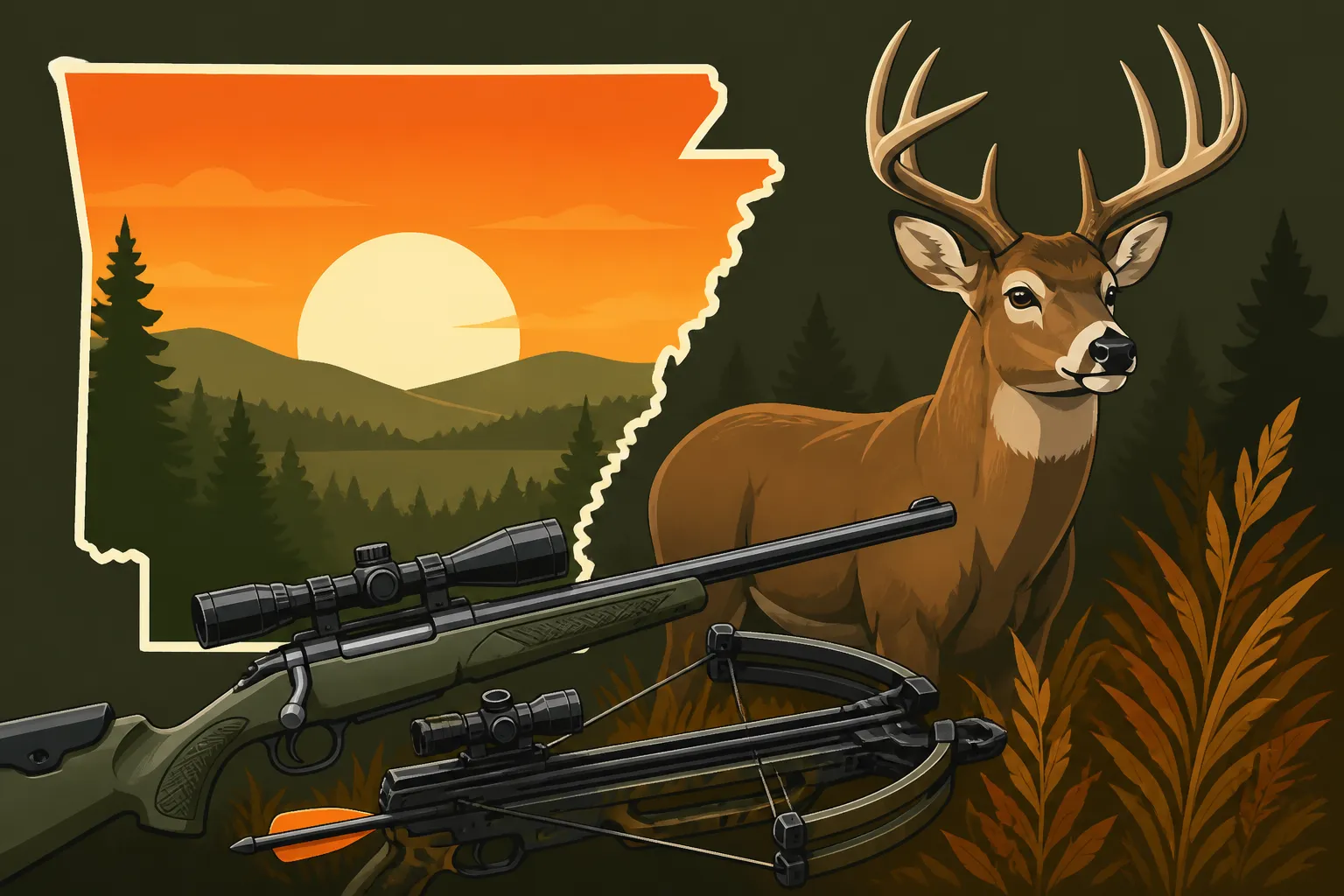
For deer hunting in Arkansas, the term "alternative firearms" refers to muzzleloading rifles and handguns, non-semiautomatic centerfire firearms and handguns that fire a straight-wall cartridge of .30 caliber or larger, and large-bore air rifles. Shotguns with slugs are not allowed. Let's break down the main categories you'll encounter.
Muzzleloaders: These are the classic black powder firearms, loaded from the muzzle. Arkansas regulations typically specify that a muzzleloader must be .40 caliber or larger for deer, though most hunters opt for .50 caliber. Both flintlock and percussion cap actions are legal, as are inline muzzleloaders. Unlike some states, Arkansas generally allows optical sights (scopes) on muzzleloaders during these seasons, which is a big help for accuracy, especially as our eyesight isn't getting any younger. Just make sure your projectile is a single bullet or slug, not shot.
Shotguns: Shotguns with slugs are not allowed during alternative firearms season, so a slug gun stays home until the modern gun season. For close shots in thick cover during this season, hunters turn to muzzleloaders, straight-wall cartridge firearms, or big-bore air rifles instead.
Pistols: For those who enjoy a real close-quarters challenge, certain pistols are also legal during alternative firearms seasons. These are typically large-caliber, single-shot, or revolver-style handguns, often chambered in calibers like .44 Magnum, .45 Colt, or .50 S&W. They must fire a single projectile, and using them effectively requires considerable practice and discipline, as shot placement is critical. Always check the specific regulations for legal pistol calibers and barrel length restrictions each season, as these can be updated.
The Rationale Behind These Unique Seasons
The AGFC doesn't just create new seasons for fun; there's always a thoughtful reason behind it. Alternative firearms seasons serve several important purposes, benefiting both wildlife management and the hunting community.
Expanding Hunting Opportunities: First and foremost, these seasons extend the hunting calendar, offering more days afield. They often provide an earlier opportunity to hunt deer before the modern gun season opens, or sometimes a special window after the primary modern gun dates. This is a huge benefit for hunters who might have limited vacation time or prefer hunting during specific periods. It spreads out hunter pressure, which can be a good thing for both the deer and the hunters looking for a bit more solitude.
Wildlife Management Goals: From a biological perspective, offering alternative firearms seasons can be a strategic tool for managing deer populations. It allows for harvest at different times of the year, which can help meet harvest objectives without concentrating all pressure into a short modern gun season. This can be particularly important for antlerless deer harvest, which is crucial for maintaining a healthy buck-to-doe ratio and overall herd health. By diversifying the methods and timing, the AGFC can fine-tune its management strategies across the state's diverse deer zones.
Preserving Tradition and Skill: Muzzleloading, in particular, is a nod to hunting heritage. It connects us to a simpler, more traditional way of hunting, often demanding greater patience, stealth, and skill. The single-shot nature means you make that first shot count, forcing a level of precision and ethical consideration that's deeply rewarding. These seasons help keep these skills alive and foster an appreciation for the historical roots of hunting.
Deciphering Arkansas's Alternative Firearms Season Dates
One of the biggest hurdles for any hunter, especially when planning a trip or even just a weekend hunt, is nailing down those exact season dates. Arkansas's alternative firearms dates are not uniform statewide; they vary significantly by deer zone. This zonal variation is crucial to understand, as hunting in the wrong zone on the wrong day could lead to serious legal trouble.
The Statewide Framework for Muzzleloader Hunts
Generally, Arkansas's muzzleloader seasons often serve as an early opener for firearms hunting, preceding the general modern gun season in many zones. This is a fantastic opportunity for hunters to get out when deer patterns might be slightly different – perhaps still on summer food sources, or just starting to show early rutting behaviors. However, don't assume every zone has an early muzzleloader season; some zones might only have a late one, or none at all, depending on local deer populations and management goals.
Typically, you'll see a week or two dedicated to muzzleloaders in October or early November. This timeframe aims to give muzzleloader hunters a distinct window before the full modern gun onslaught, which tends to push deer into different patterns and increase their wariness. It's a chance to hunt when the woods are a little quieter and the deer might be a bit less pressured. It also allows for cooler weather hunting before the deep cold sets in, making Cooling Meat in an Arkansas November a bit easier to manage.
Zone-Specific Calendars and Key Differences
This is where planning really comes into play. Arkansas is divided into numerous deer zones (like Zones 1, 2, 3, 4, 4A, 5, 5A, 6, 6A, 7, 8, 8A, 9, 10, 12, 13, 14, 15, 16, 16A, 17), each with its own specific regulations and season dates for all hunting methods, including alternative firearms. For example, a zone in the Ozarks might have very different dates than a Delta zone.
Let's consider a couple of hypothetical scenarios:
- Ozark Highlands (e.g., Zone 1 or 2): You might find an early muzzleloader season in mid-October, perhaps for a week, and then a shorter muzzleloader season tacked onto the end of modern gun season in December. These dates are often designed to target areas with lower deer density or to provide specific harvest opportunities before winter. If you're planning a hunt here, checking Hunting Ozark Ridges and Hollows for Deer will give you a better idea of the terrain and how deer move through it.
- Delta Farmland (e.g., Zone 10 or 12): These zones, known for higher deer populations, might have slightly longer or different timed muzzleloader seasons. An early November muzzleloader hunt could be common, aligning with crop harvests and early deer movement patterns. Understanding the specific zone boundaries and dates is non-negotiable. I highly recommend using a mapping tool like GoHunt to visualize these zones and overlap them with public lands or your private hunting grounds. This makes it incredibly easy to see exactly when and where you can legally hunt with an alternative firearm.
The best way to stay current is to consult the official AGFC Hunting Guide each year, paying close attention to the Arkansas Deer Zones Explained section and the specific dates for "Muzzleloader Deer Season" under each zone.
Here's a simplified example of how alternative firearms dates might look across different regions (always check the current AGFC regulations):
| Deer Zone Region | Typical Muzzleloader Season Start | Typical Muzzleloader Season End | Primary Use/Goal |
|---|---|---|---|
| Ozark Highlands | Mid-October | Late October | Early opportunity before modern gun |
| Ouachita Mountains | Late October | Early November | Mid-season opportunity, spreading pressure |
| Delta Farmland | Early November | Mid-November | High deer density harvest, post-crop harvest |
| South Arkansas Pine | Mid-December | Late December | Extended late-season opportunity |
Youth Hunts and Special Opportunities
Arkansas also offers special youth-only deer hunts where alternative firearms (along with modern guns) are permitted. These hunts are fantastic for introducing the next generation to hunting in a safer, less pressured environment. Youth hunts typically occur on specific weekends in November or December, giving young hunters an exclusive opportunity to hunt without adult competition. For these hunts, the rules are often a bit more flexible regarding legal weapons, including muzzleloaders and shotguns, allowing youth to use a method they might be more comfortable with. Always ensure you are familiar with the Youth Deer Hunt Dates and Rules for these critical opportunities.
Navigating the Rules: Gear, Tags, and Safety
Just like any other hunting season, alternative firearms seasons come with a specific set of rules and regulations designed to ensure safety, ethical hunting practices, and sound wildlife management. Ignoring these details isn't just irresponsible; it can lead to hefty fines and loss of hunting privileges.
Legal Calibers, Ammunition, and Prohibited Devices
Arkansas has clear guidelines on what you can and cannot use during alternative firearms seasons. It’s not just about having a muzzleloader; it’s about having the right kind of muzzleloader and ammunition.
-
Muzzleloaders: As mentioned, they must be .40 caliber or larger. This is a minimum; most hunters use .50 caliber for deer due to its effectiveness. The projectile must be a single, solid slug or bullet. While sabots (a plastic sleeve that allows a smaller bullet to be fired from a larger bore muzzleloader) are generally legal and popular, using buckshot in a muzzleloader for deer is not. You can use open sights, peep sights, or telescopic sights (scopes). Unlike some states, Arkansas doesn't typically restrict magnifications on muzzleloader scopes during these specific hunts, but it's always good to confirm this detail in the current regulations.
-
Shotguns: Not allowed with slugs during alternative firearms season, whatever the gauge or barrel. A shotgun with a rifled barrel is still considered a shotgun in Arkansas regulations, not a rifle, so it is not a legal option here either.
-
Pistols: If you're going the pistol route, stick to large-caliber, centerfire pistols (.41 caliber or larger) that fire a single projectile. Small-caliber rimfire pistols like .22s are for small game, not deer. Again, check the current guide for precise caliber and energy requirements for pistols used for deer.
It's equally important to know what's prohibited. For instance, fully automatic firearms are illegal for hunting. Most importantly, during an alternative firearms season (unless explicitly stated otherwise), you cannot use a modern centerfire rifle or rimfire rifle for deer. These seasons are designed for the specific types of firearms allowed, giving hunters using them a dedicated time. This level of detail is something you can easily cross-reference on the GoHunt app or website, which provides state-specific regulations that often mirror the AGFC guide.
Essential Checking and Tagging Procedures
Even if you're using a muzzleloader, the fundamental rules for what to do after you harvest a deer remain the same as with any other method. This is a critical step that ensures proper reporting and management of the deer herd.
Immediate Tagging: The moment you harvest a deer, you must immediately attach your valid deer tag to the animal. This tag must be visible and securely fastened. It's a physical representation of your legal right to possess that animal. Failing to tag immediately can lead to citations, even if you have a valid license.
Checking Your Harvest: All harvested deer must be checked by the AGFC. You can do this quickly and conveniently through the AGFC's mobile app, online portal, or by calling a toll-free number. You'll need information like the date of harvest, county, zone, sex, and antler configuration (if it's a buck). Make sure to check your deer before processing it or transporting it out of the state. This data is vital for AGFC biologists to track harvest trends and make informed management decisions. Don't forget, these steps are the same whether you harvested your deer during the Arkansas Archery Deer Season Structure or the Arkansas Alternative Firearms Seasons.
CWD Rules: If you're hunting in a Chronic Wasting Disease (CWD) management zone, there may be additional rules regarding carcass transport and sampling. Always check the current regulations for Arkansas CWD Rules and Carcass Transport if you're hunting in one of these areas. Sometimes, specific drop-off locations are set up for voluntary or mandatory CWD testing.
Hunter Orange and Safety Considerations for Alternative Firearms
Safety is paramount, regardless of the weapon you're using. During alternative firearms seasons that overlap with or precede modern gun season, hunter orange requirements are usually in effect, just like during the Arkansas Modern Gun Season Structure.
Hunter Orange: You typically need to wear at least 400 square inches of hunter orange above the waist, visible from all sides. This is for your safety, making you clearly visible to other hunters in the woods, especially as deer season progresses and more hunters enter the field. Even if you're still-hunting, this visual cue can prevent tragic accidents. The only exceptions are usually during archery-only seasons or specific small game hunts, but for alternative firearms deer hunts, err on the side of safety and wear your orange. Familiarize yourself with Arkansas Hunter Orange Rules before heading out.
Firearm Safety: All the fundamental firearm safety rules apply: always point the muzzle in a safe direction, treat every firearm as if it's loaded, keep your finger off the trigger until ready to shoot, and be sure of your target and what's beyond it. Muzzleloaders, in particular, require careful handling of powder and primers. Read your firearm's manual thoroughly and practice safe loading and unloading procedures.
Maximizing Your Success During Alternative Firearms Seasons
Hunting with alternative firearms presents unique challenges and rewards. To truly make the most of these opportunities, you need a strategy that considers the timing, the equipment, and the behavior of the deer.
Scouting for Early Season Opportunities
The early muzzleloader seasons, in particular, are a fantastic time to hit the woods. Deer patterns can be a bit more predictable than during the chaos of the rut or the post-rut shuffle.
Focus on Food and Water: In early fall, deer are heavily focused on food sources. Hard mast, like acorns, will be a primary draw, especially red oak acorns later in the season. Soft mast, like persimmons and muscadines, can be deer magnets earlier on. Identifying these key food sources during your Scouting Arkansas Public Land Before Season is critical. Look for fresh droppings, tracks, and disturbed ground where deer have been feeding. Water sources, especially during warmer spells, will also concentrate deer.
Utilize Technology: Modern mapping applications like those offered by GoHunt are invaluable for scouting. You can identify potential bedding areas, travel corridors, food plots, and water sources from your couch. Layering in public land boundaries and topography can help you pinpoint those hidden pockets where deer might feel secure. Look for funnels, saddles, and benches in the Ozarks, or thick brush lines and isolated timber blocks in the Delta.
Early Morning and Late Evening: Just like with any other deer hunting, dawn and dusk are prime times for deer movement. Set up your stand or blind along heavily used trails leading from bedding to feeding areas. Pay attention to wind direction, as your scent will carry easily, especially in the quieter woods of an early muzzleloader season.
Adapting Tactics to Less Pressured Deer
While not entirely unpressured, deer during an early alternative firearms season often haven't experienced the full brunt of hunter interference. This can work to your advantage.
Still-Hunting and Stalking: With fewer hunters in the woods, deer might be less prone to immediately blowing out of an area. This can make still-hunting or slow stalking a viable tactic, particularly in suitable terrain. Move slowly, pause frequently to scan and listen, and utilize available cover. In the thick pine country of south Arkansas, still-hunting can be incredibly effective. Consider reading about Still-Hunting Arkansas Pine Country for some great tips on this method.
Minimal Disturbance: Your goal is to be as stealthy as possible. Minimize noise when walking to your stand, avoid strong human odors, and use calls sparingly and subtly. A soft grunt or a doe bleat might be enough to pique a deer's curiosity without alarming it. Deer in areas like Hunting Arkansas Cutovers and Clearcuts might be more accustomed to disturbance, but even there, quiet approaches pay off.
Patience is Key: Muzzleloading, especially, can test your patience. The process of reloading is not quick, so making that first shot count is paramount. Don't rush a shot. Wait for the deer to offer a clear, ethical broadside or quartering-away shot. This patient approach not only ensures a clean kill but also enhances the overall hunting experience.
Disclaimer
Please remember that hunting regulations, season dates, and zone boundaries can change annually. Always consult the most current Arkansas Game and Fish Commission (AGFC) Hunting Guide before planning any hunting trip to ensure you are in compliance with all state laws and regulations. The information provided here is for general guidance and informational purposes only.