Arkansas Deer Zones Explained
Figuring out where you can hunt deer and what rules apply can feel like navigating a dense, tangled briar patch here in Arkansas. It’s not just a matter of having a license and a deer tag; the entire state is carved into a patchwork of deer zones, each with its own specific season dates, bag limits, and even antler restrictions. This comprehensive guide will help you untangle that web, breaking down the logic behind these zones and equipping you with the knowledge to hunt legally and confidently, no matter where you chase whitetails in the Natural State.
The Labyrinth of Arkansas Deer Zones
For newcomers or even seasoned hunters crossing county lines, the sheer number of deer zones in Arkansas can be downright bewildering. It's not uncommon to hear a frustrated hunter at the coffee shop wondering why the rules seem to change every few miles. But trust me, there's a method to the madness, even if it feels like a puzzle on the surface.
Why Zones Exist and Their Purpose
The Arkansas Game and Fish Commission (AGFC) doesn't just draw lines on a map arbitrarily. These zones are meticulously designed to manage the white-tailed deer population across our incredibly diverse state effectively. Think about it: the habitat in the flat, agricultural fields of the Delta is vastly different from the rugged, forested mountains of the Ozarks. The deer populations, their health, their reproductive rates, and even their antler growth vary dramatically in these areas.
By dividing the state into zones, the AGFC can implement tailored regulations that address the specific needs of the deer herd in that region. In areas with booming populations or agricultural damage, you might see longer seasons or more generous antlerless bag limits. Conversely, in regions where deer numbers might be struggling or herd health is a concern, seasons could be shorter, or antler restrictions more stringent. It's all about balancing the ecological health of the herd with the recreational opportunities for us hunters.
A Quick Overview of the Current Zone System
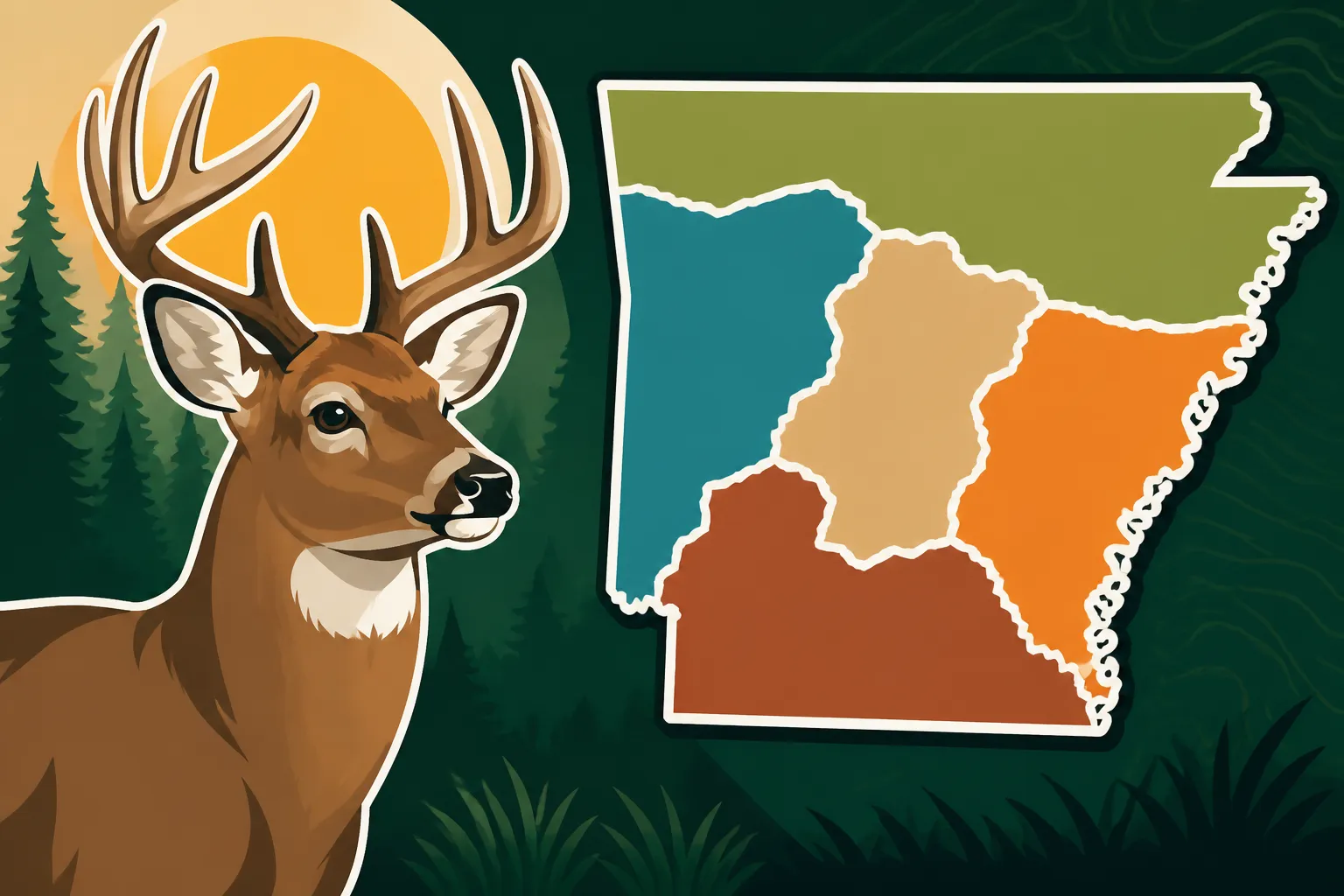
Currently, Arkansas is divided into numerous deer zones, often identified by numbers (1 through 17) and sometimes with letter suffixes (like 4A or 6A). These zones broadly correspond to the state's major geographic regions: the Mississippi Alluvial Plain (Delta), the Ozark Mountains, the Ouachita Mountains, and the Gulf Coastal Plain.
Each of these major regions, and the zones within them, presents a unique set of challenges and opportunities for deer hunters. For instance, the Delta zones are generally known for higher deer densities and often have antler point restrictions aimed at allowing younger bucks to mature. The mountainous zones, on the other hand, might have lower deer densities but offer a different kind of hunting experience, emphasizing tracking and still-hunting in dense timber. We'll dive much deeper into these specific characteristics shortly, but for now, just understand that these zones are the fundamental building blocks of Arkansas deer hunting regulations.
The Ever-Changing Landscape of Regulations
Here's where it gets really important: the AGFC regularly reviews and adjusts these zone regulations based on biological data, hunter feedback, and current conditions. What was true last year might have a slight tweak this year. This isn't to confuse us, but rather to respond to dynamic wildlife populations and environmental factors. For example, if a severe winter impacts a specific region, or if CWD prevalence changes, the AGFC might adjust regulations in the affected zones. This means it's absolutely crucial that you never rely on old information. Always check the current year's hunting guide or the AGFC website before you head out, especially if you plan to hunt a new area.
Deciphering the Major Deer Zones and Their Characteristics
To truly understand Arkansas deer hunting, you need to grasp the distinct personalities of our primary deer zones. Each offers a unique experience, driven by its geography, habitat, and deer population dynamics.
The Delta Zones: Food, Floods, and Big Bucks
Ah, the Delta. If you're talking big bucks and high deer numbers, this is often where the conversation begins. Zones like 1, 2, 3, 6, 6A, 7, 8, 8A, 9, 10, 11, 12, 13, 14, 15, 16, and 17 cover the vast, fertile Mississippi Alluvial Plain and the associated river bottoms.
This region is characterized by extensive agriculture—think endless fields of rice, soybeans, and corn—interspersed with crucial tracts of bottomland hardwoods, cypress swamps, and countless sloughs and ditches. This combination is a deer hunter's dream: an abundant, high-quality food source from agriculture and natural browse, coupled with thick cover and water. The deer here often have access to superior nutrition, which is a major factor in Why Delta Bucks Grow Bigger and typically results in higher deer densities compared to other parts of the state.
Hunting in the Delta often involves setting up stands on field edges, along creek bottoms, or within blocks of flooded timber. Due to the generally flat terrain and dense cover, scouting for rub lines and scrape lines along old logging roads or levee systems can be incredibly productive. Keep in mind that water levels can play a huge role here, especially during the late season. Understanding how deer move through flooded timber or respond to changing water can be key to success.
The Ozark Zones: Rugged Terrain and Mountain Whitetails
Switch gears completely, and you find yourself in the Ozark Mountains, home to zones like 1, 2, 3, 4, 4A, and 5. This is a completely different world from the Delta, and so are the deer and the hunting strategies. The Ozarks are defined by their steep, rocky ridges, deep hollows, and vast expanses of oak-hickory forest, interspersed with some pine stands.
Deer densities here are generally lower than in the Delta, and you won't find the same sprawling agricultural fields providing endless buffets. Instead, Ozark whitetails rely heavily on mast crops like acorns, natural browse, and the occasional small food plot. Hunting here is often a much more physically demanding endeavor, requiring patience, stealth, and a keen understanding of topography.
Many hunters employ still-hunting techniques, slowly working ridges and hollows, looking for fresh sign or catching deer moving through the timber. Learning to read an Ozark bench, find saddles, and understand how deer use draws and creek bottoms as travel corridors is paramount. Thermal currents and wind direction are critical considerations when Hunting Ozark Ridges and Hollows for Deer. These deer are often pressured, especially on public land, making it even more important to get off the beaten path and find those hidden pockets of timber. While the deer might not carry the sheer body weight or antler size of their Delta cousins on average, a hard-earned Ozark buck is a trophy in its own right.
The Ouachita and Gulf Coastal Plain Zones: Pine and Mixed Hardwoods
Nestled between the Ozarks and the Delta, and extending into south Arkansas, you'll find zones like 4, 4A, 5, 10, 11, 12, 13, 14, 15, 16, and 17. These zones encompass the Ouachita Mountains and the Gulf Coastal Plain, offering a blend of habitats and hunting experiences.
The Ouachitas, similar to the Ozarks, feature mountainous terrain, though often with more pine forests and a different geology. Hunting strategies here often combine elements of both mountain and timber hunting, focusing on transitions between pine and hardwood stands, logging roads, and creek drainages. Deer often relate heavily to clearcuts and regenerating timber, providing both food and thick cover.
Further south, in the Gulf Coastal Plain, the landscape transitions to rolling hills dominated by pine plantations and mixed pine-hardwood forests. Here, you'll find more commercial timberland, often leased by hunting clubs. Deer populations can be quite healthy, especially where good habitat management practices are in place. Hunting strategies might involve hunting edges of pine thickets, clearcuts a few years old (where browse is abundant), or setting up on food plots managed by clubs. While not as prone to extreme flooding as the Delta, these areas can still see significant rain and saturated ground, impacting deer movement.
Understanding Season Dates and Bag Limits by Zone
One of the most critical aspects of hunting in Arkansas's deer zones is knowing the specific season dates and bag limits for your chosen area. Get this wrong, and you could easily find yourself on the wrong side of the law.
Archery Season Nuances Across Zones
Arkansas is famous for its incredibly long archery season, often stretching for five months. However, the exact opening and closing dates, as well as specific early periods, can vary slightly by zone. Generally, the statewide archery season for deer opens in late September. But within that framework, some zones might have an early buck-only archery period.
For example, many zones kick off with a short, three-day early buck-only archery hunt, allowing archers to target antlered deer before the general statewide archery season begins for both sexes. Understanding when The Three-Day Early Buck-Only Archery Hunt applies to your specific zone is crucial. After these early days, the season typically opens to either-sex hunting. It's vital to consult the current AGFC regulations each year to confirm the exact dates for the zone you plan to hunt, as these can sometimes be adjusted to address local population dynamics or hunter pressure. Always remember that while How Arkansas's Long Archery Season Works offers a generous timeframe, the specifics within that period are zone-dependent.
Modern Gun and Alternative Firearms Season Variations
When it comes to modern gun season, the zone system becomes even more pronounced. Unlike the long, continuous archery season, modern gun seasons are typically much shorter and can have dramatically different start and end dates, as well as duration, across the state. Some zones might only have a few days of modern gun hunting, while others in areas with higher deer densities might have longer periods, including the popular "Christmas Modern Gun Season."
It's not uncommon for certain zones, particularly those with lower deer densities or specific management goals, to have very limited or even no modern gun season at all, focusing instead on archery or muzzleloader hunting. The regulations also specify legal firearms by zone.
Similarly, alternative firearms seasons—which allow muzzleloaders, large-bore air rifles, and non-semiautomatic straight-wall centerfire firearms, but not shotguns with slugs—also have their own zone-specific dates. Often, these seasons run before or after the modern gun season, providing additional opportunities. For a complete understanding of what's legal and when, you'll want to check both the Arkansas Modern Gun Deer Hunting and Arkansas Muzzleloader and Alternative Firearms Tactics sections of the current regulations, paying close attention to the specific zone details. These seasons are shorter and more impactful, so knowing the exact dates is non-negotiable.
Bag Limits and Antler Restrictions: The Three-Point Rule
Beyond season dates, bag limits and antler restrictions are perhaps the most complex, and often misunderstood, aspects of zone regulations. Arkansas generally has a statewide antlered buck limit of two, but the antlerless limits and, critically, the "three-point rule" are entirely zone-dependent.
The three-point rule, which mandates that an antlered buck must have at least three points on one side to be legally harvested, is in effect in many, but not all, Arkansas deer zones. This rule is a core component of the AGFC's Quality Deer Management (QDM) strategy, designed to protect yearling bucks and allow them to mature, leading to an older age structure and potentially larger antlers in the herd over time.
For instance, many of the Delta and Gulf Coastal Plain zones (Zones 1, 2, 3, 6, 6A, 7, 8, 8A, 9, 10, 11, 12, 13, 14, 15, 16, 17) operate under the three-point rule. Conversely, most of the Ozark and Ouachita zones (Zones 4, 4A, 5) do not have this restriction, meaning any antlered buck with at least one antler three inches or longer is legal.
Knowing which zones implement The Three-Point Rule and What It Changes is absolutely vital for every hunter. Mistakes here can lead to citations and significant fines. Similarly, antlerless deer limits vary widely by zone, with some allowing multiple antlerless deer per day or season, while others might be more restrictive. This is directly tied to population management, where increased antlerless harvest helps control overall deer numbers and maintain herd health. Always confirm the antler restrictions and antlerless limits for your specific zone before you hunt.
Key Factors Influencing Zone Regulations
It’s easy to look at the deer zone map and feel overwhelmed by the lines and numbers. But once you understand the underlying ecological and management principles, it starts to make a lot more sense. The AGFC’s decisions on zone boundaries and regulations aren’t arbitrary; they’re driven by critical factors that shape the deer herds in different parts of the state.
Habitat Diversity and Carrying Capacity
Arkansas is a state of incredible ecological diversity. From the bottomland hardwoods and vast agricultural fields of the east to the rugged, mixed forests of the mountains in the west, the habitat changes dramatically. This habitat diversity directly influences the carrying capacity of the land—how many deer it can realistically support and how well those deer can thrive.
In the Delta, for instance, the combination of nutritious agricultural crops (like corn, soybeans, and rice) and dense cover in the river bottoms provides an almost ideal environment for deer. This abundance of food allows for higher deer densities and often contributes to better body weights and antler development. Because the land can sustain more deer, the AGFC can often set more liberal bag limits and longer seasons in these zones without harming the overall population.
Conversely, the Ozark Mountains, with their thinner soils, rockier terrain, and reliance on mast crops, simply don't have the same carrying capacity. Food sources can be less consistent, and the habitat is more fragmented. As a result, deer densities are naturally lower, and the AGFC tends to be more conservative with regulations in these zones, focusing on maintaining a healthy, sustainable herd given the available resources. The specific zone boundaries often reflect these dramatic shifts in habitat type and the land's ability to support deer.
Deer Population Density and Health
The AGFC constantly monitors deer populations across the state using a variety of methods, including hunter harvest reports, spotlight surveys, and fawn recruitment studies. This data is critical for assessing the health and density of the herd in each zone.
If a zone shows consistent signs of an overpopulated deer herd—indicated by declining body weights, poor fawn survival, or increased disease prevalence—the AGFC might adjust regulations to encourage a higher harvest, particularly of antlerless deer. This helps bring the population back into balance with the habitat, leading to healthier deer overall. On the other hand, if a zone exhibits declining deer numbers, the AGFC might implement more conservative regulations, such as shorter seasons, reduced bag limits, or stricter antler restrictions, to help the population recover.
These adjustments are not always popular, especially if they reduce hunting opportunities, but they are essential for the long-term sustainability of the deer resource. It’s a dynamic process, and the zone system allows the AGFC to be surgical in its management efforts rather than applying a blanket approach that might harm one region while benefiting another.
Chronic Wasting Disease CWD Management Zones
Perhaps one of the most significant recent influences on Arkansas's deer zone regulations has been the discovery and spread of Chronic Wasting Disease (CWD). CWD is a fatal neurological disease affecting deer, elk, and moose. Once detected in an area, it introduces a whole new layer of management complexity, leading to the establishment of CWD Management Zones.
Within these CWD zones, which often span multiple deer zones, hunters face additional regulations designed to monitor, control, and hopefully slow the spread of the disease. These can include mandatory CWD testing of harvested deer, restrictions on the transport of deer carcasses (only deboned meat, antlers, and clean hides may be transported out of a CWD zone), and even bans on baiting or supplemental feeding to prevent deer from congregating and potentially spreading the disease.
The AGFC’s CWD strategy is serious, and it directly impacts how and where you can hunt. For instance, if you harvest a deer in a CWD zone, you might be required to submit a sample for testing, and you'll definitely need to be mindful of carcass transport rules. It’s absolutely critical to be aware of the current CWD zones and their specific regulations, which you can find detailed in documents like Arkansas CWD Rules and Carcass Transport. Tools like GoHunt can also be invaluable for quickly identifying CWD zones and understanding the associated rules for your hunting area. Staying informed on CWD regulations is not just about compliance, it's about protecting the health of Arkansas's deer herd.
Navigating WMA-Specific Zone Overlays
Just when you think you’ve got a handle on the statewide deer zones, Arkansas throws another layer into the mix: Wildlife Management Areas (WMAs). These special public lands are fantastic hunting opportunities, but they often come with their own distinct rules that can override or supplement the general deer zone regulations.
WMAs Within Zones: A Layer of Complexity
Imagine a large WMA that spans across two different statewide deer zones. While the general zone rules might apply to private land adjacent to the WMA, the WMA itself could have entirely different regulations for season dates, legal weapons, and bag limits. This complexity is designed to allow the AGFC to manage deer populations and habitat on these specific public lands with even greater precision.
For example, a WMA located in a Delta deer zone might have shorter modern gun seasons or unique antler restrictions compared to surrounding private land, all in an effort to manage hunter pressure or achieve specific management goals for that WMA. It’s not about making things confusing; it’s about optimizing hunting quality and resource health on these heavily used public parcels. Therefore, never assume that just because you know the rules for the broader deer zone, you automatically know the rules for a WMA within that zone.
Permit Hunts and Special Regulations on WMAs
Many WMAs in Arkansas offer special permit hunts, often allocated through a draw system. These can be for deer, turkey, or even elk, and they usually come with very specific rules regarding dates, legal weapons (e.g., archery-only, muzzleloader-only, youth-only), and bag limits. These hunts are often designed to control harvest in sensitive areas, provide quality hunting experiences, or manage specific age classes of deer.
Applying for and drawing one of these permits, as detailed in Arkansas WMA Permits and Draw Hunts, is only the first step. You then need to meticulously read and understand the unique regulations associated with that specific WMA hunt. These special regulations can dictate everything from entry and exit times, use of ATVs, stand placement rules, and even camping restrictions. Ignoring these can lead to a forfeited permit and a hefty fine. Always treat WMA regulations as the primary rulebook when hunting within their boundaries.
Using Online Tools to Stay Informed
Given the intricate nature of WMA regulations, staying informed is critical. The AGFC website is your absolute best friend here, providing detailed maps and regulation supplements for every WMA. They also have an excellent interactive map tool that can help you visualize WMA boundaries and their respective rules.
Beyond the AGFC’s official resources, third-party mapping applications like GoHunt can be incredibly useful. While GoHunt is traditionally known for Western hunting, it and similar platforms often integrate AGFC data, allowing you to overlay WMA boundaries, public land ownership, and even CWD zones onto detailed topographic maps or aerial imagery. This can be a game-changer for Scouting With the AGFC Map Tool or using onX Layers for Arkansas Land Status to confirm boundaries and rules while you're actually in the field. These tools help minimize confusion and ensure you're always operating within the legal framework, making for a much less stressful and more enjoyable hunt.
Practical Tips for Hunting in Different Zones
Understanding the regulations is one thing, but actually putting boots on the ground in different Arkansas deer zones requires a shift in strategy, gear, and even mindset. What works wonders in one part of the state might be completely ineffective, or even detrimental, in another.
Pre-Season Scouting Strategies for Each Zone Type
Scouting is the bedrock of successful deer hunting, but how you scout needs to be tailored to the specific zone you're in.
- Delta Zones: In the Delta, pre-season scouting often means looking for fresh rub lines and scrape lines where the hardwoods meet agricultural fields. Pay close attention to pinch points along sloughs, ditches, and old levee systems, as these are natural travel corridors. Identify blocks of thick cover, especially those with standing water or dense briar patches, where deer will bed. Reading aerial photos for subtle elevation changes, even a foot or two, can reveal crucial bedding and travel areas during wet conditions. Checking water levels in green timber areas before the season is critical if you plan to hunt those flooded woods.
- Ozark and Ouachita Zones: Here, scouting is about covering ground, literally. Focus on finding consistent mast crops (acorn-producing oaks are gold) on ridges and in hollows. Deer will congregate where the food is. Look for heavily used trails leading from bedding areas (often on steep, protected slopes) to feeding areas. Identify natural funnels created by terrain features like saddles between ridges or narrow benches. Understanding how wind and thermals will affect deer movement in these hilly areas is paramount. Scouting before leaf-out can give you an advantage in seeing the terrain features clearly. This is where Scouting Arkansas Public Land Before Season really comes into play, as you'll want to find those overlooked spots.
- Pine Country (South Arkansas): In areas dominated by pine plantations, scouting involves looking for clearcuts that are 2-5 years old, offering a bounty of regenerating browse. Deer often bed in thick, young pine replants and feed on the edges or in more open areas. Identify transition zones where pine meets hardwoods, as these edges can be high-traffic areas. Logging roads also serve as natural travel routes and can reveal fresh sign.
Gear and Tactics Tailored to the Terrain
Your gear list and hunting tactics should change with the zone.
- Delta Zones: You might be doing more stand hunting over food sources or along major travel corridors. A good pair of waterproof boots or waders can be essential, especially in the late season when water levels rise. Bug spray is non-negotiable early in the archery season. If you're hunting private land, a ground blind can be highly effective on field edges. Calling can be effective during the rut, especially grunt calls in Arkansas river bottoms and rattling volume in thick cover.
- Ozark and Ouachita Zones: This is often a game of still-hunting or methodical stand placement. Lightweight, quiet clothing is crucial for navigating rugged terrain without spooking game. Comfortable, supportive hiking boots are a must. A good mapping app (like GoHunt or onX) is invaluable for navigating the complex topography and ensuring you stay on public land. Calling might be more subtle here, relying on soft grunts or doe bleats, as aggressive tactics can be risky with lower deer densities.
- General Considerations: Always carry a first-aid kit, plenty of water, and a way to communicate, regardless of the zone. Processing a deer in warm weather, especially during the early archery season, requires quick action and knowing how to Field Dressing in Arkansas Heat. Having a plan for game recovery and processing is just as important as the hunt itself.
Staying Legal and Ethical: Double-Checking Regulations
No matter how experienced you are, always, always double-check the current year's regulations for your specific zone. Don't rely on memory or what your buddy said. The AGFC publishes an annual hunting guide, available online and at license vendors, that details all zone-specific rules.
Use the official AGFC website and their mapping tools. If you use a third-party app, ensure its data is up-to-date. Pay particular attention to:
- Season Dates: Archery, modern gun, muzzleloader, and youth hunts can all vary.
- Bag Limits: How many antlered and antlerless deer can you take?
- Antler Restrictions: Is the three-point rule in effect?
- Weapon Restrictions: Are there specific weapon requirements or prohibitions (e.g., centerfire rifles not allowed in certain areas)?
- WMA Specifics: If on a WMA, have you read their specific regulations document?
Making sure you're compliant is not just about avoiding fines; it's about being a responsible hunter and contributing to the ethical management of Arkansas's deer resource. When in doubt, call the AGFC directly or err on the side of caution.
Common Misconceptions and Troubleshooting
Even with all the information at hand, it’s easy to fall into some common traps when dealing with Arkansas deer zones. Let's clear up a few misunderstandings and offer some troubleshooting advice for tricky situations.
The Myth of "One-Size-Fits-All" Deer Hunting
Perhaps the biggest misconception among hunters, especially those new to Arkansas or those who've only hunted one specific area, is the idea that "deer hunting is deer hunting" no matter where you go in the state. This couldn't be further from the truth. As we've explored, the ecological, geographical, and regulatory differences between the Delta, Ozarks, and Ouachita/Gulf Coastal Plain zones are profound.
Trying to apply Delta field edge tactics to a rugged Ozark hollow, or expecting the same deer densities in pine timber as in a river bottom, will almost certainly lead to frustration and empty handed returns. The deer themselves behave differently based on their environment. Delta bucks might be more accustomed to agricultural disturbance, while Ozark deer might be incredibly wary of human presence in their vast, quiet forests.
Embracing this diversity is key to success. Instead of getting frustrated, see it as an opportunity to expand your hunting skill set. Learn to read different types of sign, adapt your calling, and adjust your stand placement based on the immediate surroundings, not just broad assumptions. Your ability to adapt to the nuances of each zone will make you a far more versatile and successful Arkansas hunter.
What to Do if You Hunt in Multiple Zones
It’s not uncommon for hunters to have access to land that straddles two different deer zones, or to hunt different properties throughout the season that are in separate zones. This can lead to a sticky situation if you're not careful. The golden rule here is: always comply with the regulations of the zone you are physically in at any given moment.
Let's say your property line runs through Zone 1 (no 3-point rule) and Zone 6A (with a 3-point rule). If you harvest a buck on the Zone 6A side, it must meet the three-point criteria. If you shoot a smaller buck on the Zone 1 side, that's perfectly legal for that zone. This means you need to be acutely aware of exact property lines and zone boundaries, especially when tracking a wounded animal.
If you plan to hunt multiple zones during the season, develop a routine for checking the regulations each time you switch locations. A simple checklist before each hunt can save you a lot of grief. Ensure your tags are correctly filled out for the specific zone where the animal was harvested. Some mapping apps like GoHunt allow you to draw custom boundaries and label them, helping you visualize these critical distinctions.
How to Interpret Boundary Lines
Understanding where one zone ends and another begins is often where the most confusion arises. Zone boundaries typically follow easily identifiable physical features: major highways, rivers, county lines, or established property lines. However, just because a map shows a highway as a boundary doesn't mean you can visually guess it in the field.
- Official Maps: Always consult the official AGFC maps, either in the hunting guide or on their website. These are the definitive source.
- GPS and Mapping Apps: This is where modern technology shines. Using a GPS unit or a smartphone app like GoHunt or onX Hunt, which often have AGFC zone overlays, is incredibly helpful. These apps can show your exact location relative to a zone boundary in real time. Just make sure your map layers are current.
- Physical Features: If a zone boundary follows a river, be aware of which side of the main channel constitutes which zone. If it's a road, know whether the center line, one shoulder, or the other marks the division.
It's a good practice to scout the boundary areas of your hunting property or WMA beforehand, both on a map and on the ground, to definitively identify the landmarks that delineate zones. Don't leave it to chance or a vague memory; being certain of your location relative to zone lines is fundamental to legal and ethical hunting in Arkansas.
| Deer Zone Region | Typical Zones Affected | Key Characteristics | Antler Restriction (3-Point Rule) | General Deer Density | Primary Habitat Types | Common Hunting Challenges |
|---|---|---|---|---|---|---|
| Delta | 1, 2, 3, 6, 6A, 7, 8, 8A, 9, 10, 11, 12, 13, 14, 15, 16, 17 | Flat, fertile, abundant food, high quality bucks. | Yes (most zones) | High | Agriculture, Bottomland Hardwoods, Cypress Swamps, Sloughs | Flooding, intense hunter pressure, dense cover |
| Ozark Mountains | 1, 2, 3, 4, 4A, 5 | Rugged, steep terrain, heavily forested, lower deer density. | No (most zones) | Low to Medium | Oak-Hickory Forests, Pine Stands, Rocky Ridges | Physical demands, lower densities, finding food sources |
| Ouachita Mountains / Gulf Coastal Plain | 4, 4A, 5, 10, 11, 12, 13, 14, 15, 16, 17 | Rolling hills, mix of pine and mixed hardwoods, some agriculture. | Yes (most southern zones), No (some mountainous) | Medium | Pine Plantations, Mixed Forests, Creek Drainages | Timber company leases, understanding clearcut cycles |
Disclaimer
The information provided in this guide is for general informational purposes only and is not intended as legal advice. Hunting regulations in Arkansas are subject to change by the Arkansas Game and Fish Commission. It is the responsibility of every hunter to consult the most current official Arkansas Game and Fish Commission hunting regulations and to obtain all necessary licenses and permits before engaging in any hunting activities. Always prioritize safety and ethical hunting practices.