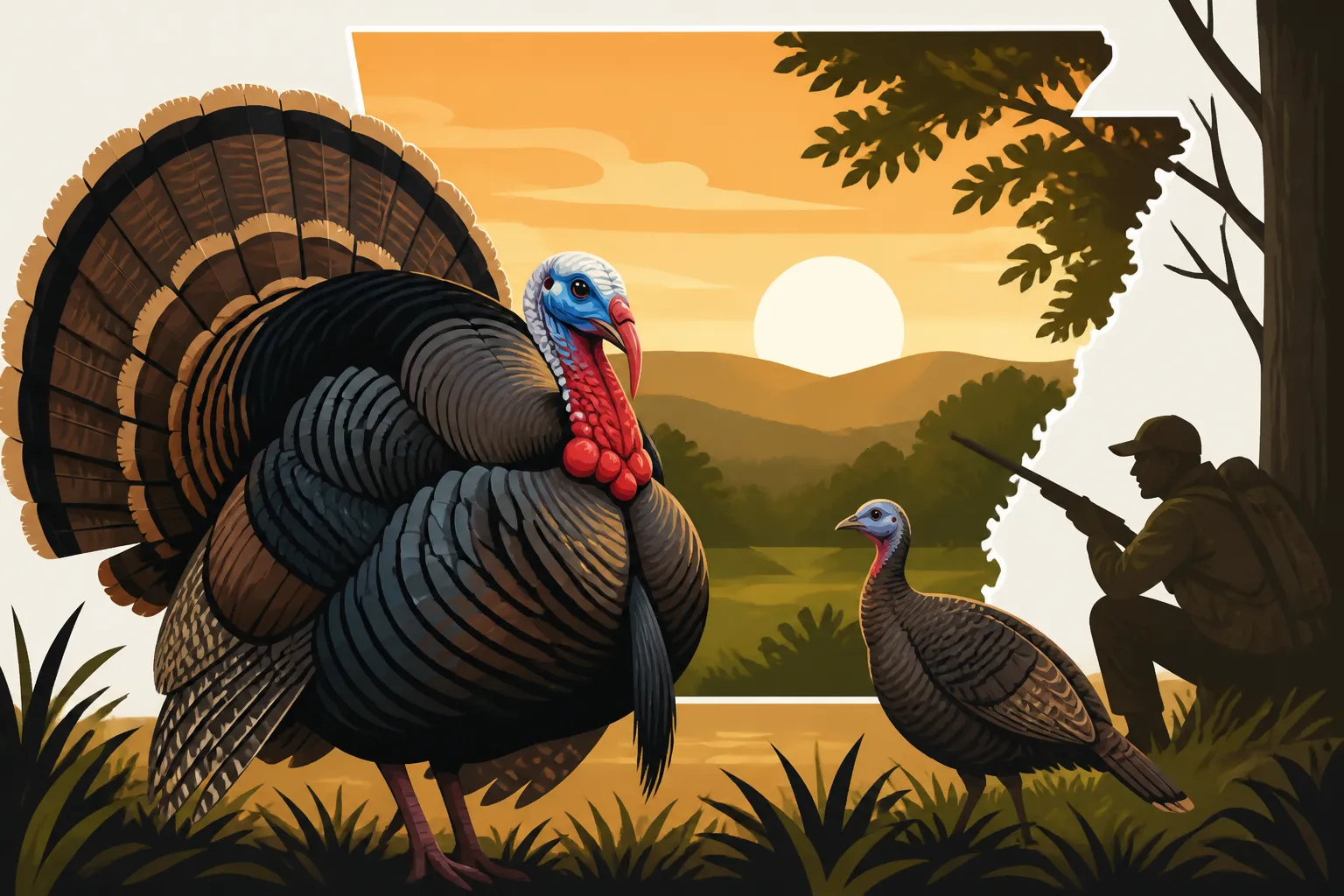
Wild Turkeys in Arkansas
Many hunters in Arkansas have felt the sting of a quiet spring morning, wondering where all the wild turkeys have gone. The truth is, wild turkey populations have faced significant challenges across much of their historic range, and Arkansas is no exception. This comprehensive guide aims to peel back the layers of frustration and provide a deep dive into the state of wild turkeys in Arkansas, exploring everything from their historical presence and population dynamics to the critical factors influencing their numbers, habitat needs, and the management efforts underway.
Understanding Arkansas Wild Turkey Populations
It's no secret that the sight and sound of wild turkeys are treasured by hunters and wildlife enthusiasts alike. However, anyone who has spent time in the Arkansas woods over the past few decades has likely noticed a shift in the prevalence of these magnificent birds. Understanding the trajectory of Arkansas's wild turkey populations requires looking back at their historical journey and examining the data that tells us where we stand today.
Historical Context and Decline
Arkansas, once known as a stronghold for wild turkeys, saw its populations plummet dramatically in the early 20th century due to unregulated hunting and widespread habitat destruction. By the 1930s and 40s, wild turkeys were virtually absent from large parts of the state, driven to near extirpation. Thankfully, dedicated restoration efforts by the Arkansas Game and Fish Commission (AGFC) in the mid-20th century, primarily through trap-and-transfer programs, brought them back from the brink. It was a conservation success story, with turkey numbers soaring and expanding into new territories. For many years, hunters enjoyed robust seasons.
However, over the last 15-20 years, a concerning trend has emerged, marking what many refer to as the "second decline." Hunters have shared anecdotal evidence of fewer birds, quieter woods, and harder hunting. This decline isn't unique to Arkansas; it's a phenomenon observed in many southeastern states, pointing to complex, multi-faceted issues that are proving difficult to untangle. This downturn in numbers can be disheartening, especially for those who remember the booming turkey populations of the 80s and 90s. If you're wondering what Drove the Arkansas Turkey Decline, it's a confluence of factors, not a single culprit.
Current Population Trends and Data
The Arkansas Game and Fish Commission diligently monitors wild turkey populations, collecting data through various means to gauge the health and size of the statewide herd. While official statewide population estimates can be tricky to pin down with absolute certainty, the trend data over the past couple of decades clearly indicates a general decline in overall numbers. Harvest statistics, which are often a proxy for population health, have shown a downward trend in spring turkey kills across much of the state.
For instance, looking at the Arkansas Spring Turkey Harvest Numbers, you can see the ebb and flow, but the overall trajectory has been heading south. This data, combined with hunter observation surveys, paints a picture of a species struggling in certain areas. It's not all doom and gloom everywhere, as some regions fare better than others, but the overall trend has necessitated a hard look at management strategies. Tools like GoHunt can help hunters visualize these trends and understand the varying success rates across different counties or zones.
Interpreting Brood Surveys and Poult-to-Hen Ratios
One of the most critical metrics for assessing wild turkey population health and future trends is through brood surveys, which focus on reproductive success. Each summer, the AGFC conducts these surveys, relying on reports from staff, landowners, and hunters to count hens and the number of poults (young turkeys) they have with them. This information helps calculate the poult-to-hen ratio, a vital indicator of how well turkeys are reproducing and recruiting new birds into the population.
A healthy poult-to-hen ratio typically indicates good survival of young turkeys and a strong potential for population growth. Unfortunately, in many parts of Arkansas, these ratios have been consistently below the levels needed to sustain or grow the population. You can delve into the Arkansas Brood Survey Results to see how these numbers have stacked up year after year. Low poult-to-hen ratios suggest problems with nesting success, poult survival, or both, stemming from issues like predation, adverse weather during the hatch, or poor habitat quality. Understanding Poult-to-Hen Ratios and What They Mean is key to grasping the long-term outlook for Arkansas's wild turkeys.
Arkansas Turkey Subspecies and Distribution
Arkansas is home to one of the most iconic and widespread wild turkey subspecies. Understanding where they live and how their behavior might slightly vary across different regions can be invaluable for hunters and conservationists alike.
The Eastern Wild Turkey
The vast majority, if not all, of Arkansas's wild turkey population belongs to the Eastern Wild Turkey subspecies (Meleagris gallopavo silvestris). These are the quintessential wild turkeys, known for their iridescent bronze and copper plumage, long legs, and distinctive gobble that echoes through the spring woods. Easterns are incredibly adaptable and can thrive in a wide array of habitats, from dense, mature hardwood forests to pine plantations and agricultural edges.
They are distinguished from other subspecies like the Rio Grande or Osceola by subtle differences in feather coloration (particularly the chestnut tips on tail feathers and tail coverts) and their preferred forested habitats. While they might occasionally interbreed with other subspecies at their range edges, the pure Eastern strain is what you'll encounter predominantly in Arkansas. Their resilience has allowed them to bounce back from historical lows, though current pressures are testing that adaptability once again.
Geographic Range Across the State
Wild turkeys, specifically the Eastern subspecies, are found across most of Arkansas where suitable habitat exists. However, their density and health vary significantly by ecoregion. The mountainous regions of the Ozarks and Ouachitas in the northern and western parts of the state historically held, and continue to hold, strong turkey populations due to their vast expanses of hardwood forests. These areas offer excellent roosting habitat, abundant mast crops (acorns, hickory nuts), and sufficient cover.
Moving into the Delta region, eastern Arkansas presents a different picture. While the vast agricultural fields dominate, remnants of bottomland hardwood forests along rivers and bayous provide crucial turkey habitat. Populations here can be more fragmented and localized, often relying on these timber blocks for survival. The Gulf Coastal Plain in southern Arkansas, characterized by pine forests and mixed pine-hardwood stands, also supports turkeys, though densities may differ from the mountains. For more detailed information on their presence and density, you can often find maps that illustrate the Arkansas Turkey Subspecies and Range.
Differences in Turkey Behavior by Region
Just as human cultures adapt to their environments, so do wild turkeys, exhibiting subtle behavioral differences depending on their specific regional habitat. In the rugged terrains of the Ozarks and Ouachitas, turkeys often have extensive home ranges, traversing steep ridges and hollows in search of food and mates. Their calling behavior might be more expansive, echoing far, and their travel patterns dictated by topography and mast availability. Hunters pursuing turkeys in these areas often rely on tactics like still-hunting, glassing open areas, or aggressive run-and-gun setups to cover ground and locate birds. Successfully Calling Arkansas Gobblers in the Ozarks often requires understanding how sound travels in elevation changes.
Conversely, turkeys in the Delta's fragmented woodlands and river bottoms might exhibit smaller home ranges, more concentrated around available timber blocks. Their movements may be more predictable, following treelines, ditches, or slough edges. In areas with large agricultural fields, they might spend more time feeding in open fields, retreating to timber for roosting and security. In pine plantations and mixed forests, their behavior might be influenced by logging activity and the availability of clearcuts, which can offer important brooding habitat. Hunting in these areas might involve setting up on the edge of a pine plantation or focusing on interior food sources. Understanding these nuances can greatly improve your success rate, no matter if you're hunting in the Delta or trying Turkey Tactics in Arkansas Pine Plantations.
Key Habitats for Wild Turkeys in Arkansas
Wild turkeys are generalists in terms of diet, but they are quite particular about the structure and diversity of their habitat. For them to thrive, they need a mosaic of different cover types that provide food, water, roosting sites, nesting cover, and escape routes. Arkansas, with its diverse ecoregions, offers a variety of these crucial habitats.
Ozark and Ouachita Mountain Hardwoods
The vast, sprawling hardwood forests of the Ozark and Ouachita Mountains are prime turkey country. These areas are characterized by mature stands of oak, hickory, and other mast-producing trees, which provide a critical food source, especially in the fall and winter. The rugged topography, with its steep ridges and hollows, offers diverse cover and abundant roosting opportunities in tall trees. The understory often includes a mix of brush and younger trees, providing crucial nesting and brooding habitat.
In these mountainous regions, turkeys rely heavily on acorns and other hard mast for energy, especially during colder months. The health of these mast crops directly impacts the overall condition of the birds, their reproductive success, and even their survival rates. Areas with a good mix of mature timber, scattered openings, and clear, flowing streams create an ideal environment. Hunters often find themselves traversing challenging terrain, but the reward of a gobbler echoing through the mountains is unparalleled. This is why you'll often find the Best Arkansas Counties for Turkeys concentrated in these regions.
Delta Woodlands and River Bottoms
While much of the Arkansas Delta is dominated by agriculture, the remaining pockets of bottomland hardwood forests and river bottoms are incredibly important for wild turkeys. These areas, typically found along the Mississippi River, White River, Arkansas River, and their tributaries, are characterized by species like oak, pecan, sweetgum, and cypress. These forests often flood seasonally, creating unique challenges and opportunities for wildlife.
Turkeys in the Delta utilize these timber blocks for roosting, nesting, and finding food sources like acorns, insects, and other plant matter. The proximity to agricultural fields can also provide additional food, though security cover remains paramount. These fragmented habitats make turkeys here vulnerable to habitat loss and disturbance. Conservation efforts often focus on preserving and restoring these vital bottomland areas to ensure the long-term survival of Delta turkey populations. Hunters here learn to navigate water and thick undergrowth, often setting up along timber edges bordering fields.
Pine Plantations and Mixed Forests
Southern and central Arkansas, particularly within the Gulf Coastal Plain, are characterized by extensive pine plantations and mixed pine-hardwood forests. While dense, single-age pine stands offer limited value to turkeys, well-managed pine forests with prescribed burns, thinning, and clearcuts can be excellent turkey habitat. Prescribed fire, in particular, helps to open up the understory, promote native grasses and forbs (which provide food and insect forage for poults), and improve overall habitat structure.
Mixed forests, with a blend of pine and hardwoods, offer the best of both worlds, providing mast, cover, and diverse plant communities. Early successional habitats, created by clearcuts or timber thinning, are absolutely vital for young poults, offering abundant insects for protein and dense cover from predators. Hunters often find that Turkey Tactics in Arkansas Pine Plantations involve understanding the timber rotation, targeting edges where different age classes of timber meet, or focusing on areas that have recently been burned. Even GoHunt's mapping tools can help identify suitable timber types and land management activities beneficial to turkeys.
Factors Affecting Turkey Health and Numbers
Wild turkey populations are incredibly sensitive to environmental changes. While habitat availability is paramount, a multitude of other factors, both natural and human-induced, play significant roles in their overall health and population trends. It’s a complex web where a weakness in one area can cascade and impact the entire system.
Habitat Loss and Fragmentation
Despite significant conservation efforts, habitat loss and fragmentation remain one of the most pressing threats to wild turkeys in Arkansas. This isn't just about clear-cutting all forests; it's also about how remaining habitats are broken up. Large, contiguous blocks of diverse habitat are ideal for turkeys, allowing them to move freely, find mates, nest, and access varied food sources without encountering significant barriers.
However, as urbanization, agricultural expansion, and infrastructure development (like new roads or pipelines) advance, these large blocks are often divided into smaller, isolated patches. This "fragmentation" makes turkeys more vulnerable. Smaller patches mean less available nesting cover, fewer secure roosting sites, and increased exposure to predators and human disturbance as turkeys try to traverse open, unprotected areas. This is particularly evident in the Delta, where expansive fields limit the timber turkeys rely on. Ultimately, the cumulative effect means fewer places where turkeys can truly thrive without constant pressure.
Predation and Disease Challenges
Predation is a natural part of any ecosystem, but an imbalance in predator-prey dynamics can significantly impact turkey numbers, especially poult survival. Coyotes, bobcats, raccoons, opossums, and even domestic animals like feral hogs and dogs are all known predators of turkey eggs, poults, and sometimes even adult birds. When poult-to-hen ratios are consistently low, it suggests that nest predation or early poult mortality due to predators might be a significant contributing factor. While there's no silver bullet, understanding predator populations and their dynamics is crucial for turkey management.
Beyond predation, diseases can also wreak havoc on turkey populations. While not as widespread or dramatic as some deer diseases, conditions like Avian Pox or various parasitic infections can weaken birds, reduce their reproductive success, or, in severe cases, cause mortality. For example, some years ago, reports of Avian Pox affecting turkey populations in certain regions were concerning. Wildlife biologists continually monitor for new or emerging diseases that could pose a threat to the state's wild turkey populations, as part of their overall assessment of Arkansas Wildlife Disease Monitoring.
Weather and its Impact on Reproduction
The weather, particularly during crucial nesting and brooding periods, plays an immense and often underappreciated role in turkey population success. A cold, wet spring can be devastating for young poults. Newly hatched turkeys are highly susceptible to hypothermia and pneumonia, and prolonged periods of rain and cold can lead to significant mortality rates. Wet conditions also reduce insect availability, which is a critical protein source for rapidly growing poults.
Conversely, a warm, dry spring generally bodes well for a strong hatch and high poult survival. Good weather ensures ample insect populations, allows poults to dry quickly after hatching, and enables hens to forage more effectively with their broods. The impact of Weather in the Weeks After the Hatch can literally make or break a turkey season several years down the line, as those poults represent the future breeding stock. Climate patterns, including more frequent extreme weather events, are a growing concern for long-term turkey population stability.
Arkansas Turkey Management and Conservation Efforts
Recognizing the challenges facing wild turkeys, the Arkansas Game and Fish Commission (AGFC) and various conservation partners are actively engaged in management and conservation efforts designed to stabilize and ideally increase turkey populations across the state. These efforts are often multifaceted, combining scientific research with on-the-ground habitat work and thoughtful regulation.
Role of the Arkansas Game and Fish Commission AGFC
The AGFC is the primary agency responsible for managing wild turkeys in Arkansas. Their role is broad, encompassing everything from setting hunting seasons and bag limits to conducting scientific research, implementing habitat improvement projects, and educating the public. They employ wildlife biologists who specialize in turkey management, using data from brood surveys, harvest reports, and field observations to make informed decisions. When you look at the Arkansas Turkey Population Estimate, for example, it's the AGFC's work behind those numbers.
The commission regularly reviews hunting regulations, often adjusting season lengths or bag limits in response to population trends. For instance, the recent decision to ban bearded hen harvest and shorten the season in some zones was a direct result of concerns over declining reproductive success and the desire to protect breeding hens. Their decisions are based on the best available science, often trying to balance hunter opportunity with the long-term health of the turkey population.
Habitat Improvement Programs
Habitat is the cornerstone of healthy turkey populations, and the AGFC, along with partners like the National Wild Turkey Federation (NWTF) and private landowners, invests heavily in habitat improvement programs. These initiatives aim to create and enhance the diverse mosaic of habitats that turkeys need throughout their life cycle. One of the most effective tools is prescribed fire, which is used to reduce dense undergrowth, promote native grasses and forbs, and improve forage and brooding cover in pine and mixed forests.
Other efforts include timber stand improvement, which involves thinning trees to promote mast production in hardwoods, and creating early successional habitats through controlled clearcuts or brush hogging. In the Delta, programs focus on protecting and restoring bottomland hardwoods, often through reforestation or wetland restoration projects. These habitat projects are not just confined to public lands; the AGFC also works with private landowners, providing technical assistance and resources to implement turkey-friendly habitat practices on their property. This collaborative approach is vital, as much of Arkansas's potential turkey habitat is privately owned.
Research and Monitoring Initiatives
Effective wildlife management hinges on sound scientific data. The AGFC continually conducts various research and monitoring initiatives to better understand Arkansas's wild turkey populations. Beyond the annual brood surveys mentioned earlier, these efforts include banding and telemetry studies where turkeys are fitted with transmitters to track their movements, nesting success, and survival rates. This data provides invaluable insights into habitat use, reasons for mortality, and the effectiveness of management strategies.
They also analyze hunter harvest data, looking at trends in age, sex, and weight of harvested birds, which can offer clues about population dynamics and buck age structure under the Three-Point Rule's impact on deer. Through these rigorous scientific approaches, including partnerships with universities and national organizations, the AGFC strives to gather the most accurate and up-to-date information. This commitment to research allows them to adapt management strategies to evolving conditions and ensure that decisions are based on data, not just anecdote.
Hunting Wild Turkeys in Arkansas: Seasons, Limits, and Zones
For many Arkansans, spring means chasing wild turkeys. It's a tradition steeped in the renewal of nature, the challenge of the hunt, and the thrill of a gobbler responding to a call. But before you hit the woods, it's absolutely crucial to understand the regulations that govern turkey hunting in the Natural State. These rules are in place not just for fair chase, but also for the conservation of the species.
Understanding Arkansas Spring Turkey Season Dates
The spring turkey season is a highly anticipated event for hunters across Arkansas. The season dates can vary slightly year to year, and it’s critical to consult the most current AGFC hunting regulations booklet or website well in advance. Generally, the season typically opens in early to mid-April and runs for a few weeks, usually concluding by early May.
However, Arkansas often implements different opening and closing dates for various zones, aiming to manage hunting pressure and align with regional turkey breeding cycles. You’ll want to pay close attention to the Arkansas Spring Turkey Zones map to ensure you’re hunting within the correct dates for your specific location. There's also a special youth hunt weekend that usually precedes the general statewide opener, giving younger hunters an exclusive opportunity to get out in the woods. Always double-check these dates before making your plans, as enforcement is strict.
Bag and Daily Limits by Zone
Knowing your bag limits is just as important as knowing the season dates. Arkansas has specific regulations on how many turkeys you can harvest per season and per day. Historically, the statewide limit has allowed for a certain number of gobblers per season. However, with recent population declines, the AGFC has made adjustments to be more conservative.
Currently, the Arkansas Turkey Bag and Daily Limits are generally set at one legal gobbler per day, with a total seasonal limit that can vary by zone, often around two gobblers for the entire spring season. A "legal gobbler" typically means a bird with a visible beard. The AGFC has also implemented rules to prohibit the harvest of bearded hens, a measure intended to protect breeding females and aid in population recovery. These limits are subject to change, so always verify them in the current regulations. Using resources like GoHunt or the AGFC's interactive maps can help you clearly identify the limits for your specific hunting area.
Special Considerations for Youth Hunters
The AGFC strongly supports youth hunting, recognizing it as essential for passing on hunting traditions and conservation ethics. To encourage youth participation, Arkansas offers dedicated Youth Turkey Hunt Weekends that precede the general statewide opener. These weekends provide a fantastic opportunity for young hunters (typically 15 years old and younger) to experience turkey hunting with less pressure and direct supervision from an adult mentor.
During these youth hunts, participants are generally allowed to harvest one legal gobbler. While the youth may be the shooter, they must be accompanied by an adult who is at least 18 years old and holds a valid hunting license (unless exempt). The adult may not hunt themselves during the youth hunt weekend. This creates a focused, educational, and often memorable experience for the next generation of Arkansas hunters. It's a testament to the AGFC's commitment to fostering new hunters and ensuring the future of outdoor sports.
Ethical Hunting Practices and Regulations
Hunting wild turkeys is a privilege that comes with significant responsibilities. Ethical conduct and strict adherence to regulations are paramount, ensuring not only personal safety but also the welfare of the turkey population and the positive public perception of hunting. Ignoring these principles undermines the sport for everyone.
Calling Arkansas Gobblers Responsibly
The art of calling a gobbler into range is one of the most thrilling aspects of turkey hunting. However, it requires responsibility and respect for the game. One key aspect of ethical calling is identifying your target properly. Never shoot at a sound or movement without positively identifying it as a legal gobbler. This means seeing the head, neck, and ideally the beard before taking a shot. In the heat of the moment, it's easy to get excited, but patience is a hunter's best friend.
Additionally, be aware of other hunters. If you're using aggressive calling tactics, particularly during popular periods or on public land, always assume there might be another hunter in the vicinity. Avoid getting into "calling duels" with other hunters. Setting Up Against a White Oak or other large tree for concealment is crucial, but also for providing a solid backdrop that stops any errant shots. Ethical calling is about enticing a turkey, not endangering yourself or others, and ensuring a clean, humane harvest. If you're Hunting Gobblers in the Late Morning, be prepared for them to be less vocal and require more subtle tactics.
Safety and Hunter Orange Requirements
Safety should always be the top priority on any hunt, and turkey hunting is no exception. Hunter orange requirements in Arkansas are critical, particularly during modern gun deer seasons when turkeys may also be in season in some areas. However, during the dedicated spring turkey season, there are often specific rules regarding hunter orange. While generally not required while stationary and actively hunting turkeys (due to their keen eyesight), it is often required to be worn while moving to and from your hunting location. Always check the current Arkansas Hunter Orange Requirements in the AGFC regulations.
Beyond hunter orange, other safety measures are vital. Always know your target and what's beyond it. Never place your gun against a tree or a blind where the muzzle is pointed in an unsafe direction. When working with other hunters, maintain clear communication about positions and shooting lanes. It’s also wise to use a full camouflage pattern that breaks up your outline effectively, whether you're performing a Run-and-Gun on Arkansas Public Land or sitting in a blind. The AGFC also offers comprehensive hunter education courses, and understanding the Arkansas Hunter Education Age Requirement is the first step for many new hunters.
Why Arkansas Bans Bearded Hen Harvest
A significant regulation implemented by the AGFC, and a crucial aspect of ethical turkey hunting in Arkansas, is the ban on harvesting bearded hens. This rule, which you can read more about in Why Arkansas Bans Bearded Hen Harvest, is a direct response to the documented decline in turkey populations, particularly concerning reproductive success. While some hens naturally grow beards, they are still vital for reproduction. Every hen is a potential contributor to the next generation of turkeys, and removing them from the breeding population, even if they have a beard, further hinders recovery efforts.
By focusing harvest strictly on gobblers (males), the AGFC aims to maximize the reproductive potential of the remaining hen population. Gobblers, while important for breeding, are polygamous and can breed with multiple hens, meaning their removal has less of a direct impact on the overall population's ability to reproduce, especially when numbers are low. This regulation is a critical conservation measure, designed to give Arkansas's wild turkey populations the best chance to rebound and thrive for future generations of hunters.
The Future of Arkansas Wild Turkeys
The narrative of wild turkeys in Arkansas has always been one of ebb and flow, from abundance to near disappearance, and then a strong rebound. Today, we stand at another pivotal moment, facing new challenges that demand ongoing commitment and adaptation. The future of these magnificent birds depends on a collaborative effort between wildlife managers, landowners, and hunters.
Ongoing Challenges for the Species
Despite dedicated efforts, wild turkeys in Arkansas continue to face a gauntlet of challenges that collectively contribute to their current struggles. Habitat quality, while improved in some areas, remains a concern, especially the lack of high-quality nesting and brooding cover crucial for poult survival. The pervasive issue of increased predation pressure, particularly from opportunistic mesocarnivores like coyotes and raccoons, continues to put a strain on turkey recruitment rates.
Furthermore, changing weather patterns, including more frequent and intense rainfall events during critical nesting periods, can significantly depress annual hatches. Human factors like increased recreational pressure on public lands, illegal poaching, and the spread of certain diseases, though monitored, also add to the complexity. There’s no single, easy fix, and addressing these intertwined issues requires a sustained, adaptive management approach and continuous monitoring to understand how each challenge impacts the Arkansas Turkey Population Estimate.
Conservation Outlook and Hunter Involvement
While the challenges are real, the conservation outlook for Arkansas's wild turkeys is not without hope. The AGFC, along with partners like the National Wild Turkey Federation (NWTF), remains deeply committed to the species' recovery. Their adaptive management strategies, based on ongoing research and data from efforts like the Arkansas Brood Survey Results, are constantly refined to address the most pressing issues. The focus on protecting hens, improving habitat through prescribed fire and timber management, and educating landowners are all positive steps.
Crucially, the active involvement of hunters is indispensable. Hunters are the primary funding source for wildlife conservation through license fees and excise taxes on equipment. Beyond financial contributions, active hunter participation in brood surveys, reporting observed issues, and advocating for sound wildlife management are vital. Joining organizations like the NWTF, attending AGFC public meetings, and practicing ethical hunting are all ways hunters can directly contribute to ensuring healthy turkey populations for generations to come.
Impact of Hunter Education and Public Awareness
The long-term health of Arkansas's wild turkeys, and indeed all wildlife, hinges significantly on public awareness and hunter education. Educating both hunters and non-hunters about the ecological role of turkeys, the challenges they face, and the importance of conservation is paramount. Hunter education courses, like those required to meet the Arkansas Hunter Education Age Requirement, instill not only safety protocols but also a deep understanding of wildlife biology, ethical hunting practices, and the principles of conservation.
For the broader public, understanding the value of diverse habitats, the impact of land use decisions, and the benefits of responsible wildlife management fosters a supportive environment for conservation initiatives. As more people, whether they hunt or not, appreciate the natural heritage that wild turkeys represent, there's a greater collective will to protect their habitats and ensure their future. Continued engagement and education are the cornerstones upon which the future of Arkansas's wild turkeys will be built.
Arkansas Wild Turkey Season Overview
To help visualize the general structure of the Arkansas wild turkey season, here's a simplified overview. Always refer to the official AGFC regulations for the most current and detailed information, as dates and limits can change annually.
| Category | General Description (Always Check AGFC for Current Rules) |
|---|---|
| Season Type | Spring Gobbler Season (Fall season often closed or very limited) |
| Typical Season Dates | Mid-April to Early May (Varies by zone, includes youth weekend) |
| Youth Hunt Weekend | Precedes General Season Opener (15 years & younger) |
| Legal Game | Bearded Turkey (Typically means a gobbler) |
| Daily Bag Limit | One legal gobbler |
| Seasonal Bag Limit | One to Two legal gobblers (Varies by zone, check regulations) |
| Bearded Hens | Prohibited for Harvest |
| Zones | Arkansas is divided into specific turkey zones, each with potentially unique dates and limits. |
| Reporting | All harvested turkeys must be checked with AGFC. |
Disclaimer
Please note: The information provided in this guide is for general informational purposes only and is subject to change. Hunting regulations, seasons, and limits are set by the Arkansas Game and Fish Commission (AGFC) and can be modified annually. Always consult the most current official AGFC hunting regulations booklet or website before engaging in any hunting activities. Adherence to all state and federal laws is the hunter's responsibility.