Mountain Lion Reports in Arkansas
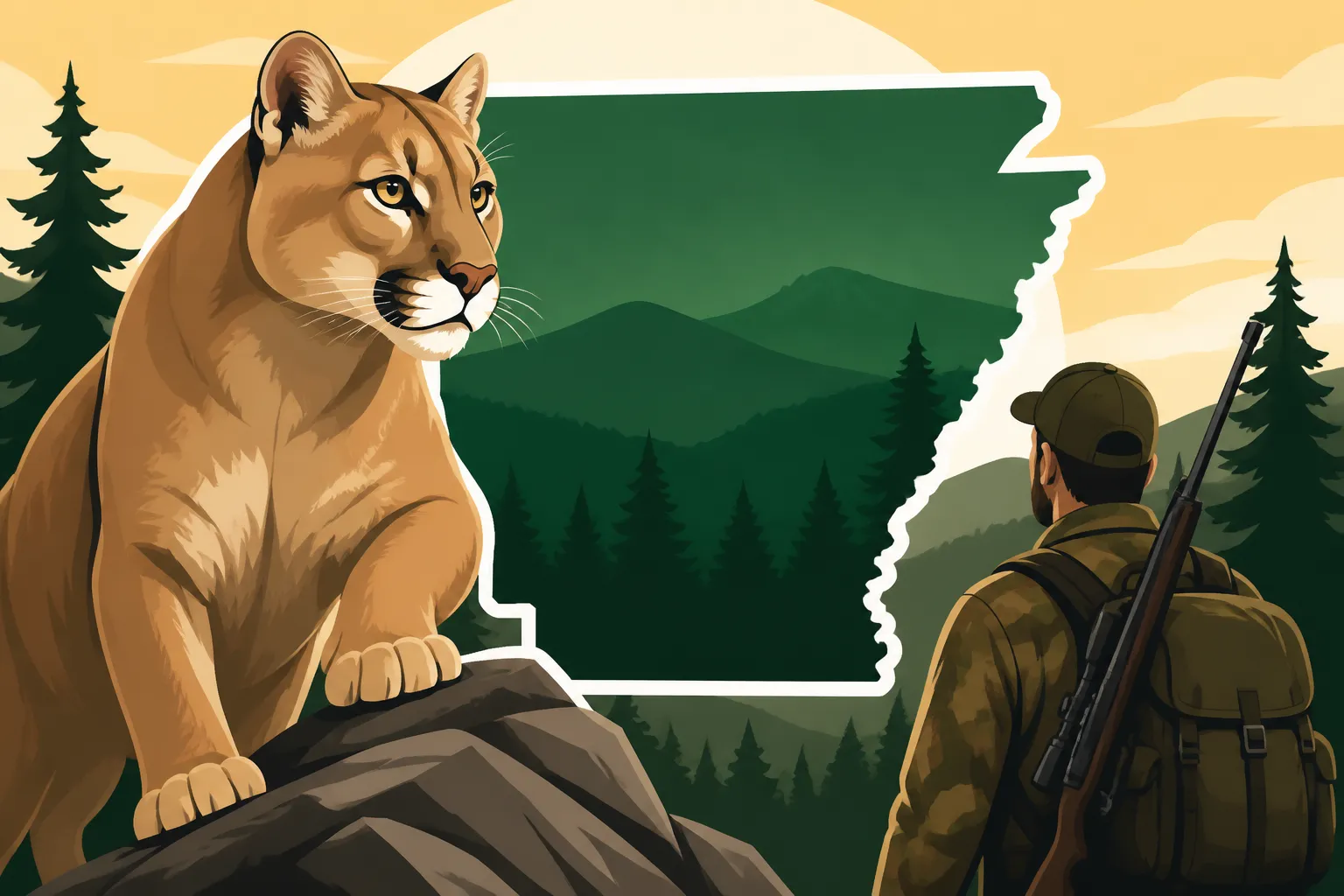
For as long as many of us can remember, whispers of mountain lions roaming the Arkansas woods have circulated, passed down through generations of hunters, hikers, and landowners. It’s a captivating thought, the idea of a top-tier predator silently stalking the very same ridges and river bottoms we explore. This persistent belief often clashes with the official stance, leaving many Arkansans wondering what to believe. This guide will delve into the history, the sightings, the evidence, and the reality of mountain lion reports in our beloved Natural State, offering a clear, empathetic look at this enduring mystery.
The Enduring Mystery of Arkansas Mountain Lions
It’s easy to understand why the idea of mountain lions in Arkansas holds such a powerful grip on our collective imagination. There's something undeniably thrilling about the thought of such a powerful, secretive predator lurking in the dense forests and remote corners of our state. For many, it speaks to a deep desire for truly wild places, and the hope that perhaps some of the wilderness we've lost could still be reclaiming its own. This isn't just a simple rumor; it's a deeply ingrained narrative passed down through families and communities.
Historical Presence and Extirpation
Let's get one thing straight from the start: mountain lions, also known as cougars or pumas, were absolutely native to Arkansas historically. They were once an integral part of the natural ecosystem, apex predators that roamed freely across much of North America, including our beautiful Natural State. Their presence helped maintain a balance in the deer and other prey animal populations, shaping the landscape in ways we can only imagine today. These majestic cats were a true symbol of the wild.
However, as human settlement began to expand rapidly across Arkansas, particularly during the late 19th and early 20th centuries, the fate of the mountain lion took a drastic turn. Their vast habitat was fragmented by agriculture and development, and they were systematically hunted due to fear, a desire to protect livestock, and a general misunderstanding of their role in the ecosystem. This relentless pressure eventually led to their extirpation from Arkansas, meaning they were wiped out from the state, even though populations continued to exist elsewhere. The last known native mountain lion in Arkansas is believed to have been killed in the early 1900s. It's a somber reminder of how quickly human actions can impact a species.
This historical reality is crucial to understanding why the belief in their current presence persists so strongly. People hear stories from their grandparents or local legends of these magnificent cats, and it creates a powerful sense of historical truth. It feels natural to believe that they should still be here, especially given the state's rugged beauty and extensive wilderness. Yet, the challenging truth is that once a species is extirpated, re-establishment is incredibly difficult without direct, intentional reintroduction efforts, and that simply hasn't happened for mountain lions in Arkansas.
The Allure of the Unknown
There's an undeniable allure and mystique surrounding the idea of a large, wild cat silently roaming our forests. For hunters, it adds an extra layer of excitement and ancient wildness to the outdoor experience, a sense that the woods hold truly untamed secrets. For others, it's a testament to the enduring wildness that still exists, even in a state with growing communities and expanding infrastructure. This deep emotional connection often fuels the desire to believe these elusive predators are out there, even when tangible, consistent evidence is scarce. It's a natural human tendency to seek out the extraordinary, and a mountain lion certainly fits that bill.
The sheer vastness of Arkansas's wild spaces – from the challenging terrain of the Ozark National Forest Acreage and the Ouachita Mountains to the sprawling, dense bottomlands of the Delta – provides ample room for imagination to take root. People often reason that such a secretive animal could easily hide in these remote areas, evading detection. It’s not an unreasonable thought on the surface, given how incredibly adept these cats are at remaining unseen in areas where they do thrive. However, maintaining a self-sustaining, breeding population requires far more than just isolated sightings; it demands a significant, contiguous habitat and a healthy population density across a wide area.
Furthermore, the cultural impact of mountain lions in other parts of the country, where they are definitively present and even expanding their range, often spills over into Arkansas. Documentaries, news stories, and even anecdotes from friends who've hunted out West can make the idea of them being here seem perfectly plausible to many. This shared cultural narrative contributes significantly to the persistent reports, as people interpret fleeting glimpses of other animals or unusual tracks through the compelling lens of what they know about mountain lions in truly established territories elsewhere.
Official Stance and Scientific Evidence
This is where the passionate belief of many Arkansans often meets the methodical, evidence-based approach of wildlife management. The difference between a sincere, heartfelt report and scientifically verifiable proof is where the Arkansas Game and Fish Commission (AGFC) draws its conclusions. Their role is to manage wildlife based on hard facts, not just hopeful speculation.
Confirmed Sightings Versus Unconfirmed Reports
The Arkansas Game and Fish Commission (AGFC) maintains a consistent stance: there is no evidence of a breeding population of mountain lions in Arkansas. This isn't to say they ignore every report; quite the opposite, they take citizen reports seriously. However, their position is built upon a fundamental lack of concrete, verifiable evidence gathered consistently over an extended period. A truly confirmed sighting requires indisputable proof that can stand up to scientific scrutiny, such as clear, identifiable photographs, compelling video footage, DNA evidence obtained from scat, hair, or a carcass, or distinct, verifiable tracks observed and documented by trained wildlife biologists.
What typically constitutes an "unconfirmed report" is often a visual sighting by an individual, which, while deeply believed by the observer, is often fleeting, takes place in poor lighting, or is later determined to be a misidentification. Many reported tracks, upon closer inspection by experts, turn out to be from a large bobcat, a domestic dog, or even a coyote. While these personal accounts are genuinely believed by the people who experience them – and we understand the excitement and conviction behind them – they rarely hold up to the rigorous demands of scientific verification. The AGFC investigates these reports when possible, but without that hard, reproducible evidence, they must remain categorized as anecdotal. It’s understandably a frustrating situation for those convinced they saw one, but the AGFC's mandate is to manage the state's wildlife based on established facts, not just compelling stories.
Consider the immense amount of human activity in Arkansas's woods: thousands of hunters are out during seasons for deer, bear, and turkey, along with countless hikers, campers, and outdoor enthusiasts. Many of these individuals are equipped with trail cameras, spotting scopes, and other advanced optics. It would be an extraordinary feat for a thriving, breeding population of such a large, active predator to go completely undetected by irrefutable means over many years. Yet, year after year, definitive evidence of a resident population remains elusive, consistently reinforcing the AGFC's cautious position. When the AGFC collects and publishes data, such as in an Reading an Arkansas Harvest Report, the absence of mountain lion data speaks volumes.
The Role of Transient Animals
Despite the lack of a resident, breeding population, the AGFC has confirmed a very small handful of mountain lion sightings in Arkansas over the past several decades. These are exceptionally rare events, and almost without exception, the animals involved are identified as young, male transient individuals. What does "transient" mean in this context?
Like many large carnivores, young male mountain lions often disperse from their birth territories as they mature, venturing far and wide in search of new hunting grounds, available mates, and unoccupied habitat. They possess an incredible capacity for travel, sometimes covering hundreds, or even thousands, of miles across various states. Most of the confirmed sightings in Arkansas are believed to be these dispersing individuals, likely originating from established populations in states to our west, such as Oklahoma, Texas, or potentially even further afield. These animals are typically passing through the state, exploring new frontiers, rather than establishing permanent residency or forming a breeding group. They are simply trying to find their way in a vast and sometimes unforgiving landscape. If you're using a planning tool like GoHunt to study migration patterns or typical animal ranges, you'd see how far some species can roam.
A notable example occurred some years ago when a mountain lion was definitively caught on a trail camera in the Ouachita National Forest Hunting area. This was one of those rare instances where the proof was undeniable and truly exciting. But even in such cases, wildlife experts concluded it was almost certainly a transient individual, a wanderer, not part of a hidden resident population. These rare, confirmed sightings, while fascinating, often inadvertently fuel the general belief in a widespread population, when in reality, they are isolated exceptions. They do serve as a powerful reminder, though, of how truly vast and wild some of our lands are, allowing even a long-distance traveler to slip through largely unnoticed for a time. For more on the official stance, you can search for information specifically on Are There Breeding Mountain Lions in Arkansas?.
Understanding Mountain Lion Behavior and Habitat
If we're to truly understand whether Arkansas could support a mountain lion population, it’s important to look at what these animals need to survive and thrive. They aren’t just looking for a quiet corner; they have very specific demands from their environment.
Habitat Requirements and Prey Base
To support a healthy, self-sustaining breeding population of mountain lions, a region needs a very specific set of ecological components. First and foremost is vast, contiguous habitat. These cats are highly territorial and require extremely large home ranges, often spanning hundreds of square miles for a single individual, with males typically needing even more expansive territories. They strongly prefer rugged, heavily forested terrain with dense understory and ample cover, which provides ideal ambush opportunities for prey and crucial security from human disturbance. While Arkansas certainly boasts large tracts of wildland, particularly in the Ozarks and Ouachitas, the critical question is whether it's truly contiguous enough and sufficiently free from significant fragmentation by roads, development, and human activity for a large carnivore that needs to roam so widely. When you're trying to understand the terrain and assess potential habitats, a robust mapping tool can be invaluable. Many hunters use platforms like GoHunt to analyze topography, cover, and water sources, which are all factors a mountain lion would consider.
Equally critical is a robust and consistent prey base. Mountain lions are obligate carnivores, and their diet consists primarily of deer. While Arkansas enjoys an abundant Arkansas Deer Population Estimate, especially in some areas like the Delta zones, it’s important to consider if the density and distribution of deer, coupled with suitable cover for hunting, would be consistently sufficient to sustain a breeding population over the long term. While they do prey on smaller animals like raccoons, coyotes, and even porcupines, deer are their primary food source, their bread and butter. The presence of a strong, healthy prey base is absolutely fundamental; without it, any transient lion would likely move on quickly or struggle immensely to survive.
The areas that do have established mountain lion populations in other states often feature much more extreme, isolated, and truly rugged terrain, often far more remote from human development than most areas in Arkansas. While we are blessed with incredible wild places, the level of human presence, even in our more remote corners, might simply be too much of a barrier for a truly wild, breeding population of these sensitive predators. While we've seen amazing wildlife success stories, like the comeback of Arkansas Black Bear Numbers Today, the difference for mountain lions often lies in their specific reproductive rates, more specialized habitat needs, and the historical intensity of human persecution they faced. If they were to return, they would certainly be among the Protected Species in Arkansas Hunting Country.
Elusive Nature and Human Encounters
One of the most defining and fascinating characteristics of mountain lions is their incredibly elusive and secretive nature. They are truly masters of stealth, moving through their environment with an almost ghost-like silence, and actively avoiding human contact whenever possible. This intrinsic shyness is precisely why, even in states with confirmed and thriving populations, many residents will go their entire lives without ever seeing one in the wild. If mountain lions were truly present in Arkansas in any significant number, their inherent stealth would make them incredibly difficult to spot.
When an encounter with a mountain lion does happen, it is almost always fleeting—a quick glimpse of a distinctive long tail disappearing into the brush, or a brief, startling moment of eye contact before the animal vanishes into the shadows. This makes positive and confident identification incredibly difficult for the untrained eye, especially when the moment is unexpected and brief. Furthermore, the human brain, under conditions of surprise or adrenaline, is quite prone to filling in gaps in perception, which can sometimes lead to misidentification. This isn't a criticism of the observer, but rather a simple reality of how our minds process startling events in the wilderness.
Unlike some other large predators, such as bears or even coyotes, which can occasionally become habituated to human presence and might be seen near residential areas or campgrounds, mountain lions are typically far warier and maintain a much greater distance. This deep-seated avoidance of humans is a fundamental survival strategy for them. If a breeding population were present in Arkansas, the sheer number of trail cameras deployed by hunters, the countless hunting blinds set up across the landscape, and the vast numbers of outdoor recreationists would likely yield far more definitive, repeated, and irrefutable evidence of their presence, despite their famously secretive ways. Their extreme elusiveness can certainly explain individual, transient sightings, but it does not adequately explain the consistent absence of a verifiable, resident population.
How to Report a Sighting (and What Happens Next)
If you genuinely believe you've seen a mountain lion in Arkansas, it's natural to feel a mix of excitement, awe, and perhaps a little apprehension. Your first instinct might be to share your incredible story with friends and family, but if you want your report to be taken seriously by the Arkansas Game and Fish Commission (AGFC), gathering concrete evidence is absolutely critical.
Gathering Evidence
A clear photograph or video is considered the gold standard of evidence. Modern smartphones are capable of amazing quality footage, so if it's safe to do so and you have a clear opportunity, try to get a shot or two. Your safety should always be your top priority, so never risk approaching an animal for a picture. But if the animal is at a distance and you have a stable, unobstructed view, snap away. Multiple angles, if possible, are always better, as they provide more context and detail for identification.
Beyond visual evidence, actively look for physical signs like tracks. Mountain lion tracks are distinctive: they are typically larger than a bobcat's, usually showing no claw marks (as their claws are typically retracted, much like a domestic house cat's), and feature a clear, asymmetrical heel pad. They also tend to be quite large, often 3-4 inches across. If you find tracks, measure them if you can, and always place a common object (like a coin, a knife, or a ruler) next to them in your photos for accurate scale. Also, keep an eye out for scat (droppings), which can be analyzed for DNA. Mountain lion scat is often tubular and segmented, frequently containing hair and bone fragments from their prey. Any unusual animal kills, particularly deer that show signs of a large cat's predatory behavior (like being dragged, covered with debris, or having specific feeding patterns), should also be thoroughly documented with photos.
Remember to meticulously note the exact location of your sighting or discovery. GPS coordinates are ideal, but a detailed description including landmarks, road names, and specific features is also incredibly helpful. Make sure to record the precise date and time. The more detailed and specific information you can provide, the more seriously your report will be considered. Wildlife agencies like the AGFC use tools, much like the AGFC Map App Offline you might use for your own hunting, to accurately verify locations and better understand the environmental context of sightings. The quality and specificity of your evidence are what truly differentiate a compelling report from a well-intentioned but unverifiable anecdote. Whether you're using a handheld GPS or a mapping app like GoHunt on your phone, precise location data makes all the difference.
The AGFC Verification Process
Once you’ve gathered all your evidence, the next crucial step is to contact the Arkansas Game and Fish Commission. You can typically reach out to your local wildlife officer, who is often the first point of contact for such reports, or the main AGFC office directly. When you make contact, be prepared to share all the detailed information and evidence you've collected. Don't expect an immediate "aha!" moment or confirmation, but you should absolutely expect them to take your report seriously, especially if you have good, tangible evidence.
The AGFC employs trained biologists and enforcement officers who are skilled in identifying wildlife and interpreting signs in the field. They will meticulously review your photographs, videos, or detailed descriptions of tracks and scat. In some specific cases, if the evidence is particularly compelling or if there’s a pattern of unusual reports in a certain area, they might deploy personnel to the reported location to conduct a thorough on-site investigation. This could involve making plaster casts of tracks, searching for additional signs of activity, or even setting up specialized trail cameras designed for long-term monitoring.
It's important for everyone to understand that the verification process is intentionally rigorous for very good reasons. Confirming the presence of a new, large carnivore population has significant implications for overall wildlife management strategies, public safety, and broader conservation efforts. Therefore, the AGFC requires absolutely irrefutable proof before making any official declarations about a resident mountain lion population. Even if your specific sighting isn't officially confirmed as a mountain lion by the AGFC, your detailed report still contributes to their overall understanding of wildlife activity and can help them track the movements of occasional transient animals or identify areas where misidentifications are common.
Distinguishing Mountain Lions from Other Arkansas Wildlife
It's a common and understandable mistake to misidentify animals, especially when you're caught off guard or get only a fleeting glimpse. In Arkansas, there are several animals that are frequently mistaken for mountain lions, and knowing the key differences can help you make a more accurate assessment.
Bobcat vs. Mountain Lion
This is, by far, the most common source of misidentification when it comes to "large cats" in Arkansas. Bobcats (Lynx rufus) are abundant and widespread throughout the state, thriving in diverse habitats from the rugged terrain of the Hunting Ozark Ridges and Hollows for Deer to the thick timber and river bottoms of the Delta. They are much smaller than mountain lions, typically weighing between 15-30 pounds, though exceptionally large males can sometimes approach 40-50 pounds. This size, especially if seen alone or at a distance, can make them appear quite substantial and lead people to believe they've seen something larger.
The most obvious and reliable distinguishing feature between a bobcat and a mountain lion is the tail. Bobcats, as their name suggests, have a very short, "bobbed" tail, usually only 4-7 inches long. Mountain lions, in stark contrast, possess a very long, thick tail, often measuring half the length of their body, which they use as a crucial counterbalance for agility and balance. This tail typically has a noticeable black tip. Their overall body color also differs: bobcats are usually tawny to reddish-brown with distinct dark spots or streaks, while mountain lions exhibit a much more uniform tan or grayish-brown coloration without prominent spotting. Even the head shape can be a clue: bobcats have a rounder face with sometimes noticeable ear tufts, while a mountain lion's head is proportionally smaller, sleeker, and lacks any ear tufts. When you're out Scouting Arkansas Public Land Before Season, paying close attention to these key differences—size, tail length, and overall body shape—can significantly improve your identification accuracy.
Feral Hogs and Dogs
Beyond bobcats, two other surprising but frequent sources of mountain lion misidentification come from feral hogs and even common domestic dogs. Feral hogs, particularly darker individuals or those seen in poor light conditions or at a distance, can sometimes be mistaken for a large, low-slung, dark cat. Their powerful, often stocky build and frequently secretive movements, especially when rooting through dense undergrowth, can contribute to this confusion. They are definitely a significant and growing problem in Arkansas, with Arkansas Feral Hog Numbers being a major concern for landowners and wildlife managers dueas to the immense ecological and agricultural damage they cause. If you only catch a fleeting glimpse of a dark, fast-moving animal in thick cover, it’s quite easy to jump to conclusions, especially when adrenaline is high.
Large domestic dogs, particularly those with a tan or tawny coat and a long tail, are also very frequently mistaken for mountain lions. This is especially true of breeds like Great Danes, greyhounds, various hound mixes, or certain shepherd breeds that can roam freely. If a dog is running loose in the woods, uncollared and seemingly wild, it can certainly create the strong impression of a wild, large carnivore. Sometimes, a dog caught on a distant trail camera can appear much larger or more mysterious than it truly is. It's not uncommon for people to see a neighbor's dog or a stray and interpret it through the lens of local legends or desires for more exotic wildlife. Learning to accurately identify canine tracks versus feline tracks is an invaluable skill for any outdoors person, as it can often clarify these situations conclusively. Knowing the difference between Coyote and Bobcat Range and a large domestic dog's typical roaming area can also help narrow down possibilities. Many hunters utilize advanced mapping tools like GoHunt to scout and identify known areas for specific game, which can sometimes help reduce misidentifications in the field by understanding typical animal ranges.
| Feature | Mountain Lion | Bobcat | Large Domestic Dog (e.g., Shepherd/Hound) | Feral Hog |
|---|---|---|---|---|
| Weight (Adult) | 100-200 lbs (males), 60-120 lbs (females) | 15-30 lbs (some larger males up to 50 lbs) | 50-100+ lbs, highly variable | 100-300+ lbs, can be very large |
| Length (excl. tail) | 4-6 feet | 2-3 feet | 3-4 feet (nose to rump) | 3-5 feet (nose to rump) |
| Tail | Very long (2-3 ft), thick, often black-tipped, held low | Short (4-7 inches), "bobbed" appearance, often banded | Variable, often long, bushy or thin, usually carried higher | Short, straight, usually thin, often tasseled |
| Color | Uniform tan, tawny, grayish-brown | Tawny to reddish-brown with dark spots/streaks | Highly variable (tan, black, brown, multi-color) | Black, brown, reddish, spotted, coarse hair |
| Tracks | No claw marks visible, asymmetrical heel pad, 3-4" | No claw marks visible, smaller heel pad, 1-2" | Claw marks visible, symmetrical heel pad, often 2-5" | Two prominent hoof prints, dewclaws often visible |
| Head/Ears | Small, sleek head; no ear tufts | Rounder head; prominent ear tufts | Variable, often pointed muzzle, no ear tufts | Long snout, small eyes, often large tusks |
| Vocalization | Screams, growls, purrs (rarely heard by humans) | Growls, hisses, purrs, "meow-like" calls | Barks, howls, whimpers | Grunts, squeals, snorts, woofs |
| Range in AR | Transient individuals only, no breeding population | Widespread throughout Arkansas | Widespread (domestic/feral) | Widespread throughout Arkansas |
Disclaimer
This article is for general informational purposes only and does not constitute professional advice. Laws, prices and regulations vary by location and change over time. Consult a qualified professional for guidance on your specific situation.