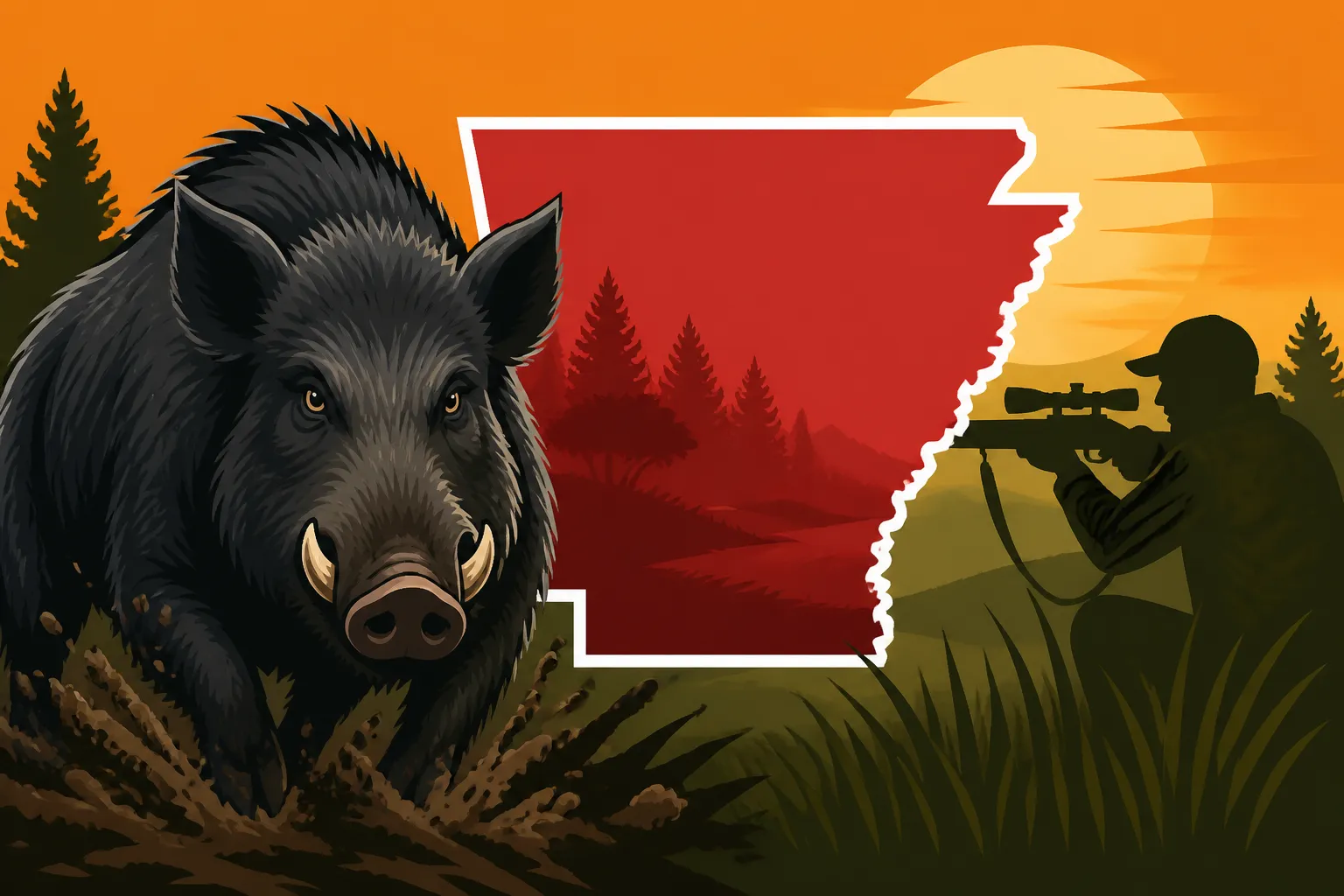
Arkansas Feral Hog Numbers
It's no secret that feral hogs are a massive headache across Arkansas. From tearing up fields to destroying native habitat and competing with our cherished native wildlife, these invasive animals cause an incredible amount of damage. Understanding their sheer numbers, how they multiply so quickly, and what we can actually do about them is key to making a difference. This guide will dive deep into the challenges of tracking feral hog populations, why Arkansas is such a breeding ground for them, and how both state agencies and individual hunters are working to curb their destructive spread.
The Elusive Numbers: Estimating Arkansas's Feral Hog Population
Trying to pin down an exact number of feral hogs in Arkansas is like trying to count raindrops in a thunderstorm – it's practically impossible, and by the time you're done, the number has already changed. These animals are notoriously secretive, highly mobile, and they reproduce at an alarming rate. However, what we do know from observations, reported damage, and trapper harvest data is that their numbers are substantial and widespread across much of the state.
Why Hard Numbers Are So Hard to Come By
Unlike deer or turkey populations, which are estimated through rigorous scientific surveys, harvest data, and hunter observations, feral hog populations don't lend themselves to traditional counting methods. They don't have defined seasons with mandatory check-ins, and their nocturnal habits make aerial surveys less effective than for other species. Many are removed through trapping efforts by private landowners or government agencies, which aren't always comprehensively tallied in a single, public database in real-time. This lack of precise data makes it tough to say "Arkansas has X number of hogs," but it doesn't diminish the severity of the problem.
Imagine trying to track a small, family farm where a few hogs showed up one season. By the next year, that "few" could easily be dozens. Now extrapolate that across hundreds of thousands of acres of diverse habitat—from the Delta's rich agricultural fields to the dense forests of the Ouachita Mountains—and you start to grasp the scale of the challenge. The most consistent indicator of their population isn't a hard number, but rather the ever-increasing reports of damage to crops, timber, and native wildlife habitats. This ongoing challenge is part of The Arkansas Feral Hog Problem.
The Impact of Rapid Reproduction
One of the primary reasons feral hog numbers are so challenging to control and why they rebound so quickly, even after significant removal efforts, is their incredible reproductive capacity. A sow can become reproductively active as early as six months old and can have two litters per year, sometimes even more under ideal conditions. Each litter can range from 4 to 12 piglets, with an average of around 6.
Let's do some quick, scary math. If one sow has just two litters of six piglets each year, and half of those piglets are also sows that become reproductive within the year, the population growth is exponential. In just a couple of years, a small sounder can explode into a massive problem, devastating local ecosystems and agricultural operations. This rapid turnaround means that any control efforts must be consistent, aggressive, and widespread to have a lasting impact. Otherwise, you're constantly fighting an uphill battle where the hogs are simply out-reproducing your best efforts.
Why Arkansas is a Feral Hog Paradise
It’s disheartening to see how well feral hogs thrive here in Arkansas, but when you look at the conditions, it's clear why they've found such a perfect home. Our diverse landscape and mild climate create an ideal environment for them to flourish, contributing to the persistent issue of The Arkansas Feral Hog Problem.
Abundant Food and Water Sources
Arkansas is blessed with incredible natural resources, which unfortunately also serve as an endless buffet for feral hogs. We have vast tracts of hardwood forests, especially in the Ozarks and Ouachitas, that drop tons of acorns and other mast crops every fall. These are high-energy food sources that allow hogs to put on weight and reproduce efficiently. Beyond the natural bounty, our agricultural landscape, particularly in the Delta, provides constant food throughout the year. Fields of corn, soybeans, rice, and even peanuts offer easy foraging, especially after harvest. Hogs will happily move into these fields, rooting up crops, and eating whatever's left behind, causing immense financial losses for farmers.
Couple that with an abundance of water – rivers, creeks, sloughs, and countless farm ponds – and you have all the necessities for survival and expansion. Hogs need water not just for drinking, but also for wallowing to cool down and protect their skin from insects. They'll often create these wallows along creek banks or in muddy fields, further contributing to habitat destruction and water quality issues.
Dense Cover and Lack of Natural Predators
From the thick river bottomlands to the dense pine plantations and overgrown clearcuts, Arkansas offers an incredible amount of heavy cover where feral hogs can hide, raise their young, and evade detection. They are masters of concealment, able to disappear into brush so thick you wouldn't believe anything could get through. This dense vegetation provides safe havens from hunters, trappers, and any potential predators.
And speaking of predators, feral hogs don't really have any significant natural threats here once they reach maturity. Young piglets can fall prey to coyotes or bobcats, but adult hogs are formidable animals with tough hides and sharp tusks. There aren't enough large carnivores in Arkansas to exert any meaningful control over their populations. This lack of predation, combined with their ability to hide effectively, means that human intervention is absolutely critical for managing their numbers.
Mild Winters and Extended Breeding Seasons
Compared to states further north, Arkansas experiences relatively mild winters. This means less stress on the hog population, higher survival rates for piglets, and often, an extended breeding season. In colder climates, harsh winters can naturally reduce hog numbers by making food scarcer and exposing young to extreme conditions. Here, while we do get cold snaps, they are generally not severe enough or long-lasting enough to significantly curb hog reproduction or survival.
The longer, milder growing seasons also mean more consistent food availability, supporting multiple litters throughout the year. This combination of ample resources, minimal predation, and favorable climate creates a perfect storm for feral hog populations to thrive, making them an ongoing challenge for landowners and wildlife managers across the state.
Arkansas's Approach to Feral Hog Management
Given the immense challenges posed by feral hogs, the state of Arkansas, primarily through the Arkansas Game and Fish Commission (AGFC) and in partnership with various federal and local entities, has developed a strategic approach to managing these invasive animals. It's a complex dance between eradication efforts, private landowner assistance, and regulated hunting.
Shifting Focus: From Recreational Hunting to Eradication
For many years, hunting feral hogs was seen as a way to "do your part" and reduce their numbers. While recreational hunting can remove some individual hogs, it often doesn't make a significant dent in the overall population, especially considering their reproductive rate. In fact, some studies suggest that uncoordinated hunting can sometimes disperse sounders, spreading the problem to new areas.
Recognizing this, the AGFC has shifted its primary focus from simply encouraging recreational hunting to a more aggressive, coordinated eradication strategy. This involves trapping as the most effective method for removing entire sounders. The goal is not just to kill a few hogs, but to remove every single hog from an infested area to prevent them from breeding and re-establishing. This strategic shift is crucial for understanding Why Arkansas Restricted Feral Hog Hunting on some public lands, allowing focused, professional eradication efforts.
Collaborative Control Programs
The state’s efforts are often a collaborative endeavor. The AGFC works closely with federal agencies like the USDA's Animal and Plant Health Inspection Service (APHIS) through programs designed to target and eradicate feral hog populations, particularly in agricultural areas and sensitive wildlife habitats. These programs often involve sophisticated trapping techniques, including large corral traps that can capture entire sounders at once.
Private landowners are key players in this effort. The AGFC and USDA-APHIS often provide assistance, expertise, and sometimes even equipment to landowners struggling with hog infestations. This support is vital because feral hogs often operate on private land, where state agencies can't always directly intervene without permission. If you're a landowner dealing with hogs, contacting your local AGFC office or USDA extension agent is a crucial first step.
Regulatory Framework for Hunters
While the state's primary strategy emphasizes trapping and eradication, hunters still play a role. Feral hogs are classified as a nuisance species in Arkansas, meaning they can be hunted year-round, day or night, on private land with landowner permission. There are no bag limits, and hunters are encouraged to remove as many as possible. On public lands, rules can vary. Some WMAs may allow hog hunting during specific deer or bear seasons, while others might restrict it to allow for more controlled eradication efforts by agency personnel. Always check the specific WMA regulations before heading out.
For those venturing onto public land to pursue hogs, tools like Using the AGFC Map Tool and GoHunt can be incredibly helpful for identifying legal hunting areas, understanding access points, and scouting for potential hog sign. They can show boundaries, habitat types, and even topographical features that might indicate hog travel corridors or bedding areas. This information is critical, especially when combining hog hunting with other seasonal pursuits like Scouting Arkansas Public Land Before Season. When hunting private land, knowing Arkansas Trespass and Permission Law is paramount.
What Hunters Can Do About Feral Hogs
As individual hunters, we might not be able to solve the entire feral hog problem ourselves, but we can certainly be part of the solution. Our efforts, when done responsibly and strategically, can contribute to reducing their numbers and mitigating their destructive impact on Arkansas's ecosystems.
Strategic Hunting and Trapping Techniques
For hunters on private land where landowners are eager for hog removal, focused efforts can make a difference. Still-hunting areas where you've seen fresh sign, setting up over known travel routes, or using thermal imaging at night (where legal and with landowner permission) can be effective. Remember, the goal isn't just to shoot a hog, but to eliminate as many as possible from a sounder to prevent them from regrouping and reproducing. Using scent control and approaching quietly can increase your chances of getting multiple shots at a sounder.
Trapping is often touted as the most effective method, especially for removing entire sounders. If you're a landowner or working with one, learning about and implementing corral traps can be highly successful. These traps are designed to catch multiple hogs at once, often baited with corn or fermented grains, and can significantly reduce local populations. Information on trap building and deployment is often available from the AGFC or USDA extension offices. It's important to understand Baiting Rules on Arkansas Public Land if you're considering any such approach.
Utilizing Technology for Success
Modern technology has given hunters and landowners some powerful tools in the fight against feral hogs. Thermal scopes and night vision devices, where legal, can be game-changers for nocturnal hunting. Hogs are most active after dark, and these tools allow you to spot them in conditions where traditional optics would be useless. Just be sure to check Night Hunting Rules for Arkansas Predators as these rules often apply to hogs as well.
Mapping applications like GoHunt and the AGFC's own mapping tools are invaluable for scouting. They allow you to study aerial photos to identify dense cover, water sources, and agricultural fields where hogs might be active. You can mark hog sightings, fresh sign, and travel corridors, helping you pattern their movements. This kind of detailed reconnaissance is just as important for hogs as it is for Reading Aerial Photos for Delta Deer. The more you understand the terrain, the more effective your hunting or trapping efforts will be.
Reporting and Ethical Considerations
One of the most valuable things a hunter can do is report significant hog activity or damage to the AGFC or their local county extension agent. This information helps wildlife managers understand the spread and concentration of hog populations, allowing them to deploy resources more effectively. While it might seem like a small act, collective reporting paints a clearer picture of the statewide problem.
Ethical hunting practices are still paramount when pursuing feral hogs. While they are a nuisance, they are still living creatures. Strive for quick, humane kills. Shot placement is critical, just as it is for deer. And always, always ensure you have proper landowner permission before hunting on private property. This includes understanding and respecting Arkansas Trespass and Permission Law. Your actions as a hunter reflect on the entire hunting community, so setting a good example is essential.
Summary of Feral Hog Characteristics and Management
To wrap up, let's look at some key characteristics of feral hogs that make them such a challenge, and the general approaches taken to manage their populations in Arkansas.
| Characteristic | Impact on Population / Management Challenge | Management Approach in Arkansas |
|---|---|---|
| High Reproduction | Rapid population growth, quick recovery from removals | Focus on removing entire sounders (trapping), sustained pressure |
| Adaptability | Thrive in diverse habitats (forest, agriculture, urban fringes) | Targeted efforts in high-damage areas, landowner assistance |
| Elusive Nature | Hard to count, nocturnal, use dense cover to hide | Use of advanced technology (thermal), coordinated trapping efforts |
| Damaging Behavior | Destroys crops, habitat, competes with native wildlife | Eradication as primary goal, hunter involvement for local reduction |
| Lack of Predators | Population unchecked by natural means | Human intervention (trapping, hunting) is essential |
By understanding these aspects, and by actively participating in responsible hunting and reporting, we can all contribute to easing the burden of feral hogs on our beautiful state. Whether you're hunting in the Ouachitas or the Delta, remember that every hog removed helps protect Arkansas's wildlife and agricultural future.
Disclaimer
This article is for general informational purposes only and does not constitute professional advice. Laws, prices and regulations vary by location and change over time. Consult a qualified professional for guidance on your specific situation.