Baiting Rules on Arkansas Public Land
It’s a tale as old as time for hunters: you're out there, enjoying the natural beauty of Arkansas, and suddenly a nagging thought hits you. "Am I accidentally baiting?" The rules around baiting on public land can feel like a minefield, with subtle distinctions that could mean the difference between a successful hunt and a serious violation. This guide is here to walk you through the nuances of baiting regulations on Arkansas public lands, helping you hunt legally and confidently.
Understanding What "Baiting" Truly Means in Arkansas
Let's face it, the term "baiting" isn't always as straightforward as it sounds. Most of us imagine a big pile of corn under a deer stand, and while that's certainly baiting, the rules in Arkansas go a bit deeper, especially when you're on public land. It’s not just about what you intentionally put out; it’s also about what becomes bait. This distinction is crucial for every hunter, from the seasoned veteran to someone just learning about Arkansas Deer Seasons and Zone Limits.
Defining "Bait" and "Baited Area"
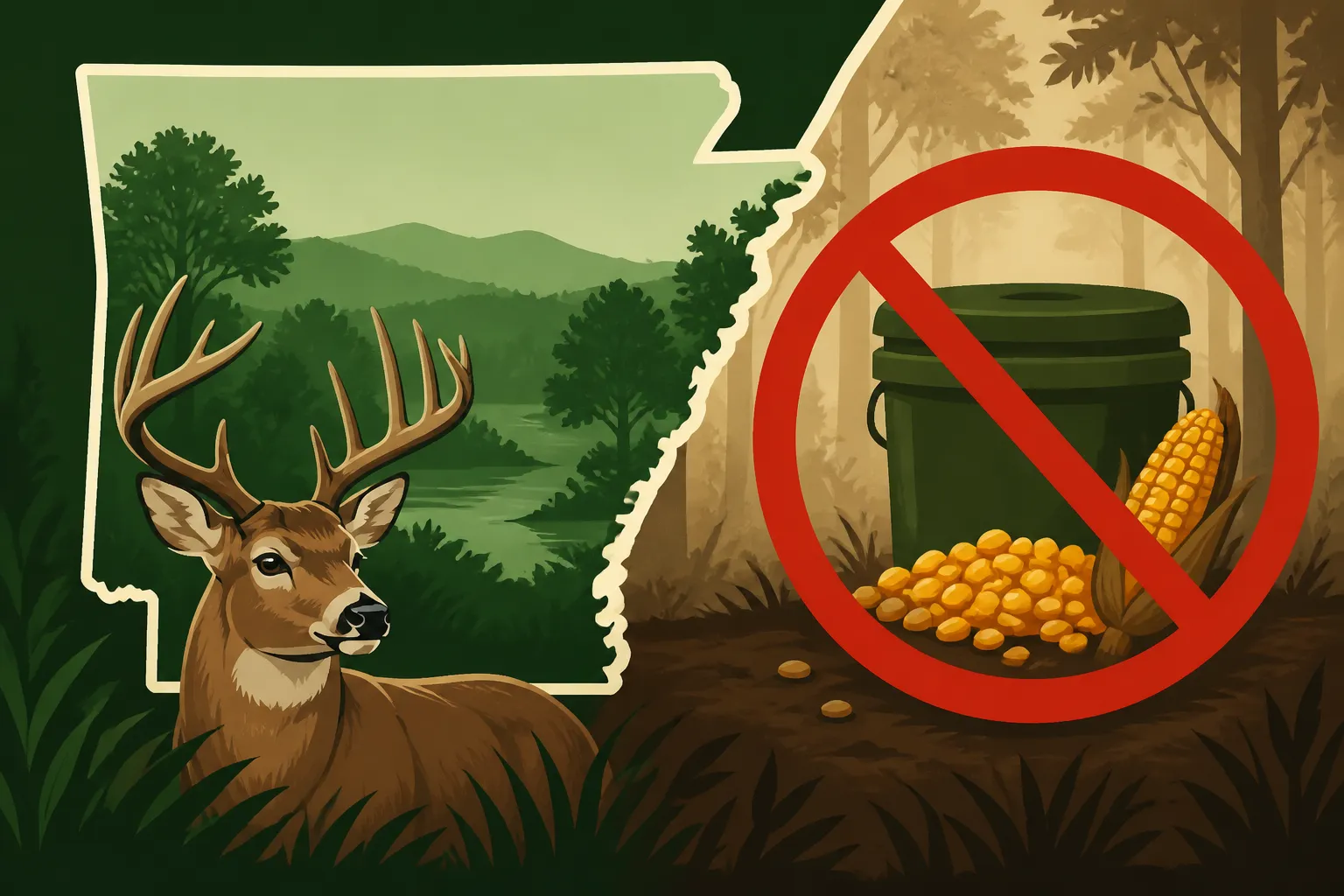
In Arkansas, "bait" is defined broadly. It’s any substance, whether it's food, salt, or mineral, that is used to attract game. This could be corn, rice, sweet potatoes, protein pellets, mineral blocks, or even certain attractant scents if they're food-based. The key is its attractive quality to game animals. Now, a "baited area" is where this gets really interesting. It's not just the spot where the bait is placed. The Arkansas Game and Fish Commission (AGFC) defines a baited area as any area where bait has been placed for the purpose of luring wildlife, and where the game animals could reasonably be expected to be attracted to or feed on that bait. This "reasonable expectation" clause is what often trips hunters up. It means if you hunt near a known baited area, even if you didn't put the bait there, you could still be in violation. The law often assumes that the attractive power of the bait can persist for a certain amount of time, sometimes up to 10 days, even after it's removed or consumed.
Imagine a scenario: You scout a beautiful spot on a Wildlife Management Area (WMA), like those found in Arkansas Wildlife Management Areas, and find a well-worn game trail leading to a clearing. You set up your stand, excited about the prospect. A week later, you learn that someone had dumped a truckload of corn there a month ago, and while most of it is gone, deer are still frequenting the spot, perhaps even digging up scattered remnants. Even if you didn't know about the corn, and didn't put it there, you could potentially be hunting a "baited area" if enough attractive material remains or the animals are conditioned to visit. This is why thorough scouting and understanding the history of a spot are so vital, and why tools like onX Hunt can be invaluable for understanding property boundaries and potential past disturbances.
The "Hunting Over Bait" Distinction
The core of the regulation isn't just about placing bait, but about "hunting over bait." This means engaging in hunting activities (like shooting, attempting to kill, or even attempting to take game) in a baited area. It's about taking advantage of an unnatural attraction. The rule is designed to maintain fair chase principles, ensuring that animals are harvested due to a hunter's skill, knowledge of natural patterns, and ethical pursuit, rather than an artificial lure.
This distinction is why many hunters are hyper-vigilant about anything that might inadvertently attract game. Bird feeders near public land boundaries, spilled lunch scraps, or even remnants from a previous season's hunt (if allowed on private land) can become problematic if not managed correctly. On public land, the simplest rule of thumb is this: if it didn't grow there naturally, and it's attracting game, stay far away. It truly simplifies things to operate under the assumption that nothing artificial should be present if you intend to hunt. This principle extends to understanding natural food sources when Scouting Arkansas Public Land Before Season, ensuring you're keying into genuine patterns, not accidental baiting.
Why Public Lands Have Stricter Baiting Regulations
It might feel frustrating that public land baiting rules are so much stricter than what some folks can do on their private acreage. But there are very good, thoughtful reasons behind these regulations, all aimed at protecting the resource and ensuring a fair experience for everyone. It’s not about making hunting harder; it’s about making it sustainable and equitable.
Promoting Fair Chase and Natural Movement
The concept of fair chase is deeply ingrained in hunting ethics, and Arkansas public land regulations uphold it rigorously. Public lands are open to everyone, and the idea is that success should come from a hunter's effort, skill, and knowledge of wildlife behavior, not from an unfair advantage like bait. When you bait an area, you're essentially short-circuiting an animal's natural foraging patterns. Instead of bucks moving through timber, searching for acorns or browsing on natural vegetation, they're drawn to a concentrated, artificial food source. This can lead to animals becoming habituated to specific spots, making them easier targets for less ethical hunters or those who haven't put in the extensive scouting time.
Imagine two hunters on adjacent tracts of public land. One has spent weeks mapping out deer travel corridors, identifying rub lines and scrapes, and understanding Wind and Thermals in Ouachita Hollows. The other, intentionally or not, sets up near an area that has been repeatedly baited by a third party, drawing deer in. Without strict baiting rules, the second hunter gains an unfair advantage simply by proximity to an unnatural attractant. This undermines the spirit of the hunt and the value of hard-earned scouting. By prohibiting baiting, the AGFC aims to level the playing field, ensuring that all hunters have to rely on their woodsmanship and understanding of the wild, rather than artificial means.
Managing Game Populations and Disease Spread
Beyond fair chase, a critical reason for strict baiting prohibitions on public land is wildlife health and population management. When animals congregate repeatedly at a bait site, several negative outcomes can occur. First, it can artificially inflate local deer densities, making them more susceptible to localized overharvesting in certain areas, even if the overall population is healthy. Second, and perhaps even more concerning, is the increased risk of disease transmission. When deer, turkeys, or other game animals gather around a communal food source, they are much more likely to exchange saliva, urine, and feces. This creates a perfect environment for the rapid spread of infectious diseases.
Chronic Wasting Disease (CWD) is a prime example of why this is a serious concern. Arkansas has CWD in certain zones, and concentrating deer at bait sites can accelerate its spread. CWD prions, which cause the disease, can persist in the soil for years. A deer shedding prions at a bait site can contaminate the area, exposing other deer to the disease long after the original animal has moved on. This risk is amplified on public lands, where monitoring individual bait sites is nearly impossible, and a single contaminated site could have far-reaching consequences for the entire herd. For more on this, you can look into Chronic Wasting Disease in Arkansas. The regulations are a proactive measure to protect the health of Arkansas's wildlife, which ultimately benefits all hunters and the ecosystem.
Navigating Baiting Rules on Arkansas Public Lands vs. Private Land
This is where a lot of the confusion often comes in. The rules aren't uniform across the board in Arkansas, and knowing the difference between public and private land regulations is paramount. Making a mistake here, even an innocent one, can lead to serious legal issues.
The Clear "No Baiting" Rule on Public Ground
Let's make this crystal clear: Baiting is generally prohibited on all Arkansas public hunting lands. This includes Wildlife Management Areas (WMAs), National Forests (like the Ouachita National Forest or Ozark National Forest), National Wildlife Refuges, and Corps of Engineers lands. There are very few, if any, exceptions to this on publicly managed areas. You simply cannot place or hunt over bait on these lands. This rule is non-negotiable and strictly enforced by game wardens.
This means you need to be acutely aware of property lines, which can be tricky when public and private lands abut each other. It’s not enough to think you're on public land, or to assume a fence line marks the boundary. You absolutely need to know. Tools like onX Hunt become indispensable here, showing property boundaries right on your phone, often with ownership details. Before you even set foot in an area you plan to hunt, pull up your app, verify you’re on public ground, and pay close attention to any private property adjacent to it. Even if bait is legally placed on private land, if deer are being drawn from public land to it, or if you are sitting on public land aiming towards that baited private land, you could still be in violation depending on how game wardens interpret the situation and specific rules regarding proximity to baited areas. The safest bet is to maintain significant distance from any known or suspected baited private land if you are hunting public ground. For details on Arkansas WMA Rules and Permits, always check the AGFC regulations specific to the area you're visiting.
Exceptions and Considerations for Private Land
While baiting is largely a no-go on public lands, the rules can be different on private land in Arkansas. On privately owned lands, hunters are generally allowed to bait for deer and other game, provided they have permission from the landowner and adhere to any specific local ordinances or statewide restrictions. However, this isn't a blanket free-for-all. Even on private land, there are crucial caveats, particularly concerning CWD. In counties designated as Chronic Wasting Disease (CWD) Management Zones, there are often specific restrictions or outright prohibitions on the use of bait or supplemental feeding, even on private land. This is directly related to the disease management strategies discussed earlier, aiming to prevent the congregation of deer and reduce the risk of CWD transmission.
It's absolutely essential to consult the latest AGFC regulations for the specific county you're hunting in, especially if it's a CWD zone. These rules can change annually based on disease prevalence and research. Never assume that because you own the land, you can do whatever you want. Wildlife is a public resource, and its management falls under the state. So, while your buddy on his farm might be legally scattering corn (outside of a CWD zone), that doesn't mean you can replicate that activity across the fence on public land. The onus is always on the hunter to know and follow the rules for their specific location and game species.
Avoiding Accidental Baiting Situations and Staying Compliant
The last thing any ethical hunter wants is to accidentally violate baiting regulations. It's easy to dismiss these situations as "never happening," but the truth is, an innocent mistake or a lack of awareness can lead to big problems. Understanding how accidental baiting can occur is your first line of defense.
Scouting and Due Diligence Before Your Hunt
Before you ever set up a stand or start your hunt, you need to conduct thorough due diligence. This goes beyond just finding game sign; it means actively looking for signs of bait. Pay close attention to the ground, especially in areas that look like natural travel corridors or feeding zones. Are there unusual concentrations of feed like corn, sweet potatoes, or mineral dust? Is there an old mineral block that's largely dissolved but still attracting deer? These are red flags. Remember that the "reasonable expectation" clause means that even if the bait is old or mostly gone, if animals are still frequenting the spot because of its past presence, you could be hunting a baited area.
This is where your scouting kit becomes invaluable. A good GPS app like onX Hunt or a detailed map from the AGFC's tool Using the AGFC Map Tool helps you understand property boundaries, land ownership, and even past logging activities that might have left behind debris. Walk the area thoroughly. If you find anything suspicious, even if you didn't put it there, the best course of action is to move. Find a new spot, preferably one where you can be absolutely certain there's no artificial attractant. Document what you find (photos, GPS coordinates) if you feel it's a persistent issue or a potential violation by others, and consider reporting it to the AGFC. Don't risk your license and reputation for a questionable spot.
When Human Activities Can Create a "Baited Area"
It’s not always obvious, intentional bait piles that create problems. Everyday human activities can inadvertently lead to a "baited area" if you’re not careful. Think about where you eat your lunch in the woods. Do you leave apple cores, banana peels, or sandwich crusts scattered around? While these might seem innocuous, they can still attract game, especially if left consistently. Deer are opportunistic feeders, and they will investigate anything new and potentially edible. Over time, an area where lunch scraps are regularly left could become an attractant.
Here’s a practical table summarizing common scenarios and how to avoid them:
| Scenario | Potential Baiting Issue | How to Avoid It on Public Land |
|---|---|---|
| Dropped Food Scraps | Apple cores, sandwich crusts, candy wrappers containing food. | Pack out all food waste. Leave no trace. |
| Hunting Camp Kitchen | Discarded cooking grease, food waste, or uneaten portions. | Practice meticulous camp hygiene. Pack out all garbage. Dispose of greywater far from hunting areas. |
| Non-Target Baits | Spilled birdseed (from a bird feeder), pet food bowls. | Ensure no such attractants are near your hunting spot or public land boundary. |
| "Accidental" Spills | Corn or minerals spilled from a private land feed bag. | Double-check your gear. If you see a spill, avoid the area. |
| Mineral/Salt Blocks | Even if dissolved, residual minerals can attract deer. | Avoid areas with past mineral block use, as the effect can linger. |
| Past Logging Debris | Leftover tree tops or stumps from certain species can act as browse. | Stick to natural foraging patterns rather than concentrated logging sites. |
Even activities like establishing a food plot on your own adjacent private land, while legal there (outside CWD zones), can draw animals from public land onto your property, potentially impacting the natural flow of game for others. The spirit of the public land rules is to ensure a natural hunting experience. By understanding these subtle ways baiting can occur, and by committing to a "leave no trace" mentality, you can enjoy your hunting trip without the constant worry of breaking the rules. Always remember that the responsibility falls on you, the hunter, to ensure you are compliant with all AGFC regulations. Good tools and good habits are your best friends in the woods.
Disclaimer
This article is for general informational purposes only and does not constitute professional advice. Laws, prices and regulations vary by location and change over time. Consult a qualified professional for guidance on your specific situation.