Trail Camera Rules on Arkansas WMAs
There's nothing quite like the anticipation of checking a trail camera, hoping to find that mature buck or a pattern of movement that will lead to success. But when you're hunting Arkansas Wildlife Management Areas (WMAs), that excitement can quickly turn to anxiety if you're not absolutely clear on the rules surrounding trail cameras. The last thing any of us wants is a fine or, worse, to inadvertently contribute to an ethical breach. This guide is here to untangle the specifics of trail camera use on Arkansas public lands, helping you scout smarter and stay on the right side of the regulations.
Understanding the Basics: Why Rules Exist for Trail Cameras on Public Land
It’s easy to get frustrated with all the regulations surrounding hunting, especially when you feel like you're just trying to gain an edge. But when it comes to public land and tools like trail cameras, these rules aren't just there to make our lives harder. They're carefully crafted to balance hunter opportunity, wildlife management, and the overall quality of the hunting experience for everyone. Imagine a WMA where every tree has a half-dozen cameras on it, some left year-round. It wouldn't feel much like wild hunting anymore, would it?
The Ethical Dilemma: Fair Chase and Pressure
One of the core tenets of ethical hunting is "fair chase." While technology has advanced dramatically, the spirit of fair chase suggests that hunters should not have an unfair advantage over the game animals they pursue. Trail cameras, especially when used improperly or excessively, can push the boundaries of this concept. When a camera is left out indefinitely, constantly monitoring game movements, it removes some of the traditional challenge of scouting and woodsmanship. This can also lead to over-pressuring specific animals or areas, as hunters might congregate in spots identified by camera intel.
Think about it from the perspective of another hunter. If you put in hours of scouting, walking miles, and learning the terrain, only to find someone else has twenty cameras blanketing the area, effectively doing all the work for them, it can feel pretty disheartening. These regulations aim to preserve the natural feel of the hunt and ensure that while technology can assist, it doesn't entirely replace the skill and effort involved in finding and pursuing game. The goal is to encourage active scouting and engagement with the environment, rather than a passive collection of data from a distance.
Property Rights and Public Land Management
While WMAs are public, they are still managed properties, and the Arkansas Game and Fish Commission (AGFC) has a responsibility to maintain them for a variety of uses, not just hunting. This includes ensuring the health of the timber, protecting natural habitats, and preventing litter or damage. Unattended equipment, like trail cameras, can become problematic. They can be forgotten, fall apart, or even become targets for theft or vandalism, leading to discarded plastics and batteries in the woods. Blinds and Stands on Arkansas Public Land rules often share similar considerations.
Furthermore, these rules help prevent a "land grab" mentality. If everyone could claim a spot by leaving cameras out year-round, it could create de facto private territories on public land, which goes against the very principle of public access. Regulations ensure that these shared resources remain accessible and enjoyable for all users, whether they're hunters, hikers, birdwatchers, or photographers. The AGFC needs to manage potential conflicts and ensure that equipment doesn't interfere with other management activities like timber harvests or prescribed burns.
Specific Arkansas WMA Trail Camera Regulations
Navigating the specifics of WMA regulations can feel like reading a legal document, but it's essential for anyone using trail cameras. The AGFC is pretty clear about what's allowed and what's not, and ignorance of the rules is never a valid excuse. These rules are put in place for a reason: to create a level playing field, minimize pressure on game, and protect the integrity of the public land experience.
Attachment, Identification, and Retrieval
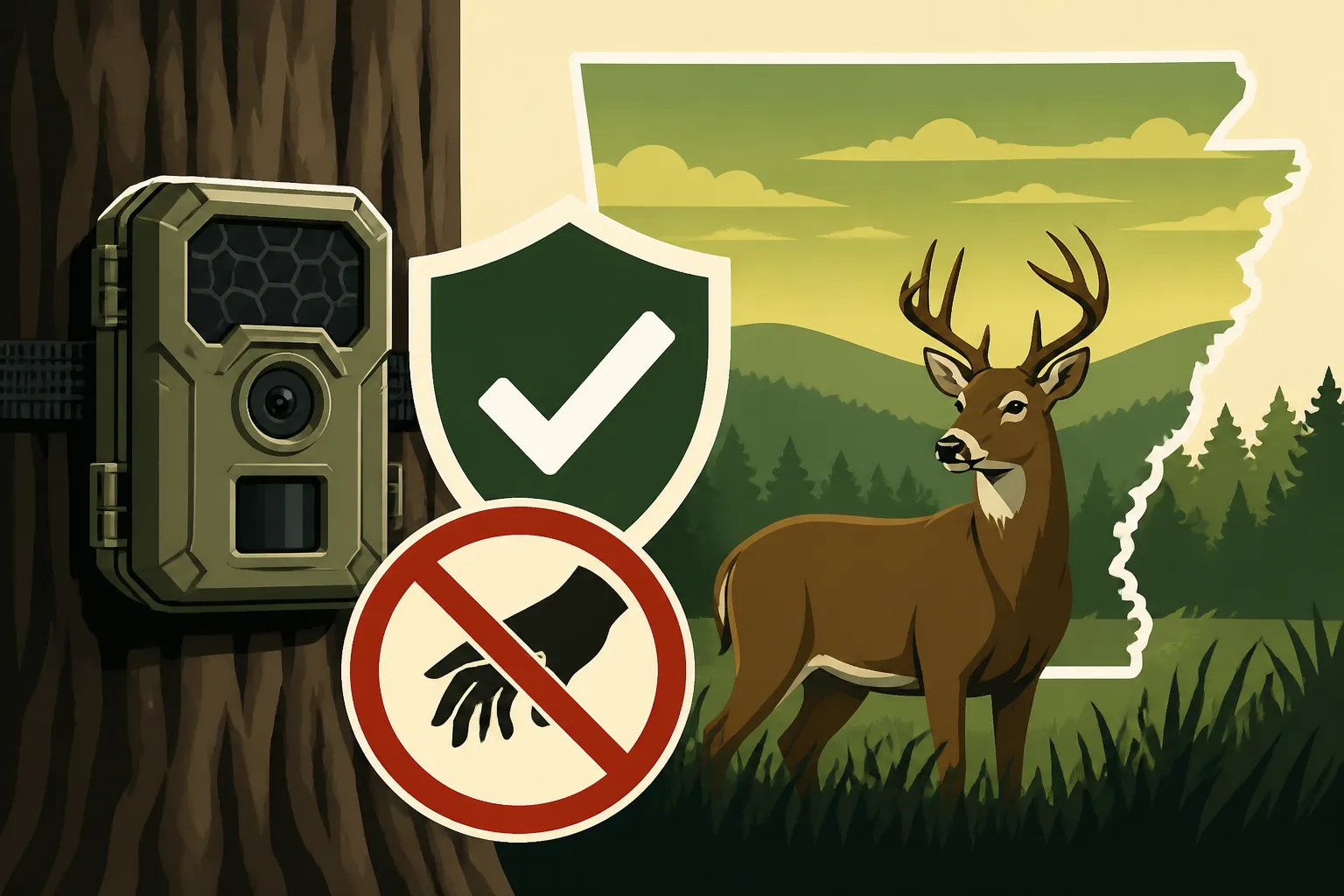
The most critical aspects of trail camera use on Arkansas WMAs revolve around how you attach them, how they're identified, and when you can take them down. This is where most hunters run into trouble if they're not careful. The general rule is that cameras must be clearly marked with your AGFC ID number or name and address. This ensures that if a camera is found or if there's an issue, the owner can be identified. Attaching them with non-damaging methods is also key; no nails or screws that will harm trees.
| Rule Category | Specific Requirement | Why It Matters |
|---|---|---|
| Identification | Must have your AGFC ID number or name and address permanently affixed. | Ensures accountability and allows wildlife officers to identify owners. |
| Attachment | Must be attached in a non-damaging manner (e.g., straps, bungee cords). No nails, screws, or anything that pierces the tree. | Protects public timber resources and prevents unnecessary damage to trees. |
| Retrieval | Must be removed from the WMA by specific dates, typically coinciding with the end of deer hunting season or within a short window after. Check specific WMA regulations, as these can vary. | Prevents equipment from being left indefinitely, reduces litter, and discourages year-round monitoring. |
| Location | Generally, cameras can be placed on any WMA where hunting is allowed, unless otherwise specified. | Provides fair access but respects specific WMA rules or closures. |
This table provides a general overview, but it's absolutely vital to check the specific regulations for the WMA you plan to hunt. The AGFC's website and their annual hunting guide are your best friends here. A WMA might have different rules than the general statewide regulations, or even specific zones within a WMA could have unique directives. For example, some WMAs might have earlier removal dates due to specific management activities or spring turkey season considerations. You don't want to get caught off guard because you assumed one WMA's rules applied to all. Make it a habit to look up the exact rules for your chosen spot every year.
Prohibited Uses and Enforcement
Beyond the basics of how and when to place your cameras, there are also explicit prohibitions you need to be aware of. Using a camera in conjunction with baiting is a big no-no, especially in areas where baiting is already illegal. Baiting on public land, particularly WMAs, is generally forbidden, and using a camera to monitor such a setup would compound the violation. Baiting Rules on Arkansas Public Land are very strict.
Enforcement of these rules falls to the AGFC wildlife officers. They patrol WMAs regularly and are trained to spot violations. If a camera is found without proper identification, attached in a damaging way, or left out past the retrieval date, it can be confiscated. Fines can also be levied, and repeated offenses could lead to more severe penalties. Wildlife officers aren't out there trying to ruin your hunt, but they are serious about protecting public resources and ensuring fair play. They often leave a note if a camera is improperly placed before confiscating it, giving you a chance to rectify the situation, but that courtesy isn't guaranteed. Always assume they know the rules and expect you to know them too.
Best Practices and Avoiding Common Mistakes
So, you've got the rules down, but how do you actually use trail cameras effectively and ethically on Arkansas WMAs? It's about being smart, respectful, and leveraging modern tools to enhance your scouting, not replace it. Many hunters find that a blend of traditional woodsmanship and strategic camera placement yields the best results without infringing on rules or other hunters.
Scouting Smart Without Breaking Rules
The real value of a trail camera on public land comes from using it as an enhancement to your scouting, not as a substitute. Instead of just plopping a camera on the first rub line you see, use your initial legwork to identify areas of genuine interest. Look for natural funnels, pinch points, bedding areas, and feeding zones away from heavy human traffic. These are often the places where a camera can confirm patterns you've already observed or suggest new travel routes.
When placing a camera, think about its purpose. Are you trying to identify a specific buck, learn travel times, or gauge deer density? Adjust your camera settings accordingly. A camera set to take photos every 30 seconds after detecting motion might capture too much redundant data, while one set for a 5-minute delay might miss crucial secondary movements. Pay attention to game trails, creek crossings, and edges of clearcuts – places where deer are naturally funneled. You might find useful information on Hunting Arkansas Cutovers and Clearcuts or Reading an Ozark Bench for Deer to help identify good camera spots.
Remember, less is often more on public land. You don't need a dozen cameras to get good intel. A few strategically placed cameras, moved periodically based on the information they provide, can be far more effective than cluttering the woods with too many. And always be mindful of other hunters. If you find a spot that another hunter is clearly using (e.g., an established stand, well-worn access path), it's good etiquette to give that area a wide berth with your camera placement. We're all out there trying to enjoy the same resource.
Leveraging Mapping Tools for Success
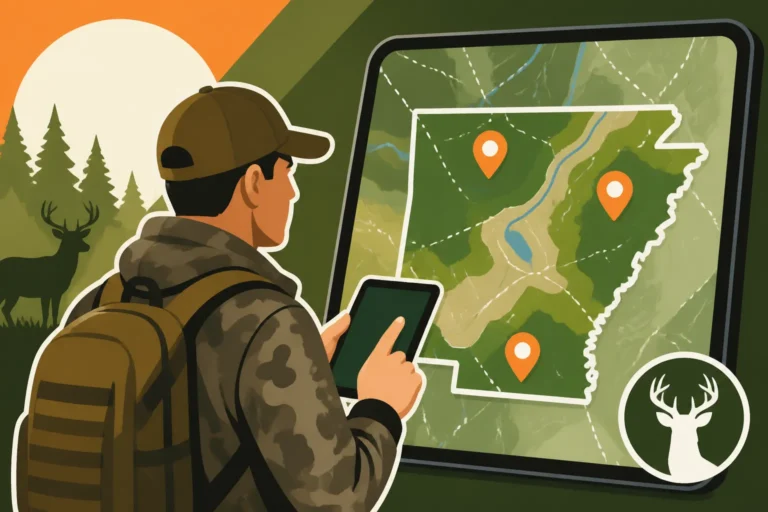
Modern mapping applications are absolute game-changers for public land hunters, and they can play a huge role in ethical and effective trail camera use. Tools like onX Hunt and GoHunt provide invaluable layers that show public vs. private land boundaries, WMA borders, topography, aerial imagery, and even historic fire data. Before you even set foot in the woods, you can use these apps to identify potential camera locations that are both productive and fully within WMA boundaries.
Imagine you're looking at a satellite image. You spot a narrow strip of WMA land wedged between two large private timber tracts. This could be a natural travel corridor for deer moving between properties, making it an excellent candidate for a camera placement. With onX Hunt, you can precisely mark where you intend to put your camera, record its location, and even track the path you take to access it. This helps ensure you're not trespassing and makes retrieval much easier. Using the AGFC Map Tool is also a great resource for identifying WMA boundaries and access points.
These apps also help you plan your access routes to camera sites. On public land, minimizing your disturbance is crucial. By knowing the terrain and property lines through mapping tools, you can plan an approach that keeps you out of known bedding areas and away from other hunters. When it's time to retrieve your camera, the exact coordinates saved in your app will guide you directly to it, preventing wasted time and unnecessary walking through prime hunting areas. Using these tools enhances your ability to follow the rules, protects your equipment, and ultimately makes you a more efficient and respectful public land hunter.
| Feature | Benefit for Trail Camera Use | Relevant Tool Example |
|---|---|---|
| Property Lines | Ensures cameras are placed only on public WMA land, avoiding trespass. | onX Hunt, GoHunt |
| Aerial Imagery | Identifies potential pinch points, funnels, and cover for strategic placement. | onX Hunt, GoHunt |
| Topographical Maps | Helps plan low-impact access routes and predict game movement patterns. | onX Hunt, GoHunt |
| Waypoint Marking | Records exact camera locations for easy retrieval and tracking intel. | onX Hunt, GoHunt |
| WMA Boundaries | Clearly delineates the specific WMA you are hunting and its regulations. | AGFC Map Tool, onX Hunt |
Always make sure your mapping app is up to date, and if you're venturing into areas with poor cell service, download offline maps before you go. This way, you're never guessing about property lines or camera locations. A little preparation with these digital tools can save you a lot of headaches and ensure your trail camera use on Arkansas WMAs is both productive and compliant.
Disclaimer
This article is for general informational purposes only and does not constitute professional advice. Laws, prices and regulations vary by location and change over time. Consult a qualified professional for guidance on your specific situation.