Sylamore WMA Deer and Turkey Hunting
For many hunters, the Sylamore Wildlife Management Area represents the quintessential challenge of Ozark hunting: rugged terrain, steep climbs, and game that often seems to vanish into thin air. If you've ever felt the burn in your thighs after a long hike up an Ozark ridge, only to find the deer sign you expected wasn't quite there, you know the unique frustration and reward this country offers. This guide will walk you through what to expect when deer and turkey hunting in Sylamore, offering practical advice to help you navigate its beautiful yet demanding landscape and increase your chances of success.
Understanding Sylamore WMA's Unique Terrain for Deer and Turkey
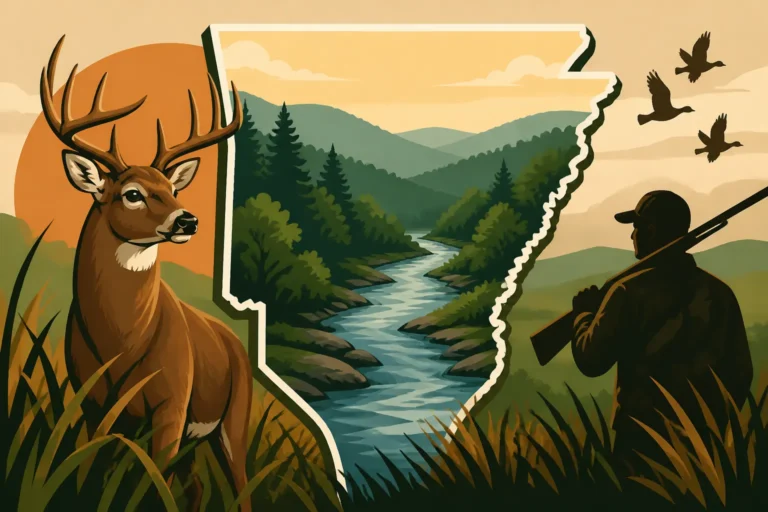
The Sylamore Wildlife Management Area, nestled within the Ozark National Forest, isn't your average hunting ground. It's a vast expanse of steep, timbered hillsides, deep hollows, and rocky creek bottoms that demand respect and preparation. This isn't flatland hunting where you glass across a bean field; this is an immersive experience where the terrain itself is a major player in how you hunt and how game moves. Understanding these natural features is the first step toward unlocking success in Sylamore.
Ozark Features and Their Impact on Game Movement
Sylamore's topography is defined by its dramatic elevation changes. You'll encounter sharp ridges, often running for miles, punctuated by steep, winding hollows and drainages that funnel down to larger creeks or rivers. This creates distinct travel corridors and bedding areas for deer and turkeys. Deer, for instance, often prefer to travel along benches or just below the ridgetops, using these contours to move with less effort and stay out of sight. They'll drop into hollows to access water or escape pressure, and then climb the opposite side using subtle trails you'll need to learn to spot.
Turkeys, on the other hand, love those high ridges for roosting, especially pines that offer good vantage points. In the mornings, they'll pitch down into hollows or onto benches to feed, often working their way back up as the day progresses. The sheer number of creek crossings, rock bluffs, and dense undergrowth in many hollows can make tracking game or even just walking quite challenging. It’s crucial to anticipate these movements, understanding that a deer isn't going to climb a sheer bluff face if there's an easier path just a few yards over. Hunting Ozark Ridges and Hollows for Deer can offer more insights into how these features shape deer behavior.
Timber Types and Food Sources
The dominant timber in Sylamore is a mixed hardwood forest, with various oak species, hickory, and other mast-producing trees being prevalent. These hardwoods are the lifeblood for both deer and turkey, providing critical food sources, especially acorns in the fall. During a good mast year, deer and turkeys will concentrate heavily in areas with abundant white oak, red oak, and black oak acorns. These food sources aren't evenly distributed, though, and you'll often find pockets of heavy mast production that can draw game from a wide area.
Interspersed with the hardwoods, especially on drier slopes and ridgetops, you'll find stands of pine. While pines don't offer the direct food benefit of oaks, they provide excellent thermal cover in winter and visual security year-round. Deer will often bed in dense pine thickets, particularly if there's a good food source nearby. Turkeys also use pines for roosting and will scratch for insects and seeds in pine straw. Paying attention to these different timber types, especially when scouting for fresh mast crops, is key. Look for recent cuttings or disturbed ground under oaks, which are clear signs that deer or turkeys have been feeding heavily there.
Deer Hunting Strategies in Sylamore WMA
Hunting deer in Sylamore WMA requires a different mindset than hunting in agricultural areas or managed timberland. It's a hunt of perseverance, meticulous scouting, and often, sheer physical effort. But the rewards – a hard-earned Ozark buck in its natural element – are truly special.
Scouting for Success in Rugged Country
Before you even think about setting foot in the woods with your bow or rifle, thorough scouting is non-negotiable in Sylamore. This is where modern tools really shine. A good mapping application, like onX Hunt, can become your best friend. Start by studying aerial imagery to identify potential travel corridors, ridgetops, saddles, and benches that might not be obvious on a topographic map alone. Look for pinch points where natural features funnel deer movement. I often trace potential routes on my phone, visualizing how deer might move between feeding areas, bedding cover, and water sources.
Once you have some areas flagged on your map, it's time for boots on the ground. Be prepared to hike, and hike a lot. Focus on finding fresh sign: rubs, scrapes, tracks, and droppings. Identify primary food sources – especially acorn flats – and look for trails leading to and from them. Don't be afraid to venture off the beaten path; many hunters stick to the trails, and the deer in Sylamore will quickly learn to avoid those high-traffic areas. The beauty of places like Sylamore is that if you're willing to put in the work and go a little deeper, you can often find unpressured pockets of deer, even on public land. Scouting Arkansas Public Land Before Season offers broader tips for this.
Tactics for Archery and Modern Gun Seasons
During archery season, which often starts in September, the heat can be a real factor in Arkansas. Deer movement will be concentrated during the first and last hours of daylight, so early mornings and late evenings are prime times. Focus your efforts near reliable water sources or prime food plots if you can find them. Treestand setups need to be carefully chosen, not just for concealment, but also for comfortable entry and exit without spooking deer. Because of the steep terrain, deer often approach from unexpected angles, so a stand that offers a wide field of view and multiple shooting lanes is beneficial. Remember to consider wind and thermals; in these hollows, thermals will typically rise in the morning and fall in the evening, sometimes swirling unpredictably in the mid-day. Bowhunting Arkansas in September Heat has more on early season challenges.
When modern gun season arrives, often around November, deer activity picks up considerably as the rut approaches. This is when rattling and grunting can become effective. Don't be afraid to be aggressive with your calls, especially in this big country where sound travels. Still-hunting, moving slowly and deliberately through the woods, can also be highly effective. The key is to pick apart the terrain, using the ridges and hollows to your advantage, pausing frequently to glass and listen. Two-person drives on smaller tracts of public land can also be productive, with one hunter pushing and another strategically positioned on a known escape route or pinch point. Modern Gun Tactics on Arkansas Public Land provides more general advice on this.
Navigating the Challenges of Public Land Pressure
Sylamore, like much of the Ozark National Forest, sees its fair share of hunting pressure, especially during the opening weekends of modern gun season. This pressure can push deer into the densest cover or onto adjacent private lands. To counter this, you need to think like a deer that’s trying to avoid hunters. That often means going deeper, climbing higher, or dropping into the nastiest, steepest hollows that most hunters won’t bother with.
Another strategy is to hunt mid-week, after the initial weekend rush has subsided. Deer tend to settle back into more regular patterns once the heavy pressure eases. Consider hunting areas that require more physical effort to access; these spots often hold more mature, less-pressured bucks. Using a topo map or a tool like GoHunt to find those hard-to-reach areas, marked by steep contours or minimal road access, can be a game-changer. These might involve significant hikes or bushwhacking, but they often yield the best results for hunters willing to put in the sweat equity.
Turkey Hunting Strategies in Sylamore WMA
Spring turkey season in Sylamore is an experience unto itself. The echoes of gobblers across the hollows are unforgettable, but these birds are often wary and require skillful calling and woodsmanship.
Locating Roosted Birds in Ozark Hollows
The first step to turkey hunting success in Sylamore is locating those birds on the roost. This often means being in the woods well before daylight, listening intently from a high point as the Ozarks wake up. Gobblers love to roost high on the ridges, especially in mature pine or hardwood stands that give them a commanding view of the surrounding terrain. As the sun begins to lighten the sky, listen for those first tree yelps and, of course, the thunderous gobble.
Once you hear a bird, you need to quickly and quietly determine its location relative to your position. Use the contours of the land to your advantage. Try to get as close as safely possible without being detected, ideally positioning yourself on the same ridge or a parallel ridge at a similar elevation, ready for him to pitch down. Remember that turkeys have excellent eyesight, so stealth is paramount. Setting up against a large tree that breaks up your silhouette is critical. Calling an Arkansas Gobbler Off the Roost details tactics for those first morning setups.
Run-and-Gun vs. Setting Up
Sylamore's varied terrain lends itself to both run-and-gun and more static ambush strategies, depending on the situation. If you're hearing multiple gobblers from different locations, or if a bird is "hung up" and not committing, a run-and-gun approach might be your best bet. This involves moving quickly and quietly, stopping every few hundred yards to call and listen, trying to provoke a shock gobble or locate an interested bird. This is where physical fitness really pays off, as you might cover miles of rugged country in pursuit of a hot gobbler.
Alternatively, if you've pinpointed a gobbler on the roost or know of a preferred strutting area, a more patient setup can be effective. This involves getting into position early, perhaps with a decoy, and waiting for the bird to come to you. This strategy works well if you can anticipate the bird's likely travel path from the roost to a feeding or strutting area. Sometimes, especially with pressured birds, setting up and making soft calls can entice a wary gobbler that wouldn't commit to aggressive calling. Decoy placement for pressured birds also matters greatly; often, less is more, or a single hen decoy can be just enough to draw attention without raising suspicion. Turkey Tactics in Arkansas Pine Plantations offers specific terrain-based tips that apply here.
Dealing with Pressure and Timid Gobblers
Like deer, turkeys in Sylamore, especially on easily accessible public land, can become educated quickly. Early in the season, gobblers might be more responsive, but as pressure mounts, they become more wary and "hang up" out of range. If you find birds are gobbling well but won't come in, it's time to adjust. Try softer, more realistic calling. Less is often more with pressured birds. Instead of aggressive cutting and yelping, try soft tree yelps, clucks, and purrs, mimicking a contented hen.
Another tactic is to use the terrain to your advantage. If a gobbler is hung up across a hollow, try to circle around and get on the same ridge or bench as him, closing the distance while staying out of sight. Remember that these birds often expect hens to come to them. Sometimes, simply changing your position by 50 yards can make all the difference. Or, if you know a bird is roosted on a certain ridge, you can try to get ahead of his likely travel route for the morning, setting up where he expects to go, not necessarily where he is when he gobbles.
Essential Gear and Planning for a Sylamore Hunt
Hunting Sylamore WMA is a demanding endeavor, both physically and mentally. Having the right gear and a solid plan isn't just about comfort; it's about safety and increasing your odds of success in this rugged environment.
Navigation and Safety in Remote Areas
Getting lost in the Ozarks isn't just an inconvenience; it can be dangerous, especially with the steep terrain and limited cell service in many areas. A reliable GPS unit or a smartphone with downloaded offline maps is absolutely critical. As mentioned, onX Hunt is an excellent tool for this, allowing you to mark waypoints, track your path, and clearly see property boundaries, which is invaluable on public land that borders private tracts. GoHunt also offers robust mapping capabilities for pre-hunt scouting and in-field navigation, helping you plan your routes and avoid unexpected obstacles. Don't rely solely on your phone; a traditional compass and a paper map of the area are essential backups.
Beyond navigation, consider your personal safety. Let someone know exactly where you're going and when you expect to return. Carry a whistle, a fire starter, and a basic first-aid kit. Water is paramount; dehydration can set in quickly when climbing these hills. A water filter or purification tablets are smart additions to your pack, allowing you to safely replenish from Sylamore's many creeks. Given the remote nature of some parts of the WMA, a personal locator beacon or satellite messenger can offer true peace of mind, allowing you to call for help even without cell signal. Reading an Ozark Bench for Deer is an excellent companion to understanding terrain from a safety and navigation perspective.
Packing for Ozark Hunts
Your packing list for Sylamore needs to account for the physical demands and unpredictable weather. Layering your clothing is key. Even if it's cool in the morning, climbing those hills will generate heat, and you'll want to shed layers. Durable, breathable fabrics are your friend. Good quality, broken-in hiking boots with excellent ankle support are non-negotiable; you'll be traversing uneven, rocky, and often slippery terrain. A comfortable, well-fitting pack is also essential for carrying your gear, water, and if you're lucky, game meat out of a steep hollow.
When considering game retrieval, think ahead. If you're hunting deer, how will you get it out of a deep ravine? A deer cart might be useless in much of Sylamore's truly rugged terrain, meaning you might have to quarter the animal and pack it out. This requires having the right tools – a sharp knife, game bags, and perhaps a small saw. Be prepared for any contingency, from changing weather to a successful harvest, and your Sylamore experience will be much smoother. Getting a Deer Out of an Ozark Hollow is a good read for practical advice.
Here's a quick comparison of the distinct characteristics of hunting deer versus turkey in Sylamore:
| Feature | Deer Hunting in Sylamore WMA | Turkey Hunting in Sylamore WMA |
|---|---|---|
| Primary Goal | Locating and ambushing individual deer or small groups. | Locating and calling in vocal, social birds. |
| Movement | Often silent and stealthy, following terrain contours and subtle trails. | More vocal, with distinct roosting, flying down, and strutting patterns. |
| Scouting Focus | Food sources (acorns), fresh sign (rubs, scrapes), bedding cover, pinch points. | Roosting locations (tall trees on ridges), strut zones, dusting bowls. |
| Calling Style | Primarily grunt calls, rattling, snort-wheezes (seasonal). | Yelps, clucks, purrs, cutting (mimicking hens, shock gobbling). |
| Physical Demand | High, often long hikes, difficult game retrieval. | Very high, fast movement ("run-and-gun") common, steep climbs. |
| Key Challenge | Identifying subtle deer sign, navigating dense cover, public pressure. | Dealing with "hung up" birds, pinpointing exact locations, wary birds. |
| Best Tools | onX Hunt, binoculars, rangefinder, comfortable boots, durable pack. | Locator calls, slate/mouth calls, binoculars, lightweight chair, decoys. |
Hunting Sylamore WMA isn't just about bagging an animal; it's about immersing yourself in the wild, rugged beauty of the Arkansas Ozarks. It challenges you, teaches you patience, and often pushes you to your physical limits. Whether you're tracking a wary buck or trying to coax a stubborn gobbler into range, the experience itself is a profound connection to the land. With careful preparation, smart scouting using tools like onX Hunt and GoHunt, and a willingness to put in the hard work, you'll find that Sylamore offers some of the most rewarding deer and turkey hunting opportunities in the state. Remember to always prioritize safety, respect the land, and cherish every moment spent in these incredible woods.
Disclaimer
This article is for general informational purposes only and does not constitute professional advice. Laws, prices and regulations vary by location and change over time. Consult a qualified professional for guidance on your specific situation.