Arkansas Corps of Engineers Lakes
One of the biggest hurdles for any hunter in Arkansas is simply finding a place to go, especially if you don't have access to private land. The thought of navigating crowded public hunting grounds can be daunting, and deciphering exactly where you can and cannot hunt can feel like trying to solve a puzzle. This comprehensive guide will walk you through the often-overlooked, yet incredibly productive, hunting opportunities found on the lands managed by the U.S. Army Corps of Engineers around Arkansas's many beautiful lakes and rivers.
Understanding Corps of Engineers Land in Arkansas
When you think of public land in Arkansas, your mind might jump straight to the National Forests or a specific Wildlife Management Area (WMA). But nestled around many of our larger reservoirs are vast tracts of land managed by the U.S. Army Corps of Engineers (USACE). These lands, often overlooked by hunters focused on more traditional spots, offer a wealth of opportunities if you know how to approach them.
The Mission and Management of Corps Lands
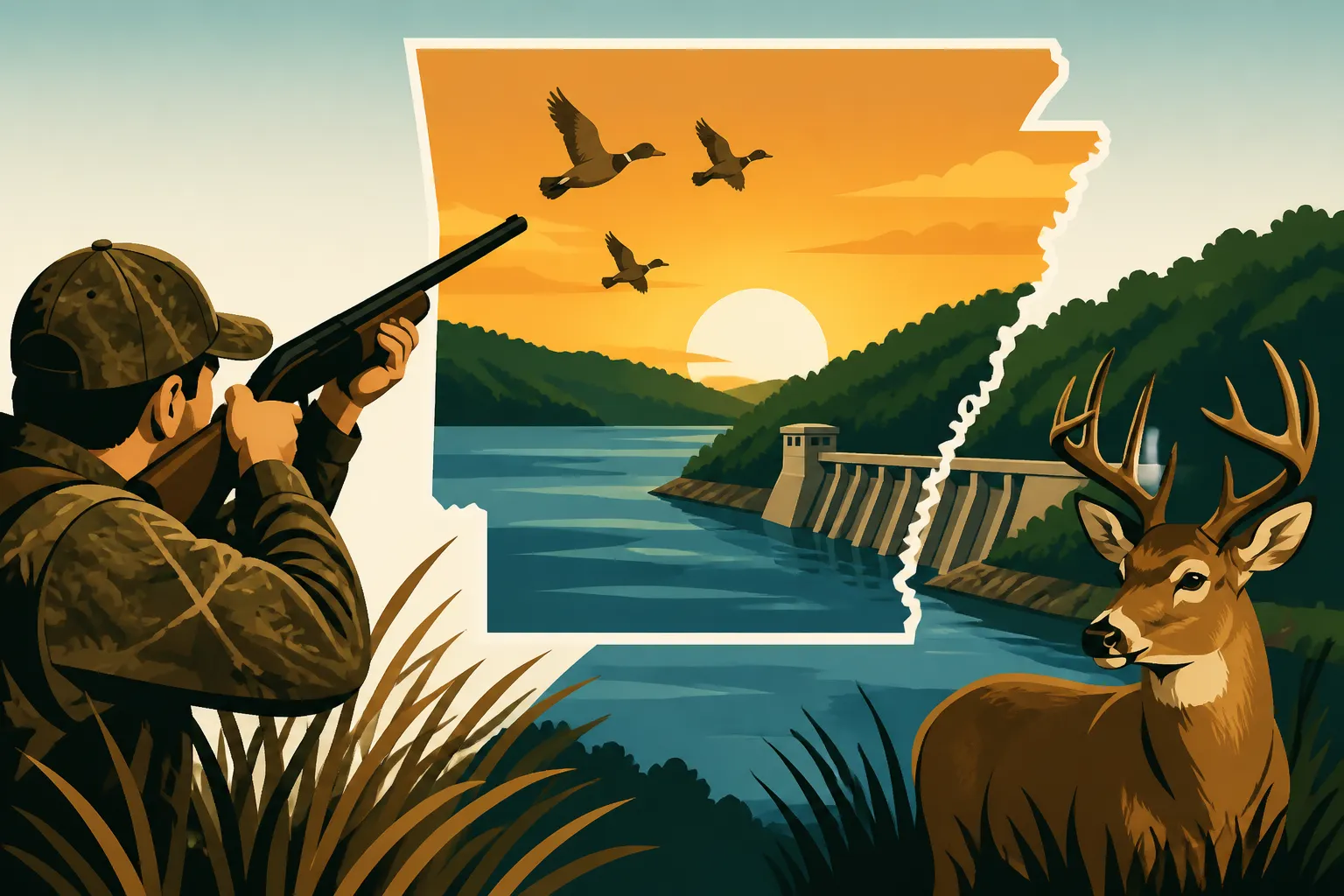
The U.S. Army Corps of Engineers isn't primarily a wildlife agency, which is why their lands operate a little differently. Their main mission revolves around civil works projects: managing our nation's waterways, building and maintaining dams, flood control, navigation, and hydropower. Part of that mission involves managing the land surrounding these projects, particularly the buffer zones around reservoirs. These "buffer lands" serve multiple purposes, from protecting water quality to providing recreational opportunities like fishing, boating, camping, and, yes, hunting.
The management philosophy is often multi-use, meaning hunting is usually permitted but shares space with other activities. This can sometimes lead to unique challenges, such as navigating around campgrounds or recreation areas, but it also means these lands are often less intensively managed for hunting-specific habitat than a WMA might be. Instead, you'll find more natural, unmanipulated forests, bottomlands, and shoreline habitats that can be fantastic for game if you understand how to read them. These lands might not always have dedicated food plots or extensive trail systems, but they offer raw, wild hunting experiences that many of us crave.
Distinguishing Corps Land from Other Public Lands
It's crucial to understand that Corps of Engineers land is distinct from other public land types in Arkansas. It's not a National Forest, though it might border one. It's not an Arkansas Game and Fish Commission (AGFC) Wildlife Management Area, though the AGFC often cooperates with the Corps on management or leases some Corps land for WMA designation. The key difference lies in the primary managing agency and their specific rules. While state hunting regulations (seasons, bag limits, license requirements) apply across the board, the Corps can and often does have additional, site-specific regulations governing access, vehicle use, stand placement, and even activities like baiting or food plotting.
This distinction is super important because it means you can't just assume the rules you know for a WMA apply here. Always, and I mean always, check the specific regulations for the particular Corps lake or project area you intend to hunt. Most Corps offices have brochures, websites, or signs posted at access points detailing these rules. Ignoring these can quickly turn a great hunting trip into a frustrating encounter with a park ranger or, worse, a violation.
General Rules and Regulations on Corps Properties
While specific rules vary, there are some common threads you'll find across most Corps of Engineers properties in Arkansas. Generally, hunters are required to possess all valid state hunting licenses and stamps for the game they pursue. Arkansas Hunting Licenses and What They Cost will give you a good overview of what you need from the state. Firearms are typically allowed during legal hunting seasons, but discharge is often restricted near developed recreation areas, campgrounds, or administrative sites for safety. Discharging a firearm in a non-designated area is a serious offense, so give these spots a wide berth.
Vehicle access is another common point of difference. Many Corps lands restrict motorized vehicles to designated roads and parking areas, similar to some WMAs. Cross-country travel, or even using an ATV on undesignated trails, is usually prohibited. This often means more legwork to get to your hunting spot, but it also creates quieter, less pressured areas deeper in the woods. Camping might be allowed in primitive areas, but generally not in conjunction with hunting camps unless specifically designated. Knowing these baseline expectations will help you avoid issues and focus on the hunt.
Major Arkansas Corps Lakes and Their Hunting Potential
Arkansas is blessed with a fantastic network of Corps of Engineers lakes, each offering unique hunting experiences. While they all fall under the general Corps management umbrella, the terrain, typical game species, and local regulations can vary significantly. Let's dive into some of the prominent ones.
Hunting Around Beaver Lake
Up in Northwest Arkansas, Beaver Lake is a massive body of water known more for fishing and recreation, but don't let that fool you about its hunting potential. The surrounding Corps land, particularly on the upper ends and in the less accessible coves, can hold excellent deer and turkey populations. The terrain here is classic Ozark: steep, rocky, and heavily timbered with a mix of hardwoods and pines. This kind of country can be physically demanding, but it often rewards hunters willing to put in the effort to get away from the easy access points. Hunting Ozark Ridges and Hollows for Deer would be an excellent resource for understanding this challenging yet rewarding landscape.
Deer hunting here often involves focusing on benches, saddles, and creek drainages that funnel deer movement. Acorn crops are vital, and finding a good mast crop can be the key to success. Turkeys thrive in this diverse habitat, particularly where there's a mix of mature timber for roosting and open areas for foraging. Due to the rocky terrain, deer numbers might not be as high as in the Delta, but the potential for a mature, hard-earned buck or a vocal gobbler is absolutely there. Just be prepared for those steep climbs and descents!
Bull Shoals and Norfork Public Ground
Moving eastward into North Central Arkansas, Bull Shoals and Norfork Lakes present another set of prime Corps hunting opportunities. These are also major Ozark impoundments, so expect similar rugged topography to Beaver Lake. However, the sheer size of these lakes and the expansive public land surrounding them offer immense potential. Deer, turkey, and even black bear can be found in good numbers, especially in the more remote sections. Black Bear Hunting in Arkansas is a fascinating topic if you're interested in pursuing the larger game in this region.
The key to hunting these areas is often identifying key access points that allow you to reach large blocks of unpressured timber. Many points and hollows that drop off into the lake are managed by the Corps, creating natural funnels for wildlife. Water levels can fluctuate, exposing new areas or cutting off access, so always check the current lake levels before you go. Scouting these areas for old logging roads, game trails, and preferred food sources is critical. Given the vastness, using a good mapping app like onX Hunt to identify public land boundaries and topography is almost non-negotiable here. It helps you stay on legal ground and understand the lay of the land without getting turned around in the hills and hollers.
Greers Ferry Lake Hunting Access
Greers Ferry Lake, located in the foothills of the Ozarks, offers a slightly different flavor of Corps hunting. While still featuring plenty of timbered hills, you'll also find areas with a bit less extreme elevation change, potentially making for easier walking in some spots. The Corps manages significant acreage around the lake, providing habitat for deer, turkey, and a good variety of small game. Due to its popularity as a fishing and recreation lake, hunting pressure can be higher near main roads and boat ramps.
Success on Greers Ferry often comes from exploring the arms and feeder creeks of the lake, particularly those areas that aren't easily accessible by vehicle. Look for areas where dense cover meets more open hardwood ridges. During the fall, deer will key in on acorns, and finding a productive oak flat overlooking one of the lake's many coves can be a real hotspot. Small game, particularly squirrels, can be abundant in the mature hardwoods that dominate much of this Corps land. Squirrel Hunting Arkansas Hardwoods offers great insight into pursuing these agile creatures. Don't forget to check the specific Corps regulations, as some areas might have unique rules for boat access or stand placement.
Millwood Lake Hunting Ground
Down in Southwest Arkansas, Millwood Lake offers a distinct hunting environment from its Ozark counterparts. Here, the landscape transitions to more bottomland hardwood and pine forests, reflecting the influence of the Red River basin. This means different terrain, different vegetation, and often different hunting tactics. Deer numbers can be excellent, and the cover can be incredibly thick in places, making for challenging but rewarding still-hunting or stand setups.
The Corps land around Millwood often features sloughs, oxbows, and low-lying areas that can hold water, especially after heavy rains. These wetlands can create fantastic habitat for deer, hogs, and even some waterfowl. Where Delta Bucks Bed in Standing Water provides insights into hunting similar wet environments, though Millwood isn't strictly Delta. Look for higher ground within these bottomland areas where deer will travel and bed. Access here might involve more wading or using a small boat to reach secluded islands or sections cut off by water. Hog populations can be significant in this region, offering an additional hunting opportunity, though specific regulations for feral hog hunting on Corps land should always be confirmed.
DeGray Lake and Lake Greeson Hunting Opportunities
Further south in the Ouachita Mountains, DeGray Lake and Lake Greeson are two more excellent Corps of Engineers lakes with substantial hunting acreage. The terrain here is typical Ouachita: rolling hills, deep pine forests mixed with hardwoods, and distinct creek drainages. This is prime habitat for deer, turkey, and black bears, with the Ouachita National Forest often bordering or integrating with Corps lands, creating vast tracts of public hunting ground.
Hunting these areas means adapting to a mix of forest types. Deer will often utilize the transition zones between pine plantations and mature hardwoods, or feed heavily in acorn flats. Bear sign can be prevalent, especially in areas with good mast production. Turkey populations thrive in the varied timber. Access can be a mix of well-maintained roads and more rugged, foot-traffic-only areas. The key is to find those overlooked pockets, perhaps across a deep creek or on a less-traveled ridge, where game can find sanctuary. Tools like GoHunt can be incredibly useful for overlaying various public land layers and identifying these subtle features, helping you plan your approach and understand game movement in complex terrain.
Navigating Regulations and Permits on Corps Lakes
Hunting on Corps of Engineers land, while offering great opportunities, also comes with its own specific set of rules and regulations. It's not enough to simply have your state hunting license; you need to understand the nuances of federal land management to avoid common pitfalls. Trust me, rangers on Corps land are just doing their job, and a little homework on your part can save you a lot of headache.
State and Federal Regulation Overlap
This is where things can get a little tricky. On Corps land, you're operating under a dual layer of regulation: both state and federal. The Arkansas Game and Fish Commission (AGFC) sets the statewide seasons, bag limits, shooting hours, and licensing requirements for all game species. These are the baseline rules everyone must follow. However, the U.S. Army Corps of Engineers, as the managing federal agency, can impose additional restrictions or requirements on top of the state laws. They can dictate what type of blinds are allowed, vehicle access, specific hunting zones, or even special permits.
For example, the AGFC might allow you to put up a tree stand on public land, but the Corps might have a rule against permanent stands or require stands to be removed daily. Or, while the state may have broad rules for Arkansas Legal Shooting Hours, the Corps might have specific rules for quiet times in certain areas. It's like having two bosses for the same job – you need to make sure you're satisfying both. Always look for signage at access points, check the specific Corps lake's website, or even call the local Corps office directly. It’s better to ask a question than to get a ticket.
Specific Corps Permits and Requirements
Sometimes, beyond your regular state hunting license, Corps land might require a special permit. This isn't universal, but it's common enough that you need to be aware. These permits might be free, or they might involve a small fee. They could be for specific hunt areas, for overnight camping related to hunting, or even for certain types of access. The purpose is often to manage hunter density, ensure safety, or protect sensitive ecological areas.
One common requirement you might encounter is for the placement of ground blinds or tree stands. Some Corps properties may require blinds to be plainly marked with the hunter's name and contact information, or prohibit leaving stands overnight. Others might restrict the cutting of any vegetation, even for shooting lanes. It’s imperative to identify if the specific Corps property you intend to hunt has any such permit requirements or unique rules. A simple search for "Hunting Regulations [Corps Lake Name] Arkansas" will usually lead you to the local Corps Project Office's recreational rules, which should cover hunting. Don't skip this step!
Understanding Restricted Zones and Safety Areas
Perhaps one of the most critical aspects of hunting on Corps land is understanding and respecting restricted zones and safety areas. These lands are often multi-use, which means hunters share space with hikers, campers, boaters, and other recreational users. For safety reasons, the Corps typically designates areas around dams, powerhouses, campgrounds, recreation areas, marinas, and administrative sites as off-limits to hunting or firearm discharge. These are usually well-marked with signs, but it's your responsibility to know where they are.
Beyond these obvious exclusion zones, there might also be areas designated for other recreational uses where hunting is permitted but requires extra caution, or areas where certain hunting methods are prohibited. For instance, you might find an area where archery hunting is allowed but modern gun hunting is not. Mapping tools like onX Hunt are invaluable here, as they often have layers that show public and private boundaries, as well as designated recreation areas or other points of interest that you need to be aware of. Using these tools to plan your approach and identify safe hunting zones can prevent accidental trespassing or, more importantly, ensure the safety of yourself and others enjoying the outdoors.
Effective Scouting and Tactics for Corps Lake Hunting
Scouting is always paramount in hunting, but on Corps of Engineers lands, it takes on an even greater significance. These areas can be vast and varied, often lacking the intensive management features (like obvious food plots or well-marked trails) you might find on some WMAs. To consistently find game, you need to become a detective of the landscape.
Reading Topography and Water Levels for Deer and Hogs
Corps lakes are defined by their relationship with water, and understanding how that water impacts the surrounding topography is crucial. When water levels fluctuate, they can reveal new feeding areas, create travel corridors, or cut off escape routes. For deer and hogs, look for fingers of high ground extending into coves, isolated islands that become accessible at low water, or saddles that connect ridges above the floodplain. These features act as natural funnels or bedding areas. Reading an Ozark Bench for Deer is a great start, and applying that principle to areas above varying water levels can be highly effective.
Topography also dictates game movement. Steep bluffs dropping directly into the water might be less productive than areas with a more gradual slope and accessible shoreline. Deer will often follow the contours of the land, avoiding unnecessary climbs or descents if an easier path exists. In areas with significant elevation changes, focus on benches, creek bottoms, and ridge lines. For hogs, look for disturbed ground, wallows near water, and thickets in low-lying areas that offer dense cover. They thrive in those hard-to-reach, brushy spots that provide both food and security.
Identifying Key Habitat Features
Since Corps lands are often less manipulated for hunting, identifying natural habitat features is critical. Mature hardwood forests, especially those with a strong component of red and white oaks, are goldmines when the acorns are dropping. Deer and turkey will gravitate to these areas. Look for concentrations of cuttings under oak trees, indicating active feeding. Reading Red Oak Acorn Drops offers deep insights into this vital food source. Beyond acorns, focus on dense thickets for bedding cover, particularly on points or benches overlooking open areas. These spots offer safety and warmth.
Pine stands, while often perceived as less productive, can offer valuable thermal cover in colder weather and provide different browse opportunities. Transition zones, where different timber types meet, or where timber meets a cleared utility right-of-way, are always worth investigating. Also, pay attention to natural pinch points formed by terrain or water. A narrow strip of land between two coves, or a creek crossing, can be a high-traffic area. Don't overlook the impact of past logging operations; old clearcuts, even those several years old, can provide crucial browse and cover for deer. Hunting a Cutover Two Years After Logging explains how to approach these areas.
Utilizing Mapping Tools for Corps Land
In today's hunting world, mapping apps are no longer a luxury—they're an absolute necessity, especially on large, complex public lands like those around Corps lakes. Products like onX Hunt and GoHunt provide invaluable layers that can make your scouting efforts exponentially more efficient. These apps allow you to see public vs. private land boundaries, which is crucial for staying legal. They often have topographical maps, aerial imagery, and even overlays showing designated recreation areas, trails, and water features.
Before you even set foot in the woods, you can use these tools to identify potential access points, pinpoint remote pockets of public land, trace likely game trails along contour lines, and mark potential bedding or feeding areas. You can drop pins on promising spots, measure distances, and even identify changes in vegetation types. For example, if you see a finger of timber extending into a large cove on onX Hunt, you can analyze the terrain for a likely deer path. When you're physically scouting, these apps help you confirm what you're seeing on the ground and navigate effectively. They're also indispensable for tracking your movements, marking game sign, and safely finding your way back to your vehicle, especially when you're pushing deep into unfamiliar territory.
Species Specific Hunting on Arkansas Corps Lakes
The varied habitats around Arkansas's Corps of Engineers lakes support a diverse array of game species. Understanding the specific behaviors and preferred habitats of each species will help you tailor your approach and increase your odds of success.
Deer Hunting Strategies on Lake Shores and Islands
Deer hunting is probably the most popular pursuit on Corps lands. The strategies here blend traditional timber hunting with considerations for the water. Lake edges, particularly those with dense brush or hardwoods, can be fantastic travel corridors. Deer will often skirt the shoreline, using the cover provided by the bank and the water as a barrier to human intrusion. Look for trails running parallel to the water, especially where points or hollows create natural funnels.
Isolated islands, if they are large enough and have good cover and food, can be phenomenal deer magnets. These islands offer a sense of security and often experience less hunting pressure, especially if they require boat access. During periods of high water, deer might be pushed to higher ground, concentrating them on ridges or smaller islands that remain dry. During the rut, these shorelines and islands can become cruising routes for bucks searching for does. Hunting the Arkansas Rut by Zone can give you an idea of peak activity times to coincide with your scouting and hunting efforts in these unique environments. Setting up a stand where you can observe a pinch point between the water and a steep bank can be incredibly effective.
Waterfowl and Migratory Bird Opportunities
While Arkansas is famous for its Delta duck hunting, many Corps lakes also offer excellent opportunities for waterfowl and other migratory birds. Larger lakes with extensive shallow flats, river backwaters, or flooded timber on Corps-managed acreage can attract a variety of ducks and geese. Species like mallards, wood ducks, gadwall, and various diver ducks can be found, depending on the habitat. Hunting Arkansas Reservoir Ducks delves deeper into these specific environments.
For ducks, focus on areas with submerged vegetation, natural food sources, or flooded timber pockets. Scouting for active birds and understanding their flight patterns is key. On larger lakes, diver ducks might concentrate on open water areas where they can feed on aquatic vegetation and mussels. For migratory birds like doves, look for open fields, powerline cuts, or agricultural areas (if present and open to hunting) on Corps land, especially those near water sources. Ensure you are familiar with Arkansas Duck Season Dates and Arkansas Dove Opener and Later Splits to hit the season right. Always remember non-toxic shot rules apply when hunting waterfowl on most public lands, including Corps properties.
Small Game and Predator Hunting
Beyond deer and ducks, Corps lands are often excellent for small game and predator hunting. Squirrels, in particular, thrive in the mature hardwood forests that dominate many Corps properties. When the acorns are dropping, find a good stand of oaks or hickories, listen for cutting squirrels, and enjoy a classic hunt. Squirrel Hunting Arkansas Hickories provides specific tactics for this. Rabbits can be found in brushy areas, thickets, and along forest edges, especially where there are openings or old clearings.
Coyotes and bobcats are also present on most Corps lands and offer a challenging hunting opportunity. Their presence is often a good indicator of a healthy ecosystem. Calling for coyotes or still-hunting thick cover for bobcats can be productive, especially during colder months. Remember to check regulations on night hunting for predators, as rules can vary. The varied terrain and extensive cover found on Corps properties make them ideal for these less-pressured hunting pursuits.
Overcoming Challenges and Maximizing Success
Hunting on Corps of Engineers lakes isn't without its challenges, but with the right mindset and preparation, you can turn these obstacles into opportunities. Often, the very things that make these areas challenging are what keep other hunters away, leaving more ground for you to explore.
Managing Pressure and Finding Seclusion
One of the biggest realities of public land hunting, especially near popular recreation areas, is hunter pressure. Corps lands can be no exception. Popular access points, roads, and trails often see the most traffic. The key to finding success, especially for larger game like deer and turkey, is to embrace the grind and get away from the crowds. This usually means walking further, sometimes much further, than most hunters are willing to go.
Look at your mapping app and identify large blocks of Corps land that have minimal road access. Focus on areas that require a boat to reach, or that are separated by natural barriers like steep terrain or wide creeks. These "hard-to-reach" spots often hold less-pressured animals that haven't been pushed around as much. Consider hunting during weekdays instead of weekends, or during the mid-day lull when many hunters head back to camp. Hunting later in the season, when many fair-weather hunters have packed it in, can also reveal new opportunities as game patterns shift. Hunting Pressure on Arkansas WMAs gives a good framework for thinking about this, which directly applies to Corps lands.
Access Considerations: Boats, ATVs, Foot Traffic
Access to Corps lands can be incredibly varied. Some areas might have well-maintained gravel roads and ample parking, while others might require a serious hike through thick timber or even boat access across a lake. Understanding these nuances is vital for planning your hunt. If boat access is an option, consider using a small Jon boat or kayak to reach secluded points, islands, or sections of shoreline that are inaccessible by vehicle. This can open up huge tracts of unpressured habitat. Just be mindful of changing weather conditions and water levels, as a calm morning can turn into a windy, choppy afternoon on a large lake.
For those areas accessible by vehicle, pay close attention to signs regarding ATV use. Most Corps properties restrict ATVs to designated trails or roads, if allowed at all. Never assume you can take an ATV cross-country. Most often, your two feet will be your best mode of transportation. Be prepared for long walks, sometimes through dense brush or up steep grades. Invest in good boots and a comfortable pack, and make sure you have enough water and supplies for the duration of your hunt. While it's more work, the payoff of finding an unpressured animal is absolutely worth the effort.
Ethical Hunting and Public Land Stewardship
Hunting on public land, especially multi-use land like Corps properties, comes with a responsibility to be an ethical hunter and a good steward of the land. This means not only following all state and federal regulations but also exercising common courtesy and respecting other users. Pick up your trash, including spent shell casings. Leave no trace of your presence. If you're using a tree stand, ensure it complies with Corps regulations, and remove it when required.
Be mindful of other users. If you encounter hikers or campers, acknowledge them politely and ensure you're maintaining safe distances from their activities. Avoid hunting too close to designated campgrounds or picnic areas, even if not explicitly prohibited, to ensure everyone has a positive outdoor experience. Public land is a shared resource, and our behavior as hunters reflects on the entire hunting community. By being respectful, safe, and ethical, we help ensure these valuable hunting opportunities on Corps of Engineers lakes remain available for generations to come.
Planning Your Corps Lake Hunt: A Checklist
To make sure you're fully prepared for your Arkansas Corps of Engineers lake hunting adventure, here's a handy checklist to run through before you head out. This will help you cover all your bases and focus on the hunt itself.
| Category | Item | Details & Considerations |
|---|---|---|
| Pre-Hunt Research | Identify Specific Corps Lake/Project | Choose your target lake (e.g., Beaver, Bull Shoals, Millwood). |
| Check Corps Regulations | Visit the specific Corps Project Office website or call for current, local hunting rules (vehicle access, stand rules, restricted areas). | |
| Review AGFC Regulations | Confirm state hunting seasons, bag limits, and general rules for your target species in that zone. | |
| Acquire Maps/Mapping Apps | Use onX Hunt or GoHunt to identify public/private boundaries, topography, trails, and recreation areas. Download offline maps! | |
| Water Level Information | For lakes, check current and projected water levels, as they impact access and game movement. | |
| Licenses & Permits | Arkansas Hunting License(s) | Ensure you have all required state licenses and stamps for the game you intend to hunt. |
| Federal Duck Stamp (if waterfowl) | Required for waterfowl hunting in addition to state stamps. | |
| Corps-Specific Permits | Determine if any special permits are required by the local Corps Project Office for hunting or access. | |
| Scouting & Access | Identify Access Points | Locate legal parking areas, boat ramps, or trailheads. |
| Plan Entry/Exit Routes | Map out primary and secondary routes to your hunting spot, considering terrain and distance. | |
| Consider Water Access | If hunting islands or remote shorelines, plan for boat, kayak, or canoe use, and check for safety gear (PFDs). | |
| Ground-Truth Scouting | Walk the area if possible, looking for fresh sign, preferred food sources, bedding areas, and natural funnels. | |
| Gear & Safety | Appropriate Clothing | Dress for the weather and terrain; include hunter orange if required by state law for your season. Arkansas Hunter Orange Requirements are important to remember. |
| Navigation Tools | GPS device or smartphone with mapping app (with backup battery), compass, and physical map as a redundant option. | |
| First-Aid Kit | Essential for any outdoor excursion, especially in remote areas. | |
| Communication Device | Fully charged phone; consider a satellite communicator for areas with no cell service. | |
| Water and Snacks | Bring more than you think you'll need, particularly for long treks. | |
| Game Recovery Gear | Field dressing kit, game bags, drag rope or cart if needed for bigger game. Field Dressing a Deer in Warm Weather is a good read if you're hunting early seasons. | |
| Post-Hunt | Game Checking & Reporting | Know the AGFC's regulations for checking your harvested game. Arkansas Deer Checking and Tagging |
| Leave No Trace | Pack out all trash, remove stands/blinds as required, and respect the natural environment. |
Navigating the diverse and often challenging lands managed by the Corps of Engineers around Arkansas's lakes can be incredibly rewarding. With proper planning, diligent scouting, and a thorough understanding of the regulations, these overlooked public lands can offer some of the most memorable hunting experiences the state has to offer. Don't be afraid to explore, learn, and put in the effort – the wild spaces of Arkansas's Corps lands are waiting.
Disclaimer
This article is for general informational purposes only and does not constitute professional advice. Laws, prices and regulations vary by location and change over time. Consult a qualified professional for guidance on your specific situation.