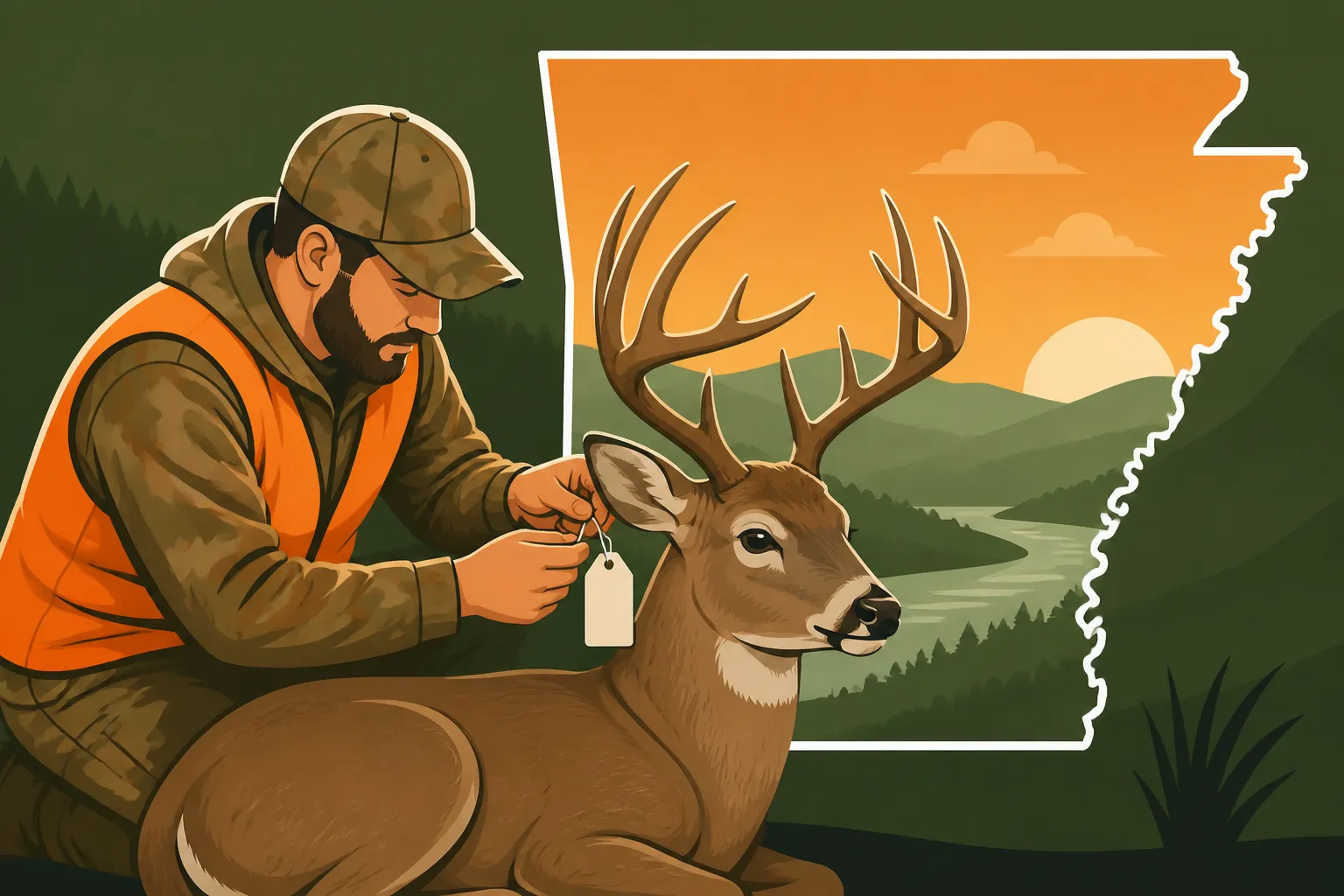
Arkansas Deer Checking and Tagging
There’s nothing quite like the rush of finally bagging that deer you’ve been chasing, whether it’s a big buck from the Ozarks or a plump doe in the Delta. But in that excitement, it’s all too easy to let the crucial steps of deer checking and tagging slip your mind. Failing to follow Arkansas Game and Fish Commission (AGFC) rules can quickly turn a successful hunt into a frustrating legal headache. This guide is here to walk you through every step of the process, ensuring your harvest is legal, properly recorded, and stress-free.
Why Deer Checking and Tagging Matters in Arkansas
Deer checking and tagging might seem like just another piece of red tape, an extra step after the hard work of the hunt. But I promise you, it's so much more than that. It's a fundamental part of responsible hunting and plays a massive role in maintaining the health and sustainability of Arkansas's deer herd for all of us.
The Importance of Data for Wildlife Management
Every time you check a deer in Arkansas, you're not just confirming your harvest; you're contributing vital data to the AGFC. Think about it: the date, the location, the sex of the deer, whether it was antlered or antlerless – all of this information is meticulously collected and analyzed. This data helps wildlife biologists understand population trends, monitor herd health, and make informed decisions about future hunting regulations, like setting bag limits for Arkansas Deer Bag Limits by Zone or adjusting season dates. Without this information from thousands of hunters like us, the AGFC would be flying blind, and our deer populations could suffer. It’s a collective effort, and each checked deer is a small but mighty piece of the conservation puzzle.
For example, if the AGFC sees a dip in reported harvests in a certain zone, coupled with other surveys, they might realize the population is declining and needs more protection. Conversely, if antlerless harvest numbers are consistently high in a particular county, it could indicate a healthy, growing herd that can sustain more hunting pressure. Your data directly influences the seasons and limits we all hunt under, ensuring there are deer for generations to come.
Legal Compliance and Avoiding Penalties
Beyond conservation, correctly checking and tagging your deer is a straightforward legal requirement in Arkansas. It’s not an option; it’s the law. The AGFC has clear regulations in place, and failing to adhere to them can lead to significant fines, confiscation of your game, and even the loss of your hunting privileges. No one wants their successful hunt to end with a visit from a game warden and a court date, especially after all the effort, time, and money you've invested in your hunting season.
The rules are designed to prevent poaching, manage game populations effectively, and ensure fair chase. When you properly tag and check your deer, you're proving that your harvest was legal and within the established limits for that season and zone. Ignorance of the law is rarely an excuse that holds up, so taking the time to understand and follow these steps is just as important as knowing how to shoot straight or track a deer. Trust me, the peace of mind knowing you're fully compliant with the law is worth every minute spent on the checking process.
Understanding Arkansas Deer Tags and Licenses
Navigating hunting licenses and tags can feel a bit like reading a foreign language, especially with all the different options and rules. But getting a handle on what your license provides and how your tags work is absolutely critical before you even step foot in the woods.
What Comes With Your Hunting License
When you purchase an Arkansas hunting license, you're not just buying permission to hunt; you're receiving the fundamental tools to legally harvest game. For most resident hunters, a standard Sportsman's License or an All-Game License, for example, will come bundled with a certain number of deer tags. These tags are your physical proof of entitlement to harvest deer. It's crucial to understand which type of license you have and what specific tags are included. Are they valid for any deer, or specific to antlered or antlerless animals?
Nonresident hunters have several options, from annual licenses to shorter-term permits like the three-day or five-day deer licenses, each with its own set of included tags. Youth hunters also have special license options with specific tags designed to get them started. It’s worth taking the time to carefully read the specifics of your license. You can find detailed information on what different licenses cost and include in guides like Arkansas Hunting Licenses and What They Cost. Always double-check that you have the appropriate license and enough valid tags for the type of deer you intend to pursue and the zone you'll be hunting in, especially when planning for the varied seasons, such as Arkansas Modern Gun Deer Hunting or Bowhunting Arkansas's Five-Month Archery Season.
Antlered Versus Antlerless Tags
One of the most common points of confusion for hunters revolves around the distinction between antlered and antlerless deer tags. In Arkansas, these aren't just arbitrary terms; they dictate precisely what kind of deer you can legally harvest. An antlered tag is for a buck with antlers of a certain length or number of points, often governed by The Arkansas Three-Point Rule in specific zones. An antlerless tag, on the other hand, is for a doe or a button buck (a male fawn that hasn't grown antlers yet).
The AGFC issues these tags to manage specific aspects of the deer population. Antlered tags often have stricter limits to protect younger bucks and allow them to grow, while antlerless tags are crucial for controlling the overall deer population and maintaining a healthy buck-to-doe ratio. It’s vital to use the correct tag for the deer you harvest. Accidentally using an antlered tag on an antlerless deer, or vice versa, could lead to a violation, even if you still have the correct tag in your possession. Always identify your target clearly and ensure you have the right tag ready to affix immediately after the harvest. This foresight prevents simple mistakes that can have legal repercussions.
The Step-by-Step Process for Checking Your Deer
Once you've made a successful harvest, the next immediate steps are tagging and checking. This isn't something you can put off until you get home or decide to process the deer. The rules are clear: prompt action is required.
When and How to Tag Your Deer Immediately
The absolute first thing you must do after recovering your deer is physically tag it. And I mean immediately – before you move the deer from the point of kill, before you even load it into your vehicle. This is non-negotiable in Arkansas. The tag, usually a paper tag provided with your license, needs to be filled out completely and legibly. This includes your license number, the date and time of kill, the county, and the sex of the deer.
You'll need to secure this tag to the deer in a conspicuous manner that it cannot be removed without damaging the tag. Many hunters use zip ties or a length of string to attach it to an antler or a leg. The key here is permanence and visibility. This tag acts as temporary proof of your legal harvest until you complete the electronic checking process. Don't rush this step or skimp on the details; a partially filled or improperly affixed tag is just as problematic as no tag at all.
Reporting Your Harvest via Phone or Online
Once your deer is physically tagged, the next crucial step is to report your harvest to the AGFC. You have a 24-hour window from the time of kill to complete this. The easiest and most common methods are through the AGFC's website or their dedicated mobile app. I highly recommend using the app; it’s incredibly convenient when you’re out in the field, even if you just have a faint cell signal.
When reporting, you'll be prompted to enter information such as your license number, the date and time of kill, the county and deer zone, the sex of the deer, and whether it was antlered or antlerless. For antlered deer, you’ll also need to specify the number of points. Be as accurate as possible. The GoHunt app can also be a fantastic resource not just for scouting, but for quickly accessing regulations or even having your license information readily available to make the checking process smoother. After you submit the information, you’ll receive a unique confirmation number.
If you don't have internet access or prefer to use the phone, the AGFC also provides a toll-free number for checking deer. The process is similar, where you'll verbally provide the necessary details and be given a confirmation number. Whichever method you choose, make sure you complete the reporting within that 24-hour timeframe. It's a critical legal obligation and contributes to the AGFC's ability to track harvest data effectively.
The Deer Check Confirmation Number
That unique confirmation number you receive after reporting your harvest? That's gold. It's the official record that your deer has been legally checked and is crucial for proof of compliance. Immediately upon receiving it, you need to write this confirmation number clearly and permanently on the physical paper tag you attached to your deer.
This step effectively "completes" the tagging process. The paper tag with the confirmation number now serves as your long-term proof of a legal harvest. This is important for transporting the deer, especially if you're traveling across county lines or out of state. Game wardens often check for this specific number, as it ties your physical tag to the electronic record in the AGFC database. Without it, your deer is considered improperly checked, and you could face penalties. Make sure you use a waterproof pen that won't smudge or fade, ensuring the number remains legible until the deer is processed.
Special Considerations for Deer Checking
While the basic steps are straightforward, a few situations demand extra attention when it comes to checking your deer in Arkansas. Being aware of these specific rules can save you a lot of grief.
CWD Zone Rules and Carcass Transport
Chronic Wasting Disease (CWD) is a serious concern for deer populations, and Arkansas has specific CWD management zones. If you harvest a deer within one of these zones, there are additional rules regarding carcass transport. The primary goal is to prevent the spread of CWD by limiting the movement of certain parts of a deer carcass out of affected areas.
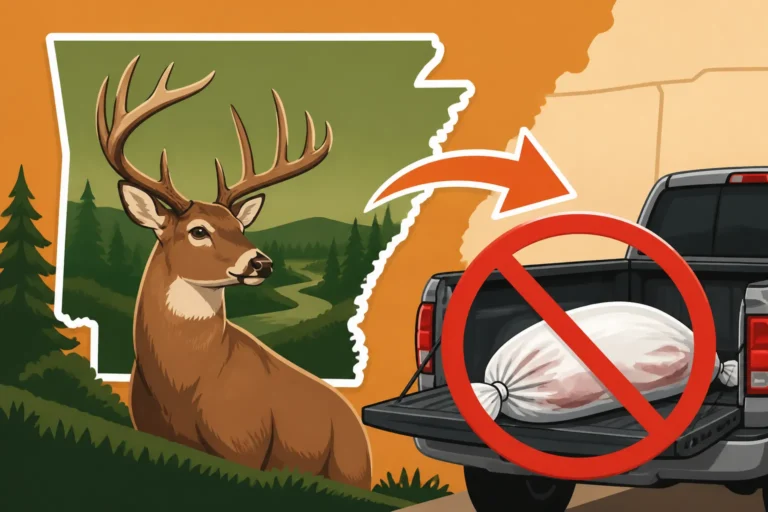
Generally, only deboned meat, clean skull plates, hides, and taxidermy-ready capes are allowed to be transported out of a CWD zone. The brain, spinal column, and other lymphoid tissues are considered high-risk for transmitting the disease and must remain within the CWD zone or be disposed of properly. This means if you kill a deer in a CWD zone, you'll likely need to process it extensively before leaving that area. For detailed, up-to-date information on these critical regulations, you should always consult the AGFC's current guidelines and specifically look into resources like Arkansas CWD Rules and Carcass Transport. These rules are in place for the health of the entire deer herd and are extremely important to follow.
Transporting Your Deer Before Processing
The rules for transporting your deer are pretty clear-cut, but they often cause confusion. You can move a deer from the point of kill to a local processing facility or your home, but only after it has been properly tagged and the confirmation number has been written on the tag. You cannot transport an untagged or unchecked deer beyond the immediate vicinity of the kill site. The tag with the confirmation number affixed to the carcass serves as your transport permit.
If you're taking your deer to a processor, make sure they understand the checking process, and always leave the tag on the deer until it's completely processed. For longer distances, especially across state lines, ensure that all necessary parts of the deer are in compliance with CWD regulations and that you have all relevant documentation ready. Furthermore, consider how you’ll handle your deer during transport, especially if you harvested it in warmer weather. Proper cooling is essential to preserve the meat, whether you're dealing with Field Dressing in Arkansas Heat or Cooling Meat in an Arkansas November later in the season. Getting a deer out of challenging terrain, like a deep Ozark hollow, can be tough, but don't let the difficulty make you cut corners on tagging and checking.
Youth and Special Opportunity Hunts
Arkansas offers fantastic opportunities for youth hunters, and it’s important to understand if their tagging and checking requirements differ. Generally, the core process remains the same: immediate tagging and 24-hour electronic reporting. However, specific youth hunts, like the Youth Modern Gun Hunt, might have unique season dates or bag limits that apply.
For example, a youth hunter might have different tag allocations or specific dates when they can harvest certain types of deer. It's crucial for the supervising adult to be fully aware of the current year's regulations for youth hunts and ensure the young hunter understands and participates in the tagging and checking process. This not only ensures compliance but also serves as an excellent teaching moment about responsible hunting practices. Similarly, if you participate in a special opportunity hunt or a managed hunt on an Arkansas WMA, always check the specific rules for that hunt, as they might have unique checking station requirements or reporting procedures.
Common Mistakes and How to Avoid Them
Even experienced hunters can sometimes make mistakes when it comes to checking and tagging. These errors are often due to excitement, forgetfulness, or simply not fully understanding the nuances of the rules. Being aware of the most common pitfalls can help you avoid them.
Forgetting to Tag Before Moving
This is, hands down, one of the most frequent and easily avoidable mistakes. Picture this: you've just dropped a beautiful buck, it's getting dark, and you're miles from the truck. Your first instinct might be to quickly drag the deer back to your vehicle, then deal with the tagging once you're out of the woods and have more light. This is a big no-no. Arkansas law is explicit: the deer must be tagged at the point of kill before any movement beyond what's necessary for recovery.
Let me tell you, a game warden isn't going to be sympathetic if they find you moving an untagged deer, even if your tags are in your pocket. The rule is there to prevent someone from claiming a deer found dead or taken illegally, and to ensure accountability. Always, always, have your tags, a pen, and something to attach the tag (like zip ties) readily accessible in your hunting pack. As soon as you confirm the deer is down and secure, take a breath, fill out that tag, and affix it. Only then can you begin the process of getting your deer out of the woods, whether you're tackling Tracking a Deer in Ozark Rock or dealing with swampy Delta ground.
Missing the 24-Hour Reporting Deadline
Life happens. You get home late, you're exhausted, you're celebrating with buddies, or you have to Butchering a Deer at Camp right away. It's easy to let that 24-hour reporting window slip by. But just like tagging at the point of kill, this deadline is firm. Forgetting to electronically report your harvest within that timeframe means your deer is not legally checked, regardless of whether you affixed the physical tag.
The AGFC uses these deadlines to maintain timely and accurate harvest data. If you miss it, you could face penalties. To avoid this, make it a habit: set an alarm on your phone for 23 hours after the kill time to remind you. Utilize the AGFC app right from the field if you have service, or make a conscious plan to do it as soon as you get home or to an area with reliable internet or phone service. Tools like the GoHunt app can even provide reminders or make it easier to access the AGFC reporting system directly. A few minutes of planning can save you a world of trouble.
Incorrectly Filling Out Your Tag
You'd be surprised how often hunters rush through filling out their physical tag and make simple but critical errors. Common mistakes include illegible handwriting, forgetting to fill in all the required fields (like county or time of kill), or even using the wrong type of tag (e.g., an antlered tag on an antlerless deer). Once you've received your confirmation number, failing to write it clearly and permanently on the physical tag is another major oversight.
The tag is a legal document, and it needs to be accurate and complete. Before you even head out, familiarize yourself with what needs to be filled out on your tags. Carry a reliable pen that won’t run out of ink or smudge in wet conditions. Take your time. Double-check everything, especially the date, time, and sex of the deer, and make sure that all numbers, particularly your confirmation number, are clearly written and secured. An incorrectly filled-out tag can render your harvest illegal, so treat it with the same care you would any other important document.
Arkansas Deer Checking Checklist
To help keep you organized and ensure you don't miss any critical steps, here's a quick checklist summarizing the deer checking and tagging process in Arkansas.
| Step | Action | Details & Considerations |
|---|---|---|
| 1. Immediate Tagging | Affix your physical deer tag to the carcass at the point of kill. | Use a waterproof pen to fill out your license number, date, time of kill, county, and sex of the deer. Secure it firmly to an antler or leg. Do NOT move the deer before tagging. |
| 2. Electronic Reporting | Report your harvest to AGFC within 24 hours via the AGFC website, mobile app, or toll-free number. | Provide accurate information: license number, date/time of kill, county/zone, sex, and antler points (if applicable). Get your unique confirmation number. Consider using the GoHunt app for convenience or to reference regulations. |
| 3. Confirmation Number on Tag | Write the received confirmation number onto the physical tag attached to the deer. | Use a permanent, waterproof marker. This links your physical tag to the electronic record and validates your harvest for transport. |
| 4. Carcass Transport Rules | Understand and follow rules, especially if in a CWD Management Zone. | If in a CWD zone, transport restrictions apply to certain parts of the carcass. Only deboned meat, clean skull plates, hides, and capes are typically allowed to leave the zone. Ensure the tagged and confirmed carcass is transported legally. |
| 5. License & Bag Limits | Ensure you have the correct license and valid tags for the deer harvested, respecting zone bag limits. | Check Arkansas Deer Seasons and Zone Limits and Arkansas Archery Deer Season Structure or Modern Gun Opening Weekend on Arkansas Public Land specific rules. Verify antlered vs. antlerless tags are used correctly. Understand The Arkansas Three-Point Rule if applicable to your zone. |
| 6. Documentation Retention | Keep your completed physical tag and a record of your confirmation number until the meat is consumed. | This is your proof of legal harvest and may be required by processors or during transport, especially if you have to deal with Carcass Transport Rules Out of Arkansas. |
Disclaimer
This guide is intended for informational purposes only and serves as a general overview of Arkansas deer checking and tagging regulations. Hunting laws and regulations are subject to change. It is the responsibility of every hunter to consult the most current Arkansas Game and Fish Commission (AGFC) regulations annually before hunting. Always refer to the official AGFC website or the current Arkansas Hunting Guidebook for the most accurate and up-to-date rules and requirements.