Arkansas Crow and Blackbird Roosts
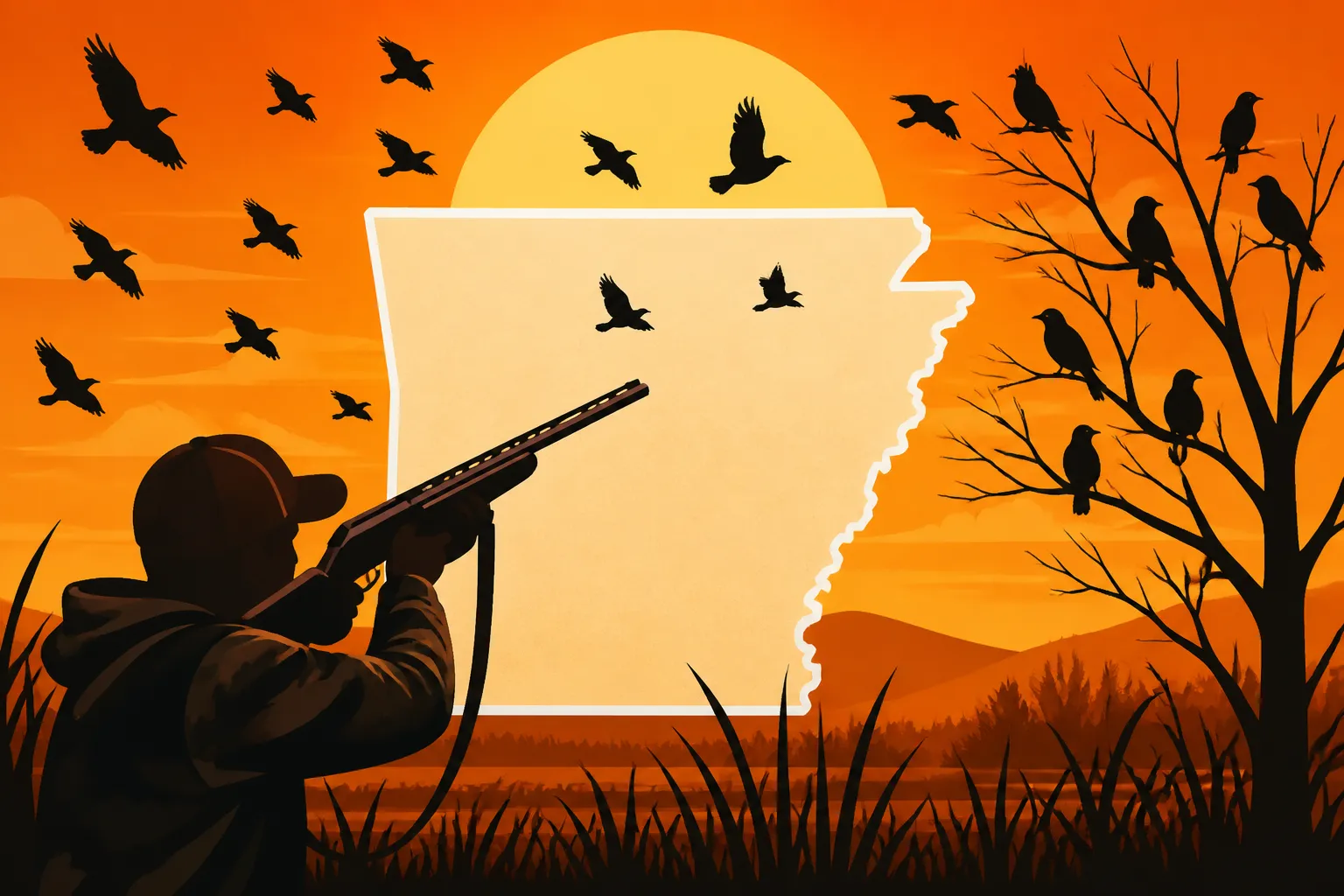
It's a common sight for anyone living in or traveling through Arkansas, especially during the colder months: massive, swirling clouds of birds darkening the sky as dusk settles, eventually descending into a cacophony in a stand of trees. Many folks might just see a nuisance, a lot of noise, and a mess. But for those of us who love the outdoors, these incredible gatherings of crows and blackbirds represent a fascinating natural phenomenon and, for some, a unique hunting opportunity. This guide will delve deep into the mysteries of these massive avian congregations and discuss the ins and outs of hunting them in the Natural State.
Understanding Arkansas Crow Roosts
When you hear the phrase "crow roost," you're likely picturing exactly what it is: a vast assembly of American crows that gather together nightly, sometimes numbering in the tens of thousands, or even hundreds of thousands. It's a truly spectacular, if sometimes noisy, event. But why do they do it? It's not just to annoy us; there's some real method to their madness.
The Purpose Behind the Grand Gathering
Crows are highly intelligent, social birds. These large winter roosts are a survival strategy, plain and simple. Think about it: during the day, they're spread out, foraging for food, but come nightfall, safety in numbers becomes paramount. A massive roost provides protection from nocturnal predators like great-horned owls, bobcats, or even coyotes. The sheer number of eyes and ears means a predator is far more likely to be spotted before it can make a kill.
Beyond safety, these roosts serve as information hubs. Crows share knowledge about prime feeding locations, water sources, and potential dangers. Imagine a massive, feathered social network, where every bird contributes to the collective knowledge of the group. Younger birds learn from older, more experienced individuals. It's an incredible display of avian cooperation that can leave you mesmerized if you take the time to observe it. These communal sleepovers typically kick off in the fall as temperatures drop and continue through the winter months, breaking up as spring approaches and breeding season begins.
Typical Roost Locations and Behavior
In Arkansas, crow roosts can be found in a variety of habitats, but they tend to gravitate towards specific types of cover. Often, you'll find them in dense stands of timber, especially evergreens like pine or cedar, which offer good thermal cover and concealment. River bottoms and wooded areas near agricultural fields are prime real estate, as they provide both shelter and proximity to food sources. You might also find significant roosts on the fringes of urban or suburban areas, taking advantage of the slightly warmer microclimates and protection from hunting pressure.
As dusk approaches, crows from miles around will begin to converge, often gathering first in staging areas – smaller groups in nearby trees – before making their final dramatic descent into the main roost. The noise can be deafening, a constant cawing that sounds like hundreds of conversations happening all at once. They'll squabble for prime perching spots, settle down, and then, as darkness truly falls, the roost will quiet, save for an occasional call. At dawn, the process reverses: they'll erupt from the roost with renewed energy, dispersing in smaller groups to their daytime feeding grounds. Identifying these staging areas is often key for hunters looking to intercept birds as they come and go.
Blackbird Roosts in Arkansas
While crows get a lot of attention for their impressive gatherings, blackbird roosts in Arkansas are equally, if not more, spectacular in terms of sheer numbers. These aren't just one species; we're talking about a mixed bag, usually involving red-winged blackbirds, common grackles, brown-headed cowbirds, and European starlings. Each species contributes its unique calls and flight patterns to the swirling vortex of birds that can literally blacken the sky.
A Multitude of Species, A Massive Impact
What sets blackbird roosts apart from crow roosts is often the sheer scale and the diversity of species involved. While a crow roost might number in the hundreds of thousands, blackbird roosts can easily soar into the millions. Imagine seeing a cloud of birds so dense that it takes ten minutes for them all to pass over your head – it's a breathtaking, almost overwhelming, experience.
These mixed-species roosts also form for similar reasons to crows: warmth, safety from predators, and information exchange. However, their dietary habits often lead them into closer conflict with human interests. Red-winged blackbirds, for instance, are notorious for feasting on grain crops like rice and corn, particularly during vulnerable stages of growth or harvest. Grackles and starlings can also cause significant damage to livestock feed and fruit crops. Because of this, their presence, while ecologically significant, can present real challenges for farmers and landowners across the Delta region and beyond.
Where Blackbirds Gather and Why
Blackbird roosts often favor different habitats than crow roosts. You'll frequently find them in wetlands, dense hedgerows, thick stands of tall reeds, or even urban parks with thick ornamental plantings. These locations offer dense cover for protection and often proximity to water, which is essential. During the winter, areas with abundant waste grain, such as harvested rice fields in the Field and Flooded Rice Duck Hunting in the Delta region or cattle feedlots, become magnets for these birds. They'll travel considerable distances each day from their roosts to these feeding grounds.
Their patterns are similar to crows: daily dispersal at dawn, followed by evening congregations. However, the sheer volume of birds in a blackbird roost makes the aerial displays even more dramatic. The collective murmuration, where thousands upon thousands of birds move in fluid, synchronized patterns against the twilight sky, is one of nature's true wonders. Understanding these patterns, and especially the flight corridors they use to move from feeding areas to roosts, is crucial for anyone interested in managing or hunting these birds. Using tools like those mentioned in Reading Aerial Photos for Delta Deer can help identify potential roosting and feeding areas on the landscape.
| Characteristic | Crow Roosts | Blackbird Roosts |
|---|---|---|
| Primary Species | American Crow | Red-winged Blackbird, Grackle, Starling, Cowbird (mixed) |
| Typical Size | Tens of thousands, sometimes hundreds of thousands | Hundreds of thousands to millions |
| Preferred Cover | Dense pines, cedars, hardwoods, river bottoms | Wetlands, reeds, hedgerows, dense ornamental trees |
| Season | Fall through Winter | Fall through Winter |
| Primary Diet | Omnivorous (carrion, insects, grain, eggs) | Primarily grain, seeds, insects (can be crop pests) |
| Noise Level | Loud cawing | Varied chirps, whistles, squawks, often a constant hum |
| Agricultural Impact | Can be minor crop pests, but less widespread | Significant crop and feedlot damage potential |
Hunting Opportunities and Management
For many Arkansas hunters, crows and blackbirds aren't exactly high on the priority list. They aren't deer, turkeys, or ducks. But overlooking them means missing out on some fantastic opportunities to sharpen your shooting skills, help a landowner, and enjoy a unique type of hunting experience. Plus, they're often available when other seasons are closed or limited, providing a reason to be out in the field.
Why Hunt Crows and Blackbirds?
There are several compelling reasons why an Arkansas hunter might target crows or blackbirds. First and foremost, they are a lot of fun to hunt! It's fast-paced, action-packed shooting that can make you feel like you're in a shooting gallery. This makes it an excellent way to practice your wing-shooting and gauge lead on moving targets. Think of it as an off-season training ground for Hunting Doves on an Arkansas Field or other migratory birds.
Secondly, crow and blackbird hunting often serves a very practical purpose: nuisance control. These birds, particularly when in massive roosts or feeding flocks, can cause significant damage to agricultural crops, livestock feed, and even spread disease. Farmers who are battling crop losses are often very grateful for hunters willing to help mitigate the problem. This can be an excellent way to gain access to private land, building relationships with landowners by offering a beneficial service, as discussed in Knocking on Doors in Arkansas Farm Country.
Finally, it's a chance to be out in nature when many other hunting seasons are closed. The seasons for crows are quite generous, as outlined in When Arkansas Allows Crow Hunting, making them accessible for much of the year. This provides a valuable opportunity to maintain your connection to the outdoors and keep your hunting skills sharp.
Regulations and Allowed Methods
The Arkansas Game and Fish Commission (AGFC) classifies crows as an unprotected migratory bird, which means they can be hunted year-round with no bag limit. Blackbirds, including grackles, starlings, and cowbirds, are also generally unprotected, and landowners can take them when they are causing damage. However, it's always critical to consult the most current AGFC regulations before heading afield, as rules can change. Be mindful of Arkansas Legal Shooting Hours for all hunting activities.
Hunting methods for crows and blackbirds typically revolve around decoying and calling. Crows, being highly intelligent, respond well to distress calls and realistic decoys of owls or injured crows. Electronic callers loaded with various crow vocalizations can be incredibly effective. For blackbirds, the strategy often involves decoying large flocks into an area, sometimes using electronic calls that mimic the sounds of feeding or roosting blackbirds. Blinds, whether natural or constructed, are essential to conceal hunters from these sharp-eyed birds. Using the same kind of calling strategies you might employ for Coyote and Bobcat Calling in Arkansas can sometimes be adapted for crows, especially in terms of understanding pitch and volume.
When hunting near roosts, discretion is key. Approaching a roost can be incredibly effective, especially at dawn or dusk when birds are transitioning. However, a heavily pressured roost can quickly disperse and become unusable. It's often more productive to set up along flight paths or in feeding areas, intercepting birds as they travel, rather than directly attacking the roost itself. For scouting these travel corridors, leveraging mapping tools like GoHunt can be immensely helpful, allowing you to identify potential flyways between roosting cover and known food sources, much like you would for larger game. Safety is paramount, so always adhere to Arkansas Hunter Education and Safety Rules and be aware of your surroundings, especially when shooting into large flocks where the backdrop can change rapidly.
Ecological Impact and Coexistence
While their sheer numbers and occasional agricultural conflicts can make crows and blackbirds seem like a nuisance, they also play vital roles in the ecosystem. Understanding these roles and exploring strategies for coexistence can lead to more balanced management practices.
The Good and the Bad: Benefits and Challenges
On the beneficial side, crows are highly efficient scavengers, cleaning up carrion and helping to prevent the spread of disease. Both crows and blackbirds consume vast quantities of insects, including many agricultural pests, which can be a huge boon to farmers at certain times of the year. They are also important seed dispersers, inadvertently helping to propagate various plant species as they move across the landscape. They truly are an integral part of the Arkansas environment, whether we like it or not.
However, the challenges associated with large roosts and feeding flocks are undeniable. Crop damage, particularly to corn, rice, and sunflower fields, can represent significant economic losses for farmers. The droppings from massive roosts can contaminate water sources, corrode structures, and create unsightly and unsanitary conditions, especially in urban or suburban environments. There's also the potential for these dense populations to act as vectors for certain diseases, though this is less common than other impacts. For landowners dealing with these issues, options for control, including hunting, are important.
Strategies for Mitigation and Coexistence
Managing the impact of large crow and blackbird roosts often involves a combination of lethal and non-lethal strategies. For agricultural producers, non-lethal deterrents are frequently the first line of defense. These can include:
- Auditory Deterrents: Propane cannons, distress calls, or even pyrotechnics can be used to frighten birds away from sensitive areas. These are often most effective when used intermittently to prevent birds from becoming habituated.
- Visual Deterrents: Effigies of predators (like owls or hawks), reflective tape, or Mylar balloons can create visual alarms. Again, movement and variety are key to their effectiveness.
- Habitat Modification: Altering the habitat around potential roost sites can make them less attractive. This might involve thinning dense tree stands or removing preferred perching areas.
- Exclusion: For high-value crops or small areas, netting can physically prevent birds from accessing the resource.
When these non-lethal methods aren't enough, hunting can be an effective tool for localized population reduction and harassment. Targeted hunting pressure can disrupt roosts, causing birds to relocate to less problematic areas. It's important to remember that such efforts are often most successful when undertaken as part of a larger, integrated management plan that considers both the birds' biology and the specific concerns of landowners and communities. Public lands, while not typically managed specifically for crow or blackbird hunting, can sometimes offer opportunities, so it's always wise to check regulations for Public Hunting Land in Arkansas before heading out.
Ultimately, crows and blackbirds are resilient and adaptable species. Learning to coexist with them, while managing their impacts, is an ongoing challenge that requires a thoughtful approach, combining both traditional hunting skills and modern ecological understanding. Using tools like GoHunt to scout and understand land boundaries can even help facilitate conversations with landowners about how you can assist with managing these avian populations.
Disclaimer
This article is for general informational purposes only and does not constitute professional advice. Laws, prices and regulations vary by location and change over time. Consult a qualified professional for guidance on your specific situation.