Field Dressing in Arkansas Heat
There's nothing quite like the thrill of an early season hunt in Arkansas, is there? The leaves might still be green, the air thick with humidity, and the sound of cicadas deafening. You've put in the time scouting, made the perfect shot, and now you're standing over your harvested game. But then, a familiar worry creeps in: the heat. Dealing with a deer, hog, or other game in Arkansas's often sweltering temperatures is a real challenge, and if you don't act fast and correctly, all that hard work, and good meat, can go to waste. This guide is all about navigating that crucial period right after the shot, focusing on field dressing techniques and strategies specifically designed to beat the heat and ensure your harvest makes it to the freezer in prime condition.
The Harsh Reality of Arkansas Heat and Game Meat
Arkansas is a beautiful state, but its climate, especially during the early and even some late hunting seasons, can be brutal on harvested game. Many hunters have experienced the heartbreak of losing meat to spoilage because they underestimated just how quickly things can go wrong when temperatures climb.
Why Heat is the Enemy of Venison
Imagine a warm summer day in August; now picture that heat on a freshly harvested animal. It's a race against the clock, and the clock starts ticking the moment the animal hits the ground. Heat is the primary accelerator of spoilage in game meat, and it works against you on multiple fronts.
First and foremost, it's about bacteria. Every animal's gut contains a multitude of bacteria, and when an animal is harvested, these bacteria can rapidly multiply, especially in warm conditions. These microorganisms are the primary culprits behind meat spoilage, leading to off-flavors, odors, and ultimately, rendering the meat inedible. The internal body temperature of a deer, for instance, is around 100-102°F. Even after death, this internal heat can persist for a surprisingly long time, creating a perfect incubator for bacterial growth if not addressed immediately. We're talking about a significant amount of latent heat in a large animal, which needs to be expelled as quickly as possible. The longer the meat stays above roughly 40°F, the faster those unwelcome microbes will take over, breaking down the muscle tissue and producing undesirable compounds.
Beyond bacteria, heat also accelerates enzymatic activity within the muscle tissue itself. While some enzymatic processes are desirable for tenderizing meat during aging, excessive heat speeds up these reactions to a detrimental degree, leading to what's often called "sour" meat or a mushy texture. The meat can start to break down too quickly, compromising its quality and taste. Think of it like leaving raw meat on your kitchen counter on a hot day – it doesn't take long for it to start looking and smelling off. Now imagine that on a much larger scale, with a thick hide acting like an insulating blanket. This is the reality we face when hunting in Arkansas's challenging temperatures. The frustration of making a clean kill only to lose the meat to improper handling is a lesson no hunter wants to learn the hard way.
Understanding Arkansas's Hunting Season Temperatures
Arkansas's hunting seasons offer incredible opportunities, but they also bring a wide range of weather conditions. It’s easy to think of deer season as crisp, cold autumn days, but the reality for many hunters, especially bowhunters, is far from that. Our deer season kicks off with the long Bowhunting Arkansas's Five-Month Archery Season, which means we're often out there in September and October, when daytime temperatures can easily soar into the 80s, and even low 90s. Even during the early buck-only archery days in late September, the heat can be intense. These initial weeks are prime examples of when field dressing rapidly is paramount.
Even as we move into November, an unseasonably warm spell can pop up, leaving you scrambling. And let's not forget our feral hog populations, which can be hunted year-round, meaning you're almost guaranteed to encounter significant heat challenges. Knowing the average temperatures for the specific time and zone you're hunting is crucial for planning your strategy. For example, the Arkansas Archery Deer Season Structure often means you'll be in the woods when highs are still in the 70s or higher, especially in the southern zones. This isn't just about comfort; it's about the survival of your meat. A beautiful autumn morning might quickly turn into a sweltering afternoon, and if you have an animal down, those rising temperatures will demand immediate action. It forces us to be prepared for the worst-case scenario, even when hoping for cooler weather.
Essential Gear for Hot Weather Field Dressing
Being prepared with the right tools can make all the difference between saving your meat and watching it spoil. When dealing with Arkansas heat, every minute counts, and fumbling for inadequate gear is time you simply don't have.
The Right Tools for the Job
First and foremost, you need a seriously sharp knife. A dull knife is not only dangerous because it requires more force, increasing the risk of slips and cuts, but it also slows down the entire process. I always carry at least two knives, and often a small sharpener, just in case. Something like an Outdoor Edge swing blade or a Havalon Piranta with replaceable surgical blades can be incredibly efficient. Having a gut hook can also be a real time-saver for opening the belly cavity without puncturing intestines.
Next up, gloves. Nitrile gloves are non-negotiable. They protect you from bacteria and blood-borne pathogens, and they help keep the meat cleaner. No one wants to spend an hour scrubbing gamey smell off their hands. Carry several pairs; they're cheap, lightweight, and you'll be glad you have them if one rips or gets too messy.
Game bags are absolutely critical in warm weather. Forget tarps or just slinging a carcass into the bed of your truck. Quality game bags, usually made from synthetic, breathable material like those from TAG Bags or Caribou Gear, allow air circulation while protecting your meat from flies, dirt, and debris. They are not simply glorified pillowcases; they are designed to keep things clean and cool. If you're quartering, you'll need a set of four or five, depending on the size of the animal.
Depending on the size of the animal, a small bone saw or a pair of heavy-duty bone shears can be invaluable. These are particularly useful for splitting the pelvis or sternum to enhance airflow or for quartering larger animals like hogs or mature bucks. For wiping up blood and keeping things tidy, a roll of paper towels or a pack of wet wipes is also incredibly handy. Lastly, a bottle of clean drinking water isn't just for you; it can be used for a quick rinse of your hands or blade if needed, though direct rinsing of the cavity with water is generally avoided unless the meat is immediately going into an ice bath. And if you're hunting near dusk, a reliable headlamp is essential, allowing you to work quickly and safely as the light fades.
Cooling Aids and Transportation
Once the internal organs are removed, the next battle is rapid cooling and secure transport. Your best friend here is ice – and lots of it. A large, high-quality ice chest or cooler is absolutely vital. Forget the cheap thin-walled coolers for this job; you need something that will hold ice for days. Brands like Yeti, RTIC, or Engel are popular for a reason. Make sure it’s large enough to accommodate your game, whether it's whole, halved, or quartered. Pre-chilling your cooler with a sacrificial bag of ice the night before can also make a significant difference in ice retention.
For cooling the meat itself, block ice is superior to cubed ice for longevity. Block ice melts slower, which means less meltwater to deal with and longer cooling duration. If you can't get block ice, freeze large plastic bottles of water; they act as ice blocks and you'll have potable water later. For very large animals or long distances, you might even consider carrying extra tarps or ground cloths to lay out the meat in the shade, away from direct sunlight and dirt, while you prepare your cooler or make multiple trips.
The goal is always to get the animal out of the sun and off the ground as quickly as possible. Every minute spent in direct sunlight or on warm ground adds degrees to the meat temperature, making your job harder. Planning ahead for extraction and knowing where you can quickly access ice or a cooler is part of the warm weather hunting strategy. Often, this planning starts with your mapping tool. Using platforms like GoHunt can help you identify shaded areas, potential extraction points, or even the quickest route back to your vehicle where your cooling gear is waiting. This foresight is just as important as the actual field dressing process.
Step-by-Step Field Dressing in the Heat
When that moment arrives, and you're standing over your downed game in the Arkansas heat, speed and precision are your allies. Don't waste time; get to work immediately.
Positioning the Animal and Initial Cuts
First things first: get the animal to a suitable spot. Ideally, this means finding the closest patch of shade. Even a little bit of shade from a bush or tree can make a difference in slowing down the heat transfer. If you can, position the animal so its head is uphill. This helps with drainage once you open the cavity. If it's a deer, lay it on its back. If it's a hog, often rolling it onto its side is easier, but ensure its belly is exposed.
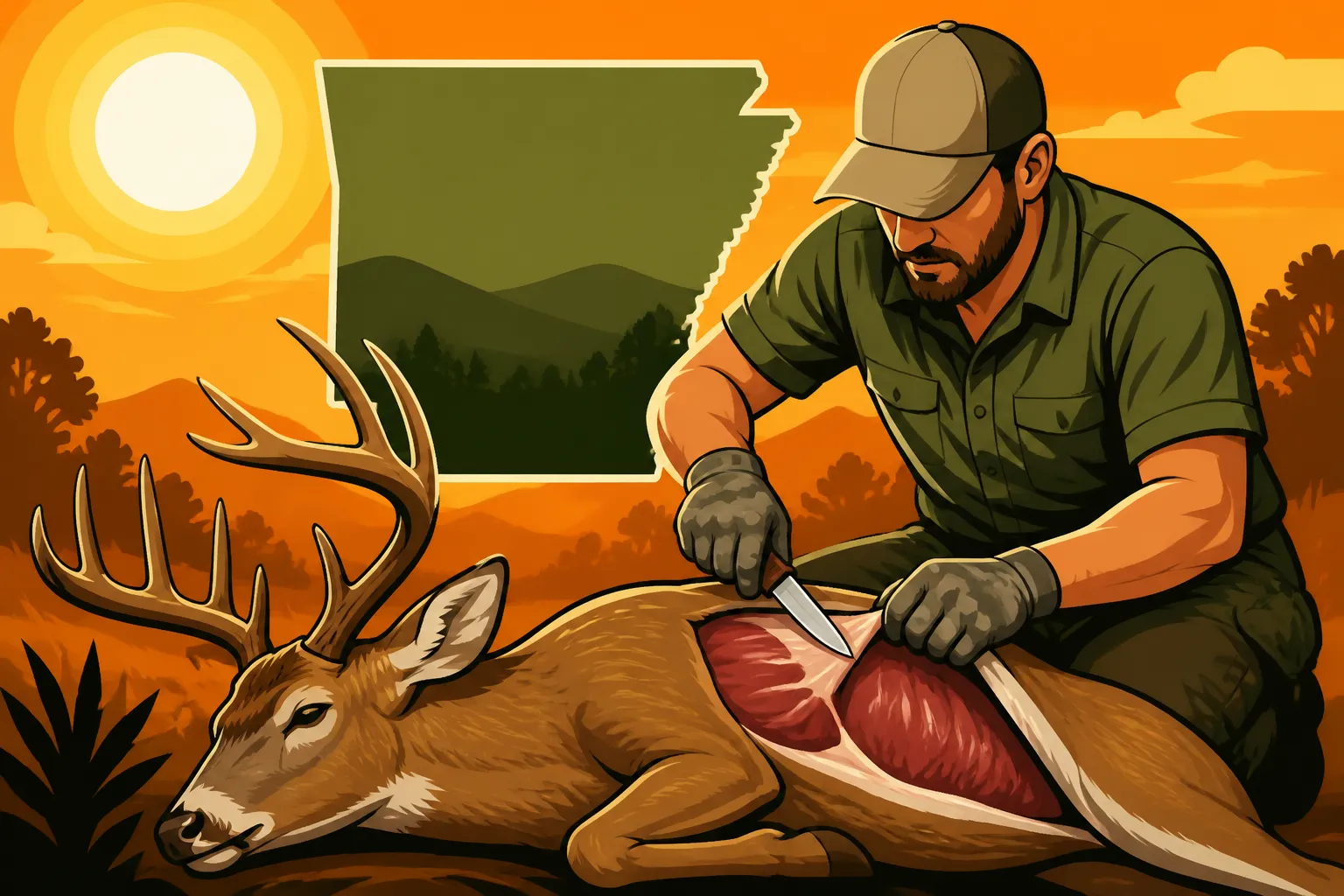
Now, for the initial cuts. Don your gloves. Start by carefully making a shallow incision through the hide, from the sternum (breastbone) all the way down to the pelvis. Be extremely careful not to puncture the abdominal cavity and spill the gut contents. Many hunters use a gut hook for this, or they carefully pinch up the hide with one hand and slide the knife blade, edge-up, just under the skin. Once you've opened the hide, you'll need to cut through the abdominal wall. Again, be gentle. Slide two fingers into the initial opening, lifting the muscle wall, and use your knife to cut between your fingers, preventing accidental punctures. Extend this cut to the breastbone and down to the pelvis, avoiding the bladder.
Next, you need to address the rectum. Carefully cut in a circle around the anus, freeing the intestine. For a male, you'll also need to cut around the penis. For a female, cut around the vagina. This crucial step allows the entire intestinal tract to be pulled free without tearing and contaminating the cavity with fecal matter. For added cleanliness, some hunters will tie off the rectum with a zip tie or string before cutting it free. This prevents any contents from spilling out during the evisceration process. Remember, the goal is minimal contamination and maximum cleanliness in these initial steps.
Evisceration and Airflow
With the body cavity open, it's time to get everything out as quickly and cleanly as possible. Reach into the chest cavity, past the diaphragm, and locate the windpipe and esophagus. Sever these as high up as you can reach, usually by cutting through the connective tissue. This might require a little force, especially on larger animals. Once these are cut, you can begin pulling them down towards the abdominal cavity.
Now, roll the animal slightly to one side, using gravity to help the organs fall away from the backbone. Systematically pull out all the organs: the heart, lungs, liver (set aside if you plan to keep it), stomach, intestines, bladder, and kidneys. Work from top to bottom, ensuring nothing is left behind in the chest or abdominal cavity. Be careful not to rupture any organs, especially the stomach or intestines. If you do, immediately wipe away any spilled contents with paper towels. The key here is not just removal, but thoroughness. Any lingering pieces of organ or connective tissue will continue to hold heat and promote bacterial growth.
Once everything is out, inspect the cavity. Is it clean? Are there any bits of diaphragm or lung tissue still attached? Remove them. Many hunters want to rinse the cavity with water, and while it feels like the right thing to do, it's often counterproductive in the field. Unless you have access to truly clean, potable water and can immediately dry the cavity and cool the meat, introducing water can actually provide more moisture for bacteria to thrive. In most field situations, especially in warm weather, a thorough wiping with paper towels or clean cloths is preferable to rinsing. The goal is to get the cavity as dry as possible, as fast as possible. This step, ensuring good airflow and a clean, dry cavity, is paramount to prevent spoilage. You can read more about specific tactics for this in a guide on Field Dressing a Deer in Warm Weather.
Rapid Cooling and Preservation Strategies
Field dressing is just the first critical step. Once the guts are out, the real work of cooling the meat rapidly begins. In Arkansas heat, this phase is non-negotiable for preserving quality.
Getting the Heat Out Fast
With the cavity open and clean, your immediate priority is to dissipate the remaining body heat. A common mistake is to simply leave the animal on the ground. Instead, prop the body cavity open as wide as possible. You can use sticks, branches, or even dedicated game spreaders. This allows air to circulate freely inside, drawing heat away from the meat. If you've been able to skin the animal in the field, even better. The hide acts as a natural insulator, and removing it significantly accelerates cooling. However, be mindful that skinned meat is more vulnerable to dirt, insects, and drying out, so get it into game bags quickly.
For larger animals or particularly hot days, consider immediately placing sealed bags of ice directly into the body cavity. Don't just dump loose ice in there; the meltwater can contaminate the meat. Use sturdy Ziploc bags or dedicated ice packs. The internal organs were the biggest heat source, but the muscle mass itself still retains a lot of warmth. This internal icing dramatically speeds up the cooling process from the inside out. If you have the means, elevate the animal off the ground. Even resting it on some logs or a couple of rocks will allow air to circulate underneath, preventing heat buildup from the warm ground.
If you're dealing with a very large animal like a mature hog or a big Delta buck, or if you have a long, difficult retrieve ahead, quartering the animal in the field becomes less of an option and more of a necessity. Breaking the animal down into smaller, more manageable pieces (two hindquarters, two front shoulders, and the backstraps/tenderloins) exposes much more surface area to the air, allowing it to cool far more rapidly. Each piece can then be placed into its own game bag. This method also drastically reduces the weight for transport, which is especially important when you're trekking out of a remote area where Delta Bucks Bed in Standing Water or up a steep incline in the Ozarks. The faster you can get that heat out, the better the meat will be.
Transporting and Continued Cooling
Once your game is field dressed, and ideally quartered, it's time for the journey from the field to your cooler or processing facility. This stage is just as important for maintaining meat quality. Each quarter, or the entire field-dressed carcass if it's a smaller animal, should be immediately placed into a breathable game bag. These bags are designed to protect the meat from flies, dirt, and debris while still allowing crucial air circulation. Do not wrap meat in plastic bags or tarps at this stage; this traps heat and moisture, negating all your efforts thus far.
During transport, keep the meat out of direct sunlight. If it's going into the back of a truck, cover it with a tarp or blanket to shield it from the sun's rays. But the ultimate destination for rapid cooling is a well-packed cooler. When packing your cooler, layer the game-bagged meat with ice. The goal is for ice to surround as much of the meat as possible, but without the meat sitting in a pool of meltwater. This means using a cooler with a good drain plug and ideally, a grate or rack at the bottom to keep the meat elevated above the meltwater. Block ice is still your best friend here, as it melts slower. You can also use frozen plastic bottles of water, which have the added benefit of providing clean drinking water once melted.
Ensure your cooler isn't overpacked. Too much meat crammed in means less ice-to-meat contact and slower cooling. If you have a long drive ahead, plan to stop and replenish your ice supply. The mantra is "keep it clean, keep it dry, keep it cold." If you're heading home after a hunt in late fall, a guide on Cooling Meat in an Arkansas November might seem less relevant if it's unseasonably warm, but the principles of maintaining that cold chain remain the same. The better you manage the temperature during transport, the better the final product will be.
Specific Challenges and Advanced Tactics
Hunting in Arkansas, especially on public land, often throws unique challenges your way. Dealing with a downed animal in the heat can amplify these difficulties. Being ready for the unexpected is part of the game.
Dealing with Public Land and Long Hauls
Public lands in Arkansas, while offering incredible hunting opportunities, often come with their own set of logistical hurdles. You might be miles from the nearest vehicle access, far from any readily available shade, or deep within thick timber. This is where the standard field dressing advice needs to be adapted. The "drag it out whole" mentality, which might work for a small deer in 30-degree weather, is a recipe for disaster in the 80-degree heat of September.
In these scenarios, quartering the animal in the field isn't just a suggestion; it's often a necessity. Breaking the animal down into its primal cuts – hams, shoulders, backstraps, tenderloins – makes the individual pieces much lighter and easier to carry. More importantly, it allows for maximum surface area exposure to the air, which is critical for rapid cooling. Invest in a good quality hunting backpack with a frame designed for hauling meat, like those offered by GoHunt's gear partners or similar brands. These frames can distribute weight effectively, making those long hauls out of a Ouachita hollow or a remote Delta WMA much more manageable.
Planning for these long hauls starts well before the hunt. Using detailed mapping tools like those from GoHunt or similar GIS systems during your Scouting Arkansas Public Land Before Season can help you identify potential extraction routes, natural breaks in cover that offer shade, or even areas where you might be able to stage a cooler. Look for game trails that might offer a slightly easier path, or plan your hunt to be closer to accessible roads when conditions are warm. Remember, the longer the meat sits uncooled, the greater the risk of spoilage, so minimizing the carry distance is always a priority. If you find yourself in a situation where you've got an animal down far from your vehicle, don't hesitate to immediately begin quartering. Every minute counts when the sun is beating down. When you’re dealing with getting a deer out of an Ozark hollow, you’ll be glad you opted for quartering.
Hygiene and Preventing Contamination
In the rush to get an animal field dressed and cooled, it's easy to overlook hygiene, but this is a critical aspect, especially in warm weather. Contamination from dirt, gut contents, or even your own hands can introduce bacteria that will accelerate spoilage.
Always start with clean hands and sterile gloves. If your knife gets excessively dirty with gut contents, take a moment to wipe it clean with a paper towel or a dedicated alcohol wipe. Avoid letting the meat touch the ground unnecessarily. If you must lay a piece down, use a clean tarp or a large game bag to create a barrier. When removing the gut pile, try to do so away from the carcass. The gut pile itself is a breeding ground for bacteria and attracts flies almost instantly. While flies might seem like a minor nuisance, they can quickly lay eggs that turn into maggots, further compromising your meat. Breathable game bags are your first line of defense against flies.
After field dressing, consider where you're leaving the gut pile. If you're on public land, move it well off the trail and away from water sources. Dispose of any bloodied paper towels or gloves responsibly. Some hunters carry a small spray bottle with a mild bleach solution or vinegar to spray down exposed meat after it's been field dressed, particularly if flies are an immediate concern. While this isn't always necessary, it's an option for extreme conditions. The underlying principle is simple: the cleaner you can keep the meat from start to finish, the less chance bacteria have to gain a foothold, and the better the quality of your harvested game will be. It's about being respectful to the animal, the land, and the meat you're bringing home.
Common Mistakes and How to Avoid Them
Even experienced hunters can make crucial mistakes when faced with the pressure of a downed animal and rising temperatures. Knowing what to avoid is just as important as knowing what to do.
Not Acting Fast Enough
This is arguably the single biggest mistake hunters make in warm weather conditions. The adrenaline of the shot, the excitement of the retrieve, and the desire to take photos can all lead to delays that are detrimental to the meat. I've seen it time and again: a hunter gets a buck down, spends 30 minutes celebrating, another 20 minutes taking pictures from every angle, and then decides to field dress. If it's 75 degrees Fahrenheit, you've just lost an hour of critical cooling time. That internal body heat isn't going anywhere fast on its own.
The moment you confirm the animal is down and it's safe to approach, your mindset needs to shift from "hunter" to "meat processor." The first priority is to get that internal heat out. This means field dressing before pictures, before calling friends and family, and before starting the long drag or carry. Think of it as an emergency procedure – every second counts. If you're hunting with a partner, one person can start the field dressing while the other handles marking the location, retrieving gear, or making preparations for transport. Don't fall into the trap of thinking a few extra minutes won't matter; they absolutely do when battling bacterial growth. The "wait and see" approach, hoping the temperature will magically drop or the sun will disappear, is a surefire way to compromise your harvest.
Improper Cooling and Storage
Once the field dressing is complete, the job isn't over. The second most common mistake is failing to cool and store the meat properly. This manifests in several ways. One big one is leaving the field-dressed animal exposed to the elements. Without game bags, flies will quickly colonize the meat, and direct sunlight will negate all your field dressing efforts. Even if it's in the shade, the ground itself can be a heat sink, slowly warming the meat back up.
Another critical error is using insufficient ice or, worse, letting the meat sit in meltwater. Cubed ice melts quickly, especially if the cooler isn't pre-chilled or properly insulated. As it melts, it turns into water, and if your game-bagged meat is floating in that water, you're essentially creating a bacterial soup. Water, especially non-sterile water, can introduce new contaminants and, more importantly, quickly degrade the quality of the meat, leading to a "water-logged" or spoiled texture and taste. This is why block ice or frozen water bottles are preferred, and why keeping the meat elevated off the bottom of the cooler is so important.
Finally, overpacking a cooler is a common mistake. It might seem efficient to cram as much meat and ice as possible into one cooler, but this reduces airflow and limits the ice's ability to pull heat from the meat effectively. Give your meat and ice space to breathe and work. If you have too much game for one cooler, use another. Better to bring home perfectly cooled meat in two coolers than spoiled meat in one. Remember, the goal is to get the core temperature of that meat down to below 40 degrees Fahrenheit as quickly as possible and keep it there until it's ready for Butchering a Deer at Camp or a professional processor.
| Method | Pros | Cons | Best Use Case |
|---|---|---|---|
| Leaving Intact | Minimal effort, quick initial post-shot | Slowest cooling, highest spoilage risk | Only suitable for very cold weather (below 35°F) or immediate processing |
| Field Dressing | Good initial cooling, reduces weight | Still requires further rapid cooling | Standard method for most deer, good for moderate temps |
| Field Quartering | Fastest cooling, easiest transport (large game) | More labor-intensive, greater exposure | Large game (hogs, elk), long retrieves, extreme heat |
| Ice in Cavity | Direct internal cooling, very effective | Requires carrying ice, careful sealing needed | Immediate chilling after dressing, critical in warm weather |
| Game Bags | Protects from flies/dirt, allows airflow | Does not cool on its own, needs a cooler | Essential for all methods once game is dressed/quartered |
Disclaimer
Please remember that hunting regulations and best practices can change. Always consult the latest Arkansas Game and Fish Commission (AGFC) regulations before heading afield. This guide is for informational purposes only and does not supersede official hunting guidelines. Ensure you understand and follow all local, state, and federal laws regarding hunting and game handling.