Arkansas Hunter Orange Requirements
Hunting in Arkansas is an incredible experience, but it can also be a little confusing when it comes to understanding all the rules, especially those critical safety measures like hunter orange requirements. No one wants to head into the woods unsure if they're following the law, or worse, putting themselves or others at risk. This guide is here to clear up all the nuances of hunter orange in Arkansas, ensuring you’re both legal and safe every time you step afield.
The Core Rule for Hunter Orange in Arkansas
Let's face it, the array of seasons, zones, and weapon types in Arkansas can make your head spin, and trying to remember exactly when hunter orange is mandatory often feels like a pop quiz you didn't study for. The absolute bottom line, the one rule you must engrave in your mind, is that if you're out hunting deer or bear with a modern gun or an alternative firearm, or even just accompanying someone who is, hunter orange is not just recommended—it's the law.
When Hunter Orange is Absolutely Mandatory
When the crisp air of fall settles over Arkansas and the modern gun deer season opens, or during any of the special alternative firearms seasons, hunter orange becomes as essential as your rifle. This requirement isn't just for the person pulling the trigger; it applies to everyone in the hunting party. Imagine a group hunt where one person forgets their orange; they're not only breaking the law but creating a dangerous weak link in the safety chain. This includes the popular Arkansas Modern Gun Deer Hunting periods and any special youth modern gun hunts, where safety is paramount.
For instance, during the statewide modern gun seasons, whether you’re deep in the Ozarks or stalking timber in the Delta, you need to be visibly covered in orange. This also extends to those special days like the Arkansas Youth Modern Gun Dates where our younger hunters are out enjoying the sport. Even if you're not actively hunting, but are just a companion or assisting with a recovery, you fall under this mandatory rule. It's about maximizing visibility for everyone in the woods, especially when high-powered firearms are in use.
Specific Exemptions and Situations
Now, while the modern gun and alternative firearms seasons demand orange, there are other times in Arkansas when you can shed the blaze. During the long and popular Arkansas Archery Deer Season Dates, whether you're chasing bucks in September heat or late-season does in January, hunter orange is generally not required for archers. The same goes for most turkey hunting seasons, as wild turkeys have excellent color vision, making hunter orange a distinct disadvantage for camouflage-dependent hunting styles.
However, a crucial point here is context. If you're bowhunting on public land, like a WMA, and there's an overlapping modern gun bear or deer season happening concurrently, you're still obligated to wear hunter orange. Always double-check the specific regulations for the WMA or general zone you're in, as rules can sometimes be layered. Don't assume that just because you're using a bow, you're exempt from orange if a gun season is active in the same area. Tools like GoHunt can be incredibly useful for checking real-time season overlays and specific WMA regulations.
What "Hunter Orange" Really Means
It's one thing to know when you need hunter orange, but another to truly understand what constitutes legal hunter orange in Arkansas. It's not just any bright orange shirt you found in your closet; there are specific requirements designed to ensure maximum visibility and, therefore, maximum safety. Skimping on these details is a common mistake that can land you in a bind or, worse, compromise your safety.
The Specifics of the Requirement
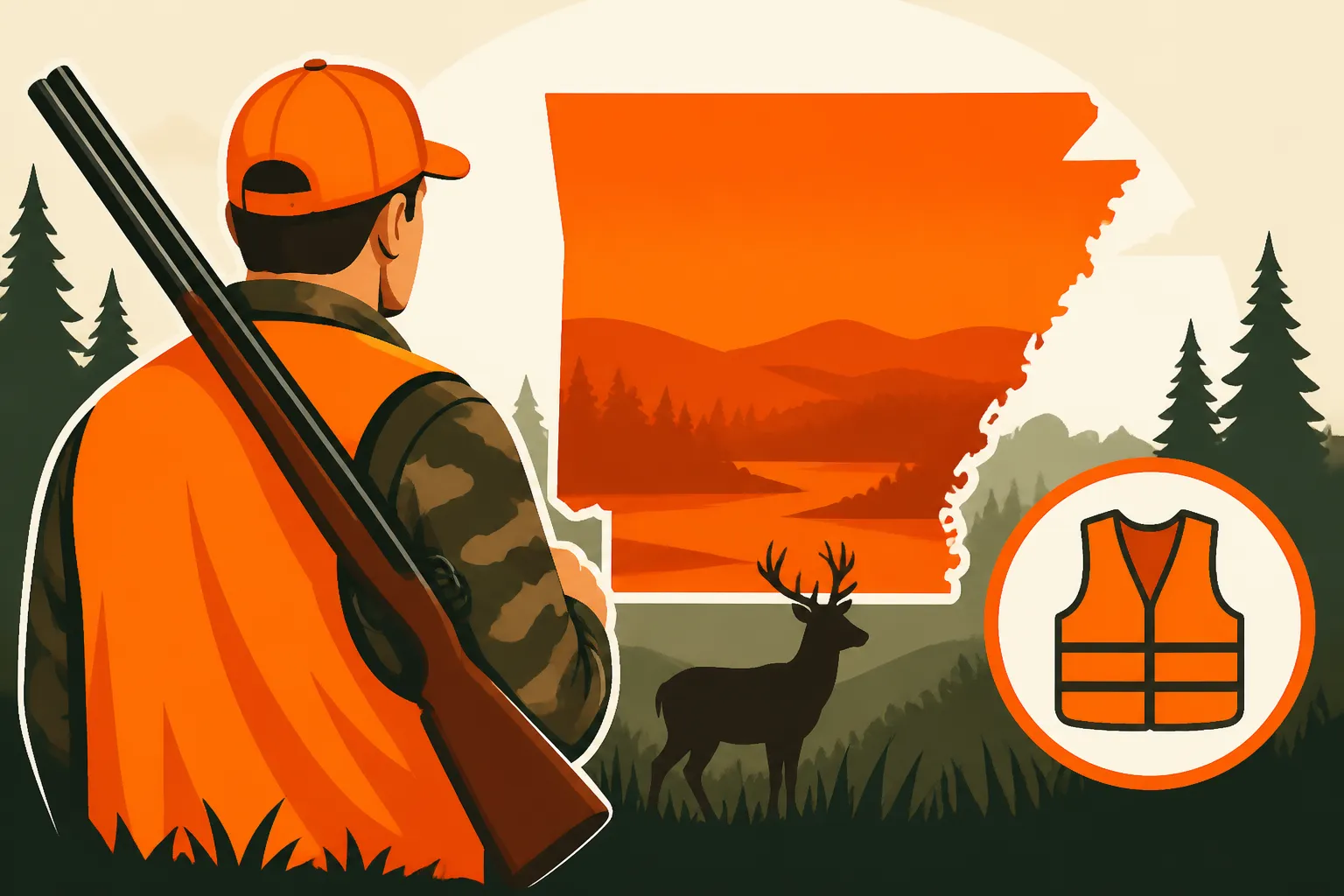
According to the Arkansas Game and Fish Commission (AGFC) regulations, anyone hunting deer or bear with a modern gun or alternative firearm, or accompanying someone doing so, must wear an outer garment with at least 400 square inches of hunter orange or "blaze orange" above the waist. This isn't just a patch; it needs to be a substantial amount of material. Crucially, this orange must be visible from all sides, meaning it can't be covered by a backpack or a jacket. Often, this means a hunter orange vest combined with a hunter orange hat, ensuring visibility from 360 degrees.
Think about it this way: when you're moving through dense timber or thick brush, every angle needs to scream "human!" to another hunter. A small patch on your back won't cut it if you're facing away or crouched down. That's why the 400 square inches is key, and why a vest and hat combo is so popular and effective. The material needs to be true hunter orange, a specific shade optimized for visibility in natural environments, not just a reddish-orange or safety orange you might see on road crews.
Common Mistakes and Misconceptions
One of the biggest pitfalls many hunters fall into is mistaking camouflage orange for true hunter orange. While camo orange designs are popular and might seem like a good compromise, they often don't meet the AGFC's 400 square inch requirement for solid hunter orange. The broken patterns of camo orange can reduce overall visibility, especially in low light or dense cover. Always opt for solid blaze orange during mandatory periods.
Another common misconception is that wearing orange inside a vehicle or only when you're walking to your stand is enough. The requirement is for while you are actively hunting or accompanying hunters. So, if you're retrieving game, still-hunting, or simply moving through the woods to a new spot, your orange needs to be on and fully visible. And remember, the AGFC defines what counts as Legal Firearms for Arkansas Deer, and if you're using one of those during an open season, the orange rule applies. Don't let a small oversight lead to a serious situation.
Why Hunter Orange Saves Lives
Hunter orange isn't just a rule plucked out of thin air; it's a proven safety measure backed by decades of data and scientific understanding of how the human eye perceives color in natural settings. Its widespread adoption has dramatically reduced hunting accidents, making our time in the woods safer for everyone.
The Science Behind Visibility
Deer and most other game animals are dichromatic, meaning they see in two primary colors, typically yellow and blue, similar to a human with red-green color blindness. This means that blaze orange, which appears as a vibrant, almost glowing color to humans, registers as a dull grey or brown to deer, effectively blending into the background from their perspective. However, to the human eye, hunter orange stands out starkly against the greens, browns, and grays of the forest, even at long distances and in poor light conditions.
This distinct visual contrast is the genius of hunter orange. It allows hunters to be easily identified by other humans, preventing tragic mistakes caused by misidentification. This is especially crucial in areas of high hunter density, like many of the Arkansas Wildlife Management Areas during peak seasons. The goal is to eliminate any doubt as to whether a shape in the woods is a person or a deer.
Preventing Accidents in the Field
Imagine a scenario: you’re slowly Still-Hunting Arkansas Pine Country on a foggy morning, meticulously scanning the undergrowth for movement. Suddenly, a flash of movement catches your eye. Without hunter orange, that flash could be mistaken for a deer's rump or a patch of fur. With hunter orange, however, that flash instantly registers as "human," forcing you to pause, identify, and confirm before ever raising your weapon.
Hunter orange is particularly vital during group hunts or when approaching downed game. It's easy to get tunnel vision when tracking a deer, and another hunter moving in for a closer look might not be immediately obvious. During any form of deer drive or when multiple hunters are in close proximity, the constant visibility offered by orange helps maintain situational awareness. This simple garment is a silent, constant declaration of your presence, drastically reducing the chances of "mistaken for game" accidents, which historically were a leading cause of hunting fatalities.
Hunter Orange and Other Hunting Activities
While deer and bear seasons with firearms are the primary focus for hunter orange regulations, it's wise to consider its role (or lack thereof) in other hunting pursuits. The rules can vary, and sometimes, even when not legally required, wearing orange can still be a smart choice for personal safety.
Small Game, Waterfowl, and Predator Hunting
For the most part, hunting small game like squirrels or rabbits, waterfowl, or predators like coyotes and bobcats, does not legally require hunter orange in Arkansas. These activities often rely heavily on camouflage or stealth, and the bright orange would be a hindrance. For instance, when you're Squirrel Hunting Arkansas Hardwoods, you need to blend in to get close to those wary tree dwellers. The same applies to Green Timber Duck Hunting in Arkansas or calling coyotes, where any unnatural color can spook game.
However, a critical caveat here: if you're pursuing small game or predators in an area where a modern gun deer or bear season is concurrently open, the hunter orange rules for those big game seasons take precedence. For example, if you're rabbit hunting on a WMA during the statewide modern gun deer season, you must still wear hunter orange. Always consult the current AGFC regulations for overlaps. When in doubt, wear it. It's better to be safe than sorry, especially if you're sharing the woods.
Special Cases: Public vs. Private Land
A common question hunters have is whether hunter orange rules differ between public and private land. The short answer in Arkansas is no, not for the core requirement. Arkansas Game and Fish Commission regulations, including those for hunter orange, generally apply statewide, regardless of whether you're on your own land, leased property, or public ground like the Ouachita National Forest Hunting areas or the Ozark National Forest Hunting regions.
While private landowners might have additional rules they impose for their property, they cannot override or lessen AGFC safety requirements. So, if you're on private land during a modern gun deer season, you still need to be wearing your 400 square inches of blaze orange. Understanding property boundaries and public access points can be crucial for safety and compliance, and digital mapping tools like GoHunt, along with the Using the AGFC Map Tool, can provide invaluable assistance in navigating these distinctions and ensuring you're always aware of where you are and what rules apply.
Hunter Orange Requirements by Season
Here's a quick reference table to help clarify when hunter orange is typically required in Arkansas:
| Hunting Activity/Season | Hunter Orange Required? | Notes |
|---|---|---|
| Modern Gun Deer Hunting | YES | Mandatory 400 sq. inches above waist, visible 360 degrees. |
| Alternative Firearms Deer/Bear Hunting | YES | Includes muzzleloader, archery-only season during gun deer/bear, etc. |
| Archery-Only Deer Hunting (No gun season) | NO | Generally not required, but advisable if high hunter traffic or near active gun hunts. |
| Fall/Spring Turkey Hunting | NO | Turkeys have excellent color vision; camouflage is preferred. |
| Small Game Hunting | NO (unless overlap) | Required if active modern gun deer/bear season is concurrent in same area. |
| Waterfowl Hunting | NO | Camouflage is critical for duck and goose hunting. |
| Predator Hunting | NO (unless overlap) | Required if active modern gun deer/bear season is concurrent in same area. |
| Accompanying Hunter (during gun season) | YES | Applies to non-hunting companions, game retrievers, etc., during mandatory periods. |
How to Make Sure You're Always Compliant
Staying compliant with hunter orange rules isn't just about avoiding a ticket; it's about being a responsible, ethical hunter and contributing to a safer environment for everyone in the woods. There are some practical steps you can take to ensure you're never caught off guard.
Checking the Latest Regulations
The Arkansas Game and Fish Commission updates its regulations annually, and sometimes mid-season changes can occur. It's imperative that you always check the most current digest before heading out. This is where your personal responsibility truly shines. Don't rely on what you think you remember from last year or what your buddy told you. The official AGFC website and the printed regulation booklets are your best sources. These will clarify specific dates for Arkansas Modern Gun Season Structure or Arkansas Archery Deer Season Structure and their associated orange requirements.
Making this a routine part of your pre-hunt preparation is key. Just like you check your license, tags, and gear, make checking the regulations a non-negotiable step. Utilize resources like the AGFC app, which often has up-to-date information at your fingertips, even in areas with spotty cell service. This proactive approach ensures you’re always on the right side of the law and, more importantly, making safe choices.
Investing in Quality Hunter Orange Gear
Don't skimp on your hunter orange gear. A cheap, flimsy vest that tears easily or a hat that fades quickly isn't going to serve you well. Invest in good quality, durable hunter orange clothing that meets the 400 square inch requirement. Many reputable outdoor brands offer excellent options, from lightweight vests for early season hunts to insulated options for colder late-season excursions. Remember, the material should be tough enough to withstand briars and brush without tearing, maintaining its integrity and visibility throughout your hunt.
Consider having multiple options available. A lightweight mesh vest is perfect for those warm early November hunts, while a heavier, insulated vest or even a hunter orange jacket might be better for colder conditions. A solid hunter orange hat, like a baseball cap or a beanie, is also an excellent addition, ensuring visibility for your head and often completing the 360-degree requirement. Make it a part of your essential hunting kit, right alongside your Arkansas Hunting Licenses and What They Cost and your first-aid kit.
What Happens if You Don't Comply
Ignoring hunter orange requirements in Arkansas can lead to more than just a stern talking-to. The AGFC takes safety violations seriously, and not wearing mandated hunter orange can result in fines and potentially other legal consequences. Depending on the specific circumstances and any other violations, penalties can vary, but generally, it's considered a misdemeanor offense.
Beyond the legal ramifications, the personal cost of non-compliance is far greater. The real risk is an accident, either to yourself or another hunter. No deer, bear, or hunting experience is worth risking a life-altering injury or fatality. Understanding Arkansas Hunter Education and Safety Rules isn't just a requirement; it's a commitment to responsible hunting. Always prioritize safety, and wearing hunter orange when required is one of the easiest and most effective ways to do just that. Should you ever witness a violation, knowing how to appropriately Reporting a Poacher in Arkansas or other infractions to the AGFC can help ensure continued safety and proper wildlife management.
Disclaimer
Please remember that hunting regulations, including those for hunter orange, can change. Always consult the most current Arkansas Game and Fish Commission regulations guide before engaging in any hunting activity. This article is for informational purposes only and should not be considered legal advice.