Arkansas Legal Shooting Hours
There's nothing quite like the anticipation of a crisp Arkansas morning or the quiet fading light of an evening hunt. But that magical window of prime hunting time also comes with a strict set of rules, and knowing the precise legal shooting hours is one of the most critical. Misinterpreting these times, even by a few minutes, can turn an otherwise successful hunt into a serious legal headache. This guide is here to demystify Arkansas's legal shooting hours, ensuring you stay safe, ethical, and on the right side of the law.
Understanding the Basics: What Are Legal Shooting Hours?
For many hunters, legal shooting hours can feel like a moving target, literally changing by the minute with the seasons. It’s not just about sunrise and sunset; it’s about a specific window defined by the Arkansas Game and Fish Commission (AGFC) to ensure fair chase and public safety. Getting this wrong isn't just a minor infraction; it can lead to citations, fines, and even the loss of hunting privileges.
Defining the Standard: 30 Minutes Before Sunrise to 30 Minutes After Sunset
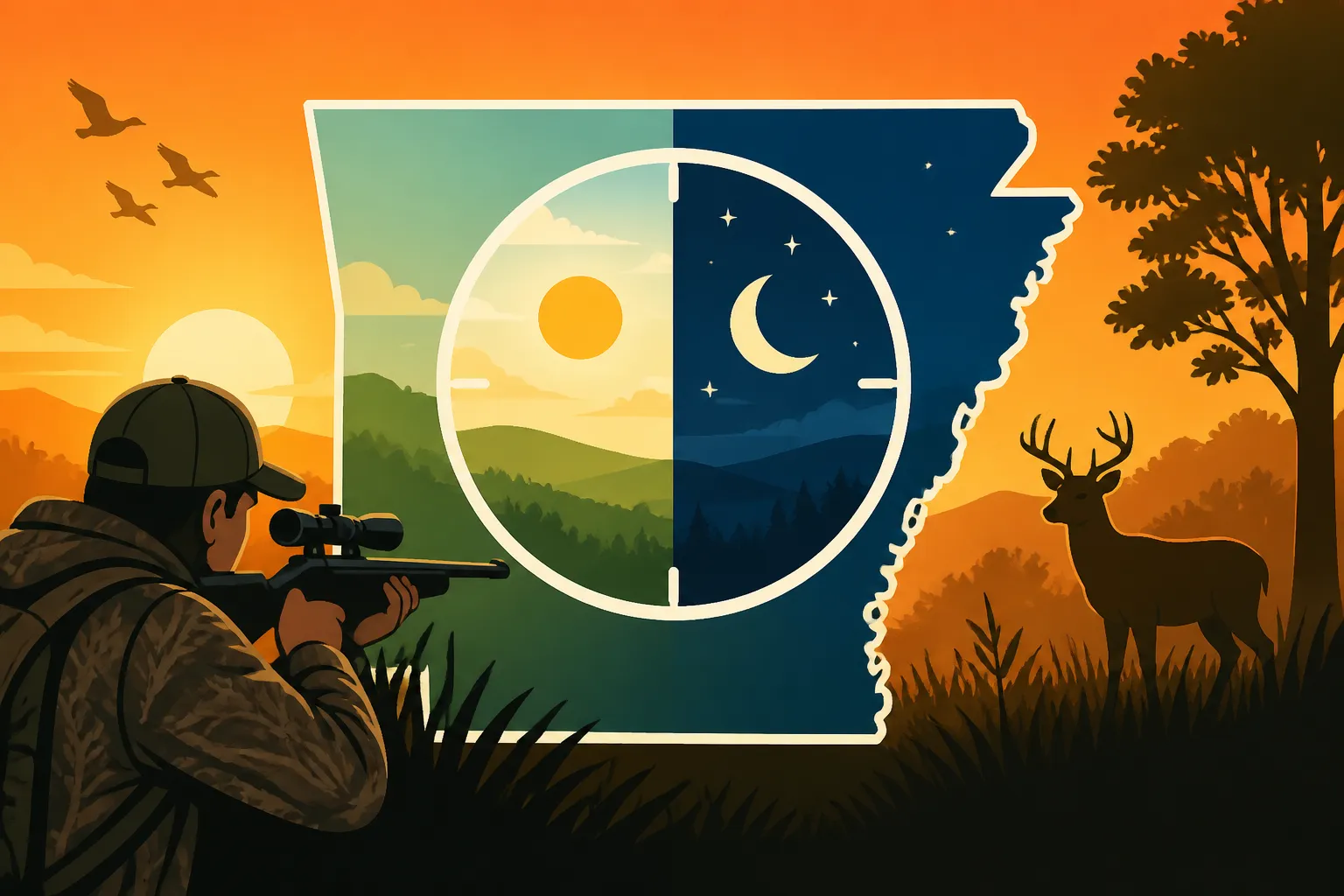
Let's cut right to the chase: for most game animals in Arkansas, the general rule is that you can legally shoot from 30 minutes before official sunrise until 30 minutes after official sunset. This is the golden standard that applies to deer, turkey, bear, and most small game like squirrels and rabbits. It seems straightforward, right? But the devil, as always, is in the details, especially when it comes to pinpointing those "official" times. Many hunters try to eyeball it or rely on a simple weather app, but that's a dangerous game to play.
The AGFC establishes these times based on astronomical data for specific geographic points in the state. What might be 30 minutes before sunrise in one part of Arkansas could be slightly different in another. This variance is why it’s so important to consult official resources rather than just guessing. You might think a few minutes won't matter, but law enforcement officers aren't looking for "close enough." They're looking for adherence to the published regulations.
The Importance of Official Times: Not Your Phone's Sunrise/Sunset App
This is where many hunters get tripped up. You pull out your smartphone, open your favorite weather app, or even just Google "sunrise Little Rock AR," and you get a time. But is that the official time that the AGFC uses? Not always. Different apps and sources can pull data from various astronomical models, leading to slight discrepancies. The AGFC, through its regulations and often its mobile app, provides the exact times you need to follow.
Think of it this way: the AGFC isn't trying to make it hard; they're trying to make it unambiguous for enforcement. Relying on an unofficial source, even if it's usually close, opens you up to potential issues. Imagine setting up your stand, carefully watching the sky, and thinking you're legal, only to find out you were off by 5-10 minutes according to the official chart. That's a huge frustration, especially when you've done your best to be compliant. That's why tools like the official AGFC app, or a reliable mapping system like GoHunt, which often integrates official data, can be invaluable. They take the guesswork out of it.
Penalties for Ignoring the Clock: It's Not Just a Recommendation
Let’s be honest, nobody wants to get a ticket while they’re out enjoying the woods. But when it comes to shooting hours, a violation isn't just a slap on the wrist. Hunting outside of legal shooting hours is considered a serious offense, often falling under "hunting during a closed season" or "illegal taking of game." The penalties can include significant fines, the forfeiture of your harvested animal (if one was taken illegally), and even the suspension of your hunting license for a period of time.
Consider the ripple effect: a license suspension means you're sitting out seasons you've planned for, paid for, and looked forward to. It impacts your ability to obtain licenses in other states as well, due to interstate wildlife compacts. These rules are in place for real reasons – safety, fair chase, and wildlife management – and the AGFC takes them very seriously. It underscores why understanding and meticulously following Arkansas Legal Shooting Hours is paramount. No hunter wants to explain why they thought it was "close enough" to a game warden.
Why These Rules Exist: Safety, Fair Chase, and Wildlife Management
It might seem like an arbitrary rule, but there's a lot of thought and historical precedent behind legal shooting hours. These regulations aren't designed to make hunting harder; they're designed to make it safer, more ethical, and more sustainable for our wildlife resources.
Visibility and Ethical Shots: When Light Matters Most
The most obvious reason for specific shooting hours is visibility. While our eyes can adjust to low light, our ability to clearly identify a target and ensure a clean, ethical shot is severely compromised in twilight conditions. Hunting isn't just about pulling a trigger; it's about making a responsible decision to harvest an animal cleanly and humanely. In poor light, hunters are more likely to:
- Misidentify their target: Could it be another hunter? A non-game animal? An antlerless deer when you have an antlered tag?
- Make a poor shot: An animal hit poorly will suffer and often escape, leading to wasted game and prolonged suffering. Tracking a wounded animal in low light is incredibly difficult and dangerous.
- Shoot outside of their safe zone of fire: Without clear visibility, it's harder to confirm what's beyond your target, increasing the risk of accidentally hitting another person, a vehicle, or property.
The "30 minutes before sunrise and 30 minutes after sunset" window is generally considered the minimum amount of light required for hunters to make these critical identifications and decisions confidently and safely. It's a balance between maximizing hunting opportunity and ensuring responsible practices.
Preventing Poaching and Unfair Advantage: The Intent Behind the Limits
Illegal hunting, or poaching, often occurs under the cover of darkness. By restricting legal hunting to periods of reasonable visibility, wildlife agencies make it much harder for those who would break the law to operate undetected. Animals, particularly deer, often become more active at dawn and dusk. Allowing hunting strictly during these times prevents hunters from taking an unfair advantage when animals are most vulnerable and less able to detect threats in truly dark conditions.
This concept ties into the principle of "fair chase," a cornerstone of ethical hunting. Fair chase dictates that hunters should not have an unsportsmanlike advantage over the game they pursue. Hunting in pitch black, even with artificial lights (which are generally illegal for big game), removes that element of fair chase and dramatically increases the risk of unethical practices. These regulations help maintain a level playing field between hunter and hunted.
Respecting Wildlife Patterns: Minimizing Disturbance During Crucial Hours
Wildlife, like humans, have natural routines. Many species are crepuscular, meaning they are most active during dawn and dusk. The current shooting hours allow hunters to intercept these patterns. However, going beyond these times would create undue disturbance during periods when animals are bedding down for the night or just beginning their diurnal activities.
For instance, deer often move into feeding areas right at last light or move back to bedding areas just before first light. Allowing hunting deep into the night or too early in the pre-dawn hours could constantly disrupt these crucial movements, potentially stressing animals and altering their natural behaviors in ways that could negatively impact their health and reproduction. The rules also contribute to a sense of order in the woods, preventing a chaotic, 24-hour hunting free-for-all that would be detrimental to both wildlife and the hunting experience.
Specifics by Game Type: When You Can Hunt What
While the 30-minute rule is a great baseline, it's not universal. Arkansas has different rules for different species, particularly when it comes to migratory birds and certain furbearers. Always double-check the current AGFC regulations for the specific species you're pursuing.
Deer and Most Big Game: The Standard Applies
For our beloved white-tailed deer, as well as black bear and wild turkey, the 30 minutes before sunrise to 30 minutes after sunset rule holds true. This applies across all weapon types – archery, modern gun, and alternative firearms. Whether you're bowhunting Arkansas's five-month archery season or participating in Arkansas Modern Gun Deer Hunting, these are the times you must adhere to.
This consistency makes it relatively easy for big game hunters to remember. However, it's still vital to consult official sunrise/sunset tables, especially when you're hunting different parts of the state. For example, the precise times in the Delta will be slightly different than in the Ozarks or Ouachitas. A minute or two might not seem like much, but it could be the difference between a legal shot and a violation.
Here’s a simplified table for common game:
| Game Species | General Legal Shooting Hours | Notes |
|---|---|---|
| Deer, Bear, Turkey | 30 minutes before sunrise to 30 minutes after sunset | Standard rule for all legal hunting methods. |
| Waterfowl (Ducks, Geese) | 30 minutes before sunrise to sunset | No shooting after sunset for migratory birds. |
| Small Game (Squirrel, Rabbit) | 30 minutes before sunrise to 30 minutes after sunset | Same as big game, generally. |
| Furbearers (Coyote, Bobcat) | 30 minutes before sunrise to 30 minutes after sunset (day) | Can be hunted at night with specific equipment/rules. |
| Frogs, Furbearers (Night) | No restrictions on time, but specific methods apply | Special regulations for lights, weapon types, etc. |
Waterfowl and Migratory Birds: Different Rules for Different Feathers
This is a critical distinction that often catches hunters off guard. For ducks, geese, doves, and other migratory game birds, the shooting hours are typically 30 minutes before sunrise to sunset. Notice the difference? You cannot shoot migratory birds for 30 minutes after sunset. This is a federal regulation, enforced by state agencies like the AGFC, and it's strictly adhered to.
If you're out there duck hunting in Arkansas flooded green timber or Field and Flooded Rice Duck Hunting in the Delta, you absolutely must be aware of this specific end time. Many a duck hunter has been caught taking a "last shot" after official sunset, only to face a federal violation. It's a quick way to lose your birds, your gun, and face hefty fines. These regulations are designed to prevent excessive harvest and give the birds a period of undisturbed rest as they transition to night roosts.
Small Game and Furbearers: More Flexibility for Certain Species
For species like squirrels, rabbits, and many furbearers (like raccoons and opossums), the general 30 minutes before sunrise to 30 minutes after sunset rule usually applies for daytime hunting. So, if you're out Small Game and Squirrel Hunting in Arkansas, you'll follow the big game schedule.
However, certain furbearers and frogs have different rules, allowing for night hunting. For example, Arkansas allows night hunting for coyotes, bobcats, raccoons, and opossums, but this often comes with specific equipment restrictions, such as allowable lights and weapon types. You might be able to use a spotlight for certain species, but absolutely not for deer. These rules are detailed in the "Predator and Furbearer Hunting in Arkansas" section of the AGFC regulations. It’s crucial to know exactly what species you're targeting and what methods are permissible after dark. For instance, you can typically use a light to hunt raccoons and opossums at night, but you cannot use a light to take a deer.
Night Hunting and Special Permits: Exceptions to the Rule
As mentioned, true "night hunting" in Arkansas is generally reserved for specific species like certain furbearers, frogs, and often feral hogs (with specific rules that can change). There are strict rules governing the use of artificial lights, night vision, and thermal imaging. For big game like deer, bear, and turkey, night hunting is unequivocally illegal.
Sometimes, special permits or specific seasons might allow for deviations, but these are rare and always clearly outlined by the AGFC. For example, some depredation permits for landowners dealing with crop damage might have expanded hours, but these are exceptions, not the rule, and require specific authorization. Hunters interested in night hunting should consult the current AGFC code for details on what equipment is allowed for specific species and when. For instance, when you're bowfishing Arkansas Rivers and Oxbows for rough fish, you'll find different rules about lighting and hours than you would for big game.
Navigating Nuances: Special Cases and Considerations
The AGFC regulations are comprehensive, but local variations and unique situations can always add layers of complexity. Staying informed requires a proactive approach and a willingness to dig a little deeper.
WMA Specifics and Local Ordinances: Always Check Beyond State Law
Arkansas's Wildlife Management Areas (WMAs) are incredible public resources, offering fantastic hunting opportunities. However, each WMA can have its own specific set of regulations that might further restrict state-wide rules. This is incredibly important when it comes to shooting hours. While a WMA might follow the general state shooting hours, some could have specific access times, or even different hours for certain hunts (like youth hunts or special permit hunts).
Before you head out to any WMA, whether it's for deer, duck, or small game, always check the current AGFC WMA regulations specific to that area. You can find these on the AGFC website, within the annual hunting guide, or sometimes posted at WMA entry points. These specific rules could include things like when you can enter and exit the area, or when specific blinds can be occupied. Don't assume that because it's legal statewide, it's legal on your chosen WMA. Tools that integrate WMA-specific rules, like some features on GoHunt, can be very helpful here.
Using Technology: Apps and Tools to Stay Legal
In this day and age, technology can be a hunter's best friend. There are several excellent resources available that can help you pinpoint legal shooting hours accurately:
- AGFC Mobile App: The official Arkansas Game and Fish Commission app is usually the most reliable source. It often provides real-time sunrise/sunset data specific to your location or designated hunting zones, automatically calculating the 30-minute windows.
- Specialized Hunting Apps: Many popular mapping and hunting apps, such as GoHunt, integrate sunrise and sunset times directly into their platforms. Some even have features that show you exactly when your legal hunting window begins and ends for your current location. Make sure these apps are pulling from reliable, official astronomical data.
- Online Tables: The AGFC website often publishes tables of sunrise/sunset times for key locations across the state. While not real-time for your exact spot, they provide an excellent guide.
The key is to use these tools responsibly. Don't just glance at the time; understand how the 30-minute rule applies. Set alarms on your phone, or better yet, use a dedicated hunting watch that can track these times for you. Being proactive with technology can save you a lot of grief.
Common Misconceptions and Hunter Education: Clearing Up Confusion
Despite the clear rules, several misconceptions persist that can lead hunters astray:
- "Civil Twilight" vs. "Official Sunrise/Sunset": Many weather apps report "civil twilight" which is a period of diffused light. However, legal shooting hours are based on the official astronomical sunrise and sunset, not twilight periods. This difference can easily be 10-15 minutes, which is enough to cause a violation.
- "As long as I can see": Your personal visual acuity has no bearing on the legal shooting hours. The rule is absolute, regardless of whether you feel like you can clearly see your target.
- "It's just five minutes": As discussed, game wardens don't typically give leeway for "just a few minutes." A violation is a violation.
This is why hunter education is so vital. Programs like Arkansas Hunter Education and Safety Rules thoroughly cover legal shooting hours and other crucial regulations, instilling the importance of knowing and following the rules. Even experienced hunters should review the regulations annually, as they can sometimes change. Staying informed is the best way to ensure you have a safe, legal, and enjoyable hunting season in Arkansas. Always consult the most current AGFC regulations to avoid any surprises regarding when Arkansas allows hunting.
Disclaimer
Please note that hunting regulations, including legal shooting hours, can change. This guide is for informational purposes only and should not be considered a substitute for the official Arkansas Game and Fish Commission (AGFC) regulations. Hunters are responsible for knowing and adhering to all current state and federal hunting laws. Always consult the latest AGFC hunting guide or website before heading afield.