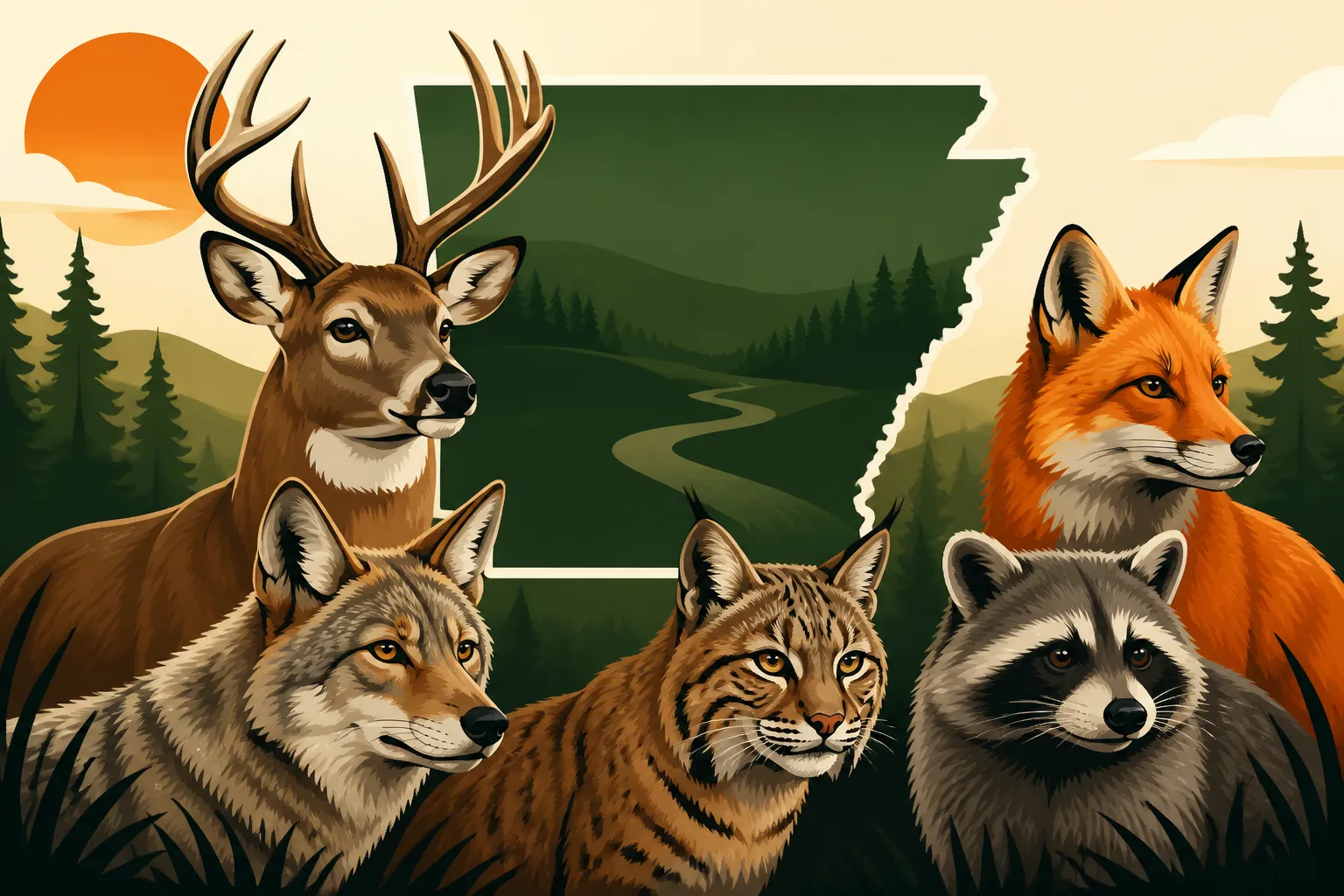
Arkansas Predators and Furbearers
Let's be honest, dealing with critters that can sometimes feel like they're eating your profit margins or impacting your deer herd can be a real headache. Whether it's the wily coyote, the elusive bobcat, or the ever-destructive feral hog, hunters and landowners in Arkansas often face unique challenges with predator and furbearer populations. This comprehensive guide will walk you through everything you need to know about these animals, their impact, and the best strategies for hunting and trapping them responsibly across the Natural State.
Common Predator and Furbearer Species in Arkansas
Arkansas is a state rich in diverse wildlife, and that includes a healthy population of predators and furbearers. These animals play crucial roles in our ecosystems, but their numbers and behaviors can sometimes present management challenges for landowners and hunters alike. Understanding who these animals are and their typical haunts is the first step toward effective management or a successful hunt.
Coyotes: The Ubiquitous Opportunist
Coyotes are perhaps the most widespread and adaptable predators in Arkansas, found in virtually every habitat type from the dense forests of the Ozarks to the open farmlands of the Delta. They are incredibly opportunistic, thriving on a diet that includes deer fawns, rabbits, rodents, birds, insects, and even fruits and berries. Their presence is often felt more than seen, with their distinctive howls echoing through the night. Many hunters view coyotes as direct competitors for deer and turkey populations, especially during fawning and nesting seasons. This is one of the main drivers behind the push to manage coyote numbers. They are truly masters of survival, quickly learning and adapting to human presence and hunting pressure, which makes them a formidable target for even experienced hunters. You might hear them yipping and howling around your deer stand, a constant reminder of their presence and often, their impact on the game you're after.
Bobcats and River Otters: Elusive and Valued
Unlike the vocal coyote, bobcats are far more secretive and elusive, preferring dense cover in forested areas, swamps, and rocky outcrops. These beautiful felines are skilled hunters, primarily preying on rabbits, squirrels, and small rodents, though they will occasionally take larger game like deer fawns. Their cryptic nature makes encounters rare, adding to the thrill for those who manage to harvest one. River otters, on the other hand, are semi-aquatic furbearers found in healthy rivers, streams, lakes, and oxbows across the state, particularly in the eastern Delta region. They are known for their playful nature and their diet of fish, crustaceans, and amphibians. Both bobcats and otters are highly valued for their luxurious fur, making them prized targets for trappers. Their populations are generally stable, and regulated trapping seasons help ensure their long-term health while providing economic opportunities for trappers. Tracking these animals often requires a keen eye for subtle sign and an understanding of their preferred aquatic or dense forest habitats.
Raccoons and Opossums: Nighttime Foragers
Raccoons and opossums are quintessential nocturnal creatures, commonly found near water sources, in hardwood forests, and often venturing into suburban and agricultural areas. Raccoons, with their distinctive masked faces, are incredibly clever and adaptable omnivores, eating almost anything from crawfish and frogs to corn and bird eggs. Their dexterity and intelligence make them a challenge for property owners trying to protect gardens or poultry. Opossums, North America's only marsupial, are also generalist scavengers, known for "playing possum" when threatened. Both species can be detrimental to ground-nesting birds, like wild turkeys and quail, and their eggs, making them a management concern for those focused on game bird populations. Many hunters enjoy chasing raccoons with hounds at night, a traditional form of hunting deeply rooted in Arkansas culture. This provides a unique challenge and camaraderie, often under the stars.
Feral Hogs: An Invasive Menace
Perhaps no other non-native species causes as much frustration and damage in Arkansas as the feral hog. These destructive animals are an ecological and agricultural nightmare, tearing up fields, rooting through timber, destroying crops, and preying on native wildlife like deer fawns and turkey poults. Their unchecked reproduction rate means that even aggressive efforts to control them often feel like a losing battle. Feral hogs can be found in every county in Arkansas, with populations particularly dense in river bottoms and agricultural areas. The Arkansas Game and Fish Commission (AGFC) strongly encourages their eradication, making them one of the few species hunters can pursue year-round with very few restrictions. Understanding the scale of the problem is key, and many landowners are desperate for hunters to help mitigate the damage these animals inflict. For more on this critical issue, check out our piece on The Arkansas Feral Hog Problem.
Understanding Arkansas's Predator and Furbearer Regulations
Navigating the rules and regulations for hunting and trapping predators and furbearers in Arkansas can feel a bit like trying to solve a puzzle. The Arkansas Game and Fish Commission (AGFC) sets these guidelines with conservation and management in mind, balancing hunter opportunity with species sustainability. It’s absolutely critical to be well-versed in these rules before you head out, as violations can lead to hefty fines and loss of privileges. Things can change, too, so always consult the most current AGFC hunting guide each year.
General Season Dates and Bag Limits
While some species, like coyotes and feral hogs, can often be pursued year-round with liberal or no bag limits, many furbearers have specific seasons. Bobcat and river otter, for instance, typically have set trapping seasons, and sometimes specific hunting seasons, that are much shorter. These seasons are designed to coincide with prime fur quality and to ensure sustainable populations. It’s not a free-for-all, even if it feels like you're doing good work managing nuisance animals. For example, during a typical season, there might be a specific timeframe, say, from November to February, when bobcats and otters can be legally harvested. The AGFC publishes detailed calendars each year, often available online and at license vendors. You need to know which zone you're in, too, as some regulations can vary by deer or bear management zones, even for furbearers. Always double-check the current year's digest.
Night Hunting Rules and Restrictions
Night hunting for predators and furbearers is a popular and effective method, especially for nocturnal animals like raccoons, opossums, and coyotes. However, Arkansas has very specific rules governing when, where, and how you can hunt at night. Generally, you’ll need to use a light source and often a specific firearm or archery equipment. For instance, hunting with artificial lights for coyotes at night is often allowed, but there might be restrictions on the type of light (e.g., handheld vs. weapon-mounted) and the specific counties or WMAs where it's permitted. The use of thermal imaging or night vision devices is also regulated. These advanced optics are a game-changer for night hunting, but you need to understand the legalities surrounding their use. Additionally, when it comes to night hunting, be aware of specific rules like those detailed in Night Hunting Rules for Arkansas Predators. It's not just about what you can shoot, but also how you spot and illuminate your target.
Trapping Regulations and Permit Requirements
Trapping is a highly regulated activity in Arkansas, distinct from hunting. If you plan to trap furbearers like bobcats, river otters, raccoons, or opossums, you'll need specific licenses and permits beyond a general hunting license. The AGFC mandates specific trap types, setting methods, check times, and placement rules to ensure humane practices and prevent non-target species capture. For example, specific jaw spread limits for foothold traps, or body-gripping traps of certain sizes, are common. Trap tags with your AGFC license number are usually required. There are also detailed rules about where traps can be set, particularly near public roads or residences. These regulations are designed to protect public safety and ensure the welfare of the animals. If you’re serious about trapping, it's essential to thoroughly review the "Trapping and Furbearer Rules" section of the AGFC digest and consider taking a trapper education course. You can't just throw out a few snares and hope for the best; there's a real science and legal framework to it.
| Species | Primary Legal Methods | Typical Season | Bag Limit | Notes |
|---|---|---|---|---|
| Coyote | Rifle, Shotgun, Archery, Calling, Trapping | Year-round | No limit | Often legal at night with lights. |
| Feral Hog | Rifle, Shotgun, Archery, Trapping, Dogs | Year-round | No limit | Hunters encouraged to remove. |
| Raccoon | Hunting (day/night with dogs), Trapping | Fall-Spring | No limit | Popular with hound hunters at night. |
| Opossum | Hunting (day/night with dogs), Trapping | Fall-Spring | No limit | Often harvested incidentally with raccoons. |
| Bobcat | Hunting, Trapping | Late Fall-Winter | Zone limits | Valuable fur; elusive animal. |
| River Otter | Trapping | Late Fall-Winter | Zone limits | Valuable fur; aquatic species. |
Note: This table provides a generalized overview. Always consult the current Arkansas Game and Fish Commission regulations for precise dates, limits, and specific rules that may vary by zone or WMA.
Hunting Coyotes: A Year-Round Challenge
Coyote hunting in Arkansas is a game of wits, and it's a popular pursuit for many hunters, partly because they're a common nuisance and partly because it offers a challenging hunt outside of traditional deer and duck seasons. These intelligent canids are constantly learning, making consistent success difficult but incredibly rewarding. With no closed season or bag limit on private land in most areas, you have ample opportunity to hone your skills. For those looking for detailed tactics, exploring resources on Coyote and Bobcat Calling in Arkansas can significantly up your game.
Calling Tactics: Sound and Scent
One of the most effective ways to bring in coyotes is through calling. You're essentially mimicking their prey or other coyotes to pique their curiosity or aggression. Electronic calls, like those from Foxpro or ICOtec, offer a vast library of sounds, from rabbit distress to pup howls and barks. These can be incredibly versatile, allowing you to switch between sounds to find what a particular coyote responds to. On the other hand, mouth calls, such as hand-operated diaphragms or open-reed calls, require more skill but offer a more personal, nuanced touch. I’ve seen seasoned hunters pull in coyotes that ignored electronics, simply because they could perfectly mimic a wounded rabbit with a mouth call.
Beyond sound, scent control is paramount. Coyotes have an incredible sense of smell, and if they catch a whiff of human odor, your hunt is over before it begins. Using scent-eliminating sprays, washing clothes in scent-free detergents, and playing the wind are non-negotiable. Setting up downwind or crosswind of your calling location is crucial, allowing the sound to travel while keeping your scent from reaching the coyote's approach path. Sometimes, a subtle scent like a synthetic coyote urine or a curiosity lure can also draw them in those last few critical yards. GoHunt offers articles that dive deep into the science of scent control, which can be invaluable.
Gear for Coyote Hunting: Rifles, Shotguns, and Optics
When it comes to gear, you've got options depending on your preferred hunting style and the terrain you're in. For open country or longer shots, a rifle chambered in a flat-shooting caliber like .223 Remington, .22-250 Remington, or even a .243 Winchester is ideal. Accuracy is key, so pair your rifle with a good quality scope with sufficient magnification. Many hunters prefer a variable power scope (e.g., 3-9x or 4-12x) that allows for both wide field of view at close range and precise aiming at a distance. If you're hunting in dense timber or brush, or expect close encounters, a shotgun loaded with buckshot (like #4 Buck) or heavy predator loads can be devastatingly effective. It allows for quick, reactive shots at fast-moving targets.
For night hunting, the gear list expands considerably. Traditional methods involve powerful spotlights paired with a rifle or shotgun. However, modern thermal and night vision optics have revolutionized the game. These devices allow you to spot coyotes in complete darkness, giving you a significant advantage. Just remember, as mentioned earlier, always check the current AGFC regulations on using these devices for night hunting, as rules can change and vary by location. A good bipod or shooting sticks are also indispensable for stable shots, whether day or night.
Best Times and Locations for Success
Coyotes can be hunted any time of year, but certain periods and locations offer better chances. Early morning and late evening are often prime times when coyotes are most active, moving between bedding and feeding areas. During the breeding season (typically late winter to early spring) and when pups are being raised, territorial calls and pup distress calls can be particularly effective. After a cold front or a fresh rain, coyotes often become more active, making these good times to hit the woods.
As for location, look for edges: where fields meet woods, clear-cuts adjoin mature timber, or brushy areas transition to open ground. These are natural travel corridors and hunting grounds for coyotes. River bottoms, especially in the Delta, can be coyote hotspots due to abundant prey and cover. In the Ozarks, focus on draws, saddles, and old logging roads that offer good visibility and natural funnels. Public lands, while potentially more pressured, still hold plenty of coyotes. Remember, scouting Arkansas Public Land Before Season can reveal key travel routes and denning areas, improving your odds. Don't be afraid to try different spots; sometimes the most unexpected location will produce.
Trapping and Hunting Bobcat and River Otter
These two furbearers represent different challenges and rewards for the dedicated hunter or trapper. Both are valuable for their pelts and offer a genuine test of skill to consistently bring to hand. Given their elusive nature, understanding their habits and habitats is paramount to success.
Understanding Bobcat Behavior and Habitat
Bobcats are masters of stealth, perfectly camouflaged and incredibly wary. They prefer habitats with dense cover, such as thickets, rocky bluffs, swamps, and heavily wooded areas, often interspersed with open patches for hunting. In Arkansas, this means they can be found in a variety of landscapes, from the mountainous regions of the Ozarks and Ouachitas to the bottomland hardwoods and cypress swamps of the Delta. They are primarily nocturnal or crepuscular (active at dawn and dusk), though they can be seen moving during the day, especially in remote areas or during colder weather when prey is scarce.
Their diet consists mainly of small mammals like rabbits, squirrels, and mice, but they are opportunistic and will take birds, reptiles, and even deer fawns if the opportunity arises. Understanding their territories and travel patterns is key. Bobcats use distinct travel corridors, often along ridge lines, creek bottoms, or game trails that offer good cover. They also utilize "sign posts" like fallen logs or specific trees for scent marking. Learning to read these subtle signs, such as scat, tracks, and scratch marks, is critical for both trappers and hunters. Their caution around human disturbance makes them incredibly difficult to outsmart, which is part of their allure.
Setting Traps and Hunting Methods for Bobcat
Trapping is arguably the most effective and common method for harvesting bobcats, due to their secretive nature. Foothold traps (like the #1.5 or #2 coilspring) or carefully set body-gripping traps are often used. Location is everything. Sets should be placed along known travel routes, at natural funnels, or near recent kill sites or sign posts. Scent is also crucial: a good bobcat lure, often a gland-based lure or a curiosity lure with skunky undertones, combined with a visual attractor like a bit of feathers or fur, can entice a bobcat to investigate. Dirt hole sets, cubby sets, and post sets are common and effective. Remember, you must adhere strictly to Arkansas's trapping regulations regarding trap size, setback from roads, and daily check requirements.
Hunting bobcats, while less common, is possible. Calling, similar to coyote hunting, can sometimes draw in a curious or hungry bobcat. Rabbit distress calls or bird-in-distress sounds can work. However, bobcats are much more hesitant and often approach cautiously, using heavy cover. You'll need to be incredibly patient, concealed, and ready for a quick, precise shot. Look for them to skirt the edges of your setup, often circling downwind before committing. Thermal or night vision optics can be a game changer for hunting bobcats at night, but again, check the specific legalities. Still-hunting through dense bobcat habitat, moving slowly and deliberately, can also lead to encounters, though they are rare.
River Otter Regulations and Trapping Techniques
River otters, with their sleek, beautiful fur, are another prized furbearer in Arkansas, almost exclusively taken by trapping due to their aquatic nature. Their populations are generally healthy, especially in the state's eastern half where water is abundant. The AGFC sets specific seasons for river otter trapping, and it's essential to consult the current regulations for exact dates and any bag limits or specific tagging requirements, which can change.
Trapping otters requires a good understanding of their aquatic habits. Look for otter slides on riverbanks, near beaver dams, or along creek edges where they enter and exit the water. These slides are often well-worn paths that otters use repeatedly. Another key sign is "scats," which are piles of fish scales, bones, and crayfish parts, often found on prominent logs or rocks near the water's edge. Conibear (body-gripping) traps, typically 220s or 330s, set in submerged run-throughs or blind sets where otters dive under logs or through narrow passages, are highly effective. Foothold traps can also be used in drowning sets near slides or pinch points. Scent can be used, often an oily, fish-based lure, to draw them into a set. Successfully trapping a river otter is a testament to a trapper's skill and knowledge of aquatic furbearer behavior.
Night Hunting for Raccoon and Opossum
Night hunting for raccoons and opossums is a cherished tradition in Arkansas, particularly with hounds. It's an exciting, active, and social way to enjoy the outdoors, often providing excellent meat and fur. While modern technology offers new avenues, the classic method with dogs remains a powerful draw for many. If you're looking to dive deeper into this classic pastime, our guide on Raccoon Hunting at Night in Arkansas offers a wealth of additional details.
Lights and Dogs: The Traditional Approach
The quintessential Arkansas coon hunt involves a pack of well-trained hounds, a powerful headlamp or spotlight, and the thrill of listening to the dogs work through the dark woods. Dogs, typically breeds like coonhounds (Black and Tan, Bluetick, Redbone, Walker, Plott), are essential because of their incredible scenting ability and their instinct to "tree" raccoons. They'll pick up a track, often follow it for some distance, and then bay loudly when they've treed the coon. This is where the hunter comes in, locating the treed animal with a spotlight. The "shine" of a raccoon's eyes in the dark, high up in a tree, is an iconic image for any coon hunter.
This method is highly interactive and requires a good relationship between hunter and dog. Hunters need to be prepared for rugged terrain, often traversing creeks, thick brush, and uneven ground in the dark. A good, reliable light is paramount, not just for spotting the coon but also for navigating the woods and ensuring safety. The camaraderie of a coon hunt, sharing stories and laughs while listening to the hounds, is a significant part of its appeal. It’s also an excellent way to introduce new hunters to the woods, teaching them about animal tracking, dog handling, and nighttime navigation.
Modern Thermal and Night Vision Gear
While traditional coon hunting with dogs is still popular, modern optics have opened up new possibilities for night hunting raccoons and opossums, sometimes without dogs. Thermal imaging and night vision devices allow hunters to scan large areas silently and spot these nocturnal animals even in dense cover. A thermal monocular can be used to locate heat signatures in trees or on the ground, and then a night vision scope or a thermal rifle scope can be used for precise aiming.
This approach often appeals to hunters who prefer a quieter, more solitary hunt, or those focusing on nuisance animals around property without wanting to disturb neighbors with barking dogs. It's incredibly effective for spotting animals that might be otherwise undetectable. However, the initial investment in quality thermal or night vision gear can be substantial. Just like with coyotes, it is absolutely essential to verify the legality of using thermal and night vision for raccoons and opossums in Arkansas, as regulations on these technologies can be strict and subject to change. Some areas might have specific rules for using artificial lights vs. passive night vision.
Effective Strategies for Night Hunts
Regardless of whether you're hunting with dogs or modern optics, several strategies can increase your success. For raccoons and opossums, focus your efforts around water sources – creeks, rivers, ponds, and swamps are prime habitat. Look for large, mature hardwood trees that offer good denning sites. Agricultural fields, especially cornfields or those with standing grain, are also excellent spots, as these animals will raid crops. Scouting during the day can reveal travel corridors, feed trees (like oaks or pecans), and den sites.
When hunting with dogs, letting them work slowly and thoroughly through promising habitat is key. Listening to their barks and understanding their vocalizations will tell you if they’re on a fresh track or if they've already treed an animal. For those using thermal, patience and careful scanning are important. Animals will often be moving or feeding, so a slow, deliberate sweep of an area can reveal multiple targets. Always consider the wind, even at night; while their vision is limited, their sense of smell is still acute. Setting up near a known food source or water crossing, downwind, can increase your chances of a successful ambush.
The Feral Hog Problem: Control and Opportunity
Feral hogs are not just a nuisance; they're an ecological disaster unfolding in real-time across Arkansas. These invasive animals cause millions of dollars in agricultural damage annually, destroy critical wildlife habitat, and can transmit diseases to livestock and even humans. For hunters and landowners, understanding the scope of the problem and actively participating in control efforts isn't just a hobby—it's often a necessity.
Impact of Feral Hogs on Arkansas Ecosystems
The impact of feral hogs on Arkansas's delicate ecosystems is nothing short of devastating. Their incessant rooting behavior disrupts soil structure, destroys native vegetation, and reduces the biodiversity of plant and animal communities. Imagine a pristine bottomland hardwood forest, its understory carefully managed for deer and turkey forage, only to be completely churned up and destroyed by a sounder of hogs in a single night. This rooting leads to erosion, degraded water quality, and the destruction of food sources for native wildlife.
Beyond habitat destruction, feral hogs directly compete with native wildlife for food. Acorns, a vital food source for deer, turkeys, and bears, are quickly consumed by hogs, leaving less for game species. They also directly prey on ground-nesting bird eggs, turkey poults, and, most critically, white-tailed deer fawns. Studies have shown that hog predation can significantly impact fawn recruitment, especially in areas with high hog densities. Furthermore, they are reservoirs and vectors for diseases like brucellosis and pseudorabies, which can be transmitted to domestic livestock and even humans. This multifaceted damage makes them a genuine threat to both agricultural economies and wildlife conservation efforts throughout the state.
Hunting and Trapping as Control Methods
Given their destructive nature and rapid reproductive rates, active control of feral hog populations is crucial. Hunting, while often seen as a recreational activity, plays a vital role in this control. Unlike game species, there are generally no closed seasons or bag limits for feral hogs on private land in Arkansas, and often very liberal rules on public lands (though always check specific WMA regulations, as some WMAs have restrictions). This allows hunters to pursue them year-round, using a variety of methods. Modern gun hunters often target hogs opportunistically while deer hunting, or dedicate specific hunts to them using high-capacity semi-automatic rifles. For instance, knowing when and where you can apply Modern Gun Tactics on Arkansas Public Land can be highly beneficial for hog control.
Trapping, however, is often considered the most effective method for reducing hog numbers, especially for capturing entire sounders (groups of hogs) at once. Large corral traps, often equipped with remote trigger mechanisms, are highly successful. Baited with corn or other attractants, these traps can remove multiple hogs efficiently. Snaring, where legal and safely deployed, is another effective method, particularly along travel corridors. The key to effective trapping is patience, consistent baiting to pattern the hogs, and careful placement of traps. Combining hunting pressure with strategic trapping offers the best chance at significantly impacting local hog populations.
Legal Framework for Feral Hog Eradication
The legal framework in Arkansas strongly supports the eradication of feral hogs, recognizing them as an invasive species. The AGFC classifies them as a nuisance animal, not a game animal, which means they are excluded from many of the protections afforded to native wildlife. On private land, landowners and those with permission can hunt hogs year-round, day or night, using almost any legal hunting method. There are typically no bag limits. This aggressive stance is a direct response to the immense damage hogs cause.
However, specific rules apply to public lands like Wildlife Management Areas (WMAs) and National Forests. While general hog hunting is often allowed, certain WMAs might have restrictions on specific hunting methods (e.g., no night hunting, no baiting, specific weapon types) or require permits. For example, some WMAs may restrict vehicle access or require hunters to retrieve carcasses. It is absolutely imperative to check the specific regulations for any public land you plan to hunt or trap hogs on. This emphasis on eradication also means there are no requirements for checking or tagging harvested hogs, unlike deer or turkeys. The overarching message from the AGFC is clear: if you see a feral hog, help remove it.
Predator Calling and Equipment for Arkansas Hunters
Predator calling is an art and a science, offering one of the most exciting and interactive forms of hunting. The thrill of having a coyote or bobcat charge into your setup, responding to your calls, is unmatched. But it takes more than just blowing into a call; it requires understanding the animals, their vocalizations, and how to present a convincing scenario.
Types of Calls: Electronic vs. Mouth Calls
When it comes to predator calls, you essentially have two main categories: electronic and mouth calls. Both have their place and their advantages.
Electronic Calls: These have revolutionized predator hunting. Brands like Foxpro, ICOtec, and Lucky Duck offer units preloaded with dozens, if not hundreds, of different sounds: various rabbit distress calls, bird distress calls, coyote howls, barks, pup distress, feline distress, and even sounds like deer fawns in distress.
- Pros: Versatility is their biggest strength. You can instantly switch between sounds, adjust volume, and often operate them remotely, placing the call away from your position to draw attention away from yourself. This can be crucial when dealing with wary predators that might circle downwind.
- Cons: They require batteries, can be expensive, and sometimes the sheer volume of choices can be overwhelming for beginners. Plus, relying solely on electronics might make you miss out on the subtle nuances a skilled mouth caller can produce.
Mouth Calls: These include open-reed calls, closed-reed calls, and diaphragm calls. They require more practice and skill to master but offer incredible realism and control.
- Pros: They are inexpensive, lightweight, and never run out of batteries. A skilled mouth caller can add a personal touch, mimicking subtle shifts in tone and volume that might convince a hesitant predator. They offer a more intimate connection to the hunt.
- Cons: The learning curve can be steep. It takes practice to produce realistic sounds consistently. You're also limited to the sounds you can physically make.
Many experienced predator hunters carry a combination of both—an electronic call for broad appeal and volume, and a mouth call for precise, subtle finishes or when an electronic call fails.
Decoys and Scent Control for Predators
To complete your convincing illusion, don't underestimate the power of visual and olfactory aids. A motion decoy can be a game-changer, especially for wary coyotes or bobcats that might hang up at a distance. Decoys that mimic a wounded rabbit, a fluttering bird, or even a small rodent can draw a predator's eye and distract them from your position. The movement is key; it creates a focal point that draws their attention away from the subtle movements you might make or the scent you might leave. Placing your decoy 20-40 yards from your position, off to the side, ensures that when the predator approaches the decoy, it presents a broadside shot opportunity for you.
Scent control, as we touched on earlier, is absolutely paramount. Predators, particularly canids like coyotes, possess an incredible sense of smell. If they pick up human odor, they will often circle downwind, scent-check the area, and then vanish without you ever knowing they were there.
- Steps for Scent Control:
- Scent-free Laundry: Wash all hunting clothes in scent-free detergent and store them in sealed bags or containers.
- Personal Hygiene: Use scent-free soaps, shampoos, and deodorants before your hunt.
- Wind Awareness: Always play the wind. Set up so your scent is blowing away from where you expect predators to approach.
- Avoid Contamination: Don't fuel your vehicle or handle food with your hunting clothes on. Avoid common odors like coffee, tobacco, or bug spray.
- Cover Scents: While not a substitute for scent elimination, some hunters use cover scents (e.g., skunk essence, fox urine) to mask residual human odor or add a touch of realism to their setup.
Combined, a good decoy and meticulous scent control make your setup much more believable and increase your chances of getting a predator into shooting range.
Strategic Setup and Wind Consideration
Your setup location and how you manage the wind are critical factors that often determine success or failure in predator calling. You can have the best calls and gear, but a poor setup will spook more animals than you call in.
Strategic Setup:
- Visibility and Concealment: Choose a spot that offers a clear line of sight into the areas you expect predators to approach from, but also provides excellent concealment for yourself. Think about shadows, brush, or the edge of a timber line. You want to see them before they see you.
- Backdrop: Always have a solid backdrop, like a thick tree or a rise, to break up your silhouette. This prevents predators from spotting you silhouetted against the sky.
- Escape Routes: Identify potential escape routes for the predator. They often approach cautiously, using cover. Anticipate their path and set up to intercept them before they feel exposed.
- Multiple Hunters: If hunting with a partner, position yourselves to cover different approach angles, ideally with one hunter covering the downwind side, where a wary coyote is likely to try and circle.
- Distance from Call/Decoy: If using an electronic call or decoy, place it 20-40 yards from your position. This draws the predator's attention away from you and provides a closer shot when they commit.
Wind Consideration:
- Primary Factor: The wind is your most important ally and your biggest enemy. You must set up so your scent is blowing away from the direction you expect predators to come from.
- Crosswind vs. Downwind: A crosswind setup is often ideal, allowing the sound to travel effectively while minimizing the chance of your scent blowing directly into the predator's approach path. A perfectly downwind setup is dangerous because your scent will hit them first. An upwind setup means they might not hear you.
- Thermals: In hilly or mountainous terrain, understand thermals. Air rises as it heats up and falls as it cools. Early morning, thermals often draw scent downhill, while in the afternoon, they pull it uphill. Account for this in your setup, especially when hunting in the Ozarks or Ouachitas. Understanding Wind and Thermals in Ouachita Hollows can dramatically improve your success rate in these challenging areas.
Mastering these setup principles, combined with effective calling and gear, significantly increases your odds of bringing home a predator.
Ethical Considerations and Conservation
Hunting predators and furbearers in Arkansas comes with a responsibility that extends beyond simply harvesting an animal. Ethical conduct and a strong conservation mindset are paramount, not only for the health of the wildlife populations but also for maintaining a positive public image of hunting itself. This means thinking about fair chase, respecting the animal, and utilizing what you harvest.
Fair Chase and Respect for the Animal
The principle of fair chase is a cornerstone of ethical hunting. It dictates that hunters should not have an unfair advantage over the animal, ensuring that the animal has a reasonable chance to escape. For predators and furbearers, this means refraining from practices that eliminate the challenge, such as shooting animals from vehicles on public roads, using calls that are overly intrusive in restricted areas, or engaging in methods that are not specifically permitted by the AGFC. While the goal with some species like feral hogs is eradication, even then, humane and legal methods should always be employed.
Respect for the animal is equally important. This includes striving for quick, humane kills and avoiding unnecessary suffering. Hunters should be proficient with their chosen weapon and capable of making an ethical shot. After the harvest, showing respect by properly caring for the carcass, whether for meat, hide, or both, is part of the tradition. This mindful approach elevates hunting beyond mere killing and connects it to a deeper appreciation for nature. Even when dealing with a nuisance animal like a coyote, the animal deserves respect as a living creature.
Public Perception and Hunter Responsibility
In today's interconnected world, public perception of hunting is constantly under scrutiny. Unethical or irresponsible behavior by a few hunters can quickly tarnish the reputation of the entire hunting community. Predator and furbearer hunting, in particular, sometimes faces misunderstanding from the non-hunting public, who might view it as cruel or unnecessary. This makes hunter responsibility even more critical.
Hunters have a duty to represent their sport positively. This means:
- Adhering to Regulations: Strictly following all AGFC rules, including seasons, methods, and WMA-specific guidelines.
- Being a Good Neighbor: When hunting near private property, always secure permission and be mindful of noise, lights, and any potential disturbance.
- Educating Others: Be willing to explain why you hunt predators (e.g., for conservation, deer management, fur harvest) in a respectful and informative manner.
- Proper Disposal: If not utilizing the meat or hide, dispose of carcasses respectfully and legally.
- Reporting Violations: Do your part to uphold ethical standards by reporting any wildlife violations you witness to the AGFC.
Every hunter is an ambassador for the sport. By demonstrating responsible and ethical practices, you contribute to a positive public image and help ensure the future of hunting in Arkansas.
Meat Utilization and Hide Preparation
Many predators and furbearers, particularly raccoons, opossums, and even some coyotes, offer opportunities for meat utilization, while most furbearers are harvested primarily for their valuable pelts.
Meat Utilization: Raccoon meat, for instance, is a traditional food source for many in Arkansas, often slow-cooked or stewed. While some find the flavor strong, proper preparation—including removing all fat and parboiling—can result in delicious meals. Opossum meat can also be prepared similarly. Even coyotes, though less commonly eaten, can be processed for their meat if handled correctly. Field dressing quickly, especially in warmer temperatures, and ensuring the meat is cooled rapidly are crucial steps to ensure quality, similar to handling venison. Our piece on Field Dressing in Arkansas Heat might be helpful for general game handling.
Hide Preparation: The hides of bobcats, river otters, raccoons, and opossums are highly prized. For trappers and hunters pursuing these animals for their fur, proper hide preparation is essential to maximize value. This involves:
- Skinning: Carefully skinning the animal to avoid cuts or holes in the hide.
- Fleshing: Removing all fat and muscle tissue from the hide. This is a meticulous process that prevents spoilage and ensures the hide lays flat for drying.
- Stretching and Drying: Stretching the hide flesh-side out on a proper stretcher or board, allowing it to dry slowly in a cool, well-ventilated area. This process, often called "putting up" fur, needs to be done correctly to achieve a high-quality, marketable pelt.
Learning these skills—whether it's cooking a raccoon or fleshing a bobcat hide—connects you more deeply to the harvest and ensures that as much of the animal as possible is utilized. It's the ultimate act of respect for the animal and part of the sustainable tradition of hunting and trapping.
Disclaimer
The information provided in this guide is for general informational purposes only and is not a substitute for the official regulations published by the Arkansas Game and Fish Commission (AGFC). Hunting and trapping regulations are subject to change annually and may vary by specific location, including Wildlife Management Areas (WMAs) and federal lands. Always consult the current AGFC hunting and trapping digests, available on their website or from licensed vendors, before engaging in any hunting or trapping activities. It is the individual hunter's responsibility to know and obey all applicable laws and regulations.