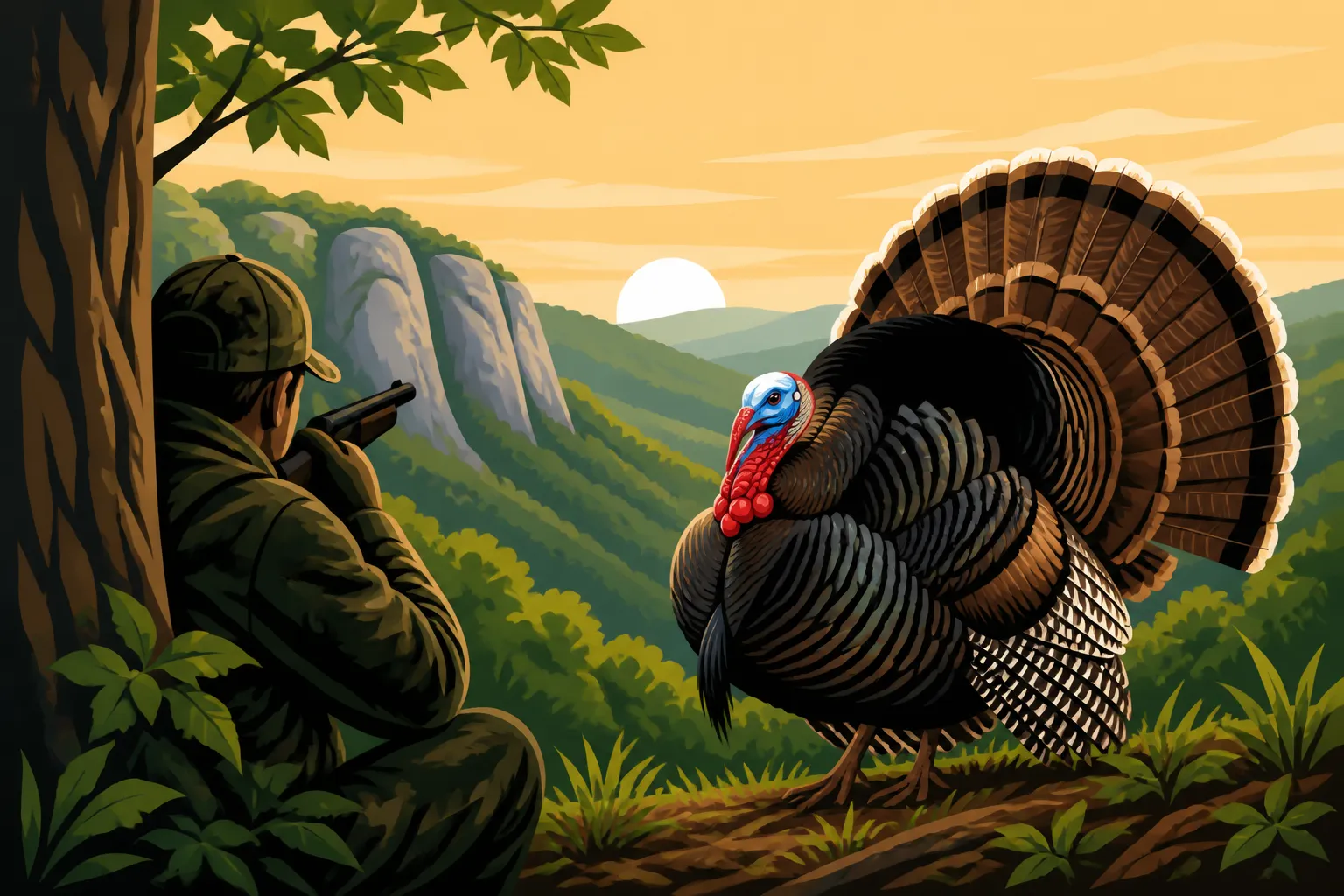
Spring Turkey Hunting in the Arkansas Ozarks
The crisp, cool air of an Ozark spring morning, the gobbler sounding off from a distant ridge – it's a sound that makes a turkey hunter's heart pound. But let's be real, chasing longbeards in the steep, unforgiving terrain of the Arkansas Ozarks can be incredibly frustrating. These aren't flatland birds; they're cagey, they cover ground, and they know every nook and cranny of those hills. This guide is all about equipping you with the knowledge and tactics to find success and truly enjoy your spring turkey hunting adventure in the beautiful, yet challenging, Ozark Mountains.
Understanding the Ozark Terrain and Turkeys
Hunting turkeys in the Ozarks is a whole different ballgame compared to the river bottoms of the Delta or the piney woods of south Arkansas. The terrain dictates everything, from how birds move to how your calls carry, and understanding this is your first step to success.
The Lay of the Land: Ridges, Hollows, and Creek Drainages
The Ozarks are characterized by a seemingly endless series of steep, often rocky ridges separated by deep hollows, creek drainages, and occasional limestone bluffs. This topography isn't just pretty; it fundamentally shapes how turkeys live and behave. Birds will roost on the higher parts of ridges, often near a water source or open glade, seeking security. Once on the ground, they'll often move down into the hollows to feed on mast or bugs, work their way along benches, or cross drainages. Your approach needs to account for elevation changes, thermal currents, and the sheer effort it takes to navigate this country. Knowing how to read an Ozark bench for deer can be incredibly helpful for turkeys too, as they often use similar travel corridors. Understanding these features is critical for predicting where a gobbler will go after flying down.
The Behavior of Mountain Gobblers
Ozark gobblers are notorious for being a bit tougher to pin down than their flatland cousins. They tend to be more vocal on the roost but can go silent quickly once on the ground, especially if they've been pressured. These birds have immense home ranges, traversing vast amounts of territory in a single day. They're also masters of using the terrain to their advantage. A gobbler on a facing ridge can sound incredibly close, but be a quarter-mile away, using the sound funnel of a hollow to project his voice. They’re less likely to commit to long, open runs and more prone to circling, using cover, and trying to get above you to spot potential danger. Patience and adaptability are paramount when dealing with these wary birds. They expect you to come to them, and often, that's exactly what you'll have to do, but intelligently.
Essential Gear for Ozark Turkey Hunts
When you're climbing up and down hills all day, every ounce of gear matters. The right equipment isn't just about comfort; it's about being effective and safe in rugged country.
Lightweight and Durable Clothing
Forget heavy cotton; you need layers that wick moisture, breathe, and can withstand snags from briars and rocks. Synthetic blends or merino wool are excellent choices for base layers, as they regulate temperature effectively whether you're climbing a steep incline or sitting motionless. A durable outer layer, preferably in a good camouflage pattern like Mossy Oak or Realtree, is essential. Think about brush pants or chaps to protect your legs from thorns and ticks. The weather in the Ozarks can change rapidly in spring – a warm, sunny morning can quickly turn into a chilly, rainy afternoon. Having a packable, waterproof, and windproof shell is non-negotiable. Don't underestimate the power of a good hat and gloves; they not only provide warmth but also break up your outline and protect against sun and insects.
Footwear and Navigation Tools
Your feet are your most important asset in the Ozarks. Invest in high-quality, comfortable, waterproof hiking boots with excellent ankle support and aggressive tread. You'll be traversing rocky slopes, slick creek beds, and muddy patches, so traction is key. Break them in well before the season. Blisters can ruin a hunt faster than anything.
Beyond footwear, reliable navigation is critical. Cell service can be spotty, if not nonexistent, in many parts of the Ozarks. A handheld GPS unit or a reliable mapping app on your phone (like the GoHunt app or other reputable options) with downloaded offline maps is essential. Mark your truck, key terrain features, and where you hear birds. Don't forget a compass and a physical map as a backup, and know how to use them. While the AGFC map tool is great for planning, having those downloaded maps or a paper copy in hand when you're deep in a hollow is priceless. Headlamps are also a must for navigating in the dark, both before dawn and after dusk.
| Item | Why It's Essential in the Ozarks |
|---|---|
| Waterproof Hiking Boots | Superior ankle support, traction on steep/rocky terrain, dry feet. |
| Layered Clothing | Adaptability to rapidly changing temperatures and exertion levels. |
| Mapping App/GPS | Navigating rugged terrain, marking locations, essential for off-grid areas. |
| Variety of Turkey Calls | Adapting to different bird moods and hunting scenarios. |
| Lightweight Pack | Carrying essentials without unnecessary bulk for long hikes. |
| Small First-Aid Kit | Treating minor injuries common in rugged environments. |
| Water & Snacks | Staying hydrated and fueled during physically demanding hunts. |
| Shotgun & Choke | Appropriate patterning for varying turkey ranges in open timber. |
Scouting Strategies Before Opening Day
You wouldn't head into battle without intel, and the same goes for hunting Ozark turkeys. Pre-season scouting is arguably more important here than in flatter regions.
Locating Roosting Areas and Travel Corridors
The key to early morning success is knowing where gobblers are likely to roost. Before the season, spend time driving and walking logging roads, especially around dawn and dusk. Listen intently for gobblers sounding off. They often favor the highest points of ridges with mature trees, providing a good vantage point. Once you pinpoint a general area, focus on identifying primary travel corridors. Turkeys will often follow old logging roads, ridgetops, power lines, or distinct benches that traverse hillsides. Look for tracks, droppings, and shed feathers. Accessing these areas and scouting Arkansas public land before season using apps like GoHunt can give you a significant advantage, highlighting accessible points and identifying potential natural funnels. Observing turkey behavior during this time can also give you clues to their typical morning routines, such as where they fly down and which direction they usually head.
Identifying Feeding Areas and Water Sources
While roosting and travel are crucial, understanding where birds feed and drink is equally important, especially as the day progresses. In the Ozarks, turkeys feed heavily on acorns, insects, and tender green vegetation. Look for areas with a good mast crop from the previous fall (oaks, hickory). Openings, glades, and less dense timber patches often provide better insect foraging opportunities. Creek bottoms and spring heads are obvious water sources, and turkeys will use them, particularly during dry spells. Sign in these areas, like scratching in leaf litter or fresh tracks near water, indicates active use. Knowing these spots can help you plan your approach for later in the morning or set up an ambush if a gobbler goes silent after flying down from the roost. Consider how far these feeding areas are from potential roosts and how the turkeys might get there.
Calling Techniques for Mountain Gobblers
Calling in the Ozarks requires a nuanced approach. The terrain plays tricks with sound, and mountain gobblers are often more cautious and experienced.
Adapting Your Volume and Cadence to the Terrain
One of the biggest mistakes hunters make in the Ozarks is calling too loudly or too frequently, especially when a bird is close. Sound carries incredibly well in the hollows, often amplifying even soft calls. Conversely, calling across a deep valley can make your soft yelps sound like distant chirps. You need to constantly gauge the distance and attitude of the bird and adjust. When gobblers are on a facing ridge, use softer, more seductive calls. If a bird is far off, a louder, sharper series of yelps might be necessary to get his attention, but be ready to back off the volume immediately if he responds. Often, less is more. A soft series of clucks and purrs can be incredibly effective when a bird is within a hundred yards, hinting at a "lonely hen" rather than a demanding one. This is a critical skill for Calling Arkansas Gobblers in the Ozarks.
Mastering Locator Calls and Decoy Strategies
Locator calls are your best friend in the Ozarks. Owl hoots, crow calls, and coyote howls can get a shock gobble from a bird on the roost or one that's gone silent later in the morning. Use them sparingly and strategically, especially from vantage points that allow you to hear long distances. Once you get a response, resist the urge to immediately hit them with hen calls. Let them gobble a few times, pinpoint their location, and then start your move.
Decoys can be a double-edged sword in the Ozarks. In open glades or fields, a single hen or a jake/hen combination can be irresistible. However, in thick timber, decoys can be hard for a gobbler to spot, or worse, they can draw him into an area where he can't get a clear shot or circles to a position that puts you at a disadvantage. If you use them, place them where they're visible but allow the gobbler a clear approach. Always consider your line of sight and the bird's likely approach angle. Sometimes, the best decoy is no decoy, relying solely on your calling to seal the deal.
Setting Up for Success in Challenging Terrain
Once you've located a bird and planned your approach, the setup is where success often hinges in the rugged Ozarks.
Maximizing Natural Cover and Shot Angles
When a gobbler is talking, your priority is to get to a good setup quickly and quietly. Look for a large tree that breaks up your outline from multiple directions and offers a solid backrest. A deadfall, a thicket, or a rock outcrop can also provide excellent cover. Critically, ensure you have a clear shooting lane in the direction you expect the bird to approach. Mountain gobblers often circle to get above you or use terrain features to approach from unexpected angles. Anticipate this and choose a setup that gives you maximum visibility and shot opportunities while maintaining concealment. Remember, turkeys have incredible eyesight, so even a slight movement can spook them. Consider a blind if you're hunting a known field edge or heavily used strut zone, but for run-and-gun in the timber, natural cover is paramount.
Understanding Thermals and Wind Direction
Thermals are the rising and falling air currents that play a huge role in the mountains, especially in the mornings and evenings. As the sun rises and warms the earth, thermals lift upwards. In the evening, as the air cools, they drop. This means scent and sound will often travel uphill in the morning and downhill in the evening. Always try to position yourself so your scent is carried away from the bird's likely approach. If you set up below a gobbler in the morning, your scent could easily drift up to him. Conversely, wind can carry your calls and cover your approach. Paying attention to wind and thermals in Ouachita hollows – which are very similar to Ozark hollows – is crucial for both deer and turkey. A slight breeze can mask your movements as you try to get into position, but a swirling wind can give you away in an instant.
Navigating Public and Private Land in the Ozarks
The Ozarks offer a mix of public and private hunting opportunities, each with its own set of rules and considerations. Understanding where you can hunt is as important as knowing how to hunt.
Hunting the National Forests and WMAs
A significant portion of the Ozarks falls within the Ozark National Forest and various Wildlife Management Areas (WMAs). These areas offer vast expanses of public hunting land, but they also come with specific regulations. Always check the Arkansas Game and Fish Commission (AGFC) regulations for the specific WMA or National Forest you plan to hunt. Some WMAs might require special permits or have unique season dates. Areas like the Ozark National Forest, especially around White Rock WMA, provide incredible opportunities but also demand more effort due to the ruggedness and dispersed nature of game.
Remember that pressure can be high on public land, especially during opening weekend. Using the AGFC map tool or a mapping app like GoHunt to find less accessible areas can be a game-changer. Don't be afraid to walk further than most hunters are willing to go. That extra mile often leads to unpressured birds. Learn about Arkansas WMA Permits and Draw Hunts to see if any apply to your chosen area, although most Ozark National Forest land is open access with a valid state license.
Seeking Private Land Permission
While public land offers great opportunities, securing private land permission can often lead to less pressured birds and more consistent success. Many small landowners in the Ozarks have timbered tracts that hold turkeys. The key is respectful communication and building relationships. Start by identifying properties that look promising on a map and then approach landowners in person. Be polite, explain why you're interested, and offer to share game or help with chores. Showing respect for their property and land is paramount. Always get explicit permission before stepping foot on private ground, and if possible, get it in writing. Remember, Arkansas Trespass and Permission Law is clear: you need permission. Building trust takes time, but it can open up fantastic hunting opportunities year after year.
Safety Considerations and Ethical Hunting
Hunting in the Ozarks, while rewarding, carries inherent risks. Being prepared and adhering to ethical practices is crucial for a safe and responsible hunt.
Practicing Shotgun Safety in Steep Terrain
The uneven ground and thick cover of the Ozarks demand extra vigilance when handling your firearm. Always keep your muzzle pointed in a safe direction, especially when climbing or descending steep slopes, or navigating through brush. Be acutely aware of your hunting partners if you're not hunting solo. Never carry a loaded firearm with the safety off. When setting up, ensure your firearm is securely resting and won't tip over. Before taking a shot, be absolutely certain of your target and what lies beyond it. In hilly terrain, a shot can travel much further than you might anticipate. Always follow all Arkansas Hunter Education and Safety Rules. Hunter orange is not required for turkey hunting, but it's crucial to identify your target clearly.
Dealing with Wildlife and Environmental Hazards
Beyond firearm safety, the Ozarks are home to other potential hazards. Venomous snakes like timber rattlesnakes and copperheads are present, especially as temperatures warm in spring. Always watch where you step and place your hands. Ticks are also abundant, so regularly check yourself and use repellents. Dehydration and heat exhaustion can be real concerns on strenuous spring hunts, so carry plenty of water and know your limits.
Ethical hunting means making a clean kill and respecting the game. Only take shots you are confident in, typically within 30-40 yards with a properly patterned shotgun. If you wound a bird, make every effort to recover it. It’s also crucial to identify your target as a legal gobbler before pulling the trigger, ensuring it's not a hen or an illegal bird. Remember, Arkansas bans hen harvest to protect the breeding population, which is vital for Arkansas Turkey Population Trends. Leave no trace behind and be a good ambassador for the sport.
Dealing with Pressure and Late-Season Tactics
The early season might be busy, but the Ozark woods continue to offer opportunities for those who persist and adapt.
Hunting Pressured Birds
Opening weekend on public lands can often feel like a competition. Many hunters will target roosted birds aggressively, which can push gobblers into becoming "call shy" or changing their routines. When hunting pressured birds, consider these tactics:
- Go Deeper: As mentioned, putting in extra miles to get away from road hunters often pays off. Most hunters won't venture far from their vehicles.
- Hunt Mid-Day: Many hunters give up around 9 or 10 AM. Often, pressured gobblers will go quiet after fly down and then become active again mid-morning as they look for hens. This is a great time to cover ground, calling periodically, or even try "still-hunting" if the woods are open enough.
- Soft Calling: Back off the aggressive calling. Subtle clucks, purrs, and soft yelps can be more effective on wary birds. Sometimes, just sitting quietly in a good ambush spot and letting nature take its course can work.
- Locators, Not Loud Calling: Use locator calls to get a response, then move quietly into position before attempting any hen calls. This reduces the chances of them pinpointing your exact location too early.
Late-Season Strategies as Hens Nest
As the spring progresses, hens begin to nest, which significantly impacts gobbler behavior. Early in the season, gobblers are often with groups of hens. By late season, many hens are committed to nesting, leaving the gobblers more "lonely" and receptive to calling. This can be a fantastic time to hunt, as gobblers might be more willing to come to a call.
- Aggressive Calling Can Work: A lonesome gobbler might be more inclined to respond to persistent, even aggressive, calling from a "hen" he thinks he's finally found.
- Focus on Feeding Areas: With hens nesting, gobblers will still need to feed. Focus your efforts around known feeding areas, water sources, and strutting zones.
- Patience is Key: Birds might not gobble as much late in the season, but they are still around. Sit tight, call intermittently, and be prepared to wait. They might appear silently.
- Find Secondary Strut Zones: As primary hens become scarce, gobblers might move to secondary strutting areas, looking for any remaining receptive hens. These could be small clearings, old logging decks, or even field edges within the timber. Turkey Tactics in Arkansas Pine Plantations can offer insight into finding these types of areas even in mixed timber.
Hunting turkeys in the Arkansas Ozarks is a challenging, yet deeply rewarding pursuit. It demands physical stamina, mental fortitude, and a deep appreciation for the landscape and its wildlife. By understanding the terrain, adapting your tactics, and always prioritizing safety, you'll not only increase your chances of bagging a longbeard but also forge unforgettable memories in one of Arkansas's most stunning regions.
Disclaimer
Hunting involves inherent risks, including but not limited to injury or death. Always prioritize safety, follow all applicable laws and regulations, and obtain proper licenses and permits. The information provided in this guide is for informational purposes only and should not replace professional instruction or local wildlife agency guidelines. Always scout your hunting area thoroughly and understand the specific rules for public or private lands.