Best Arkansas Counties for Turkeys
Finding a reliable turkey hunting spot in Arkansas can feel like chasing a ghost, especially with all the ups and downs our wild turkey populations have seen in recent years. It's incredibly frustrating to invest precious time scouting, only to find limited gobbler activity or areas that are simply overrun with pressure. This guide is here to help you cut through that uncertainty, offering grounded insights into which Arkansas counties historically offer better potential for wild turkey hunting, along with how to wisely approach them.
Navigating the Current State of Arkansas's Wild Turkeys
Let's be real, many hunters across the state have felt the sting of declining turkey numbers. It's not just in your head; Arkansas has experienced some significant shifts in its wild turkey populations. Understanding these broader trends is the first step to pinpointing where your efforts might be best rewarded. It’s no longer just about driving to your favorite spot from twenty years ago and expecting it to be prime.
The Challenges Facing Arkansas Turkey Numbers
The good old days of hearing gobblers on every ridge seem distant for many, and there are real biological and environmental reasons for that. Factors like poor brood survival, habitat changes, and increased predation on nests and poults have all played a part. You might recall reading about Arkansas Turkey Population Trends and how they've fluctuated. This isn't unique to Arkansas; it's a trend seen in many states across the Southeast. For us in Arkansas, these challenges mean we have to be more strategic than ever in our hunting approaches and in selecting our hunting grounds.
Weather patterns, particularly during nesting and brood-rearing periods, can also have a profound impact. A cold, wet spring right after the hatch can decimate poult survival, and unfortunately, we've had a few of those. These issues directly affect the number of birds that survive to become gobblers in subsequent seasons. We're all trying to make the most of the season, and knowing what's truly going on with the birds helps us set realistic expectations and adapt our strategies.
What Recent Harvest Reports Tell Us
When you look at the Arkansas Spring Turkey Harvest Numbers, you can see the ebb and flow. Some years are better than others, and generally, the overall numbers have been lower than we'd like. These reports aren't just dry statistics; they reflect actual hunting conditions on the ground. A county that consistently produces a decent number of harvested birds, even in tougher years, might indicate a more resilient local population or better habitat. It's not just about the raw number, but about consistency relative to other areas.
It’s also important to consider the zones. Arkansas has distinct turkey zones, and what might be true for one might not be for another. The Arkansas Turkey Zone Differences directly influence season dates and bag limits, reflecting regional variations in turkey health. Understanding these zone-specific trends helps zero in on areas that are currently performing better. Don't just focus on the total state numbers; dive into the specific zone data if you want to be truly informed.
Deciphering What Makes a Top Turkey County
Identifying the "best" counties isn't just about looking at a map and hoping for the best. It involves understanding the intricate dance between habitat, turkey biology, and human pressure. A county might look great on paper, but if it's pounded by hunters every weekend, your chances can plummet.
The Role of Prime Habitat and Food Sources
Wild turkeys need specific things to thrive: a mix of mature hardwood forests, open woodlands, fields, and water sources. They need roosting trees, areas for nesting cover, and plenty of bugs and acorns. Counties dominated by extensive, unbroken tracts of mature timber or those with a healthy mix of agriculture and forest often hold more birds. For instance, areas rich in mast-producing trees, especially oaks and hickories, are goldmines for turkeys. They provide critical food through fall and winter, which helps birds go into breeding season healthier.
Consider the diverse landscapes of Arkansas. The Ouachita and Ozark regions, with their vast national forests and rugged terrain, offer expansive habitat, while some areas on the edge of the Delta might have a unique mix of timbered bottomlands and agricultural fields. Each offers distinct advantages. The key is finding areas where this mosaic of habitat is abundant and undisturbed enough for turkeys to reproduce successfully and avoid predation.
Population Density and Reproduction Success
A "top" county will inherently have a higher density of turkeys, or at least a population that is showing signs of stable or increasing reproduction. This isn't just about adult gobblers; it's about the poult-to-hen ratios. If you've been following the Poult-to-Hen Ratios and What They Mean, you know that consistent, healthy reproduction is the backbone of a strong turkey population. A county might have a few old gobblers, but if the young birds aren't surviving, it's a population on borrowed time.
Hunters often report that in counties with consistently good turkey numbers, they also see more hens with broods during the summer. This anecdotal evidence, when combined with official Arkansas Brood Survey Results, helps paint a clearer picture of where reproduction is holding its own. When you're scouting, look for signs of young birds, not just adult gobblers. Their presence indicates a healthy, viable population.
Navigating Hunter Pressure
Let's face it, if a county is known for good turkey hunting, everyone wants to be there. High hunter pressure can make even a strong turkey population incredibly wary and difficult to hunt. Birds will go silent, become nocturnal, and generally be much tougher to call in. This is a common frustration, and it's why some hunters prefer to seek out less-known pockets rather than targeting historically "best" counties that might now be overpressured.
Public land in particular can become a challenge. While tools like GoHunt are fantastic for identifying public land access and boundaries, they also show the same information to everyone else. The trick is to use such tools to find less accessible corners, or to hunt during weekdays when pressure is lower. Sometimes, a county that isn't at the very top of the harvest report but has vast, less accessible public land might offer a better quality hunt than a "top" county that's easily reached by thousands.
Unlocking the Potential: Promising Counties for Gobblers
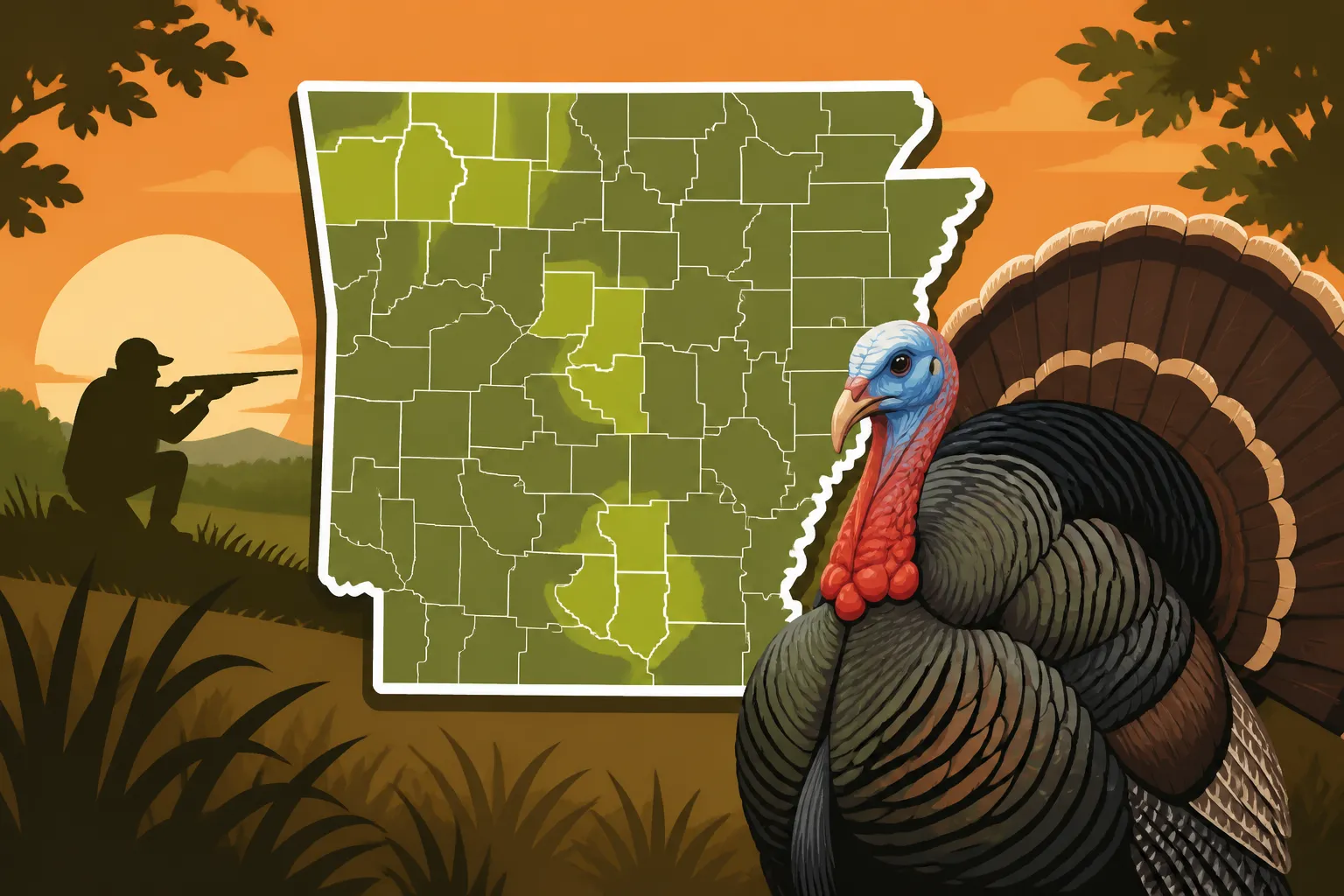
Given the factors above, certain regions and counties in Arkansas consistently emerge as having higher potential for turkey hunters. These aren't always the easiest hunts, but they offer the best chance for a memorable encounter.
The Ozark and Ouachita Mountain Regions
When it comes to expansive, rugged terrain and a good mix of hardwoods, the Ozark and Ouachita National Forests contain some of Arkansas's most promising turkey country. Counties like Newton, Pope, Searcy, Johnson, and Franklin in the Ozarks, and Montgomery, Polk, and Scott in the Ouachitas, often get mentioned. These areas offer vast public hunting opportunities, which, while sometimes pressured, also provide enough room for birds to spread out.
The rolling hills and deep hollows of the Ozarks present a different kind of challenge, but also a classic turkey hunting experience. If you enjoy Calling Arkansas Gobblers in the Ozarks, these regions are your bread and butter. The terrain can be grueling, but it often means you can find birds willing to gobble at a good call, especially away from main roads. Likewise, the Ouachitas, with their steep ridges and mixed pine/hardwood forests, can hold significant numbers of birds. Using scouting tools like GoHunt can help you identify remote ridges, saddles, and creek bottoms that might hold less-pressured birds.
South Arkansas Pine Country
Further south, counties like Bradley, Calhoun, and Dallas, which feature a mix of pine plantations, mixed timber, and some agricultural elements, can be surprisingly good. While historically known more for deer, these areas offer excellent Turkey Tactics in Arkansas Pine Plantations. Turkeys in these managed pine forests adapt to the timber operations, often using older clearcuts and thinned pine stands for nesting and feeding, and the mature pines for roosting.
The key here is understanding the timber rotation. A cutover that's a few years old might be thick as thieves but offers great bugging and escape cover. Older, thinned pines provide more open understory for strutting and easier travel. These areas can sometimes see less turkey hunting pressure than the mountain regions, making for a potentially rewarding experience if you know how to read the habitat.
The Delta Fringe and River Bottoms
While the Delta is synonymous with duck hunting, certain counties on the fringe, especially those with significant river bottomlands like Mississippi, Arkansas, and Woodruff, can hold pockets of turkeys. These areas often have rich, fertile soil, which can translate into excellent mast production. Large tracts of bottomland hardwoods provide ideal roosting and foraging habitat.
The challenge here is often access, as much of this land is privately owned. However, public land WMAs along major rivers can offer incredible opportunities, particularly for those willing to get off the beaten path. These Delta birds can be different, often more reclusive due to dense cover and historic hunting pressure. But for a hunter willing to put in the legwork, some fantastic gobblers can be found in these rich river bottoms.
Strategies for Hunting These Top Counties
Finding a promising county is just the first step. To consistently tag a gobbler, you need solid strategies tailored to Arkansas's diverse landscapes and the current behavior of the birds.
Effective Scouting Techniques
Before you even load your shotgun, effective scouting is paramount. This goes beyond just looking at a map. While online tools are invaluable – and I highly recommend using platforms like GoHunt for their detailed aerial imagery and public land overlays – you still need boots on the ground. GoHunt allows you to mark potential roosting sites, strutting zones, and travel corridors, which is a huge advantage. Look for fresh tracks, droppings, feather dustings, and actual roost trees. This physical evidence tells you where birds are currently active, not just where they might have been last year.
Scouting isn't a one-and-done deal; it's an ongoing process. As the season progresses, turkey habits can shift based on food availability and pressure. Pay attention to weather patterns and how they might influence bird movement. A good scout can be the difference between a frustrating morning and a successful one. If you're hunting public land, take advantage of tools like Scouting Arkansas Public Land Before Season to find those hidden gems.
Adapting Calling Strategies to the Terrain
Arkansas's diverse terrain demands adaptability in your calling. In the wide-open timber of the Ozarks or Ouachitas, your calls might carry further, meaning you can be a bit more aggressive. However, if birds are pressured, a softer, more subtle approach is often key. Think about the specific scenario: are you trying to locate a bird on the roost, or are you trying to coax a hung-up gobbler across a ridge?
For more details on specific approaches, consider how Run-and-Gun on Arkansas Public Land tactics might apply in more open, less pressured areas, versus a more stationary setup in denser cover. In the tight confines of bottomland timber or thick pine plantations, soft yelps, clucks, and purrs can often be more effective than loud, aggressive calling that might scare wary birds. Understanding when to use a diaphragm, slate, or box call, and varying your volume and cadence, will greatly improve your odds.
Timing Your Hunts Wisely
While Arkansas Spring Turkey Season Dates provide the framework, knowing the subtle nuances of when to hunt within those dates can make a big difference. The first week of the season often sees high pressure, especially on public land. Gobblers can be very vocal early on, but also quickly become call-shy. Hunting weekdays, especially mid-week, can significantly reduce pressure and increase your chances.
The weather also plays a huge role. Cold, rainy mornings might keep birds quiet, but a sunny, calm day after a front can often get gobblers fired up. Don't be afraid to hunt later in the morning or even into midday. Sometimes, the most pressured birds wait until the crowds have thinned before they become active. Also, be aware of the daily limits and Arkansas Turkey First-Week Limit to ensure you're hunting legally and responsibly.
| Region/County Type | Typical Habitat | Hunting Challenge | Key Strategy |
|---|---|---|---|
| Ozarks/Ouachitas | Mature hardwoods, mixed pine/hardwood, steep terrain | Rugged terrain, scattered birds, some pressure | Thorough scouting, good physical conditioning, adaptable calling |
| South AR Pine | Pine plantations, mixed timber, cutovers, some fields | Dense cover, timber operations, specific bird patterns | Understand timber stages, focus on edges and openings |
| Delta Fringe/River | Bottomland hardwoods, agricultural borders, swamps | Limited public access, wary birds, dense cover | Target WMAs, focus on thick river bottoms, patient calling |
Disclaimer
This article is for general informational purposes only and does not constitute professional advice. Laws, prices and regulations vary by location and change over time. Consult a qualified professional for guidance on your specific situation.