Poult-to-Hen Ratios and What They Mean
It's frustrating when you head out into the Arkansas woods, full of anticipation for turkey season, and the gobblers just aren't talking like they used to. You wonder what happened to the birds, and it can feel like the population has just vanished. Understanding poult-to-hen ratios can be a huge part of piecing together that puzzle, giving you a clearer picture of future turkey numbers and helping you set more realistic expectations for your hunts. This guide is all about demystifying those numbers and showing you how they translate to boots-on-the-ground turkey hunting.
What Are Poult-to-Hen Ratios and Why Do They Matter So Much?
When we talk about poult-to-hen ratios, we're really talking about the health of the future turkey population. Simply put, it's a measurement of how many young turkeys (poults) are surviving per adult hen during a specific period, usually after the hatch and into the summer. Wildlife biologists use this ratio as a critical indicator of reproduction and recruitment – how many new birds are successfully joining the population each year. Think of it as the ultimate report card for the wild turkey's ability to sustain itself and even grow.
A high poult-to-hen ratio suggests a successful breeding season with good poult survival, meaning more birds will be entering the population in the coming years. This is excellent news for hunters because it implies a healthier, potentially growing population, offering more opportunities down the road. Conversely, a low ratio often points to poor nesting success, high poult mortality, or a combination of both. This can signal a declining population trend, which, as a hunter, might mean tougher hunting in subsequent seasons as the bird numbers dip. It's not just about how many hens are out there, but how many of them are bringing significant broods to maturity. You can learn more about general population trends in our article on Arkansas Turkey Population Trends.
This ratio is a much more nuanced indicator than just looking at overall harvest numbers from the previous spring. While harvest data tells us what was taken, the poult-to-hen ratio gives us a peek into what will be available. It’s a proactive measure, crucial for understanding the boom and bust cycles that wild turkey populations naturally experience. For instance, after a few years of high ratios, hunters might expect more two-year-old gobblers in the woods, those challenging but exciting birds that are often the target for many. Without these young birds coming into the system, the older age classes will eventually thin out, leading to fewer gobblers sounding off during those crisp spring mornings.
Key Influencers of Poult-to-Hen Ratios in Arkansas
The factors that influence poult-to-hen ratios are numerous and often interconnected, making turkey management a complex dance with nature. In Arkansas, like many places, the primary drivers fall into categories like weather, predation, and habitat quality. Each plays a significant role in whether a hen successfully hatches her clutch and, more importantly, whether her poults survive to adulthood.
Weather's Direct Impact on Young Poults
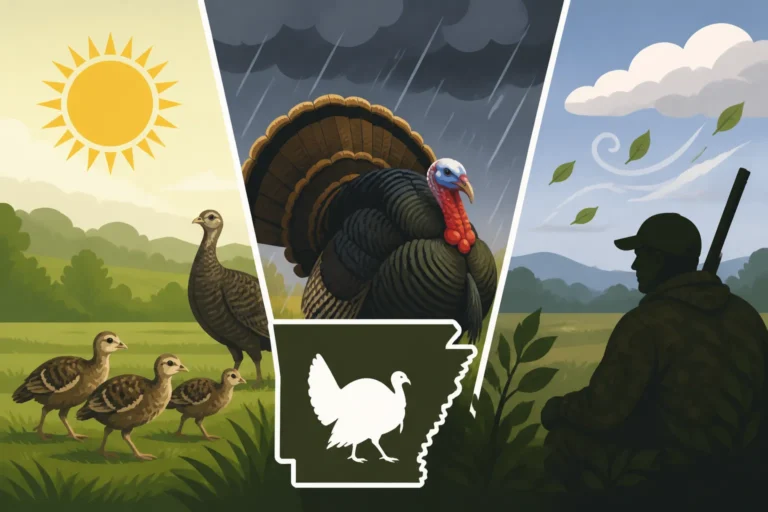
Arkansas weather can be a real wildcard, and it's a huge factor in poult survival. We often see wet, cool springs in the state, and these conditions can be absolutely devastating for newly hatched poults. Young turkeys are incredibly vulnerable to exposure; they can't regulate their body temperature very well, and they chill easily when wet. Prolonged heavy rains can lead to hypothermia, making them susceptible to disease and more easily picked off by predators because they're too weak to escape. A string of beautiful, dry, and warm days after the hatch is a turkey biologist's, and a hunter's, dream, providing ideal conditions for poults to grow quickly and gain strength. This concept is explored further in Weather in the Weeks After the Hatch. Conversely, a cold, wet May can spell disaster, resulting in a low poult-to-hen ratio that will undoubtedly impact hunting success a year or two down the line.
Predation Pressure in the Arkansas Landscape
Arkansas is teeming with various predators that love a tasty turkey egg or a vulnerable poult. Raccoons, opossums, skunks, coyotes, bobcats, and even feral hogs are all significant contributors to nest failure and poult mortality. A hen might lay a full clutch of eggs, but if a raccoon finds the nest, all that reproductive effort is lost. Once poults hatch, they become targets for avian predators like owls and hawks, and terrestrial predators find them to be easy meals. While some predation is natural and healthy for the ecosystem, excessively high predator populations, especially in areas with declining turkey numbers, can severely depress poult survival. Landowners and managers try to balance predator control with other habitat improvements, but it's an ongoing battle. Knowing the typical predator ranges in Arkansas can help you understand the challenges turkeys face; sometimes, even knowing where deer typically bed can give you clues to areas of dense cover that might also harbor nesting turkeys.
Habitat Quality and Brood Rearing Success
Quality habitat is the bedrock of strong turkey populations. Hens need dense cover for nesting that protects them from predators and the elements. Once poults hatch, they need easy access to "bugging grounds" – areas rich in insects, which are crucial for their rapid growth and protein intake. These areas are often found in open woodlands, old fields, or regenerating clearcuts where herbaceous growth is abundant. Critically, these bugging grounds also need overhead cover or escape routes to shield the poults from aerial predators. Areas with a diverse mix of mature timber for roosting, open understory for foraging, and dense thickets for escape cover tend to produce higher poult survival rates. Mapping tools, like those found on platforms such as GoHunt, can be incredibly useful for analyzing satellite imagery to identify these diverse habitat types, allowing hunters to pinpoint potential brooding areas long before the season begins. Without proper habitat management, even the most favorable weather conditions won't lead to high poult-to-hen ratios. For more on this, check out Nest Predation and Turkey Hatches.
How Hunters Can Use Poult-to-Hen Data for Better Success
Knowing what poult-to-hen ratios are and what influences them is one thing, but actually putting that knowledge to use as a hunter is another. The Arkansas Game and Fish Commission (AGFC) collects and shares this data precisely to help both their management strategies and, indirectly, to inform hunters like us.
AGFC Surveys and Data Collection
The AGFC conducts annual Arkansas Turkey Brood Surveys across the state. These surveys typically involve volunteers and agency staff observing hens and their broods during the summer months and reporting their findings. By compiling data from various regions, the AGFC can calculate poult-to-hen ratios for different zones and get a statewide picture. This information is vital for understanding current population trends and making informed management decisions, such as adjusting season lengths or bag limits. While they may not always break it down to a specific WMA, the general trends they report for a larger region, like the Ozarks or the Delta, can be very insightful for hunters planning their trips.
Translating Ratios into Hunting Expectations
So, you see the AGFC report a high poult-to-hen ratio for your favorite hunting zone. What does that mean for your next spring hunt? A strong ratio from two summers ago, for example, often translates into a good number of two-year-old gobblers the following spring. These birds are typically more vocal and aggressive, making for exciting hunts. If the ratios have been consistently low for several years, however, you might need to adjust your expectations. You might find fewer birds overall, and the ones you do locate might be older, wiser gobblers that are much harder to trick. Knowing this beforehand can save you some frustration and encourage you to adapt your tactics, perhaps focusing more on scouting extensively for isolated birds or trying different calling strategies.
A general rule of thumb for interpreting poult-to-hen ratios:
| Poult-to-Hen Ratio | Interpretation for Future Seasons |
|---|---|
| < 1.0 | Significant population decline |
| 1.0 – 1.5 | Moderate decline or struggling |
| 1.5 – 2.0 | Stable, maintaining population |
| 2.0 – 2.5 | Good, healthy population growth |
| > 2.5 | Excellent, strong population growth |
(Note: These are general guidelines; actual interpretations can vary slightly by specific geographic region and biologist assessment.)
Using Available Data to Guide Your Hunt Planning
Beyond simply managing expectations, you can use general poult-to-hen data as a tool for actual hunt planning. If a particular region consistently shows higher ratios, it might be worth focusing your scouting efforts there. You might find that public lands in those regions, which you can locate and analyze with GoHunt mapping software, tend to hold a more robust turkey population. While the AGFC doesn't typically provide specific data for individual tracts of public land, understanding the regional trends allows you to prioritize your scouting time. If the Delta has shown better ratios than a specific Ozark zone, you might lean towards planning more trips to the Delta. This strategic approach, combined with detailed on-the-ground scouting, can increase your odds of success. You might also reconsider tactics like Calling Arkansas Gobblers in the Ozarks versus focusing on Turkey Tactics in Arkansas Pine Plantations depending on the regional data.
Beyond the Numbers: Nuances and Limitations of Ratio Data
While poult-to-hen ratios are incredibly valuable, they're not the be-all and end-all of turkey population analysis. Like any scientific data, there are nuances and limitations that hunters should be aware of to fully grasp the bigger picture. Over-reliance on a single number can sometimes lead to incomplete or even misleading conclusions.
The Local Versus Statewide Picture
One of the biggest limitations is the difference between statewide or even regional averages and what's happening on your specific hunting ground. A fantastic statewide average poult-to-hen ratio might mask localized struggles. For example, your favorite WMA might have experienced a localized flood during the hatch, wiping out most of the poults there, even if the rest of the state had a banner year. Conversely, a particular private tract with excellent habitat management might be thriving even if the surrounding county's numbers are down. This is why local knowledge, personal scouting, and paying attention to your specific hunting area's conditions remain absolutely critical. Tools like GoHunt can help you zero in on specific parcels of land, allowing you to cross-reference general AGFC data with what you observe on the ground. When planning your Arkansas Spring Turkey Season Dates, remember to factor in these local variations.
Other Factors Beyond Ratios That Influence Turkey Populations
Poult-to-hen ratios are fantastic for understanding recruitment, but they don't tell the whole story of population health. Other significant factors can influence turkey numbers, sometimes independently of poult production.
- Habitat Changes: Long-term habitat degradation, such as widespread clearcutting without proper regeneration, or the conversion of diverse woodlands to monoculture pine plantations, can impact turkey populations regardless of a good hatch. Even if poults survive, if they don't have suitable habitat to mature and thrive, the population will struggle. The long-term trend of Why Arkansas Turkey Numbers Fell often highlights habitat loss and fragmentation as a key contributor.
- Disease: Outbreaks of diseases like avian flu can sweep through turkey populations, impacting adult birds and poults alike. These events are often unpredictable and can cause significant, rapid declines that a poult-to-hen ratio might only reflect a season or two later.
- Hunting Pressure: While hunting regulations are designed to be sustainable, localized excessive hunting pressure, especially on public lands, can impact the age structure and behavior of gobblers. Even if poult numbers are good, if older, dominant gobblers are consistently harvested, it can affect breeding dynamics and the overall hunting experience. This is why Scouting Arkansas Public Land Before Season is so important, especially in areas that typically see a lot of foot traffic.
- Climate Change and Drought: Extended droughts can reduce insect populations and vegetative cover, impacting poult food sources and overall turkey health. Conversely, unusually severe winters could also take a toll on adult birds, something not reflected in a summer poult survey.
Ultimately, while poult-to-hen ratios are an indispensable tool for turkey hunters and managers, they are best understood as one piece of a much larger, complex puzzle. Combine this valuable data with your own scouting, local observations, and an understanding of the broader ecological factors, and you'll be well on your way to becoming a more informed and successful Arkansas turkey hunter.
Disclaimer
This article is for general informational purposes only and does not constitute professional advice. Laws, prices and regulations vary by location and change over time. Consult a qualified professional for guidance on your specific situation.